
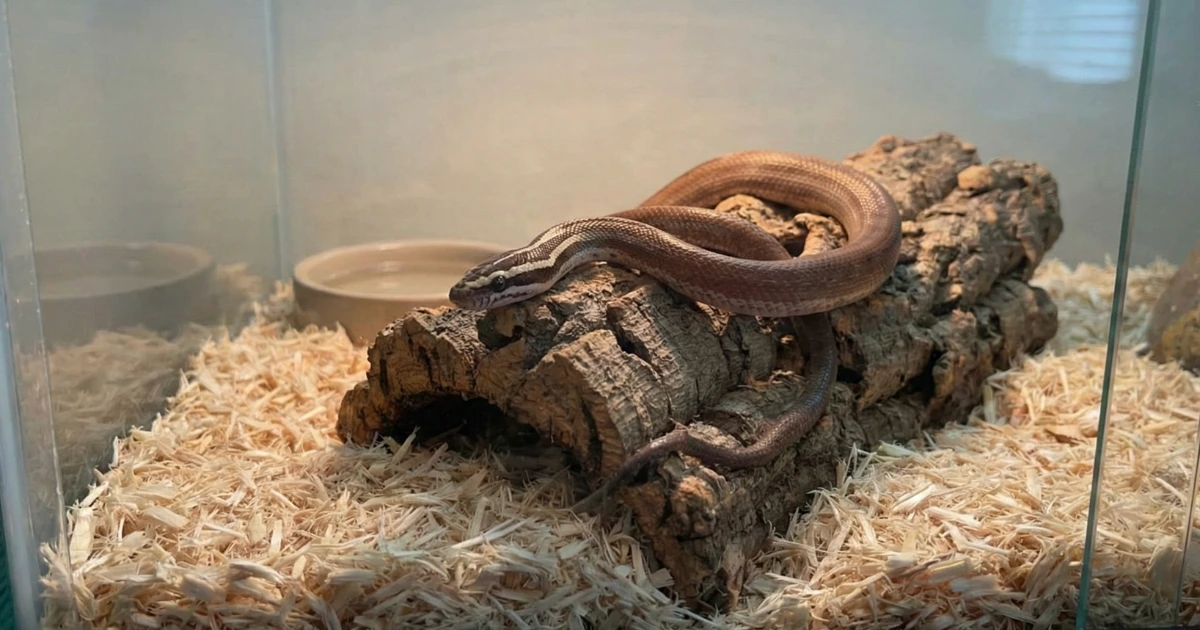
In the world of beginner snakes, the spotlight is almost always stolen by two titans: the Corn Snake and the Ball Python. They are fantastic animals, but for years, I’ve felt that one of the absolute best beginner snakes has been living in their shadow. The African House Snake (Boaedon capensis, formerly Lamprophis capensis) is a small, hardy colubrid from Africa. Its docile nature, manageable size, and legendary appetite make it a strong contender for the title of “perfect first snake.”
Is the African House Snake a suitable species for a beginning keeper?
The African House Snake is a superb choice for a beginner who seeks a hardy and predictable reptilian companion. Specifically, their resilient nature allows them to thrive even as a new keeper masters environmental controls. Furthermore, their legendary feeding response removes the primary source of anxiety for those transitioning from other pets. Consequently, they are often the “gold standard” for those entering the world of non colubrid snakes. Therefore, I frequently recommend this species for enthusiasts who want a long lived and engaging pet. In fact, their straightforward needs make them nearly impossible to fail with if provided with basic research.
What are the realistic growth and longevity expectations for an African House Snake?
An African House Snake represents a fifteen to twenty year commitment to a slender and highly efficient predator. Specifically, they reach a very manageable adult size, with females being the larger sex at three to four feet. Furthermore, males are significantly smaller and typically stay under the two and a half foot mark. Consequently, you must prepare for a pet that will be a stable presence in your home for two decades. Therefore, I prioritize the “brutal honesty” of their longevity over their initial small purchase price. As a result, providing a stable and high quality environment is essential for their enduring health.
Why are they geographically associated with human dwellings?
The common name of this serpent stems from its historical habit of seeking shelter near human settlements. Specifically, they follow rodent populations into barns and houses in their native African range. Furthermore, they are often tolerated or even welcomed by locals for their exceptional pest control abilities. Consequently, they have evolved to be highly adaptable to various micro climates and disturbed habitats. Therefore, I reject the assumption that they are “delicate” forest dwellers. In fact, this adaptability is exactly what makes them so resilient in a captive environment.
What are the essential habitat requirements for an African House Snake?
Constructing a habitat for an African House Snake requires a focus on security and environmental complexity. Specifically, while a 20 gallon tank is functional, I advocate for a 36-inch enclosure for adult females to allow for full lateral movement. Furthermore, you must provide at least two identical, tight-fitting hides to ensure the snake feels secure. Consequently, a lack of security leads directly to stress induced defensiveness or respiratory issues. Therefore, I prioritize the use of moisture retaining substrates like cypress mulch to maintain adequate humidity. In fact, a “cluttered” tank is a happy tank for this specific genus.
How do you manage the heat gradient and lighting for a nocturnal species?
The African House Snake requires a precise thermal gradient to facilitate digestion and natural circadian rhythms. Specifically, the warm side of the enclosure should feature a basking spot of 88–92∘F (31–33∘C). Furthermore, the use of a thermostat is non-negotiable to prevent lethal burns from unregulated heating elements. Consequently, while they are active at night, providing low-output UVB lighting significantly benefits their physiological health. Therefore, I recommend overhead heating to replicate the natural solar patterns of the African savannah. As a result, your snake can choose between surface heat and cooler thermal retreats.
Why is the “Garbage Disposal” feeding response so beneficial?
The most notable trait of the African House Snake is its voracious and incredibly reliable feeding response. Specifically, they are almost never picky eaters and will rarely refuse a meal once settled. Furthermore, this removes the stress of “hunger strikes” that often plague owners of more finicky species like Ball Pythons. Consequently, you must use long tongs during feeding to avoid accidental “mistaken identity” bites during their enthusiastic strikes. Therefore, I prioritize the use of frozen-thawed prey because it is safer for the snake. In fact, adults only require a meal every 10 to 14 days to prevent obesity.
What are the common health problems and genetic color morphs?
Nearly all common health issues for the African House Snake result from foundational failures in husbandry. Specifically, stuck shed and respiratory infections stem directly from incorrect humidity or temperature levels. Furthermore, it is perfectly normal for a snake’s eyes to turn cloudy as it prepares to shed its skin. Consequently, breeders have developed several stunning morphs, including Albino and Hypomelanistic varieties, through selective breeding. Therefore, I prioritize the use of digital hygrometers to ensure moisture levels remain within the safe range. As a result, a well-monitored environment virtually guarantees a healthy and thriving snake.
African House Snake Care FAQ
African House Snakes bite primarily during feeding due to their intense strike response, not out of aggression. Defensively, biting is rare once settled. Furthermore, they are entirely non-venomous, making any contact harmless. Using feeding tongs consistently eliminates the vast majority of accidental mistaken identity strikes.
Begin with short, calm sessions of five to ten minutes every other day. Always support the snake’s full body weight rather than gripping it. Furthermore, avoid handling within forty-eight hours of feeding to prevent regurgitation. Consistent, predictable interaction builds tolerance reliably within several weeks.
Cohabitation is strongly discouraged for this species. Two individuals compete directly for heat, hides, and food, generating chronic invisible stress. Furthermore, feeding two snakes in a shared enclosure carries a genuine risk of accidental cannibalism. Every African House Snake requires its own dedicated enclosure without exception.
Juveniles shed roughly every four to six weeks during rapid growth phases. Adults shed considerably less frequently, typically every two to three months. A dull, opaque appearance signals an approaching shed. Avoid handling during this phase and maintain appropriate humidity using moisture-retaining substrate.
Standard African House Snakes typically range from forty to eighty USD. Morphs such as Albino and Hypomelanistic individuals command higher prices depending on lineage. Always prioritize captive-bred specimens from reputable breeders. Wild-caught animals carry significant parasite burdens and acclimate far more poorly to captive environments.
Sources
- African Snakebite Institute
https://www.africansnakebiteinstitute.com/snake/brown-house-snake/ - Reptiles Magazine
https://reptilesmagazine.com/african-house-snake-care-sheet/ - National Geographic
https://www.nationalgeographic.com/animals/reptiles/facts/snakes - Advancing Herpetological Husbandry
https://www.facebook.com/groups/AdvancingHerpetologicalHusbandry/ - ReptiFiles
https://reptifiles.com/african-house-snake-care-guide/ - Animal Diversity Web
https://animaldiversity.org/accounts/Boaedon_capensis/


Leave a Reply