
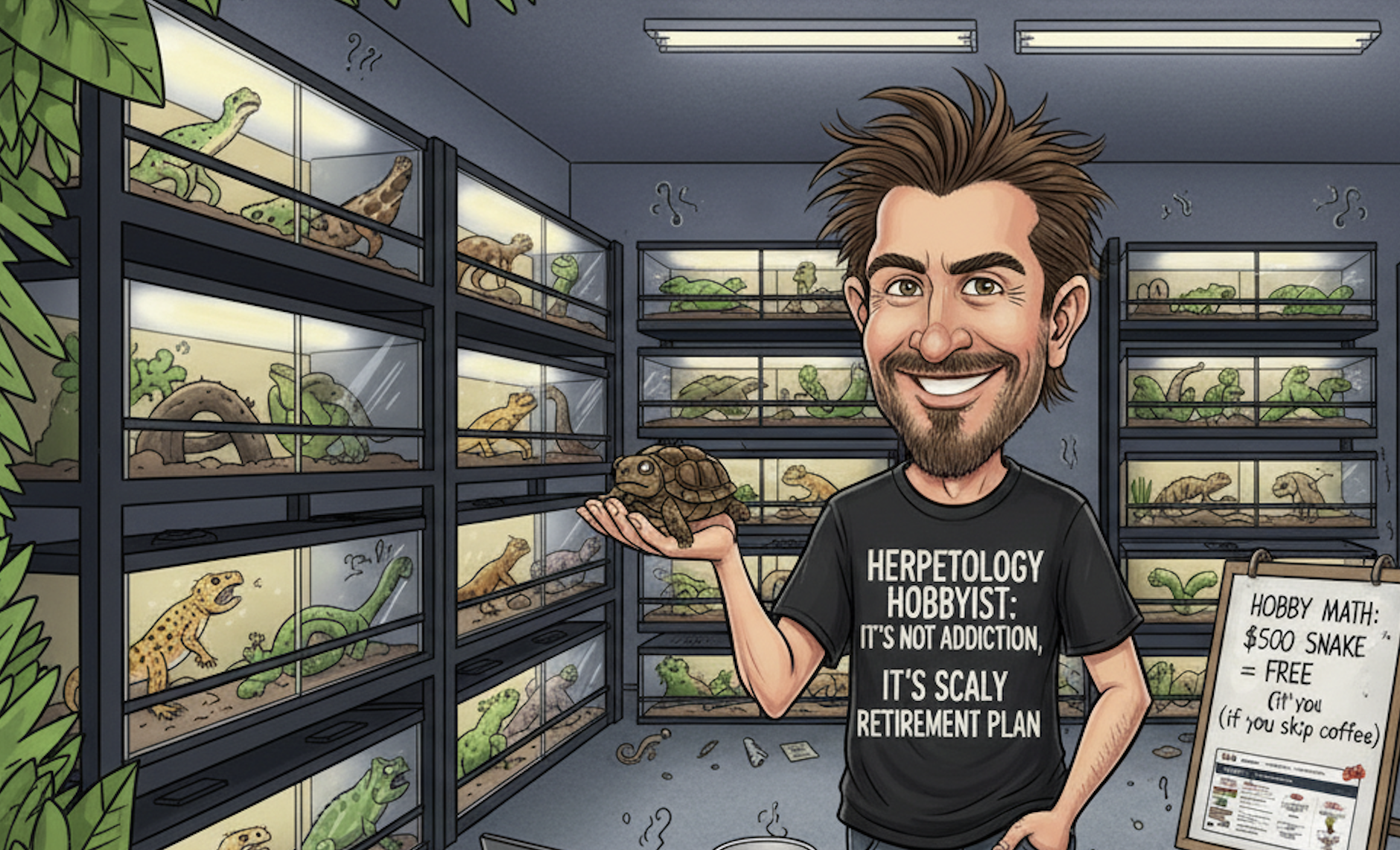
When I was first trying to convince my family to let me get a pet reptile, I was met with a wall of skepticism. The concerns were varied, but they all circled back to one central, unspoken fear: the “ick” factor. “Aren’t they slimy?” “Won’t it be gross?” and the question lurking behind it all, “Won’t it… smell?” Much of this fear comes from the idea of reptile scent and what it might be like. I think we’re culturally conditioned to associate reptiles with something primordial and swampy. But my first time holding a friend’s Leopard Gecko was a revelation. It wasn’t slimy; its skin was cool, dry, and felt like textured velvet. And the smell? There was none. Absolutely nothing. That little gecko was my first and most important lesson in reptile hygiene: a healthy reptile does not smell. A dirty enclosure, however, absolutely will.
The fear of a smelly pet is a major hurdle for many aspiring keepers. The truth is, when it comes to reptiles, you are not smelling the animal; you are smelling the quality of your own housekeeping.
What does a healthy, well-maintained reptile scent smell like?
A universal truth exists within the herpetological community regarding the natural Reptile Scent of a healthy animal. Specifically, most reptiles possess no detectable body odor because they lack the sebaceous glands found in mammals. Furthermore, if you perceive a scent while handling a healthy animal, it is likely the earthy aroma of their substrate. Consequently, the persistent myth of the “stinky reptile” is a direct reflection of poor husbandry rather than biological reality. Therefore, a clean enclosure is the primary requirement for a scent-free home. In fact, an animal that smells foul is often suffering from a significant health or hygiene crisis.
How does the digestive waste of a Bearded Dragon impact enclosure odor?
The Bearded Dragon is a popular omnivore whose waste is notably more fragrant than that of insectivorous lizards. Specifically, their diet of insects and vegetables results in a two-part package of dark feces and white solid urates. Furthermore, while a fresh dropping is noticeable, the Reptile Scent typically dissipates once the waste dries. Consequently, daily spot-cleaning is mandatory to prevent these droppings from fouling the enclosure air. Therefore, you must use a dedicated scoop to remove waste as soon as it is deposited. As a result, you maintain a hygienic environment for both the animal and your household.
Why are Leopard Geckos considered the elite of enclosure cleanliness?
Leopard Geckos are famously tidy animals that simplify the management of any lingering Reptile Scent. Specifically, they utilize a dedicated “bathroom” corner within their enclosure for almost all waste deposits. Furthermore, their droppings are small, dry, and produce virtually no detectable odor once they hit the substrate. Consequently, management is exceptionally easy for the hobbyist who prioritizes a quick daily check. Therefore, you only need to clean one specific area to maintain a pristine environment. In fact, this predictable behavior makes them one of the easiest species to keep in a shared living space.
Do arboreal species like Crested Geckos and Chameleons require different cleaning strategies?
Arboreal lizards present a unique challenge because they often deposit waste on glass walls or decorative foliage. Specifically, the Reptile Scent of these species is minimal due to their fruit or insect-based diets. Furthermore, their waste is often more fluid and can dry quickly on surfaces if not addressed promptly. Consequently, a simple wipe with a damp paper towel is necessary to maintain visual clarity. Therefore, daily spot-cleaning remains your most effective tool for preventing bacterial buildup. As a result, keeping the climbing surfaces clean ensures the health of your animal’s delicate foot pads.
Why is a snake’s waste considered a “one and done” cleaning event?
Snakes possess a slower metabolism compared to most lizards, resulting in very infrequent defecation cycles. Specifically, while a fresh dropping has a distinct musky Reptile Scent, the event occurs only once a week or less for many species. Furthermore, the waste consists of a large fecal mass and semi-solid urates that are easily removed in their entirety. Consequently, the odor is only present for a brief window until the keeper removes the waste. Therefore, managing the hygiene of a corn snake or ball python is surprisingly efficient. In fact, once the mass is removed, the enclosure immediately returns to its neutral, earthy state.
Can a bioactive setup truly eliminate the need for manual cleaning?
For high-humidity species, a bioactive enclosure offers a self-cleaning solution to manage Reptile Scent. Specifically, a “cleanup crew” of isopods and springtails lives within the soil to consume organic waste. Furthermore, these tiny invertebrates turn feces into nutrient-dense fertilizer for your live plants. Consequently, this natural ecosystem almost completely eliminates the need for deep substrate changes. Therefore, a properly balanced bioactive setup is a fantastic investment for the modern researcher. As a result, you create a more authentic and low-maintenance habitat for your tropical inhabitants.
When does a change in Reptile Scent signify a serious health red flag?
While a healthy animal is odorless, a sudden shift in Reptile Scent can indicate internal distress. Specifically, foul or persistent changes in fecal odor are major red flags for parasites or bacterial infections. Furthermore, a sick reptile may develop a sour or pungent smell that does not dissipate after cleaning. Consequently, you must monitor your pet’s waste for any lasting deviations from the norm. Therefore, a trip to a specialized veterinarian for a fecal exam is mandatory if you detect these changes. In fact, detecting sickness through smell is an essential skill for the dedicated subject matter expert.
Reptile Scent FAQ
No — a healthy reptile has no detectable body odour. They lack the sebaceous glands that make mammals smell. Any persistent odour in a reptile room is coming from the enclosure, not the animal. A clean enclosure is a scent-free enclosure.
The cause is almost always accumulated waste, uneaten food, or damp substrate that has not been spot-cleaned promptly. Daily removal of droppings and uneaten prey eliminates the source before it builds. The enclosure itself does not smell — neglected husbandry does.
No — snakes defecate infrequently, often once a week or less, and the waste is easily removed in its entirety. Once removed, the enclosure immediately returns to a neutral earthy state. The brief window of odour only exists until the keeper acts.
Yes — for high-humidity species, a bioactive setup with isopods and springtails consumes organic waste and converts it into plant fertiliser. A properly balanced bioactive enclosure almost completely eliminates the need for manual cleaning and deep substrate changes.
A sudden foul or persistent change in your reptile’s waste odour — one that does not dissipate after cleaning — is a red flag for parasites or bacterial infection. Any lasting deviation from the normal neutral smell warrants an immediate fecal exam from a specialist reptile vet.
Sources
- MSD Veterinary Manual
https://www.msdvetmanual.com/exotic-and-laboratory-animals/reptiles/management-of-reptiles - Reptiles Magazine
https://reptilesmagazine.com/leopard-gecko-care-sheet/ - Nature
https://www.nature.com/articles/nature08943


Leave a Reply