
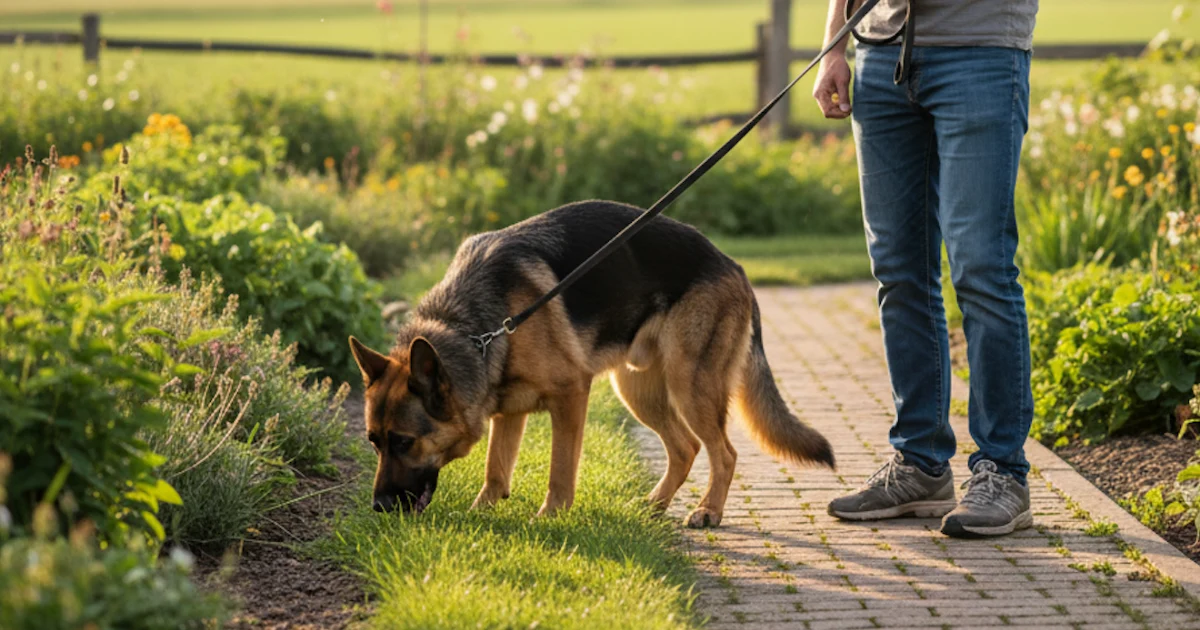
It’s a sight familiar to almost every dog owner: you’re on a lovely walk, when suddenly your dog stops, lowers its head, and begins to eat the grass. This bizarre, cow-like behavior can be confusing and even alarming. Are they sick? Maybe hungry? Are they missing a crucial nutrient? The truth is, this is a complex and ancient canine instinct with several possible explanations. This guide will explore all the theories behind this weirdly normal habit, helping you understand when it’s harmless and when it might be a sign of something more.
Is My Dog Eating Grass Because It’s Sick? (The Upset Stomach Theory)
This is the most common fear and the oldest explanation. The theory is that when a dog feels nauseous or has an upset stomach, it will intentionally eat grass to induce vomiting.
How it works:
The long, un-chewed blades of grass tickle the back of the dog’s throat and the lining of their stomach, which can trigger the vomit reflex, helping them clear out whatever was causing the discomfort.
The Reality Check:
While this certainly does happen, scientific studies have shown that it’s not the primary reason. Less than 25% of dogs vomit after eating grass, and most dogs don’t show any signs of illness before they start grazing. So, while it can be a method of self-medication, it’s rarely the main driver.
Is My Dog Missing Something in Their Diet that it takes from grass? (The Nutritional Deficiency Theory)
This is another popular and very plausible theory.
The Search for Fiber:
Modern commercial dog foods are highly digestible. Your dog may be instinctually seeking out a source of roughage. Grass is pure fiber, and eating it can help their digestive system function more smoothly, aiding in the passing of stools.
A Sign of Pica?
In very rare cases, an intense, almost obsessive eating of non-food items (including grass, dirt, and rocks) can be a sign of a condition called pica, which may be linked to a serious nutritional deficiency or other underlying health issues. This is rare and is usually accompanied by other symptoms.
Is This Just Normal, Instinctual Dog Behavior?
For the vast majority of healthy, happy dogs, the answer is yes.
An Ancestral Holdover:
Researchers believe this is a behavior inherited from their wild ancestors. Wolves and wild canids are known to eat plant matter and the grassy stomach contents of their prey. This suggests that grass-eating is simply a normal, programmed part of a dog’s natural omnivorous diet.
They Simply Like the Taste and Texture:
This is the simplest and often the most overlooked explanation. Some dogs just seem to enjoy the taste and texture of fresh, spring grass, much like we enjoy a salad. It’s a simple pleasure.
Boredom:
Sometimes, a dog in a yard with nothing else to do will start munching on grass simply out of boredom, as a way to pass the time.
When Should I Be Worried About My Dog Eating Grass?
In most cases, grazing is a harmless quirk. However, you should contact your veterinarian if you notice any of these red flags:
- It’s a Sudden, New Behavior: If your adult dog has never been a grass-eater and suddenly starts eating it frantically.
- It’s Accompanied by Frequent Vomiting: While occasional vomiting is normal, if your dog is throwing up several times a day or seems otherwise unwell, it’s a sign of a problem.
- They Seem Obsessive: If they are eating grass frantically and you cannot distract them with a toy or a treat.
- You See Other Signs of Illness: Such as lethargy, diarrhea, weight loss, or loss of appetite.
How Can I Safely Let My Dog Eat Grass?
The biggest danger in grass-eating is not the grass itself, but what’s on it.
The Danger of Chemicals: Lawns are frequently treated with pesticides, herbicides, and fertilizers that are toxic to dogs. Ingesting these chemicals can cause serious and even fatal health problems.
The Rule: Never let your dog graze on lawns that you do not personally maintain. This includes parks, your neighbors’ yards, and public spaces where you don’t know the treatment history.
The Solution: A “Safe Salad Bar”: If your dog is a dedicated grazer, consider growing a small patch of untreated lawn grass in your yard or even a pot of wheatgrass indoors specifically for them to safely enjoy.
Dogs Eating Grass FAQ
Dogs eat grass for several distinct reasons, including instinctual fiber-seeking behavior, ancestral omnivorous dietary programming, boredom, and genuine enjoyment of the taste and texture. Nausea-driven grass-eating exists but accounts for fewer than 25% of documented cases. Healthy dogs eating grass occasionally and calmly are almost always expressing a normal behavioral pattern.
Grass itself is not inherently dangerous to dogs, but the chemicals applied to it frequently are. Pesticides, herbicides, and fertilizers commonly used on lawns are toxic to dogs and can cause serious or fatal health problems upon ingestion. Dogs should only graze on grass from personally maintained, chemically untreated areas.
Occasional grass-eating does not reliably indicate illness, as the majority of dogs that graze show no prior signs of nausea. The self-medication theory, where dogs eat grass to induce vomiting, applies to a documented minority of cases. Sudden, frantic, or obsessive grass-eating in a dog with no prior grazing habit is the pattern that signals a potential health concern.
Occasional grass-eating does not reliably indicate illness, as most grazing dogs show no prior signs of nausea. Scientific data shows fewer than 25% of dogs vomit after eating grass, contradicting the universal self-medication assumption. Sudden, frantic, or new-onset grass-eating in an adult dog is the specific pattern that warrants veterinary attention.
A dog eating grass and then vomiting is using an ancestral instinctual mechanism to clear gastrointestinal discomfort. Un-chewed grass blades physically irritate the throat and stomach lining, triggering the vomit reflex. Occasional episodes are generally harmless, but repeated vomiting after grass-eating combined with visible lethargy or appetite loss requires professional veterinary evaluation.
Pica is a behavioral and medical condition where dogs compulsively consume non-food items including grass, dirt, and rocks. Standard occasional grass-eating does not qualify as pica, which is characterized by obsessive, unredirectible consumption alongside other clinical symptoms. Confirmed pica in dogs is linked to serious underlying nutritional deficiencies or systemic health conditions requiring diagnosis.
The only reliably safe grass for dogs to eat is untreated grass from a personally maintained and verified chemical-free area. Public parks, neighbors’ lawns, and roadside verges carry an unknown pesticide and herbicide treatment history and should be avoided entirely. Growing a dedicated pot of indoor wheatgrass provides a permanently safe and accessible grazing alternative.
Grass-eating requires veterinary attention when it appears suddenly in a dog with no prior grazing history, occurs alongside frequent vomiting, or cannot be interrupted by food or toys. Additional red flags include visible lethargy, diarrhea, weight loss, or appetite changes occurring alongside the behavior. Any single red flag in combination with grass-eating warrants a professional consultation.
Grass-eating requires veterinary attention when it is sudden, frantic, impossible to interrupt, or paired with frequent vomiting or visible illness symptoms. Additional red flags include concurrent lethargy, diarrhea, weight loss, or appetite changes. A dog displaying any one of these alongside grass-eating should be assessed by a veterinarian promptly.
Sources
- Applied Animal Behaviour Science
https://www.sciencedirect.com/science/article/abs/pii/S016815910700342X - MSD Veterinary Manual
https://www.msdvetmanual.com/management-and-nutrition/nutrition-small-animals/nutritional-requirements-of-dogs - National Library of Medicine
https://www.ncbi.nlm.nih.gov/pmc/articles/PMC6115930/ - American Kennel Club
https://www.akc.org/expert-advice/health/why-does-my-dog-eat-grass/ - The Spruce Pets
https://www.thesprucepets.com/why-do-dogs-eat-grass-1118320


Leave a Reply