
للقراءة بالغة العربية اضغط هنا
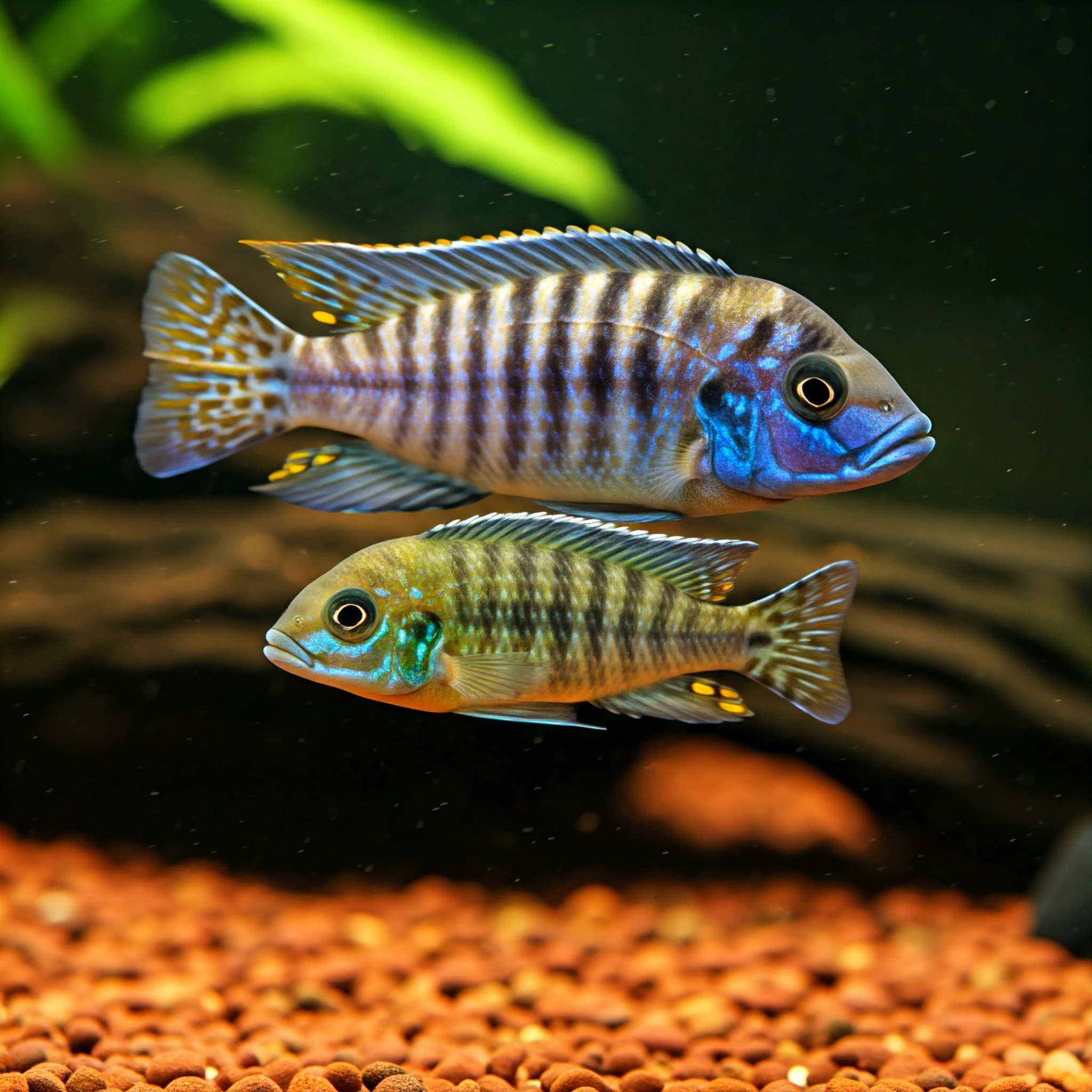
Welcome to one of the most dynamic and colorful corners of the freshwater world. The cichlids of the African Rift Lakes—Lakes Malawi, Tanganyika, and Victoria—are a dazzling explosion of color, activity, and complex behavior. Crucially, they are not peaceful community fish. Instead, they are intelligent and territorial, which means they create an aquatic society that is a constant source of fascination. Therefore, this guide will answer all of your questions, preparing you for the rewarding challenge of creating a thriving Rift Lake aquarium.
My aquarium bestie has a massive African Cichlid tank, and I am endlessly captivated by it. It’s a chaotic, vibrant world. A constant flurry of electric blues and brilliant yellows, filled with drama, territories, and complex social standoffs. In fact, it’s everything my own tanks are not.
My passion has always led me to quiet, heavily planted tanks, where the focus is on the slow, deliberate growth of a green jungle. The idea of fish that see my beautiful plants as a salad bar has always been a barrier for me. Because of this long-held preference, I’ve spent years admiring these Rift Lake jewels from afar. I lived vicariously through my friend’s successes and researched their needs obsessively. This guide is the product of that admiration, a bridge from my world of quiet greens to their world of vibrant chaos.
How Do I Create the Right Water for African Cichlids?
This is the non-negotiable foundation of their care. African Rift Lakes have uniquely hard, alkaline water, and you must replicate this.
What are the ideal water parameters?
You must aim for a high pH of 7.8–8.5 and a high general hardness (GH) and carbonate hardness (KH). This is important because this high KH is crucial as it creates a stable, buffered pH that won’t crash.
How can I achieve and maintain high pH and hardness?
- Use a Buffering Substrate: Substrates such as crushed coral or aragonite sand are the best choice. This is because they will naturally and consistently leach minerals into the water, thereby keeping the pH and hardness stable and high.
- Add Crushed Coral to Your Filter: In addition to the substrate, placing a media bag of crushed coral in your filter is another excellent way to buffer the water.
- Use Specific Rockwork: Furthermore, rocks like Texas Holey Rock or Limestone will also help maintain high pH.
How often should I do water changes for African Cichlids?
Because these are messy, active fish, the water quality must be kept pristine in order to prevent disease. Therefore,perform large, consistent weekly water changes of 40−50%.
What is the Best Tank Setup for African Cichlids?
What is the minimum tank size?
For the smallest species like Shell-Dwellers, a 20-gallon tank can work. However, for the popular Mbuna and Peacocks, a 55-gallon (208-liter) tank is the absolute minimum, with a 75-gallon (284-liter) or 125-gallon (473-liter) tank being far better. Ultimately, a larger tank is the single most effective tool for managing aggression.
What kind of substrate should I use?
A sand or fine gravel substrate is best. As mentioned, aragonite sand or crushed coral will help buffer your water to the correct parameters.
How should I arrange rocks and decor?
For rock-dwelling species like Mbuna, the more rockwork, the better. Specifically, create a complex network of caves, tunnels, and stacked rocks that reaches high up in the tank. This is critical because it breaks up lines of sight and allows many fish to establish their own territories.
Should I use live plants?
Most African cichlids, especially Mbuna, are herbivores and will destroy delicate plants. Consequently, if you wish to include plants, your only chance is with extremely tough, hard-leaved plants such as Anubias or Java Fern, securely attached to rocks.
Is It True That Slight Overstocking Can Reduce Aggression between African Cichlids?
Yes, this is a popular and effective method specifically for aggressive Mbuna. The theory is that a controlled, slightly overstocked tank spreads the aggression out. In other words, a dominant male cannot single out and harass one individual to death if there are 20 other fish to keep track of. However, this method requires massive filtration and an unwavering commitment to large weekly water changes to handle the high bio-load.
What Do I Feed My African Cichlids?
This is critically important, as the wrong diet is a primary cause of death.
What is the difference between an herbivore and a carnivore?
- Herbivores (Mbuna): These cichlids from Lake Malawi have long intestinal tracts designed to digest algae and plant matter.
- Carnivores/Omnivores (Haps & Peacocks): These are open-water predators from Lake Malawi that eat insects, crustaceans, and small fish
What is Malawi Bloat?
This is a deadly digestive illness that primarily affects herbivorous Mbuna. It is caused by a diet that is too high in animal protein and too low in fiber. Their digestive system cannot process this, leading to a fatal internal infection.
The Solution: Therefore, feed a high-quality, vegetable-based pellet or flake food (containing spirulina) as the staple for Mbuna. Conversely, for Peacocks and Haps, use a high-quality pellet formulated for carnivores.
How Do I Manage African Cichlids Aggression and Choose Tank Mates?
Q: Can I mix African cichlids with fish from other regions?
A: No. Never mix them with South American cichlids like Severums or Angelfish. This is because their water parameter and aggression levels are completely incompatible.
Q: What are good non-cichlid tank mates?
A: Fast-moving, robust species that can handle the hard water are your best bet. For example, Synodontis Catfish (from the same lakes) and some larger species of Plecos are excellent choices.
A Deep Dive into the Rift Lakes: Species-Specific Guides
Mbuna from Lake Malawi (The Rock Scrapers)
Aggression: Mbuna are the classic, highly territorial rock-dwellers. Therefore, aggression is best managed by overstocking slightly and maintaining a gender ratio of one male to at least 3-4 females to disperse his attention.
Diet: They are primarily herbivores. To ensure proper health, feed a spirulina-based, high-fiber pellet to prevent Malawi Bloat.
Peacocks and Haps from Lake Malawi (The Open Water Hunters)
Aggression: They are generally less aggressive than Mbuna but are still territorial. For this reason, a popular method for keeping them is an “all-male show tank.” This strategy prevents breeding, reduces female-related aggression, and also allows you to keep a stunning variety of colorful males.
Tank Setup: Unlike Mbuna, they need less rockwork and more open swimming space.
Shell-Dwellers from Lake Tanganyika (The Tiny Architects)
Specific Needs: These are dwarf cichlids (Neolamprologus multifasciatus is a famous example) that live and breed exclusively in empty snail shells. You must provide a sandy bottom with dozens of empty Neothauma snail shells (or Escargot shells as a substitute).
Compatibility: They are great for a smaller, species-only tank and can be kept with peaceful, top-dwelling fish that will ignore their shell beds.
Frontosa Cichlids from Lake Tanganyika (The Gentle Giants)
Size and Tank: Frontosas are slow-growing giants that can reach up to 15 inches. They must be kept in a group, and a colony of adults requires a tank of 180 gallons or more.
Temperament: They are calm, slow-moving, and majestic. They are not overly aggressive but will eat any fish that can fit in their large mouths.
How Do I Breed African Cichlids?
The most common method is mouthbrooding. The female lays her eggs, and immediately after the male fertilizes them, she scoops them up into her mouth. She will hold these eggs (and later, the fry) in her mouth for 3-4 weeks, consequentlynot eating at all during this period. To ensure the fry survive in a community tank, the female can be carefully moved to a separate tank to “release” them.
Sources
- Cichlid Forum (Lake Malawi Water Chemistry)
https://www.cichlid-forum.com/articles/lake_malawi_setup.php - Aquarium Co-Op (Shell Dwellers)
https://www.aquariumcoop.com/blogs/aquarium/shell-dweller-care-guide - Practical Fishkeeping (Mbuna Stocking)
https://www.practicalfishkeeping.co.uk/features/how-to-set-up-a-malawi-cichlid-aquarium/ - Cichlid-Forum (Malawi Bloat)
https://www.cichlid-forum.com/articles/malawi_bloat.php - Cichlid Bros (Frontosa Care)
https://cichlidbros.com/frontosa-care-guide/ - American Cichlid Association
https://cichlid.org/articles/breeding-mouthbrooders/


Leave a Reply