
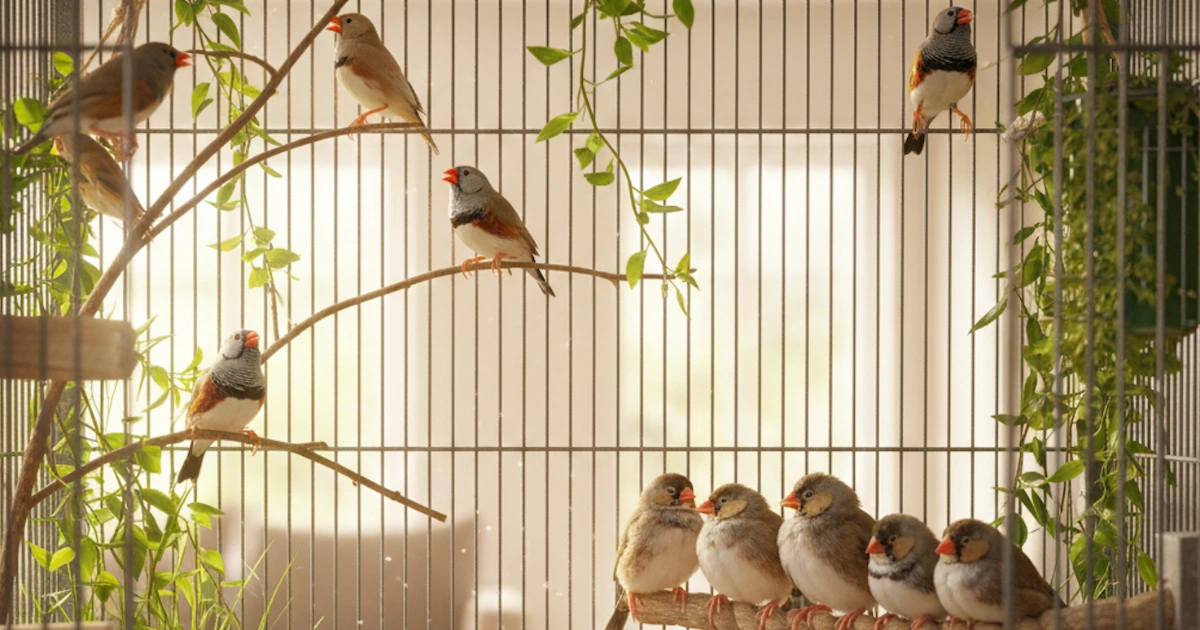
My understanding of pet birds was shaped by parrots for years. Specifically, I focused on creatures that demand one-on-one relationships. Parrots learn your name and sit on your shoulder. However, everything changed when I stood before a large flight cage. I observed a society of Zebra and Society finches. It was a bustling and cheerful miniature city. Tiny Zebra finches beeped their cheerful calls. Furthermore, gentle Society finches huddled together on a perch. They preened each other with quiet affection. It was a complete and self-contained world. This experience taught me that bird-keeping is not always about handling. Sometimes you are a quiet observer of a bustling world.
Finches are a perfect choice for those wanting cheer without intense demands. Specifically, this guide focuses on the Zebra Finch and the Society Finch. These are the two most popular beginner species. This manual gives you everything to create a thriving miniature flock.
Species Information and Suitability
Finches are absolutely good pets for beginners. Specifically, Zebra and Society finches are excellent choices. They are hardy and relatively inexpensive birds. Furthermore, their care is very straightforward. They offer the joy of ownership without intense training demands.
The average lifespan of these finches is 5 to 10 years. Specifically, a well-cared-for bird in a stress-free environment lives longer.
Do finches enjoy being handled?
No. They are decidedly hands-off pets. You should enjoy them for their cheerful sounds. Specifically, they find being held or petted extremely stressful. They are not very noisy in the way a parrot is. They do not scream. Instead, they produce a constant stream of soft beeps. This gentle background noise is suitable for apartment living.
Zebra and Society finches are peaceful species. Therefore, you can house them together successfully. The boisterous energy of the Zebras is balanced by the calm Societies. However, you should not house them with parrots. A budgie or cockatiel has a stronger beak. Specifically, they can easily injure or kill a tiny finch. Therefore, you must stick to finch-only aviaries.
Finches Enclosure and Habitat Requirements
Finches exercise by flying. Specifically, a long cage is essential for their health. The absolute minimum cage size for a pair is 30 inches long. A wider flight cage is always the best choice. For a flock of six finches, you must look for something larger. A horizontal cage is far better than a tall one. Specifically, finches do not climb like parrots. They fly back and forth. Therefore, a long cage gives them proper exercise.
Provide a variety of perch diameters to keep feet healthy. Specifically, natural wood perches are a must. Rope perches are also soft and comfortable. Furthermore, a swing will be greatly appreciated. Avoid dowel-only or plastic perches. Use a simple paper-based liner like newspaper. This allows you to monitor droppings for health. Specifically, a bird bath is essential. Finches love to bathe daily. Provide a shallow dish of cool water. Consequently, their feather health will improve.
Do finches need a nest box to sleep?
No. It is best not to provide a nest box. Specifically, a nest will trigger breeding hormones. This leads to unhealthy over-breeding. They are perfectly content to sleep on perches. Place the cage in a quiet part of the house. It should be against a wall for security. Furthermore, keep it away from direct sunlight and kitchen fumes. Covering the cage at night is a good practice. It ensures they get 12 hours of dark sleep. Provide a full-spectrum avian lamp if sunlight is lacking. Specifically, this aids in Vitamin D3 synthesis.
Finches Social Needs and Flock Dynamics
Finches are flock animals. Specifically, they must be kept in pairs at the absolute minimum. Groups of four or more are ideal. They will suffer from extreme stress if kept alone. Therefore, group housing is non-negotiable. Introduce new birds carefully. Specifically, quarantine the new bird for 30 days. This allows you to monitor for illness. After quarantine, place the cages next to each other. Consequently, they can get acquainted before sharing a cage.
An even number of birds is generally better. Specifically, this prevents a single bird from being left out. It is best to have an equal number of males and females. Avoid having more males than females to prevent stress. A single-sex flock can also work well. Specifically, all males or all females prevent unwanted breeding.
Finches Diet and Nutrition
A varied diet is key to a long life. Specifically, a high-quality seed mix should form 50% of the diet. Supplement with crushed pellets and commercial egg food. This provides extra protein for the birds. Furthermore, fresh foods should make up 25% of the diet. Offer finely chopped greens like kale and romaine. Shredded carrots and broccoli are also great.
A cuttlebone should be available at all times. Specifically, it is a crucial source of calcium. This is vital for laying females. A mineral block is also beneficial.
Do finches need grit?
No. Specifically, finches hull their seeds before eating. Grit is not necessary and causes crop impaction.
Health and Behavior
A healthy finch is active and bright-eyed. Specifically, it is constantly moving and chirping. A sick finch often appears puffed up and lethargic. Sitting on the bottom of the cage is a red flag. Air sac mites are a common respiratory parasite. Specifically, they cause a clicking sound when breathing. Egg binding is a life-threatening emergency for females. Furthermore, watch for overgrown nails and beaks.
Finches Breeding and Specific Species Traits
Zebra and Society finches are extremely easy to breed. Specifically, they are prolific breeders. Adding a wicker nest box is often enough to trigger them. Provide a high-protein diet and nesting material like coconut fiber. You can stop over-breeding by removing the nest. Specifically, separating the males and females into different cages works best.
In Zebra finches, males have bright orange cheek patches. They also have a vibrant red beak. Specifically, females lack these markings and have lighter beaks. Zebras are bold and curious birds. Society finches are the polar opposite. Specifically, they are gentle and passive. They love to huddle together in large groups. Society finches are often used as foster parents. Specifically, they readily raise the chicks of other species. It is difficult to tell their gender visually. However, only the males sing. A male will puff up his chest and sing a dancing song. Consequently, you can identify them by their courtship behavior.
Finches Care FAQ
Yes, specifically Zebra and Society finches are excellent for beginners. They are hardy, relatively inexpensive, and their care is straightforward. They are ideal for those who enjoy observing bird behavior and listening to cheerful sounds without the intense social and training demands of a parrot.
No. Finches are “hands-off” pets. They find being caught, held, or petted extremely stressful. They should be enjoyed as beautiful, active subjects for observation rather than as tactile companions.
A pair of finches requires a cage that is at least 30 inches long. Horizontal length is far more important than vertical height because finches exercise by flying back and forth rather than climbing. A large flight cage is always the best choice to ensure they remain active and healthy.
No. Unlike some other bird species, finches hull their seeds (remove the outer shell) before eating them. Therefore, they do not require grit to help grind food in their crop. In fact, providing grit can lead to dangerous crop impaction.
No. Finches are highly social flock animals and should never be kept alone. They must be kept in pairs at an absolute minimum, though larger groups of four or more are ideal for their psychological well-being. A solitary finch will suffer from extreme stress and a shortened lifespan.
A healthy finch is constantly moving, chirping, and alert. A sick finch will often appear “puffed up,” lethargic, or may sit on the bottom of the cage. One common issue is air sac mites, which can be identified by a distinct clicking sound when the bird breathes. If you notice these signs, consult an avian veterinarian immediately.
Sources
- VCA Animal Hospitals
https://vcahospitals.com/know-your-pet/finches-owning - Lafeber Conservation & Wildlife
https://lafeber.com/pet-birds/bird-grit-fact-or-fiction/ - Beauty of Birds
https://beautyofbirds.com/finches-housing/ - MSD Veterinary Manual
https://www.msdvetmanual.com/exotic-and-laboratory-animals/pet-birds/parasitic-diseases-of-pet-birds


Leave a Reply