
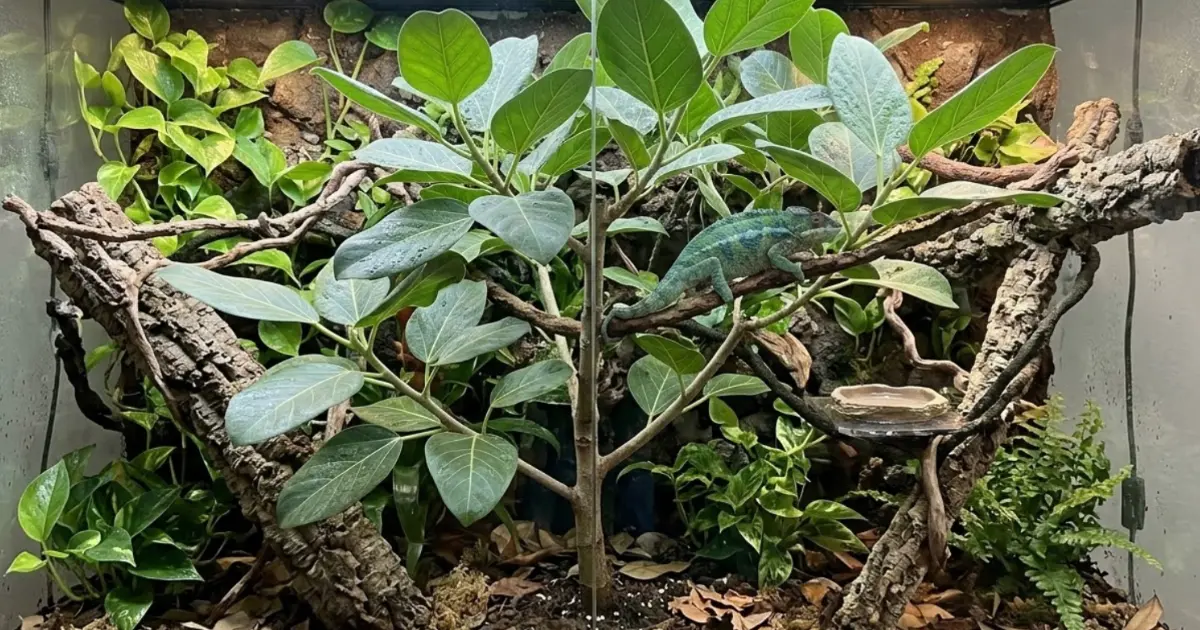
Ficus Audrey Plants contain a mildly toxic, white milky latex sap within their stems. This sap causes severe oral and dermal irritation if an animal ingests it. Consequently, they remain strictly unsafe for any herbivorous species like green iguanas or tortoises. However, they remain perfectly safe for insectivorous or carnivorous arboreal reptiles.
Which Reptiles Prefer This Velvety Canopy?
Geckos and chameleons utilize the dense canopy of this plant. Specifically, crested geckos and panther chameleons find exceptional security among the large, velvety leaves. Furthermore, the sturdy branch structure provides excellent horizontal perches for these climbing predators. Consequently, these animals never attempt to consume the foliage. Therefore, this specific pairing ensures a safe environment.
Can Ficus Audrey Plants Handle My Reptile’s Weight?
Mature Ficus Audrey Plants develop incredibly robust and woody stems over time. Specifically, a healthy trunk easily supports the weight of adult chameleons and medium sized snakes. Furthermore, juvenile plants require time to establish thick stalks before sustaining heavy climbing pressure. Consequently, you must purchase an older tree for larger reptile species. Therefore, the structural integrity of this flora surpasses fragile vines completely.
How Much Light Do They Need?
Ficus Audrey Plants strictly demand bright, indirect light conditions to maintain its foliage. Specifically, they thrive under standard full spectrum LED terrarium grow lights. Furthermore, you must provide a consistent 12-hour photo period to maintain their metabolic rhythm. Consequently, insufficient light severely halts their growth and triggers immediate leaf drop. Therefore, placing them in a dark corner guarantees immediate physical deterioration.
Can I Put Ficus Audrey Plants Under a UVB Bulb?
You can safely place Ficus Audrey Plants beneath high quality UVB lighting systems. Specifically, the thick, pubescent cuticle of the leaves deflects harmful radiation effectively. Furthermore, the intense light mimics their natural tropical canopy exposure perfectly. Consequently, they utilize this bright illumination to drive photosynthesis. Therefore, they actually thrive when positioned near your reptile’s primary basking zone.
Where Should I Place It in the Tank?
You must position this tree directly on the vivarium floor away from drafts. Specifically, their rapid growth quickly fills the background and mid ground areas entirely. Furthermore, stable placement is critical because they establish deep root systems quickly. Consequently, moving the pot frequently triggers a severe stress response and defoliation. Therefore, strategic, permanent placement prevents future aggressive landscaping conflicts.
How Do I Water Ficus Audrey Plants?
You must allow the topsoil to dry significantly between your watering sessions. Furthermore, constantly water logged roots invite immediate bacterial rot and systemic fungal infections. Indeed, Ficus Audrey Plants possess exceptional intolerance for constantly wet soil inside a closed terrarium. Consequently, pouring water directly over the root ball once a week is enough. Therefore, proper drainage remains an absolute necessity for their survival.
What If I Have High Humidity?
Ficus Audrey Plants tolerate ambient humidity levels ranging from 40% to 80% effortlessly. Specifically, they adapt rapidly to the damp environments required by tropical frogs and geckos. Furthermore, consistent moisture actually prevents the delicate leaf edges from crisping. Consequently, high humidity replicates their native Indian habitat perfectly. Therefore, they represent an ideal candidate for moderately ventilated tropical vivariums.
Do Ficus Audrey Plants Need to Be Misted?
Ficus Audrey Plants regularly to mimic natural tropical rain fall. Specifically, heavy misting washes dust and reptile waste off the velvety leaves. Furthermore, clean foliage absorbs light much more efficiently than dirty foliage. Consequently, the water droplets on the leaves provide essential drinking water for chameleons. Therefore, daily spraying benefits both the flora and the fauna immensely.
How Fast Do They Grow?
This tree exhibits highly aggressive growth under optimal light and moisture conditions. Specifically, a healthy plant adds several inches of new vertical growth every single month. Furthermore, this rapid expansion requires you to monitor their size constantly within an enclosure. Consequently, they quickly outgrow small terrariums if you neglect routine maintenance. Therefore, you must commit to active management when using this species.
How Do I Make Ficus Audrey Plants Bushier?
You must pinch off the top growing tips to force lateral branching. Furthermore, Ficus Audrey Plants respond to structural damage by activating dormant side nodes immediately. Indeed, cutting the main stem down forces the plant to push energy outward. Consequently, a pruned plant develops a thick, impenetrable canopy over time. Therefore, pruning guarantees a stunning and highly functional centerpiece.
Can I Use Fertilizer?
You must strictly avoid all synthetic chemical fertilizers inside a reptile enclosure. Specifically, these toxic salts leach into the water cycle and poison your animals rapidly. Furthermore, this flora thrives perfectly on the natural nitrogen provided by reptile waste. Consequently, if you must supplement, use exactly 5 grams of organic worm castings. Therefore, burying organic matter near the roots provides a totally safe nutrient boost.
Why Are Ficus Audrey Plants Dropping Yellow Leaves?
Massive yellowing and leaf drop indicate severe environmental stress or sudden drafts. Specifically, Ficus Audrey Plants drop their leaves rapidly if you over water them constantly. Furthermore, suffocating the roots destroys their ability to uptake oxygen completely. Consequently, you must excavate the soil and check the root health immediately. Therefore, correcting your watering schedule saves the plant from total collapse.
Why Is The Plant Becoming Thin and Leggy?
Severe light deprivation forces the tree to stretch desperately toward any illumination. Specifically, the internodal spacing increases as the plant abandons lower leaf production. Furthermore, this leggy growth creates a structurally weak and visually unappealing stem. Consequently, you must upgrade your primary terrarium grow light to halt this etiolation. Therefore, intense light forces the plant to remain compact and robust.
What Are These White Spots on Ficus Audrey Plants?
Hard tap water leaves harmless white calcium carbonate stains on the foliage after misting. Furthermore, fluffy white masses hiding in the leaf joints indicate a mealybug infestation. They suck the sap directly from the vascular system of Ficus Audrey Plants. Consequently, you must wipe the leaves with diluted neem oil to eradicate these invaders. Therefore, accurate identification dictates your pest control strategy.
Handling the Sap of Ficus Audrey Plants (Pro Tip)
Pruning Ficus Audrey Plants releases a sticky white latex that demands careful handling. Specifically, you must wear gloves when cutting branches to prevent severe contact dermatitis. Furthermore, you should allow the cut ends to dry completely before placing the reptile inside. Consequently, this prevents the animal from accidentally rubbing the wet sap into its eyes. Therefore, diligent mechanical management removes the primary danger associated with this plant.
Pre-Enclosure Prep
Commercial nurseries drench their inventory in highly toxic systemic pesticides routinely. Specifically, introducing an unprepared plant exposes your reptile to lethal chemical concentrations instantly. Furthermore, the potting soil harbors dangerous chemical fertilizers and unwanted insect hitch hikers. Consequently, skipping the preparation phase constitutes severe negligence on your part. Therefore, you must execute a strict decontamination protocol before planting.
Quarantine for Ficus Audrey Plants
You must quarantine all new Ficus Audrey Plants for a minimum of thirty days. Specifically, this isolation period allows pesticides to degrade naturally within the plant tissues. Furthermore, it provides ample time for hidden pest eggs to hatch and reveal themselves. Consequently, placing the plant in a separate room ensures your main enclosure remains uncontaminated. Therefore, patience prevents vivarium crashes.
Wash Roots
You must scrub the root system under lukewarm running water. Furthermore, nursery soil contains perlite and toxic slow release fertilizer pellets that harm reptiles. Indeed, geckos frequently ingest perlite accidentally, leading to fatal intestinal impactions. Consequently, you must strip the roots entirely bare to eliminate these hidden dangers. Therefore, root washing remains a non negotiable preparation step.
Repotting Ficus Audrey Plants
You must repot the bare root plant into a high quality, bio active reptile substrate. Specifically, a mixture of organic topsoil, sphagnum moss, and orchid bark provides excellent drainage. Furthermore, Ficus Audrey Plants establish new root systems rapidly in this aerated medium. Consequently, this clean soil ensures that burrowing reptiles encounter zero toxic chemicals. Therefore, proper repotting secures the long-term health of the entire ecosystem.
Clean Leaves
You must wipe every single leaf individually with a damp micro fiber cloth. Specifically, commercial leaf shine sprays leave a sticky, toxic film that suffocates the plant’s stomata. Furthermore, a mild solution of distilled water and organic lemon juice dissolves hard water stains. Consequently, clean leaves photosynthesize efficiently and pose no threat to a thirsty, leaf licking reptile. Therefore, physical cleaning guarantees a completely safe enclosure addition.
Sources
- Greenery Unlimited
https://greeneryunlimited.co/blogs/plant-care/ficus-audrey-care - Plantify
https://plantify.co.za/pages/ficus-audrey-care-instructions - Nick’s Garden Center
https://nicksgardencenter.com/gardening-blog/a-complete-guide-to-caring-for-the-ficus-audrey-plant/ - ASPCA Toxic and Non-Toxic Plants
https://www.aspca.org/pet-care/animal-poison-control/toxic-and-non-toxic-plants/fig


Leave a Reply
You must be logged in to post a comment.