
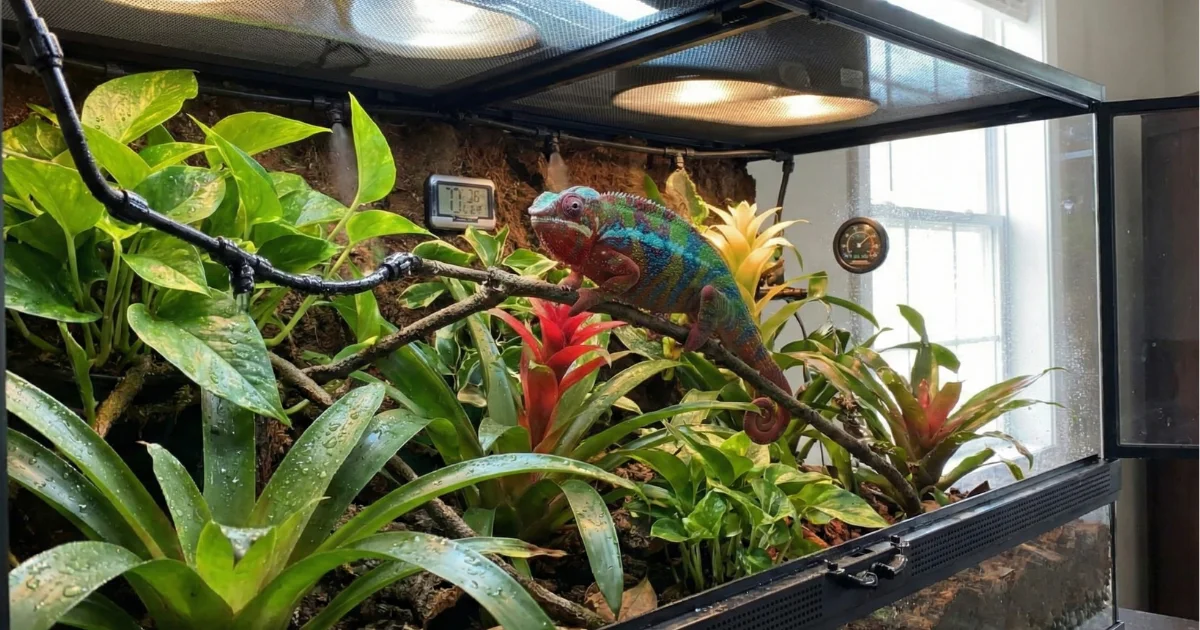
Panther Chameleons are considered intermediate to advanced-level pets due to their extreme sensitivity to environmental fluctuations. Furthermore, their complex hydration and ventilation needs require a dedicated keeper with significant experience in reptile husbandry. Consequently, first-time owners should consider hardier species before attempting to manage the delicate biological requirements of Furcifer pardalis. Therefore, you must research their specific locale-based needs before acquisition. In fact, successful keeping depends entirely on consistent, high-precision climate control.
What is the ideal habitat for a Panther Chameleon?
What is the minimum enclosure size for an adult?
Specifically, adult males require a vertical enclosure measuring at least 60x60x120 centimeters to facilitate natural arboreal movement. Furthermore, females can be housed in slightly smaller habitats, though larger spaces are always preferred for their physical health. Consequently, providing ample vertical height allows the animal to choose its own position within the temperature gradient. Therefore, you must avoid horizontal tanks that lack sufficient climbing area. In fact, vertical space is the most critical component of their physical environment.
Should I get a screen, glass, or hybrid enclosure?
A full screen enclosure is the traditional standard for ensuring the high level of ventilation the Panther Chameleons require. Furthermore, stagnant air is a primary cause of bacterial respiratory infections in chameleons. However, keepers in extremely dry climates may utilize hybrid enclosures to help retain necessary humidity levels. Consequently, you must evaluate your local ambient humidity before selecting your cage material. Therefore, prioritizing airflow remains the most effective way to protect your chameleon’s respiratory system.
What are the ideal temperature and humidity gradients?
You must provide a focused basking spot reaching 29-32°C at the top of the enclosure. Furthermore, the ambient temperature should taper down to the mid-20s toward the bottom to allow for proper thermoregulation. Consequently, the animal can move between zones to digest food or cool down as needed. In fact, a nighttime temperature drop is also beneficial for Panther Chameleons metabolic health. Therefore, utilize a high-quality thermostat to maintain these precise thermal ranges.
What kind of heat and UVB lighting is necessary?
A linear T5 HO UVB bulb is a non-negotiable requirement for the survival of your Panther Chameleon. Furthermore, this light source must span at least half the length of the enclosure to provide a functional UV gradient. Consequently, the animal can synthesize the vitamin D3 required for calcium absorption and skeletal strength. Therefore, you must replace these bulbs every six to twelve months to ensure they remain effective. In fact, compact or coil UVB bulbs are insufficient for this species.
How do I provide enough water?
Panther Chameleons will not recognize standing water in a bowl and require dripping or misting systems to drink. Furthermore, an automatic misting system provides the necessary humidity spikes needed throughout the day. Consequently, you must ensure that leaves remain wet long enough for the chameleon to stimulate its drinking reflex. Therefore, a combination of a slow dripper and frequent misting is the best approach. In fact, dehydration is one of the leading causes of kidney failure in captives.

What should I feed my Panther Chameleon?
What is a staple diet?
A varied diet of high-quality, gut-loaded insects like dubia roaches, silkworms, and crickets is essential. Furthermore, you must avoid over-reliance on a single insect type to prevent nutritional deficiencies. Consequently, rotating your feeders ensures the animal receives a broad spectrum of vitamins and minerals. Therefore, the health of your chameleon depends directly on the quality of the food your insects consume. In fact, “gut-loading” your feeders for 24 hours prior to use is a mandatory practice.
How often should I feed a juvenile versus an adult?
Specifically, juvenile Panther Chameleons require daily feedings of as many small insects as they can consume to support rapid growth. Furthermore, adults should transition to a schedule of four to six large insects every other day. Consequently, this reduced frequency prevents obesity and associated organ strain in mature lizards. Therefore, you must monitor your chameleon’s body condition to adjust feeding portions accurately. In fact, overfeeding adults can significantly shorten their lifespan through fatty liver disease.
How do I know if my chameleon is healthy?
What are the signs of MBD or respiratory infections?
Metabolic Bone Disease presents as rubbery limbs, a curved spine, or a protruding lower jaw. Furthermore, respiratory infections are characterized by wheezing, gaping, or visible mucus bubbles around the mouth. Consequently, these conditions often result from a lack of UVB lighting or poor ventilation standards. Therefore, you must perform daily visual health checks to catch these symptoms early. In fact, immediate veterinary intervention is required if you notice any physical abnormalities.
What should I do if my chameleon’s eyes are sunken in?
Specifically, sunken eyes are a classic and severe clinical sign of advanced dehydration. Furthermore, this condition indicates that your misting schedule or dripper system is failing to meet the animal’s needs. Consequently, you must immediately increase water availability and monitor the animal’s drinking behavior. Therefore, checking the turret-like eyes for fullness is the fastest way to assess hydration. In fact, persistent sunken eyes often lead to irreversible organ damage.
What are the different color “locales”?
“locales” refer to the specific geographic regions in Madagascar where the chameleon’s ancestors originated. Furthermore, males from the Ambilobe region are famous for their rainbow appearance, featuring vibrant reds and yellows. In contrast, the Nosy Be locale is renowned for producing stunning, electric blue specimens. Consequently, these color variations are genetically fixed and do not change between regions. Therefore, choosing a locale allows you to select a specific aesthetic for your research project.
Is it true that Panther Chameleons are solitary?
Panther Chameleons are strictly solitary animals that do not tolerate the presence of other chameleons. Furthermore, housing two individuals together will cause immense psychological stress and physical aggression. Consequently, you must provide separate enclosures for every animal in your collection. In fact, even visual contact between males can trigger stressful defensive displays. Therefore, you should utilize visual barriers between cages to maintain a peaceful environment.
Personal Note
I am the dedicated keeper of an African Chameleon named Cosmo, who serves as the stoic professor of my reptile room. Specifically, his color palette ranges from unimpressed brown to mildly content green. Furthermore, I view the Panther Chameleon as a flamboyant, high-fashion supermodel attending a rave. Consequently, I admire them with a sense of profound awe and healthy terror regarding their specific needs. Therefore, I founded Exotastic Earth to ensure these explosions of color receive the ethical care they deserve.
Panther Chameleons Care FAQ
They are extremely sensitive to environmental fluctuations and have complex hydration and ventilation needs. Their health is entirely dependent on precise, consistent climate control, making them challenging for beginners who may not have experience in high-precision reptile husbandry.
Adults require a vertical enclosure (at least 60x60x120 cm) to allow for natural arboreal movement. Full screen enclosures are generally recommended to provide the necessary ventilation and prevent stagnant air, which can cause respiratory infections. However, those in extremely dry climates may need to consider hybrid setups to maintain proper humidity.
Chameleons do not recognize standing water. You must use an automatic misting system or a slow drip system to create water droplets on leaves, which stimulates their natural drinking reflex. Monitoring their eyes is vital—sunken, non-full eyes are a severe clinical sign of advanced dehydration that requires immediate attention.
A linear T5 HO UVB bulb is non-negotiable. It must span at least half the length of the enclosure to provide a proper UV gradient, allowing the animal to synthesize vitamin D3 for calcium absorption. Compact or coil UVB bulbs are insufficient and can lead to serious health issues like Metabolic Bone Disease (MBD).
No. Panther Chameleons are strictly solitary and territorial. Housing them together causes intense psychological stress and physical aggression. Even visual contact between males can be highly stressful, so they should be kept in separate enclosures with visual barriers.
Sources
- Global Geckos
https://www.globalgeckos.co.uk/index.php?route=blog/post&blog_post_id=7 - Chameleon Academy
https://chameleonacademy.com/panther-chameleon-care/ - Swell Reptiles
https://www.reptiles.swelluk.com/help-guides/how-to-look-after-a-panther-chameleon/ - CB Reptile
https://www.cbreptile.com/panther-chameleon-lighting-uvb-heating-guide/ - Dublin Zoo
https://www.dublinzoo.ie/animal/chameleon/


Leave a Reply
You must be logged in to post a comment.