
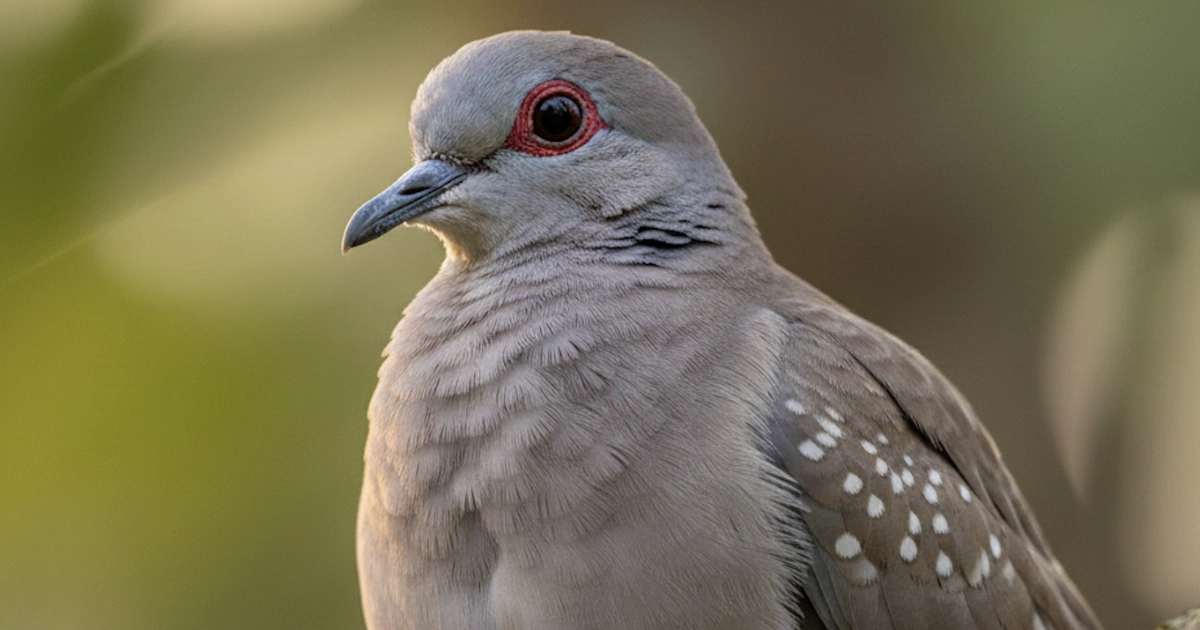
In a world of loud, demanding parrots, there is a small, gentle jewel that offers a different kind of companionship. Specifically, with its soft, pearly-grey feathers and brilliant red eye ring, the Diamond Dove embodies peace. Furthermore, its voice provides a quiet, melodic coo rather than a loud scream. Consequently, they are not a “hands-on” pet, but remain an endlessly charming bird to observe. Therefore, this guide serves as your complete introduction to the simple and rewarding world of keeping these tiny, delightful doves.
Are Diamond Doves Good Pets for Beginners?
In fact, they are an excellent choice for a beginner who is looking for a “hands-off” bird. Furthermore, their care is very straightforward. Consequently, they are hardy and quite resilient. Therefore, their quiet nature makes them a perfect pet for apartment living. Specifically, they suit someone who is not ready for the noise of a parrot.
What is a Diamond Dove’s Temperament Like?
- Are they friendly? They are not “friendly” in the way a parrot is. They are gentle and peaceful but are also naturally skittish and nervous.
- Do they like to be handled? No. They are not a cuddly, hands-on pet. They find handling very stressful. They are a bird to be watched and admired for their beauty and their peaceful interactions with each other.
Are Diamond Doves Social, and Can They Be Kept in Groups?
Yes, they are very social. Keeping a single Diamond Dove is not recommended, as it will be lonely and stressed. They should be kept in a bonded pair (male and female) or a small, harmonious group.
What is the Ideal Habitat?
What is the minimum cage size for a pair?
Flight space is everything for a dove. Length is much more important than height.
The Minimum: For a pair, the cage should be at least 30 inches long, 18 inches wide, and 18 inches high. Most experts now recommend at least 36 inches in length for a pair to prevent obesity and allow for natural flight behavior.
What kind of perches and accessories do they need?
Provide a variety of perches of different diameters (natural branches are best) to exercise their feet. They also need a shallow dish for water and another for their seed mix.
Do they need toys or nest boxes?
In fact, they are not “toy players” like parrots. However, they will certainly enjoy using swings. Furthermore, you must provide a nesting basket or a small, open-fronted nest box. Consequently, a bonded pair will almost certainly want to nest. Therefore, providing a safe spot is crucial. Specifically, it prevents them from laying eggs on the cage floor.
What is the Proper Diet?
- The Staple Diet: A high-quality finch or dove seed mix should be their primary food source.
- Do they need grit? Yes. Unlike parrots, doves do not husk their seeds. They swallow them whole and require a small amount of fine grit and crushed oyster shell in a separate dish to help grind the seeds in their gizzard and to provide calcium.
- Supplements: Offer a small amount of finely chopped greens (like kale or spinach) and other vegetables a few times a week.
How Do I Tell the Difference Between Males and Females?
The most reliable way is the eye ring. The bright red ring of skin around the eye is noticeably thicker and more pronounced on an adult male than on a female.
What Does Their Soft Cooing Sound Like?
It is a beautiful, gentle, and often two-note “coo-coo” sound. It is not loud or disruptive and is one of their most endearing qualities.
What Are Common Health Problems?
- Respiratory Illnesses: Can be caused by a drafty cage location or poor hygiene.
- Canker: A common protozoan infection in doves and pigeons.
- Mites: Red mites can be a serious problem, hiding in the cage during the day and feeding on the birds at night.
Is It Easy to Breed Diamond Doves?
Yes, they are famously easy to breed.
- How do I set up a breeding cage? Simply provide a pair with a good diet, a secure nest basket, and some nesting material (like soft straw). They will do the rest.
- What is the incubation period? The female will lay two small white eggs, and both parents will take turns incubating them for about 13-14 days.
- How do you care for the hatchlings? The parents are excellent caregivers. They feed their young “crop milk,” a special secretion from their own crop. The young will leave the nest at about two weeks of age.
What Are Good Tank Mates for Diamond Doves?
Consequently, due to their incredibly peaceful and timid nature, they remain very vulnerable. Therefore, you should keep them in a species-only enclosure. Furthermore, in a very large, walk-in style aviary, you can sometimes house them with other small, peaceful finches. However, you must handle this arrangement with extreme care. Specifically, you must monitor them to ensure no aggression occurs.
What is the Lifespan of a Diamond Dove?
With proper care, a Diamond Dove can live for 10 to 12 years.
Diamond Doves Care FAQ
Yes — they are one of the best beginner birds available, especially for apartment living. Their care is straightforward, they are hardy, and their quiet cooing is the opposite of a parrot’s demanding screech. They are a “watch and admire” bird rather than a hands-on companion.
No — a single Diamond Dove will be lonely and chronically stressed. They are highly social birds that must be kept in a bonded pair or small harmonious group. A male and female pair is the standard and most natural arrangement for this species.
No — handling is highly stressful for them and should be avoided. They are not cuddly pets and find physical restraint frightening. Their appeal lies in their peaceful, graceful presence and their interactions with each other, not with their keeper.
Yes — they are famously easy to breed. Provide a bonded pair with a secure nest basket, soft nesting material, and a good diet. They handle incubation and chick-rearing themselves, including producing crop milk for the hatchlings. Young leave the nest at around two weeks old.
10 to 12 years with proper care — a genuine long-term commitment for such a small bird. Their longevity depends on a quality seed diet supplemented with grit and calcium, a draught-free environment, and being kept with a compatible companion throughout their lives.
Sources
- VCA Animal Hospitals
https://vcahospitals.com/know-your-pet/doves-and-pigeons-feeding - Lafeber Company
https://lafeber.com/pet-birds/species/diamond-dove/ - The Spruce Pets
https://www.thesprucepets.com/diamond-doves-as-pets-390314 - Arizona Animal Hospital
https://www.azeah.com/birds-small-birds/diamond-dove-care-sheet - Merck Veterinary Manual
https://www.merckvetmanual.com/poultry/trichomoniasis/overview-of-trichomoniasis - San Diego Zoo Wildlife Alliance
https://animals.sandiegozoo.org/animals/pigeon-and-dove


Leave a Reply
You must be logged in to post a comment.