
You must analyze your ethics and resources before beginning any Reptile Breeding Protocols. Specifically, you could produce twenty or more offspring that require individual housing and feeding. Furthermore, you must already have a network of responsible keepers to provide these animals with lifelong homes. Consequently, breeding without a comprehensive plan directly contributes to the overwhelming of rescue organizations. Therefore, you must only proceed if you possess the space, time, and financial capacity for emergency veterinary care. In fact, creating life is a high stakes endeavor that requires dedication.
How do I prepare for Reptile Breeding through the conditioning phase?
Nutritional conditioning serves as a mandatory protocol for ensuring a healthy reproductive outcome. Specifically, you must provide the female with optimal nutrition for at least two months prior to pairing. Furthermore, her body will extract massive amounts of calcium from her own skeletal structure to form eggshells. Consequently, consistent supplementation with calcium and high quality multivitamins is non negotiable for preventing maternal exhaustion. Therefore, you must increase feeding frequency and prey variety during this critical window. In fact, “gut loading” insects for twenty four hours remains a primary requirement for success.
How do I replicate seasonal changes to trigger Reptile Breeding?
For many species, a cooling or brumation period acts as the essential trigger for reproductive behavior. Specifically, this process involves a gradual reduction in daytime temperatures and photoperiod length over several weeks. Furthermore, this mimicry of a natural winter signals the body that spring is approaching. Consequently, these biological cues stimulate the development of gametes in both males and females. Therefore, you must conduct species specific research to determine the precise temperature drops required. In fact, improper cooling can lead to failed pairings or poor egg fertility.
What are the Reptile Breeding protocols for a safe pairing and introduction?
You must never introduce two reptiles for breeding purposes without constant, direct supervision. Specifically, you should introduce the female to the male’s enclosure to minimize territorial aggression. Furthermore, you must watch for signs of serious combat rather than just natural courtship behavior. Consequently, having a backup enclosure ready for immediate separation is a vital safety requirement. Therefore, you must remain vigilant throughout the entire introduction phase. In fact, unsupervised pairings often result in significant physical trauma for the animals involved.
What are the requirements for egg handling and incubation?
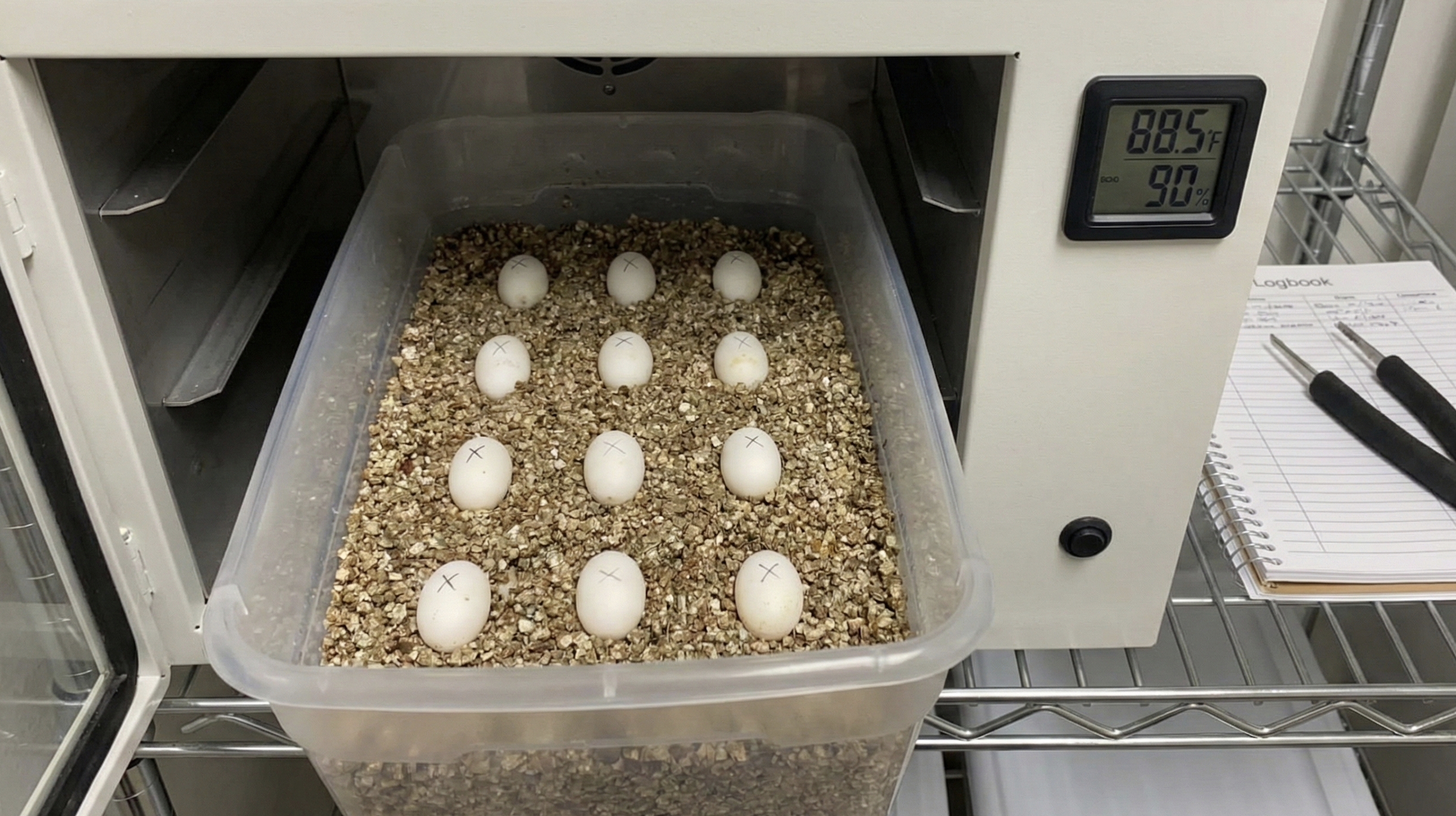
Once the female deposits her eggs in a dedicated lay box, you must carefully move them to an incubator. Specifically, you must maintain the eggs in the exact orientation in which they were found. Furthermore, rotating a reptile egg can cause the embryo to detach from the membrane and perish. Consequently, marking the top of each egg with a soft pencil is a standard industry practice to preserve orientation. Therefore, you must utilize a substrate like vermiculite or perlite to maintain consistent moisture levels. In fact, precise temperature and humidity control are the only ways to ensure a successful hatch.
What is egg binding in Reptile Breeding, and how can I identify this emergency?
Egg binding, or dystocia, represents a life threatening medical emergency where a female is unable to pass her eggs. Specifically, symptoms include extreme lethargy, restlessness, and visible straining without results. Furthermore, this condition is often caused by a lack of proper calcium, dehydration, or an unsuitable nesting site. Consequently, a hard or lumpy abdomen is a clear clinical indicator of retained eggs. Therefore, you must contact a qualified specialized veterinarian immediately if these signs appear. In fact, while a warm soak may offer temporary relief, it is rarely a substitute for professional medical intervention.
My Experience
At Exotastic Earth, my livebearer tanks are a constant, chaotic explosion of life where I don’t “breed” guppies; they just happen. Specifically, life finds a way in the floating water lettuce when I am not looking. Furthermore, I have learned through research that reptile breeding is the exact opposite of an accident. Consequently, I view it as a deliberate and slightly terrifying decision that requires becoming responsible for genetics and incubation. Therefore, I maintain a cautious admiration for those who take this leap. In fact, building a blueprint for others is my way of bridging the gap between hobbyists and science.
Reptile Breeding FAQ
Before starting, you must ensure you have the capacity to care for potentially twenty or more offspring, including individual housing and food. You should already have a network of responsible homes lined up and the financial resources for emergency veterinary care, as breeding without a plan contributes to the overwhelming of rescue organizations.
During egg formation, a female extracts massive amounts of calcium from her own skeletal structure. Consistent supplementation with calcium and high-quality multivitamins is non-negotiable to prevent maternal exhaustion. Additionally, increasing food variety and “gut loading” insects is critical for the health of both the mother and the developing clutch.
Many species require a cooling or brumation period that mimics natural winter conditions. By gradually reducing daytime temperatures and photoperiod length, you signal that spring is approaching, which stimulates the biological production of gametes. Species-specific research is required, as improper cooling can lead to infertility or health issues.
Pairing must always be conducted under direct, constant supervision, as unsupervised encounters can lead to serious physical trauma or combat. It is best to introduce the female to the male’s enclosure to reduce territorial aggression, and you must have a backup enclosure immediately available to separate the animals if signs of violence occur.
Egg binding is a life-threatening condition where a female cannot pass her eggs. Clinical indicators include lethargy, restlessness, visible straining, and a hard or lumpy abdomen. If you identify these signs, contact a specialized veterinarian immediately; while a warm soak may help, it is not a substitute for professional medical care.
Sources
- Journal of Herpetological Medicine and Surgery
https://www.jherpmedsurg.com/ - Association of Reptilian and Amphibian Veterinarians
https://arav.org/ - Reptiles Magazine
https://reptilesmagazine.com/
Leave a Reply
You must be logged in to post a comment.