
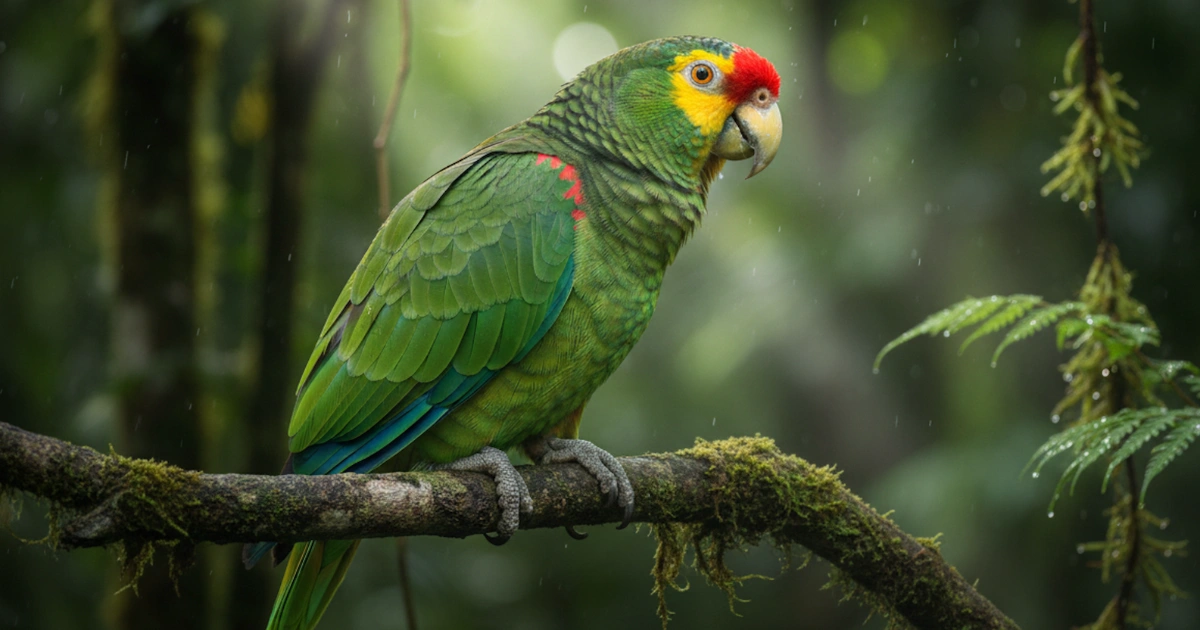
Amazon Parrots are the extroverts of the bird world. Specifically, they are intelligent and charismatic animals. They possess one of the clearest speaking voices. However, this bold personality comes with significant challenges. These include noise and hormonal aggression. Furthermore, their lifespan rivals a human life. This guide gives you an honest look at their care. Consequently, you can provide a happy forever home.
Are Amazon parrots good pets for beginners?
No. Specifically, they are not recommended for new owners. Their high intelligence requires an experienced hand. Furthermore, they live for many decades. They produce very loud vocalizations. Managing their yearly hormonal aggression is difficult. Therefore, you must be a confident bird owner.
The average lifespan is 40 to 60 years. Specifically, some individuals live much longer. This makes them a profound lifelong commitment.
Do they bond with only one person?
They often choose a favorite person. However, they can be good family pets. The entire family must interact with the bird daily. Specifically, this prevents intense one-person bonding. This bonding often leads to aggression towards others. Consequently, early socialization is vital.
Are Amazon parrots very noisy?
Yes. Specifically, they can be extremely loud birds. they have a powerful and piercing flock call. They use this call in the morning and evening. Furthermore, they scream whenever they want attention. Their noise level is unsuitable for apartments.
Amazon Parrot Intelligence and Vocal Talent
They are among the most intelligent parrot species. Specifically, they are excellent problem solvers. You can train them to do complex tricks. They understand household routines with surprising depth. Furthermore, they are famous for their talking ability. Amazons rival the African Grey in speech. Specifically, they develop huge vocabularies. They speak with remarkable clarity and correct context.
Do they bite?
Yes. Specifically, they have a reputation for aggression. This happens particularly during their hormonal season. This behavior involves fanned tail feathers. They also raise their head feathers. Furthermore, they show a willingness to lunge. This requires an owner who reads body language. Consequently, you must manage these periods without fear.
Amazon Parrot Enclosure and Habitat Requirements
A large and durable cage is a must. Specifically, the absolute minimum size is 36 inches wide. A wider cage is always preferable for flight. The cage must withstand their powerful beaks. Amazons are heavy chewers. Furthermore, they are highly intelligent animals. You must provide a constant rotation of toys.
Use destructible wood blocks for chewing. Specifically, foraging toys keep their minds engaged. Use puzzle toys to challenge their skills. Foot toys are also beneficial for manipulation. They require four hours of out-of-cage time daily. Specifically, this is essential for their mental health. It prevents serious behavioral problems. Parrot-proof your room before letting them out. Specifically, remove electrical cords and toxic plants. Their beaks can destroy furniture with ease.
Amazon Parrot Diet and Nutrition Protocols
A healthy diet is crucial to prevent obesity. Specifically, high-quality pellets should be 70 percent of their food. Fresh vegetables provide 30 percent of the diet. Use fruits and nuts as high-value treats only. A high-fat diet is very dangerous. Specifically, Amazons are genetically prone to fatty liver disease. They also suffer from hardening of the arteries.
A diet of sunflower seeds is a path to illness. Specifically, focus on Vitamin A-rich vegetables. Use sweet potatoes and carrots. Furthermore, offer bell peppers and dark leafy greens. Berries are an excellent low-sugar fruit option. Transition your bird to pellets gradually. Specifically, mix a small amount into their seeds. Increase the ratio over several weeks. Consequently, you can monitor their health during the change.
Amazon Parrot Health and Grooming Standards
A healthy Amazon is active and alert. Specifically, it has bright and clear eyes. A sick bird will appear lethargic and fluffed up. Changes in droppings are a major red flag. They are prone to respiratory infections. Furthermore, they exhibit feather plucking due to boredom. Vitamin A deficiency is common from poor diets.
Offer a bath three times per week. Specifically, bathing is vital for feather health. Many birds love joining owners in the shower.
What should you do if your Amazon bites?
Stay calm and confident. Specifically, a loud reaction is interpreted as a game. Put the bird down and walk away. Furthermore, learn to read their body language. Pinning eyes and a fanned tail are warning signs. Consequently, you can prevent bites before they happen.
Specific Species Nuances
The Blue-fronted Amazon is known for a big personality. Specifically, they are bold and affectionate birds. They are considered a good entry-level large Amazon. The Double Yellow-headed Amazon is a premier talker. Specifically, they are outgoing and intelligent. This confidence can lead to aggression.
Yellow-naped Amazons are also incredible talkers. Specifically, they speak with extreme clarity. They are exceptionally intelligent birds. However, they have a notorious reputation for aggression. Specifically, this happens during hormonal phases. They require a very experienced owner. Males and females look identical. Specifically, they are monomorphic animals. A DNA test is the only way to determine sex.
How do you handle the bluffing period?
This period is about testing boundaries. Specifically, you must remain confident. Do not show fear during lunges. Learn the signs of an impending bite. Furthermore, redirect their focus to a trained behavior. Ask the bird to wave or spin. Do not isolate the bird during this phase. Specifically, continue to interact on a structured basis. This phase will pass with consistent handling. Consequently, you will maintain a strong bond.
Amazon Parrots FAQ
Amazon Parrots are long-lived companions that can live between 40 and 60 years, with some specimens reaching 70 years under optimal care. This longevity requires a multi-generational commitment to their health and social needs. Consistent veterinary check-ups and a high-quality diet are the primary factors in ensuring they reach their full life expectancy.
The ideal diet consists of 70-80% high-quality formulated pellets, with the remainder composed of fresh vegetables, leafy greens, and limited fruits. Avoid high-fat seed diets, as Amazon Parrots are prone to obesity and fatty liver disease. Never feed your parrot chocolate, avocado, or caffeine, as these substances are highly toxic and can be fatal.
Amazon Parrots are known for being boisterous and can be quite loud, especially during their natural “morning and evening calls.” They are prolific talkers and singers, but they also possess a powerful scream that can be heard throughout a home. They are generally not recommended for apartment living or for owners with high sensitivity to noise.
These parrots are highly social and require at least 3 to 4 hours of out-of-cage interaction daily to maintain their psychological health. Without sufficient mental stimulation and social bonding, Amazons can develop behavioral issues such as feather plucking or extreme aggression. They view their human owners as their flock and need consistent, daily engagement.
To prevent obesity, prioritize a pellet-based diet over seeds and provide ample opportunities for daily exercise through flight or active play. Amazon Parrots have a slower metabolism than other parrot species and can gain weight quickly. Incorporating foraging toys that force the bird to work for its food is an excellent way to burn calories and provide mental enrichment.
Sources
- VCA Animal Hospitals
https://vcahospitals.com/know-your-pet/parrots-amazon-owning - Association of Avian Veterinarians
https://www.aav.org/page/obesity - Lafeber Company
https://lafeber.com/pet-birds/species/amazon-parrot/ - PetMD
https://www.petmd.com/bird/behavior/amazon-parrot-body-language-decoded
Leave a Reply
You must be logged in to post a comment.