Costa Rica is the undisputed capital of Pura Vida. Specifically, it is a lush and vibrant paradise. It is a land of cloud forests and toucans. For the wildlife lover, it is a dream come true. Nature is always front and center in this Eden. However, an ancient rule applies in this world. The more beautiful something is, the more likely it is a liability. Jungle inhabitants are often dangerous. Consequently, this guide is your essential field manual. Admire these wonders from a safe distance.
My Experience: Rewiring the Brain
My brain is wired for the pet trade. Specifically, I see a beautiful lizard and think of color morphs. I see a jewel-like frog and want to admire it closely. However, this instinct is a death wish in Costa Rica. You might see a Strawberry Poison Dart Frog in the jungle. It looks like a living jewel. Therefore, your brain screams “beautiful” while the jungle screams “violation.” It is a humbling experience to rewire your understanding of beauty. Specifically, this guide is for every lover whose brain needs a safety lecture.
Costa Rica Venomous Snakes of the Rainforest

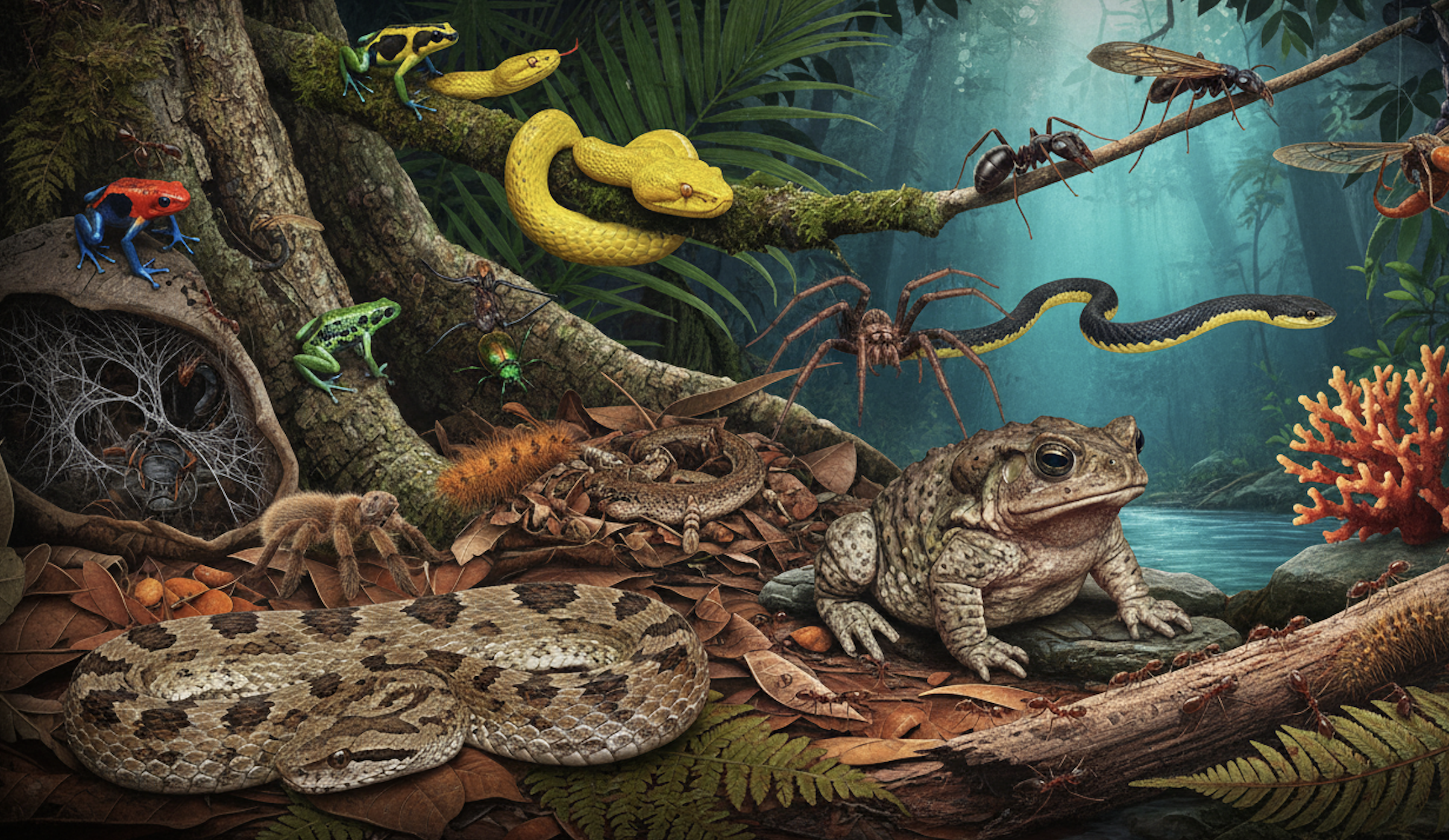
The Fer-de-Lance (Bothrops asper) is the most dangerous snake in Costa Rica. Locally, people call it the Terciopelo. Specifically, it is large and fast. It possesses a potent hemotoxic venom. These snakes are masters of camouflage in leaf litter.

Furthermore, the Eyelash Viper (Bothriechis schlegelii) is an icon of the forest. This small pit viper has scaly eyelashes above its eyes. Specifically, they come in bright yellow or green colors.

The Central American Coral Snake (Micrurus nigrocinctus) has powerful neurotoxic venom. Specifically, the red on yellow rhyme applies here. They are shy and not aggressive. However, you should never handle them.

The Hog-nosed Pit Viper (Porthidium nasutum) is a small terrestrial snake. It has an upturned snout and hides in leaves.

Furthermore, the Yellow-bellied Sea Snake (Hydrophis platurus) lives in the Pacific Ocean. It possesses extremely potent neurotoxic venom. Specifically, it is generally not aggressive towards swimmers.
Costa Rica Poisonous Amphibians: Do Not Touch

Poison Dart Frogs (Dendrobates auratus) are poisonous rather than venomous. Specifically, they do not bite to deliver toxins. Their skin secretes powerful chemicals instead. The Strawberry Poison Dart Frog is the famous blue jeans frog. Furthermore, it has a brilliant red body and blue legs. The Green-and-Black Poison Dart Frog has a metallic pattern. Consequently, touching these frogs is a medical risk.

The Cane Toad (Rhinella marina) is a giant invasive species. Specifically, it has large parotoid glands behind its eyes. These glands secrete a milky-white toxin. This toxin is potent enough to kill a dog. Therefore, you must keep pets away from these toads.
Arachnids and Medically Significant Spiders

The Brazilian Wandering Spider (Phoneutria depilata) is one of the world’s most venomous spiders. Specifically, they are nocturnal hunters that hide during the day. Bites are rare but represent a medical emergency.

Furthermore, the Black Widow Spider (Latrodectus) has a potent neurotoxin. They build messy webs in dark places.

Scorpions (Centruroides limbatus) in Costa Rica can also be medically significant. Specifically, their stings are painful for children.

Zebra Tarantula (Aphonopelma seemanni) are not considered dangerously venomous to humans. However, their bites are painful. Specifically, they flick irritating hairs from their abdomen as a defense.
Costa Rica Venomous Insects and Painful Crawlers

The Bullet Ant (Paraponera clavata) is the undisputed king of pain. Specifically, its sting is the most painful in the world. It feels like fire-walking with a rusty nail in your heel.

Furthermore, the Puss Caterpillar hides venomous spines under fluffy hair. These spines deliver an excruciatingly painful sting.

Blister Beetles release a chemical when crushed. Specifically, this chemical results in painful burns and blisters.

Tarantula Hawk Wasp (Pepsis grossa and Pepsis mexicana) hunts large spiders. Specifically, its sting intensity is second only to the Bullet Ant.

Army Ants (Eciton burchellii and Eciton hamatum) attack in massive swarms. They use powerful and painful bites.

Furthermore, the Scorpionfly – Bittacus (hangingflies) and Merope (earwigflies) is actually completely harmless. Despite the intimidating name, it is not venomous.

The Kissing Bug (Triatoma dimidiata) can deliver a painful bite. Specifically, it is a vector for Chagas disease.

Fire Coral is a hydrozoan found in the water. Consequently, it delivers a stinging burn if you brush against it.
What to Do During an Emergency
Stay calm and move away immediately. Specifically, get away to prevent a second bite. Seek medical attention for any snakebite or serious sting. Professional help is the only answer. Furthermore, Costa Rica is well-equipped for these emergencies. Listen to your tour guide at all times. Specifically, they are trained in local first aid. They know the wildlife and the terrain. Consequently, following their instructions can save your life.
Check our article on
Australia’s 20 Venomous Creatures
Sources
- Instituto Clodomiro Picado
https://icp.ucr.ac.cr/en/information-about-snakes/snakes-costa-rica - National History Museum
https://www.nhm.ac.uk/discover/ Schmidt-pain-scale-for-stinging-insects.html - The Tico Times
https://ticotimes.net/2021/01/22/snakes-of-costa-rica-the-yellow-bellied-sea-snake - National Geographic
https://www.nationalgeographic.com/animals/amphibians/facts/poison-dart-frogs
Leave a Reply
You must be logged in to post a comment.