
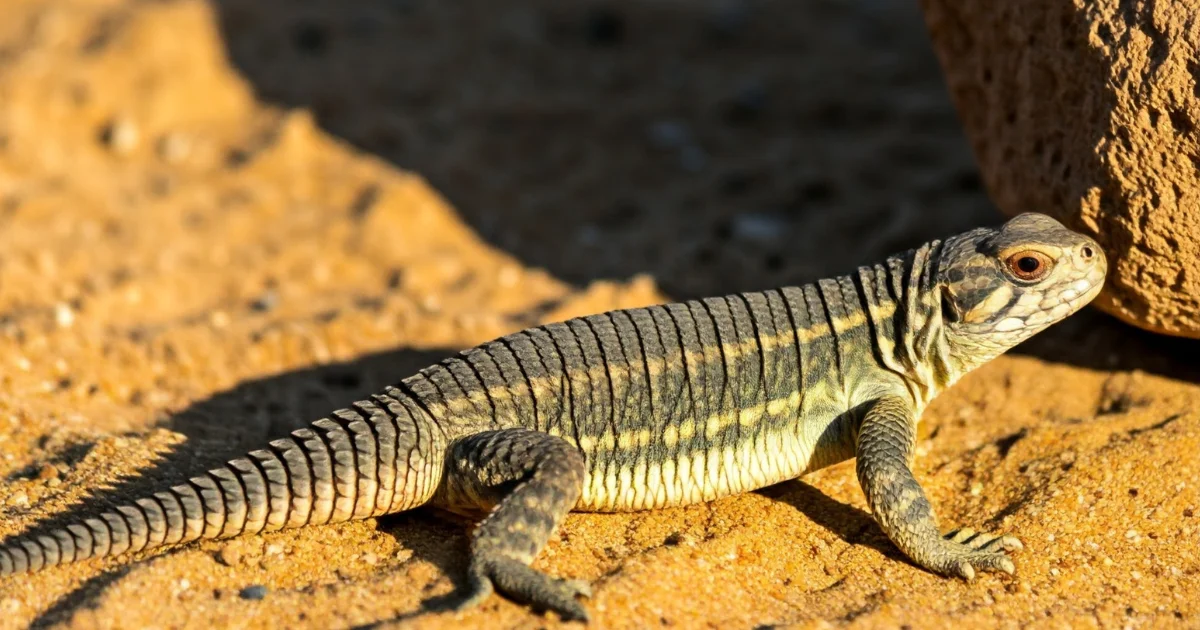
My life as a reptile keeper has been a constant masterclass in managing water. For instance, between perfecting the aquatic world for my turtles and maintaining the precise misting schedule for my chameleon, I thought I understood the reptile spectrum. Then, I encountered the Uromastyx. Here was a lizard that looked like a miniature dragon, basking under a light so intense it felt like a piece of the sun. But what truly shocked me was learning that its enclosure must be kept bone-dry.
Moreover, I found out it gets its water from a salad! After years of fighting to raise humidity, the idea of a reptile that could get sick from too much moisture was a profound lesson. In fact, it taught me that there is no “one-size-fits-all” in this hobby. Because each of these animals is a master of its own unique world, this guide is dedicated to helping you master the beautiful, dry, sun-baked world of the Uromastyx and the fundamentals of proper care.
Where Do Uromastyx Come From?
To begin with, the Uromastyx genus originates from the harsh, sun-baked deserts of North Africa and the Middle East. For example, you can find these lizards thriving in the rocky, arid landscapes of countries like Egypt and Morocco. Consequently, this environment has perfectly shaped their need for intense heat and low humidity.
What is the Behavior and Temperament of a Uromastyx?
Generally, They are docile, curious, and active during the day (diurnal), which makes them a very engaging pet. Indeed, they spend their days basking under intense heat, foraging for plants, and digging burrows. While often shy when young, they can become quite tame with gentle, consistent handling. As a result, they learn to recognize their owners. Their main defense is a powerful whip of their spiky tail; however, they are very reluctant to bite.
Do Uromastyx Make Good Pets for Beginners?
For the right owner, a Uromastyx is a fantastic pet. Because the Uromastyx care is so specific, they are best for an intermediate keeper or a beginner who has done extensive research.
- Pros: They have a calm temperament and a 100% vegetarian diet (no insects required!).
- Cons: They require very high basking temperatures and strong UVB, which can be expensive to set up. Additionally, they have a long lifespan, requiring a serious commitment.
How Do You Set Up the Perfect Uromastyx Habitat?
This is the most critical part of Uromastyx care. Replicating their natural desert environment is non-negotiable.
What Size Tank Does a Uromastyx Need?
For a single adult, the minimum enclosure size is a 40-gallon breeder tank. However, to provide the best temperature gradient, an enclosure of 4’x2’x2′ (a 120-gallon tank) is highly recommended.
What is the Best Substrate for a Uromastyx?
The safest substrate is a natural mix of washed playsand and soil or clay. This allows them to dig as they would in the wild. Crucially, avoid calcium sand or crushed walnut shells, as these can cause deadly impaction.
What Are the Uromastyx Lighting and Temperature Requirements?
Uromastyx are extreme heat-baskers.
- Basking Spot: The basking surface temperature must reach an intense 120-130°F (49-54°C).
- Temperature Gradient: Also, the tank needs a warm side in the 90s (°F) and a cool side in the low 80s (°F).
- UVB Light: Furthermore, a strong, high-output T5 HO linear UVB tube is essential for proper Uromastyx care and Vitamin D3 synthesis.
What Humidity Level Does a Uromastyx Need?
Importantly, Uromastyx require a very dry environment. Humidity should be kept below 30%. High humidity can cause serious health problems.
What is the Proper Diet in Uromastyx Care?
Uromastyx are herbivores that get most of their water from their food.
- Daily Salad: Their staple diet is a fresh salad of dark, leafy greens like collard and mustard greens.
- Essential Seeds: Additionally, a dry mix of seeds, such as millet and lentils, should always be available. This is a critical part of their diet.
- Water: Crucially, do not place a water bowl in the enclosure, as this will raise the humidity to dangerous levels. They get the hydration they need from their fresh daily salad.
How Long Can They Live?
A Uromastyx is a long-term companion. With proper care, they can easily live for 15 to 20 years. Therefore, this is a major commitment to consider.
Fascinating Facts and Common Uromastyx Health Issues
- Their skin color changes with temperature! For example, they will be dark when cool and can become incredibly bright after basking.
- Ultimately, most health problems in Uromastyx care are directly linked to an incorrect habitat setup. Metabolic Bone Disease (MBD) is caused by inadequate UVB, while Tail Rot is an infection caused by an enclosure that is too humid.
By providing the intense heat, powerful UVB, and correct diet these lizards need, you can enjoy a gentle and beautiful desert reptile for years to come.
Uromastyx Care FAQ
A Uromastyx needs basking temperatures of 49 to 54°C because they evolved in extreme desert environments. Their digestive system requires intense heat to process plant matter efficiently. Cooler basking spots cause undigested food to ferment in the gut, leading to bloating, lethargy, and chronic health decline.
A Uromastyx should not eat insects as part of regular care, since they evolved as strict herbivores. Wild specimens occasionally consume insects opportunistically, but captive diets centered on protein cause kidney failure and gout. Stick to dark leafy greens, dry seeds, and lentils for proper Uromastyx nutrition.
A Uromastyx cannot have a water bowl because standing water raises enclosure humidity above the safe 30% threshold. Excess moisture causes tail rot, respiratory infections, and fungal skin disease. They extract hydration entirely from their daily salad of fresh, dark leafy greens.
Safe substrates for a Uromastyx include washed playsand mixed with topsoil or natural clay. This combination supports digging behavior and holds burrow shape. Calcium sand, crushed walnut shells, and reptile carpet pose serious impaction or injury risks and should never enter the enclosure.
A Uromastyx changes color based on body temperature and mood states. Cool morning temperatures produce dark, muted tones for heat absorption. Bright basking sessions trigger vibrant yellows, oranges, and greens as the body reaches optimal temperature, signaling healthy thermoregulation and contentment.
Tail rot is a bacterial infection caused by chronically high humidity in the Uromastyx enclosure. Affected tails turn black, soften, and progressively decay toward the body. Veterinary intervention requires antibiotics and sometimes surgical amputation, though prevention through dry husbandry remains the only reliable approach.
A Uromastyx lives 15 to 20 years in captivity with proper husbandry. Some specimens reach 25 years under exceptional care conditions. This long lifespan demands serious consideration before purchase, since equipment, electricity, and veterinary costs accumulate substantially over the decades.
Sources
- Journal of Zoo and Aquarium Research
https://www.jzar.org/jzar/article/view/150 - MSD Veterinary Manual
https://www.msdvetmanual.com/exotic-and-laboratory-animals/reptiles/management-of-turtles-and-tortoises - LafeberVet
https://lafeber.com/vet/uromastyx-care-sheet/ - Reptiles Magazine
https://reptilesmagazine.com/uromastyx-care-sheet/ - Direct
https://www.exoticdirect.co.uk/news/uromastyx-care-guide


Leave a Reply