

South Africa is a world in one country. Specifically, it is a safari paradise where the Big Five roam free. Furthermore, rugged coastlines meet the crashing waves of two oceans. Indeed, it’s a place of breathtaking beauty and accessible wilderness. You can explore everything from the iconic Kruger National Park to the stunning Garden Route. However, in this land of giants, a silent, more secretive world exists. A host of venomous creatures thrives in the grass, under rocks, and in the vibrant ocean waters. Therefore, this guide is your essential field manual. It was created not to instill fear. Instead, it fosters the deep and healthy respect that this wild and wonderful country deserves.
The Beautifully Organized Wilderness
A self-drive safari through Kruger National Park is a wonderfully deceptive experience. You’re in this comfortable bubble of a rental car, driving on paved roads, looking at a map that tells you where the “good” lion sightings are. It feels like a beautiful, highly organized wilderness theme park. It’s easy to get complacent.
Then you pull over to look at a bird, and your guide casually points to a slender, fast-moving snake crossing the road and says, “Black Mamba.”
And in that single, heart-stopping moment, you are profoundly reminded that this is not a theme park. The glass is gone. The rules are real. It’s a hilarious and humbling slap of reality that a keeper of a tiny, judgmental Chameleon in a glass box like me desperately needs. This guide is written with that profound and respectful terror in mind.
Which Venomous Snakes are the Most Dangerous in South Africa?
South Africa is famous for its diverse snake population. Here are the venomous ones to be most aware of.
Black Mamba (Dendroaspis polylepis)
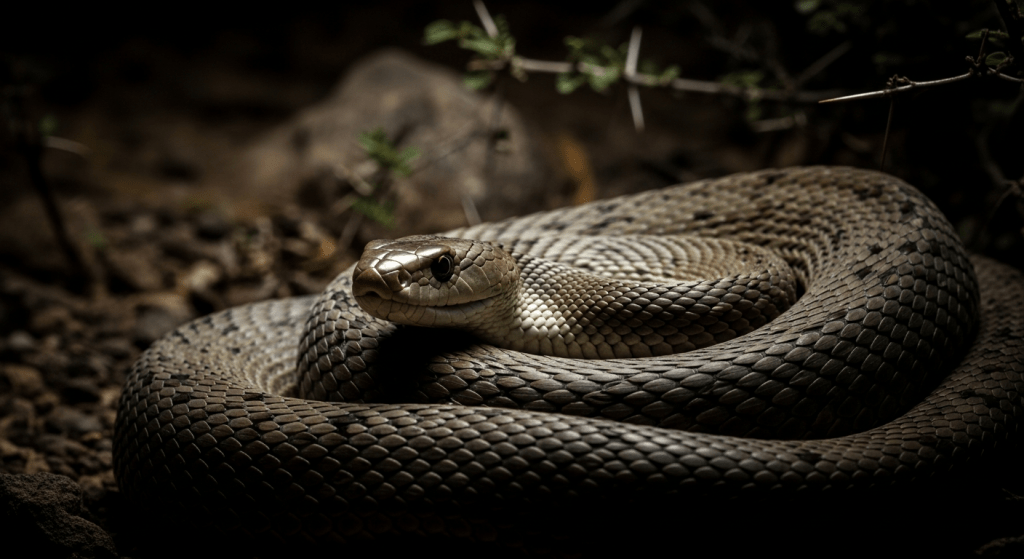
The most feared snake in Africa. In fact, it is incredibly fast and intelligent. It possesses a potent, fast-acting neurotoxic venom.
Nature & Defense
This snake is not actually aggressive. Instead, it is shy and prefers to flee to its den. However, it becomes terrifying if you block its path. It will raise its body and gape its black mouth. If cornered, it strikes repeatedly with deadly precision.
How to Deal With It
Stand absolutely still. Do not attempt to run. Sudden movement triggers its hunting instinct. Slowly back away once the snake lowers its head.
Cape Cobra (Naja nivea)
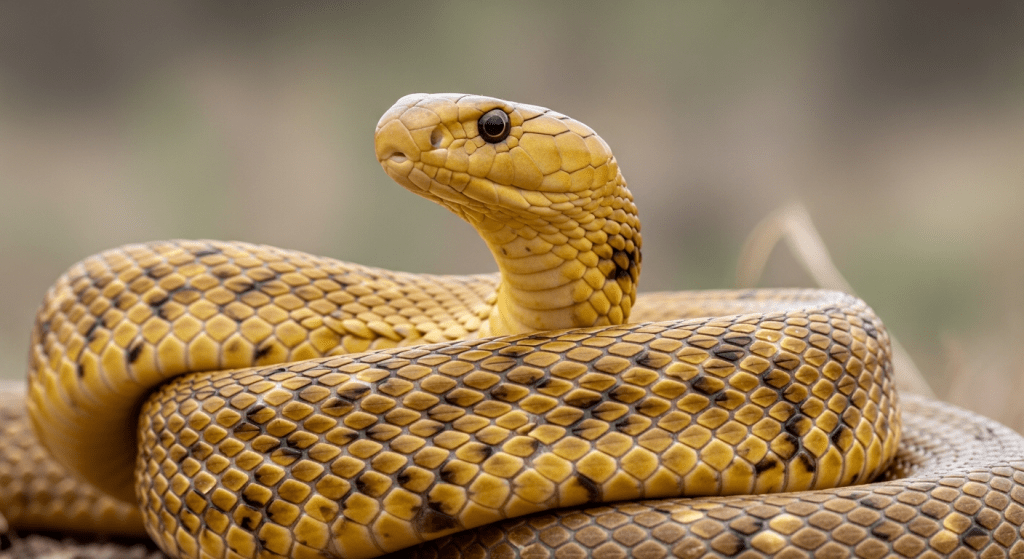
A beautiful, venomous golden-colored cobra. Its venom is considered one of the most potent of all African cobras. Specifically, its neurotoxic venom can cause respiratory collapse very quickly.
Nature & Defense
You will often find them searching for rodents in nests. When threatened, they display a classic, broad hood. Unlike other snakes, they will stand their ground rather than flee. Furthermore, they vary in color from yellow to dark brown (Speckled Cobra).
How to Deal With It
Give them a wide berth. If you see one, retreat immediately. Fortunately, they usually warn you before striking by lifting their bodies high.
Puff Adder (Bitis arietans)
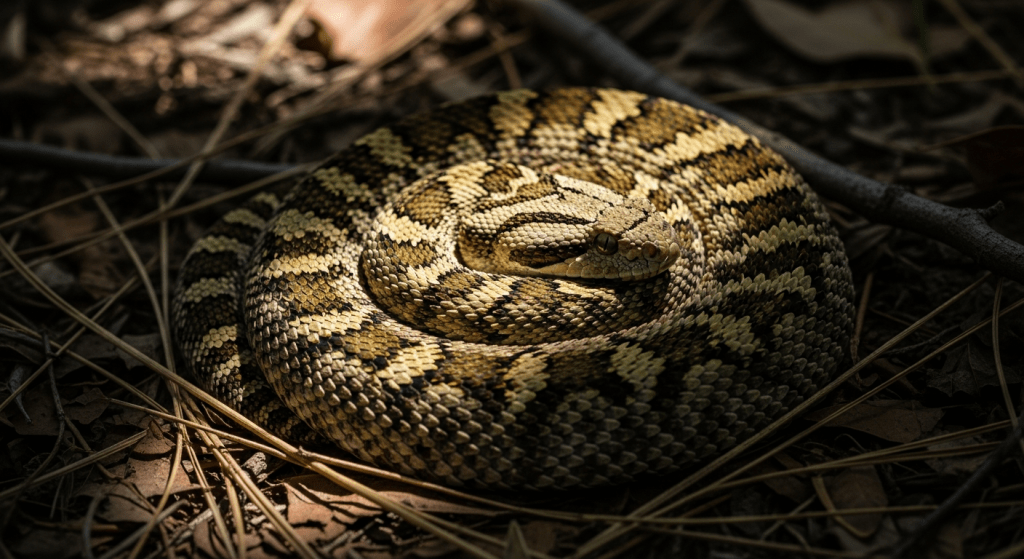
The master of camouflage. This ambush predator is responsible for the majority of serious snakebites in South Africa. This is becauseit relies on camouflage and will lie still rather than move away.
Nature & Defense
They are sluggish and thick-bodied. Rather than running, they hiss loudly as a warning. Because they blend into the dirt so well, people often step on them. Consequently, the snake bites in self-defense.
How to Deal With It
Stick to clear pathways. Additionally, wear closed shoes when hiking. If you are in tall grass, watch your step carefully.
Boomslang (Dispholidus typus)
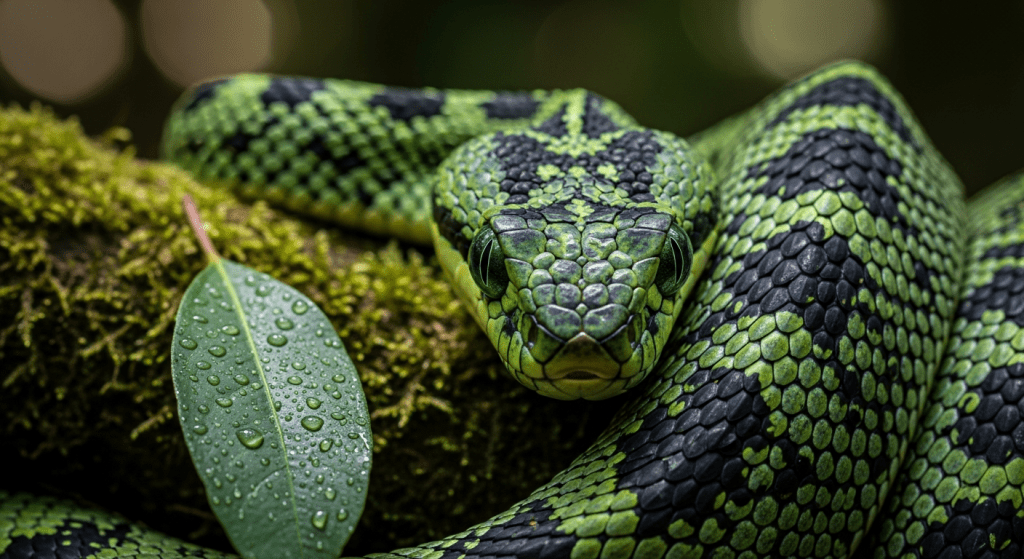
A slender, tree-dwelling snake. It possesses a powerful hemotoxic venom that causes severe bleeding. Bites are rare as they are very shy and rear-fanged. However, they are a medical emergency.
Nature & Defense
This snake has massive eyes and beautiful green or brown scales. Uniquely, it must chew on you to inject venom effectively. Therefore, it only bites if handled directly.
How to Deal With It
Do not try to catch it. Simply observe it from a distance. It will usually disappear into the foliage within seconds.
Gaboon Viper (Bitis gabonica)
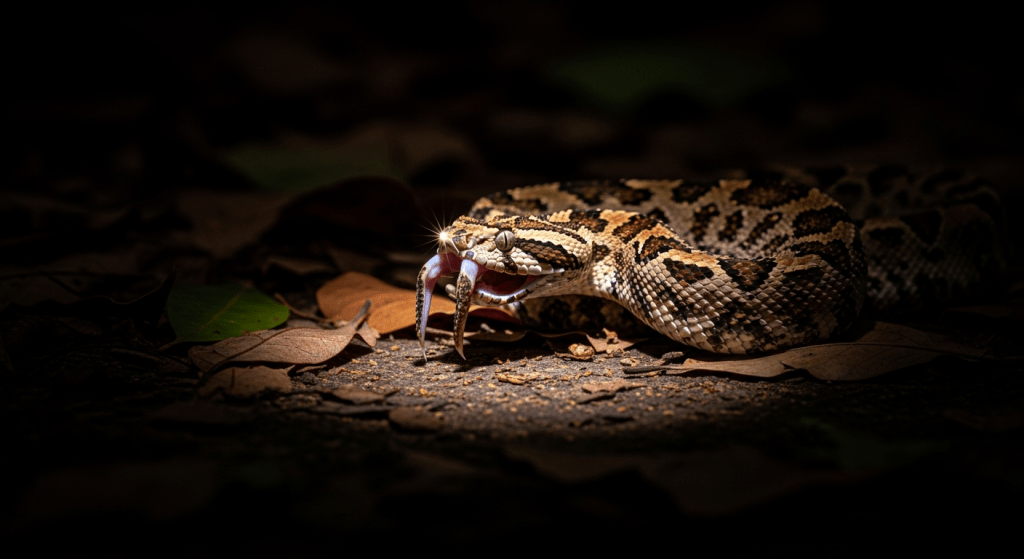
Found in the forests of KwaZulu-Natal. Remarkably, this snake has the longest fangs in the world. It delivers a huge dose of venom. Furthermore, its stunning geometric pattern provides perfect camouflage in the leaf litter.
Nature & Defense
It is a passive, docile snake. In fact, it hardly ever moves. It hunts by ambushing prey that walks right past its nose. Despite its deadly venom, it is one of the least aggressive vipers.
How to Deal With It
Look at the ground in forests. Because they don’t move, you could easily step on one. Fortunately, they hiss loudly if disturbed.
Rinkhals (Hemachatus haemachatus)
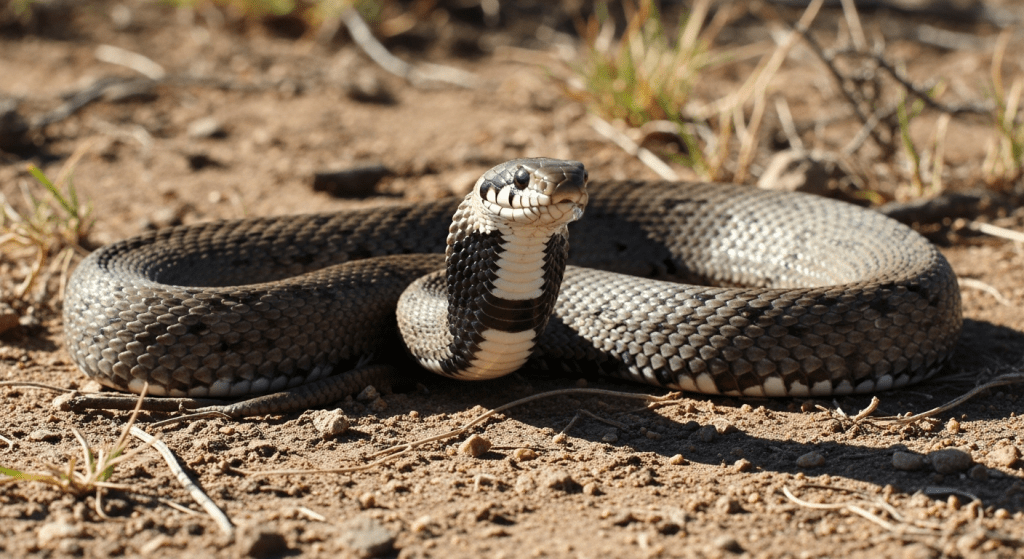
A “spitting cobra” that isn’t a true cobra. It can accurately spit its venom. Moreover, it will often sham death as a defensive tactic. It does this by rolling onto its back with its mouth open.
Nature & Defense
This snake is a great actor. If spitting fails, it plays dead. However, do not touch it. It can still bite while “dead.” Its venom is cytotoxic and can cause blindness if it enters the eyes.
How to Deal With It
Wear sunglasses. If venom hits your eyes, rinse them with water immediately. Also, leave “dead” snakes alone.
What Venomous Spiders and Scorpions Should I Be Aware Of?
Black Button Spider (Latrodectus species)
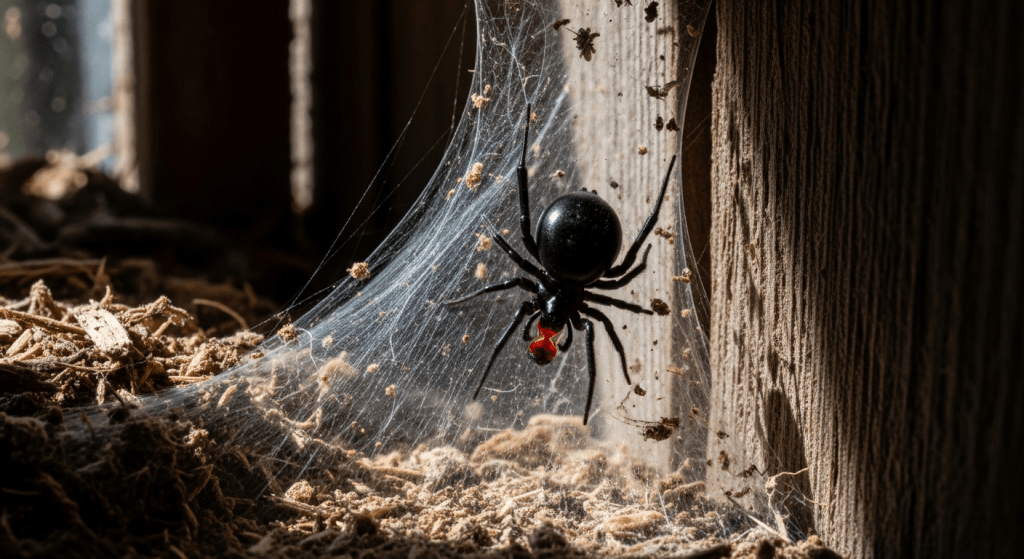
The South African equivalent of the Black Widow. The females have a medically significant neurotoxic venom. Typically, they build messy webs in dark, quiet places like sheds, woodpiles, and under outdoor furniture.
Nature & Defense
The female is jet black with a red stripe. She is very shy. Usually, she retreats into her funnel web if disturbed. However, she will bite if pressed against skin.
How to Deal With It
Wear gloves when moving wood. Also, check under chairs before sitting in the garden.
Sac Spider (Cheiracanthium species)
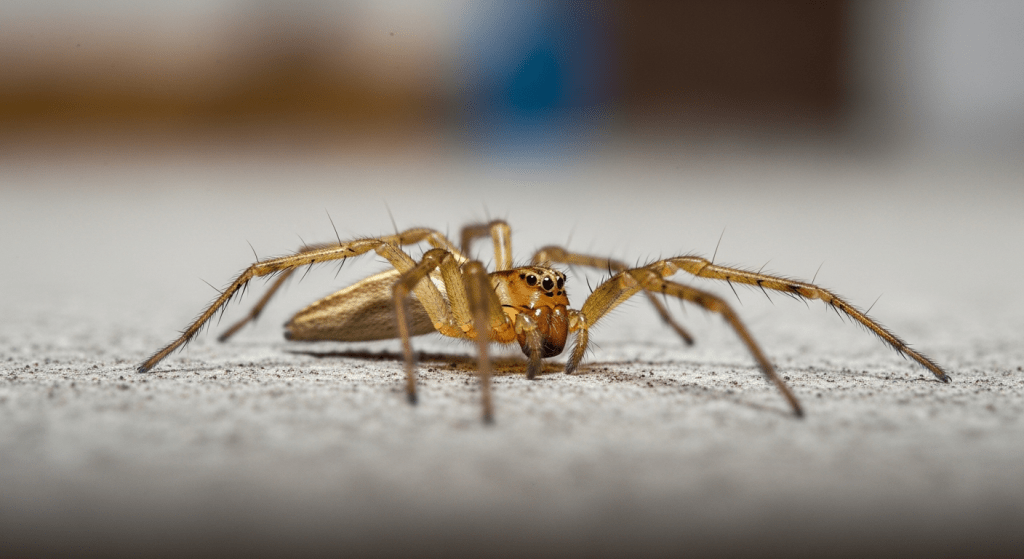
A small, pale spider. Actually, it is responsible for a large percentage of spider bites in South Africa. Its bite is cytotoxic. This means it causes a painful, slow-healing sore.
Nature & Defense
They are aggressive hunters. Unlike other spiders, they do not build webs to catch prey. Instead, they build silk “sacs” in corners or curtains to sleep in.
How to Deal With It
Shake out curtains and clothing. Specifically, they love hiding in folds of fabric.
Violin Spider (Loxosceles species)

A relative of the Brown Recluse. Similarly, it has a cytotoxic venom that can cause necrotic lesions. They are extremely shy and reclusive.
Nature & Defense
These spiders are free-roaming hunters. Often, they hide in dark, dry places. Regrettably, bites happen when they are crushed in bedsheets or clothes.
How to Deal With It
Inspect bedding in rustic cabins. Also, do not leave clothes on the floor.
Cape Thick-tailed Scorpion (Parabuthus capensis)
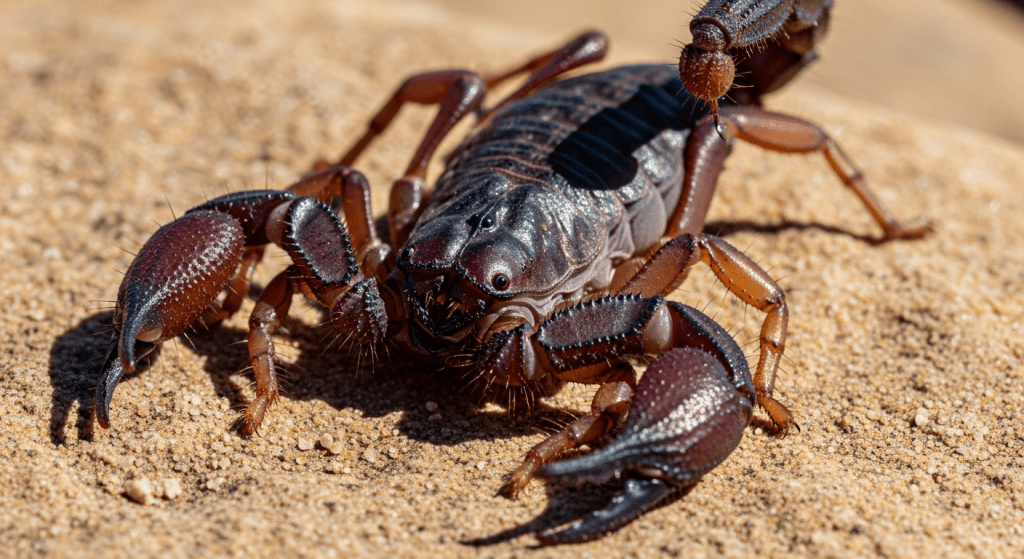
A medically significant scorpion. It has a powerful neurotoxic venom. Consequently, it can be very dangerous, especially to children.
Nature & Defense
They are nocturnal predators. Defensively, they can spray venom if threatened. Additionally, they rub their tail against their body to make a hissing sound.
How to Deal With It
Use a UV torch at night. Moreover, never walk barefoot in the dark.
What Venomous Creatures are in South Africa’s Oceans?
The country’s long and beautiful coastline is home to some creatures that demand respect.
Stonefish (Synanceia verrucosa)
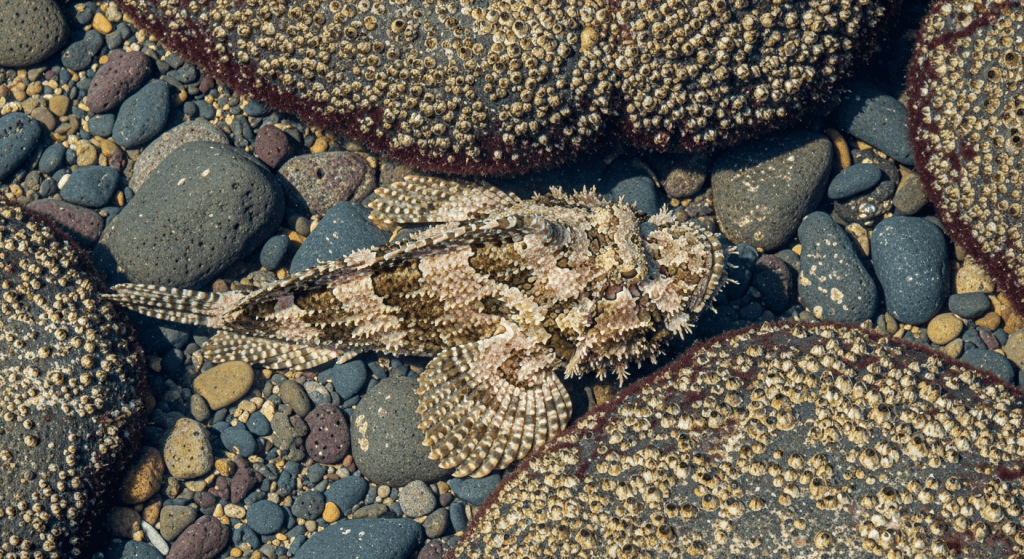
The world’s most venomous fish. Its perfect camouflage makes it look exactly like a rock. Tragically, stepping on its venomous dorsal spines causes unimaginable pain and can be fatal. Rule #1: Do not touch any rock in a tidal pool.
Nature & Defense
It sits motionless waiting for fish. Therefore, it is impossible to spot. If stepped on, spines pierce even thick-soled shoes.
How to Deal With It
Wear reef shoes. Most importantly, do not step on rocks or coral. Always shuffle your feet.
Box Jellyfish

These almost transparent jellies have an incredibly potent and painful venom. Indeed, they are a serious danger on some beaches.
Nature & Defense
They are active swimmers. Unlike drifting jellies, they hunt fish. However, contact with their tentacles triggers massive stinging cells.
How to Deal With It
Heed beach warning flags. If stung, pour vinegar on the sting. Do not rub the area.
Bluebottle (Portuguese Man o’ War)

Not a true jellyfish, but a colony of organisms. Their long, blue tentacles deliver a very painful sting. Often, they are blown ashore in large numbers.
Nature & Defense
They float on the surface. Meanwhile, their tentacles drag feet below. Even dead ones on the beach sting.
How to Deal With It
Watch the shoreline. If you see blue bubbles on the sand, do not swim.
Stingrays
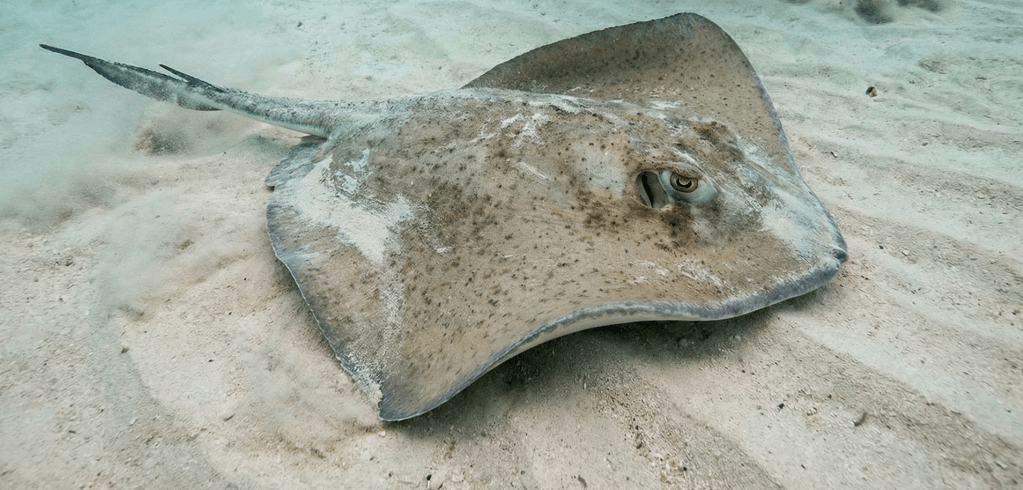
Several species inhabit the coastal waters. Their defensive tail barb can inflict a deep, venomous, and agonizingly painful wound. Therefore, shuffle your feet when walking in the shallows.
Nature & Defense:
They bury themselves in the sand. When stepped on, they whip their tail up. The barb is serrated and releases toxins.
How to Deal With It:
Do the “Stingray Shuffle.” Basically, slide your feet without lifting them. This warns the ray to move.
Devil Firefish (Lionfish)
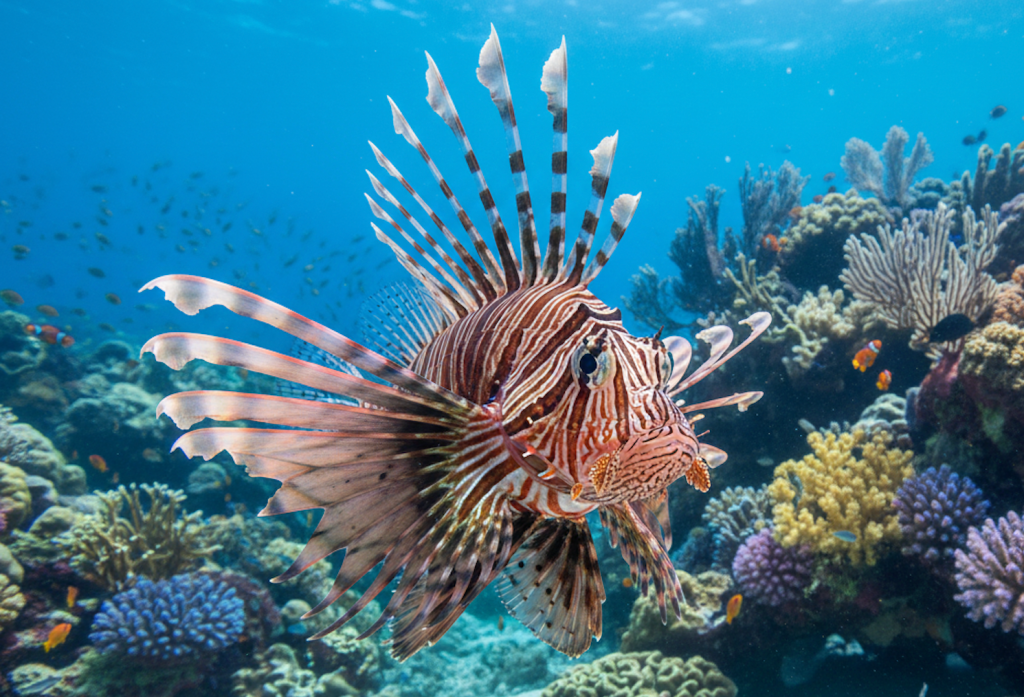
Its beautiful, flowing fins are actually venomous spines. Unfortunately, they can deliver a very painful sting.
Nature & Defense:
They are slow-moving and confident. Often, they corner small fish. Defensively, they point their dorsal spines toward any threat.
How to Deal With It:
Admire them from a distance. Never try to touch or corner them while diving.
What Other Venomous Creatures Live in South Africa?
Blister Beetle

Crushing this beetle releases a chemical that causes large, painful blisters on the skin.
Nature & Defense
They are strikingly colored (black and yellow/red). This warns predators of their toxicity. Instead of biting, they bleed reflexively from their joints. This fluid, cantharidin, burns human skin.
How to Deal With It
Blow them off gently. Never slap or crush a beetle on your neck or arm.
Shongololo (Giant Millipede)
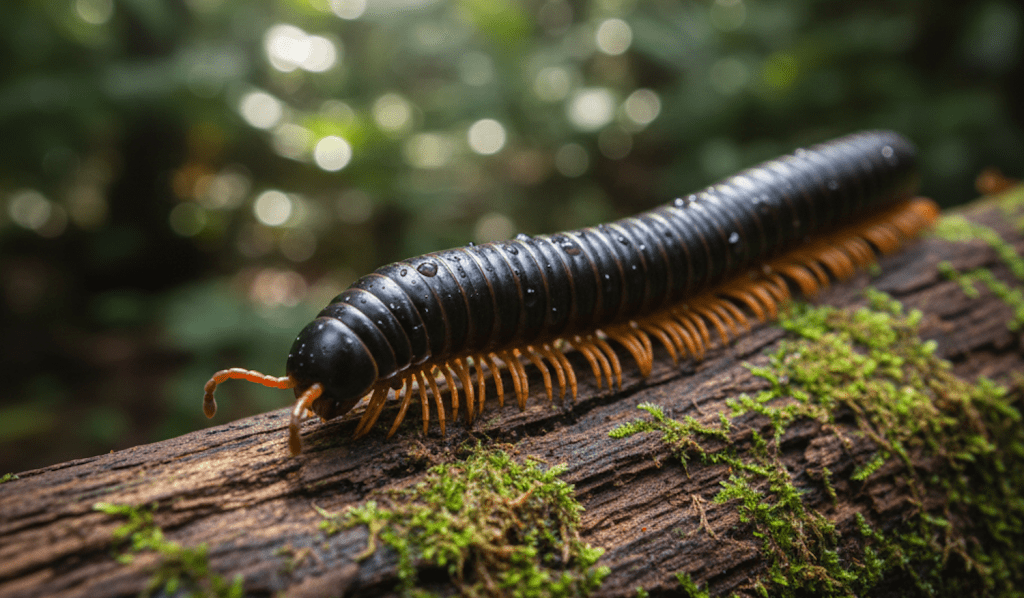
While not venomous, when threatened they can secrete a defensive fluid. Be careful, as this can be irritating to the skin and eyes.
Nature & Defense
These are the gentle tanks of the bush. However, they coil up when scared. Simultaneously, they release a foul-smelling liquid (hydrocyanic acid).
How to Deal With It
Handle them gently. Wash your hands afterwards. Do not touch your eyes.
Paper Wasps & Hornets

Various species can deliver painful stings. Unfortunately, their nests are common in both rural and suburban areas.
Nature & Defense
They are social insects. Therefore, they defend their nest as a group. Unlike bees, they can sting multiple times.
How to Deal With It
Check under eaves. If a nest is close, call a professional.
Assassin Bug

A predatory bug that can deliver a surprisingly painful bite if handled.
Nature & Defense:
They stalk other insects. Using a sharp beak, they inject enzymes. If you grab one, it will stab you in self-defense. The pain is instant.
How to Deal With It:
Observe without touching.
Parktown Prawn (a type of King Cricket)
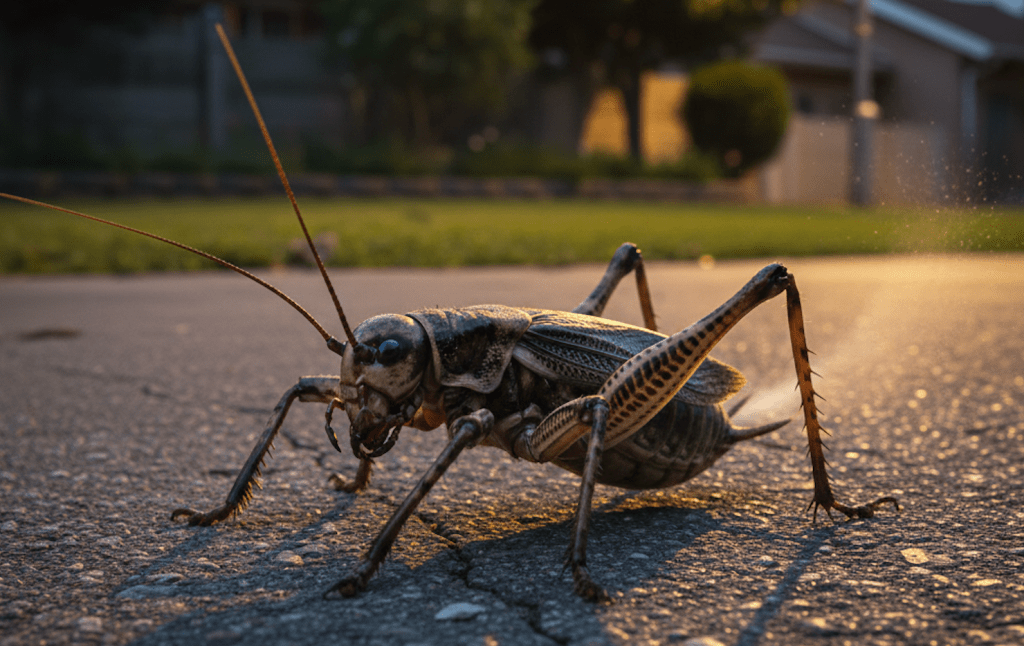
While not venomous, this large, iconic, and slightly terrifying insect causes panic. Also, it can deliver a powerful, painful bite and often sprays a foul-smelling defensive fluid.
Nature & Defense:
It is a garden creature often found in Johannesburg homes. When cornered, it jumps aggressively toward the threat. Additionally, it shoots black goo.
How to Deal With It:
Use a cup and card to move it outside. Or, just run away. That works too.
What Should I Do If I Get Bitten or Stung?
- Move Away and Stay Calm: Get away from the animal to avoid a second bite. Try hard to keep your heart rate down. Panic circulates venom faster.
- Seek Immediate Medical Attention: For any snakebite, scorpion sting, or major marine sting, this is a medical emergency. Thankfully, South Africa has excellent medical care. Moreover, hospitals keep a supply of anti-venom.
- Identify the Animal (If Safe): Try to get a good description or a photo. This helps doctors choose the correct treatment. However, never risk a second bite to get a picture.
Sources
- African Snakebite Institute
https://www.africansnakebiteinstitute.com/snake/black-mamba/ - National Geographic
https://www.nationalgeographic.com/animals/article/gaboon-viper-fangs-camouflage-video - SANBI (South African National Biodiversity Institute)
https://www.sanbi.org/animal-of-the-week/rinkhals/ - Australian Museum
https://australian.museum/learn/animals/fishes/reef-stonefish-synanceia-verrucosa/ - Medical Journal of Australia
https://www.mja.com.au/journal/2003/178/11/cantharidin-poisoning-after-ingestion-blister-beetles


Leave a Reply