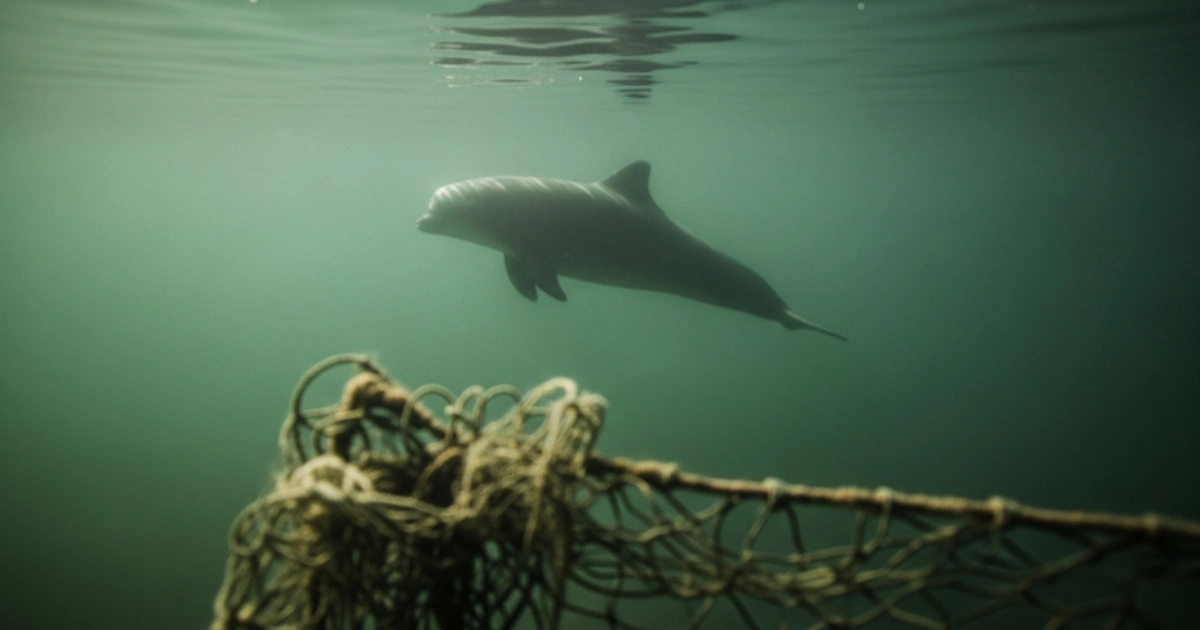
Some of the world’s most famous endangered species are titans—the elephant, the rhino, the tiger. However, the most endangered marine mammal on Earth is a ghost. It is a tiny, shy porpoise that lives only in a single gulf in Mexico. In fact, almost no one has seen a Vaquita in the wild. Save the Vaquita, as it is disappearing before we have even had a chance to truly know it. Because of this, its entire existence is being erased. This is due to the collateral damage of a criminal enterprise halfway across the world.
The story of the Vaquita (Phocoena sinus) is tragic. It is a lesson in how the fate of one animal can be sealed by the demand for another. Indeed, their fight is the most desperate conservation battle on the planet, a last-ditch effort to save the Vaquita.
Status and Population: A Species on the Edge
The Vaquita is listed as Critically Endangered. This is the highest possible level of threat before extinction. The number is tragically low. As of the most recent estimates, there are likely fewer than 10 individuals remaining. In fact, the population has plummeted from an estimated 600 in 1997 to this critical number. Therefore, the Vaquita is, without question, the most endangered marine mammal on Earth.
Threats: Why Do We Need to Save the Vaquita?
What is the biggest threat facing the Vaquita?
There is one single, overwhelming threat: bycatch in illegal gillnets set for an endangered fish called the totoaba. This accidental entanglement, or bycatch, is the sole cause of the Vaquita’s catastrophic decline.
What is the totoaba fish, and how does it affect the Vaquita?
The totoaba is a large fish that lives in the same habitat. Its swim bladder is absurdly valuable on the black market in China, where people falsely believe it has medicinal properties. Consequently, this demand fuels a powerful illegal fishing industry. Vaquitas swim into the invisible gillnets set for the totoaba and, because they are mammals, they drown. To save the Vaquita, we must first stop the totoaba trade.
Biology and Ecology: A Unique Porpoise
Vaquitas are the smallest of all cetaceans. Additionally, they are unique for the dark rings around their eyes and the dark patches on their lips. They are the only porpoise species adapted to live in such warm, shallow waters. Furthermore, they use a highly specialized form of echolocation to navigate and hunt in the murky environment.
Conservation Efforts to Save the Vaquita
What is being done to protect them?
A desperate, multi-pronged effort is underway. First, the Mexican government has banned most gillnets in the Vaquita’s habitat. Second, the Mexican Navy and conservation groups like Sea Shepherd patrol the gulf actively. They find and remove illegal “ghost” nets. In addition, international efforts are underway to disrupt the totoaba trafficking supply chain.
Are there any captive breeding programs?
In 2017, a global initiative called VaquitaCPR started a “last chance” captive breeding program. Sadly, the captured animals became very stressed, and one died. Consequently, experts determined these shy animals cannot survive in captivity. Their only hope is to save the Vaquita in the wild.
The Future of the Species: Can We Still Save the Vaquita?
The odds are incredibly slim, but it is not impossible. The science is clear: if we can eliminate gillnets from their habitat, they can survive. In fact, the remaining vaquitas are still healthy and reproducing. Ultimately, the entire fate of the species rests on stopping the illegal totoaba fishing immediately and completely.
There needs to be a total crackdown on the totoaba cartels. Moreover, the international community must do more to eliminate the demand for the totoaba swim bladder. For the Vaquita, it is zero hour.
The extinction of the Vaquita would be an immeasurable tragedy. It would be the loss of a unique species and a profound moral failure. To clarify, it would be an animal driven to extinction. This is not due to direct hunting, but as pure collateral damage from human greed.
Sources
- Sea Shepherd
https://seashepherd.org/2025/10/28/results-of-the-2025-vaquita-monitoring-effort/ - The Guardian
https://www.theguardian.com/environment/radical-conservation/2016/jan/11/china-aquatic-cocaine-vaquita-totoaba-mexico-endangered-extinct - IFAW
https://www.ifaw.org/au/animals/vaquitas - Porpoise Conservation Society
https://porpoise.org/knowledge-base/can-vaquitas-be-kept-in-captivity/ - National Marine Mammal Foundation
https://nmmf.org/marine-mammals/vaquita-porpoise/

Leave a Reply