
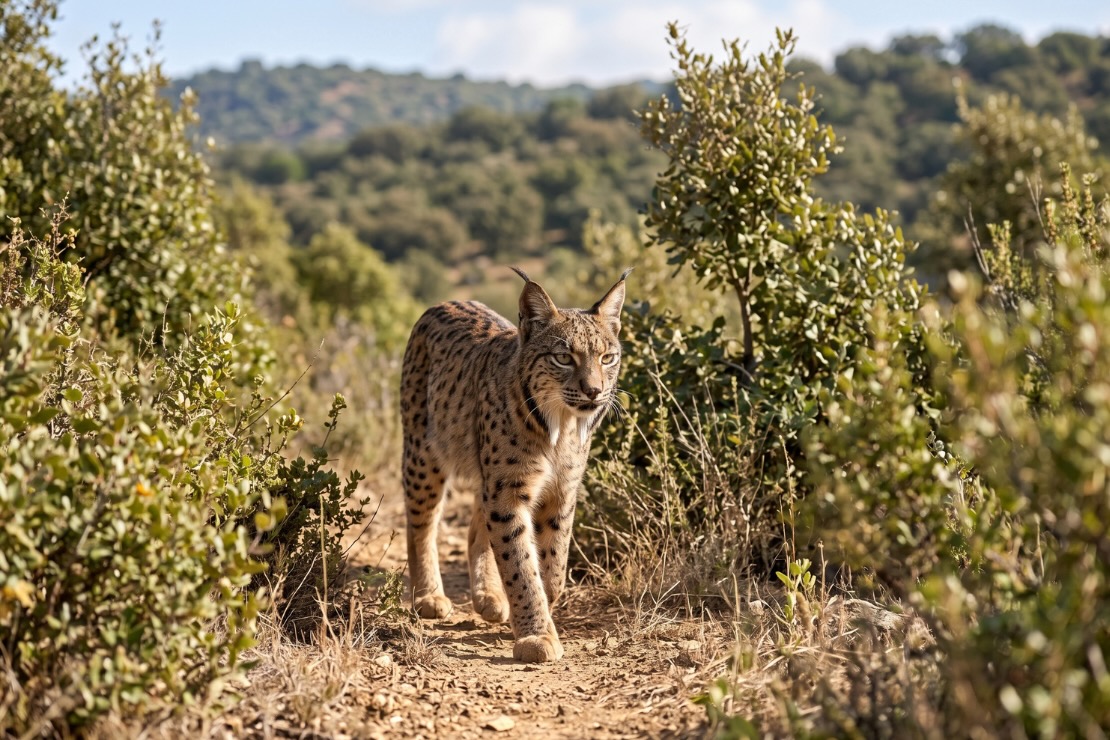
In the world of wildlife conservation, we so often find ourselves telling stories of loss. Consequently, it can feel like an endless, uphill battle. That’s why a story of true, resounding success breaks through the gloom, and it feels like a collective sigh of relief. The story of the Iberian Lynx recovery is one of those moments. I remember reading the news, years ago, that fewer than 100 of these beautiful cats remained. In fact, they were on a fast track to becoming a tragic footnote in history. To see them now, thriving, is a powerful testament to human ingenuity. Ultimately, it proves that when we choose to act, we can pull a species back from the very brink.
The Iberian Lynx (Lynx pardinus) was once the world’s most endangered feline. Today, however, it is a symbol of successful wildlife conservation and a blueprint for hope.
Conservation Status: A Monumental Success
What is the current conservation status of the Iberian Lynx?
In a landmark announcement in June 2024, the IUCN officially reclassified the Iberian Lynx from “Endangered” to “Vulnerable”. This change is a direct result of the dramatic success of the Iberian Lynx recovery program.
How many Iberian lynx are in the wild now?
The comeback is nothing short of miraculous. At its lowest point in 2002, the population had plummeted to fewer than 100 individuals. However, as of the latest census, the population has soared to over 2,000 individuals spread across Spain and Portugal.
Threats and Challenges Facing the Iberian Lynx
What were the primary threats that pushed them to the brink?
The catastrophic decline of their primary food source, the European rabbit, was the main cause. This was combined with severe habitat loss and fragmentation. Specifically, the rabbit populations were decimated by two successive disease outbreaks. With their food source gone, the lynx starved and their populations collapsed.
What is the biggest risk today?
Now, as the lynx population recovers, roadkill is the number one cause of non-natural death. Because lynx must disperse to find new territory, they cross a landscape filled with busy roads.
Biology and Ecology: A Specialized Predator

As an apex predator, the Iberian Lynx plays a crucial role in maintaining the health of the Mediterranean forest ecosystem. By preying on rabbits, they help control herbivore populations, which in turn affects the entire food web. The Iberian Lynx is also the most highly specialized of all wild cat species, as it relies almost exclusively on rabbits for food.
The Iberian Lynx Recovery: A Conservation Blueprint
What key actions led to this success?
The success is a result of a massive, coordinated effort, primarily funded by the European Union’s LIFE program. It was built on four key pillars: a successful captive breeding program, ambitious reintroduction programs, habitat restoration, and, most importantly, engaging local communities.
How did captive breeding and reintroduction contribute?
This was the cornerstone of the Iberian Lynx recovery. A network of breeding centers produced healthy offspring from a genetically diverse group. Then, conservationists carefully prepared these captive-born lynx for life in the wild and reintroduced them into protected areas, effectively creating new, thriving populations.
How were local communities engaged?
Crucially, conservationists worked directly with landowners, farmers, and even hunting associations. By working together, they managed the land in a lynx-friendly way, restored rabbit populations, and built local pride in the species’ return. In short, this turned potential opponents into vital partners.
Ongoing Efforts and Future Outlook
What threats still exist?
Even with its improved status, the lynx is not entirely safe. For example, road mortality remains the biggest threat, followed by the ever-present danger of new rabbit disease outbreaks.
How does the Iberian Lynx recovery serve as a model?
It is a perfect blueprint. Indeed, it proves that with long-term funding, scientific expertise, and genuine community collaboration, we can bring back a species from the absolute brink. Therefore, it provides a model of hope for other critically endangered predators.
The ghost of the Mediterranean forest is a ghost no longer. In conclusion, it is a living testament to the power of dedicated conservation.
Sources
- IUCN Red List
https://iucn.org/press-release/202406/iberian-lynx-rebounding-thanks-conservation-action-iucn-red-list - Sul Informação
https://www.sulinformacao.pt/en/2025/05/populacao-de-lince-iberico-aumentou-19-num-ano-e-supera-os-2-400-animais-2/ - Drishti IAS
https://www.drishtiias.com/daily-updates/daily-news-analysis/iberian-lynx - Wildside Holidays
https://wildsideholidays.co.uk/iberian-lynx-population-reaches-2401-in-2024-europes-most-endangered-cat-nears-recovery/ - Life Lynxconnect
https://lifelynxconnect.eu/en/2024/01/04/today-12th-december-international-day-of-the-iberian-lynx-thanks-to-all/
Leave a Reply
You must be logged in to post a comment.