
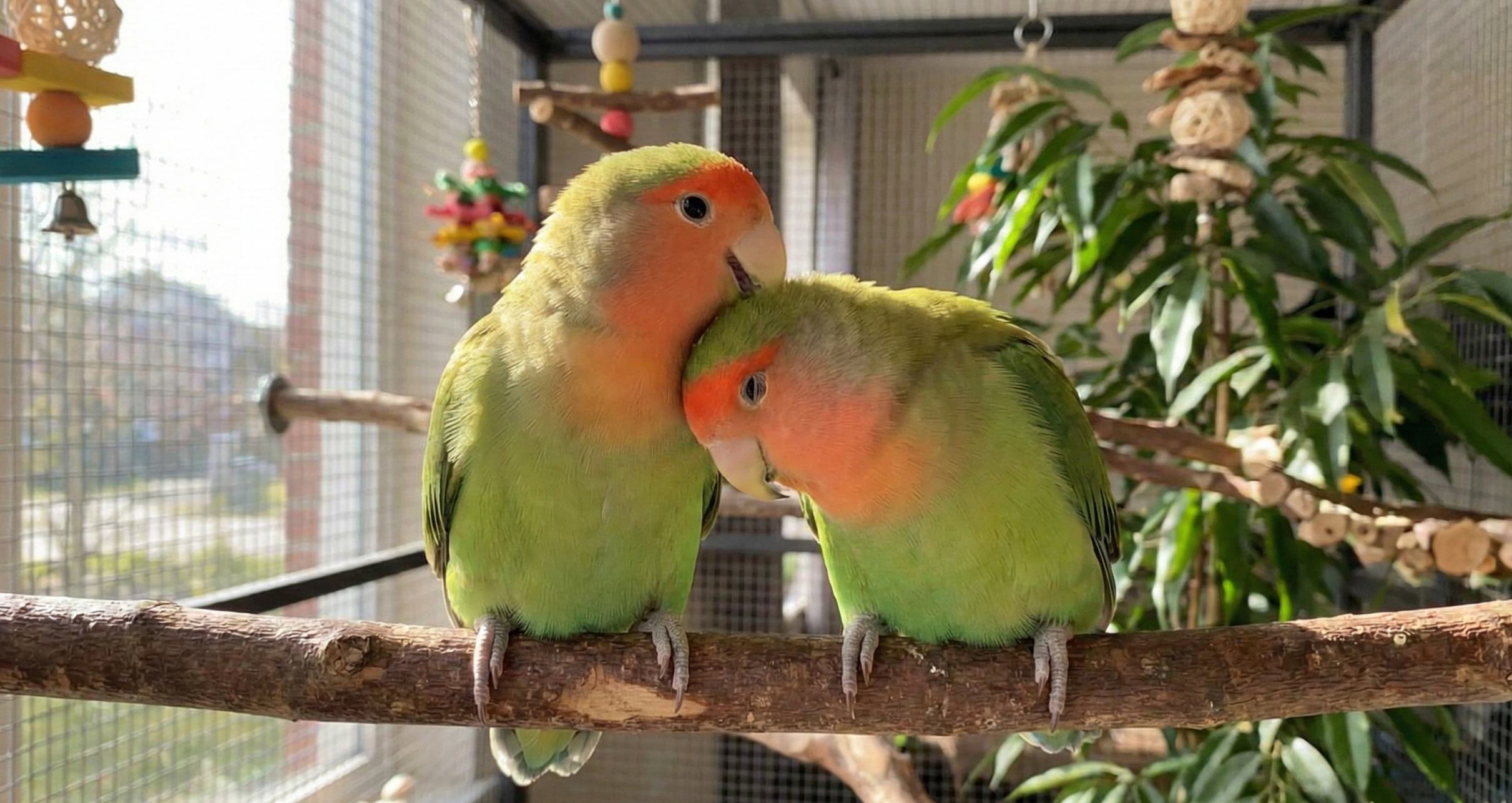
Lovebirds are a whirlwind of activity and intelligence. Specifically, they are also a whirlwind of emotion. They are not simply a smaller parrot. In fact, they are a unique and challenging companion. They possess a huge personality. Therefore, this guide explores everything you need to know. Specifically, it helps you decide if you are ready for this little bird.
Species Suitability for Dedicated Owners
Lovebirds can be a good choice for a dedicated beginner. However, you must understand they are not “hands-off” pets. They require daily interaction and training. This manages their feisty and territorial nature. They are a step up in complexity from budgies. Furthermore, they are a significant long-term commitment. With proper care, they can live for 10 to 20 years.
Choosing between one bird or a pair is a critical decision. A single lovebird bonds extremely closely with its owner. You will be its entire world. Consequently, you must provide several hours of social interaction every day. This prevents loneliness and behavioral problems. In contrast, a pair ensures constant companionship. They will primarily bond with each other. This may make them less “tame.” However, it is better for a busy lifestyle.
You must never house lovebirds with other species. Specifically, females can be very territorial and aggressive. They are known for nipping the feet of larger birds. This can cause serious injury. Therefore, they must only live with other lovebirds.
Lovebirds Vocalizations and Affection
Lovebirds are indeed noisy. They do not have the booming voice of a large parrot. However, they have a very high-pitched screech. Specifically, it is sharp and repetitive. They use this call frequently. As a result, this might be an issue in apartment settings. They are not known for their talking ability. In fact, it is rare for them to learn words. They are much more likely to mimic bells or whistles.
A hand-tamed lovebird can be an incredibly cuddly companion. They love head scratches and snuggling. However, they can also be nippy and hormonal. Furthermore, untamed lovebirds generally do not enjoy being held. They form incredibly strong and loyal bonds. Specifically, these bonds can become possessive toward their favorite person.
Lovebirds Enclosure and Habitat Essentials
These are active birds that need room to move. For a single bird, the minimum size is 24″ W x 18″ D x 18″ H. Specifically, you should aim for a larger flight cage for a pair. Horizontal space is more important than vertical space. This allows for short flights between perches. Therefore, prioritize width over height.
Provide a variety of natural wood perches to exercise their feet. Lovebirds are also avid chewers. Consequently, a constant supply of shreddable toys is essential. Place the cage in a social part of the home. Specifically, it should be against a wall for security. Keep it away from drafts and kitchen fumes. Offer a shallow dish of water a few times a week. Lovebirds love to bathe for feather health.
Proper Diet and Nutritional Management
High-quality pellets should make up 60-70% of the diet. In fact, pellets are far superior to seeds. Lovebirds are prone to fatty liver disease. A seed-heavy diet is the leading cause of this condition. Furthermore, offer fresh vegetables for 20-30% of their intake. Specifically, use dark leafy greens like kale and spinach.
Reserve seeds and treats for only 10% of the diet. Use them primarily as rewards for training. Specifically, offer broccoli, carrots, and sweet potatoes daily. Small amounts of apple or berries are excellent treats. Lovebirds do not need grit. Consequently, grit can cause a fatal impaction in hookbills.
Lovebirds Health, Behavior, and Breeding Traits
They are susceptible to various health problems. Specifically, these include Fatty Liver Disease and bacterial infections. Females can also be prone to egg binding. Feather plucking can be a sign of a medical issue. However, it is often behavioral. Stress and boredom are common causes. Therefore, ensure plenty of social interaction.
Biting is a form of communication for them. It can stem from fear or hormonal surges. Specifically, their bites are surprisingly strong for their size. Lovebirds are also prolific breeders. Consequently, casual breeding is strongly discouraged. A pair will readily breed if you provide a nest box. They are famous for forming lifelong monogamous bonds.
Comparing Common Lovebird Species
Three species are most common in the pet trade. The Peach-faced Lovebird is the most popular and largest. Specifically, they have bold and confident personalities. Fischer’s Lovebirds are part of the “eye-ring” group. They are identifiable by the white ring around their eyes. In fact, they can be more reserved than Peach-faced birds.
The Masked Lovebird is also an “eye-ring” species. It has a distinctive black “mask” on its head. Their temperament is similar to the Fischer’s. Specifically, these three species are monomorphic. Males and females look identical. Therefore, the only accurate way to know the sex is a DNA test. Consequently, behavioral traits are not always reliable indicators.
Sources
- Lafeber Company
https://lafeber.com/pet-birds/species/lovebird/ - VCA Animal Hospitals
https://vcahospitals.com/know-your-pet/lovebirds-feeding - The Spruce Pets
https://www.thesprucepets.com/facts-about-lovebirds-390444 - BirdLife International
http://datazone.birdlife.org/species/factsheet/rosy-faced-lovebird-agapornis-roseicollis


Leave a Reply