
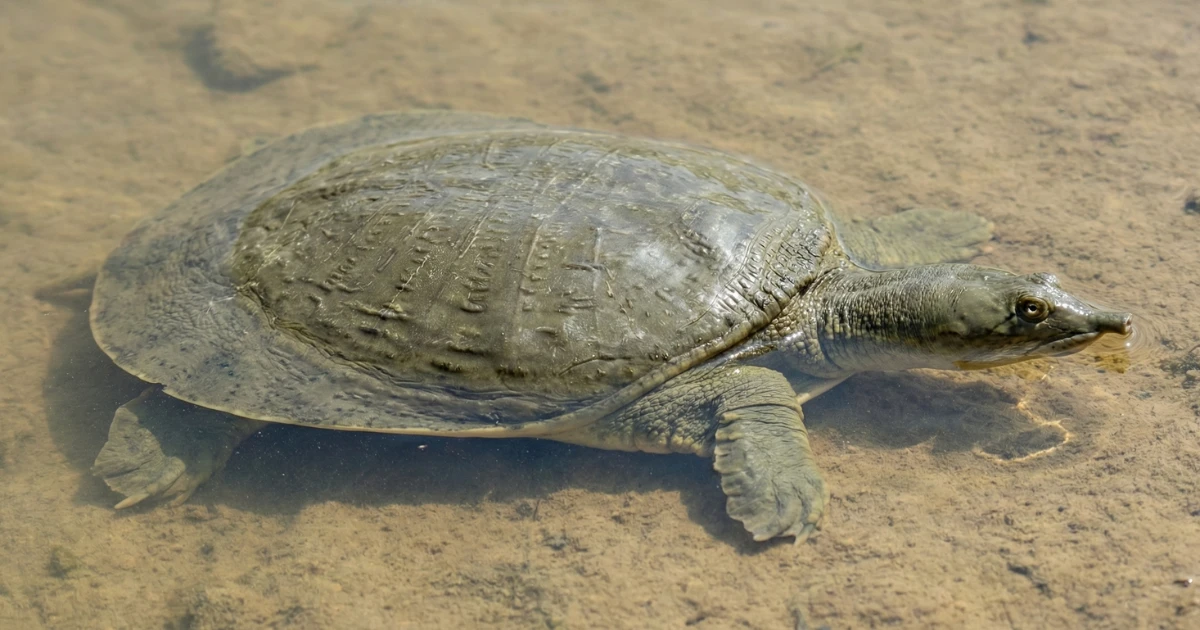
The Softshell Turtle (Apalone) is absolutely not an entry-level pet. Specifically, their massive adult size and defensive temperament require an expert-level keeper. Furthermore, these animals possess a powerful bite and lightning-fast reflexes that can cause severe injury to an unprepared owner. Consequently, their extreme sensitivity to water chemistry makes them a demanding species to maintain in a home environment. Therefore, you must have significant experience with aquatic reptiles before considering this family. In fact, they are more of a captive wild predator than a traditional pet.
What are the lifespan and size expectations for Softshell Turtles?
Keeping a Softshell Turtle is an incredibly long-term commitment that spans several decades. Specifically, they can easily live between twenty-five and fifty years in a properly managed captive habitat. Furthermore, their physical dimensions vary dramatically between the sexes. Consequently, a female Florida Softshell can reach a carapace length of over two feet, while males remain much smaller. Therefore, you must plan for an enclosure that accommodates the massive growth of a female specimen. In fact, species like the Spiny Softshell still reach eighteen inches in the female form.
Why is substrate selection the most critical part of their housing?
A deep bed of fine-grained sand is the single most important component of an enclosure for a Softshell Turtle. Specifically, these turtles bury themselves in the substrate to feel secure and ambush passing prey. Furthermore, providing at least four to six inches of soft sand prevents the chronic stress associated with bare-bottom tanks. Consequently, burrowing is their primary natural behavior and a vital indicator of psychological health. Therefore, you must avoid coarse gravel that can abrade their delicate leathery shells. In fact, a stressed turtle that cannot hide is prone to immune suppression.
What are the specialized filtration and lighting requirements?
You must utilize a “monster” filtration system to manage the high waste output of these large carnivores. Specifically, a canister filter or sump rated for twice the tank’s volume is mandatory for survival. Furthermore, poor water quality is the leading cause of death due to bacterial infections. Consequently, you must also provide a dry basking area with a heat lamp and high-output UVB lighting. Therefore, maintaining a basking spot of thirty-five degrees Celsius ensures proper thermoregulation and shell health. In fact, UVB is non-negotiable for preventing Metabolic Bone Disease in this fast-growing family.
Why is water quality uniquely vital for a Softshell Turtle?
The leathery carapace of a Softshell Turtle is actually living, porous skin rather than hard armor. Specifically, they are extremely susceptible to shell rot and fungal infections caused by high nitrate levels. Furthermore, pristine water with zero ammonia and nitrite is mandatory to prevent these painful skin conditions. Consequently, you must perform massive weekly water changes to keep the environment sterile. Therefore, neglecting water chemistry will result in a rapid decline in the turtle’s health. In fact, their shell is an open door for pathogens in an unclean tank.
What constitutes a healthy diet for these aquatic carnivores?
A Softshell Turtle is a dedicated carnivore that requires a protein-rich diet to thrive. Specifically, high-quality commercial pellets for carnivorous turtles should serve as the nutritional foundation. Furthermore, you should supplement this with earthworms, feeder insects, and frozen-thawed shrimp or fish. Consequently, providing a variety of prey items ensures that the turtle receives a broad spectrum of minerals. Therefore, you must avoid live feeder fish from pet stores, as they are a primary vector for parasites. In fact, these turtles are highly efficient ambush hunters that appreciate moving prey.
How should you handle a Softshell Turtle safely?
Handling should be kept to an absolute minimum because it is extremely stressful for the animal. Specifically, their long necks allow them to reach back and bite a hand even when they are being held by the back of the shell. Furthermore, their jaws are razor-sharp and can cause deep lacerations requiring medical stitches. Consequently, you must only handle them for necessary health checks or transport. Therefore, always treat these animals with extreme caution and respect for their speed. In fact, they are best enjoyed as a “look, don’t touch” display species.
Softshell Turtles Care FAQ
Absolutely not. They are an expert-level, “look, don’t touch” display species. Their massive adult size, highly defensive temperament, lightning-fast reflexes, and razor-sharp jaws make them extremely dangerous for unprepared owners. Furthermore, their extreme sensitivity to water chemistry demands high-level technical maintenance.
You must provide four to six inches of fine-grained sand because these turtles naturally bury themselves to feel secure and ambush prey. Never use coarse gravel, as it will cause severe abrasions to their delicate, leathery shells. Preventing them from burrowing causes chronic stress and immune suppression.
Unlike standard turtles with hard keratin armor, the Softshell’s carapace is living, porous skin. This makes them exceptionally susceptible to painful, often fatal fungal infections and shell rot if water quality drops. Massive filtration and frequent water changes to maintain zero ammonia are completely non-negotiable.
This species requires a massive enclosure because females experience explosive growth. A female Florida Softshell can reach a carapace length of over two feet, while Spiny Softshell females can reach eighteen inches. You must plan for a massive, custom habitat capable of housing these dimensions.
Handling must be kept to an absolute minimum and reserved only for necessary health checks or transport. Their extraordinarily long necks allow them to reach back and inflict deep, stitch-requiring lacerations even when held by the rear of the shell. Always treat their speed and bite with extreme respect.
Sources
- Smithsonian’s National Zoo
https://nationalzoo.si.edu/animals/spiny-softshell-turtle - Reptiles Magazine
https://reptilesmagazine.com/softshell-turtle-care-and-information/ - Florida Museum
https://www.floridamuseum.ufl.edu/herpetology/fl-guide/apaloneferox/ - University of Florida IFAS
https://edis.ifas.ufl.edu/publication/UW451 - Arizona-Sonora Desert Museum
https://www.desertmuseum.org/books/nhsd_softshell_turtle.php - Turtle Survival Alliance
https://turtlesurvival.org/species/florida-softshell-turtle/


Leave a Reply
You must be logged in to post a comment.