
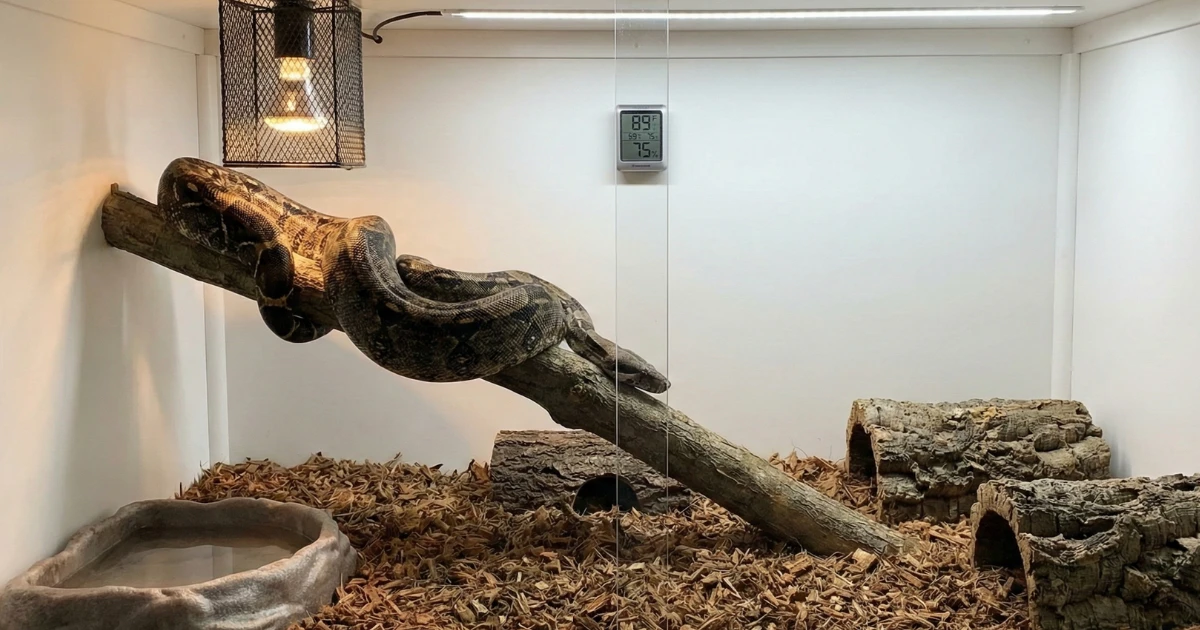
The boa constrictor is not a beginner-level species due to its substantial adult size and specialized environmental needs. Specifically, they represent the perfect “first big snake” for those who have mastered the care of smaller colubrids or ball pythons. Furthermore, their sheer physical strength requires a keeper who understands safe handling protocols for heavy-bodied predators. Consequently, you must be prepared for a long-term commitment that spans several decades. Therefore, thorough research and preparation are mandatory before acquisition. In fact, successful keeping is built on mutual respect between the snake and the keeper.
What are the realistic size and lifespan expectations for a Boa Constrictor?
An adult boa constrictor represents a profound lifelong commitment that can easily last thirty years. Specifically, females are the larger of the two sexes, frequently reaching lengths of six to eight feet. Furthermore, males are typically more slender and stay within the five to seven-foot range. Consequently, you must plan for an animal that remains a powerful force of nature throughout its entire life. Therefore, ensure you are physically and financially capable of providing for a heavy-bodied snake. In fact, these animals are living rivers of pure muscle that require a sturdy hand.
What are the essential housing requirements for an adult boa?
Providing a massive enclosure is the most significant hurdle for any prospective boa constrictor owner. Specifically, an adult male requires a habitat at least four feet long, while a large female needs at least six feet of horizontal space. Furthermore, you should utilize PVC or sealed wood enclosures instead of glass tanks to maintain stable heat and humidity. Consequently, these large “fortresses” ensure the animal has enough room to move and thermoregulate properly. Therefore, custom-built housing is often the most effective solution for adult snakes. In fact, a cramped enclosure is a primary source of chronic stress.
How do you manage heating and humidity for a Boa Constrictor?
You must maintain a stable thermal gradient and high humidity to protect the health of your boa constrictor. Specifically, the basking spot should remain between thirty-one and thirty-three degrees Celsius. Furthermore, humidity levels must stay between 60% and 80% to facilitate proper shedding and prevent respiratory infections. Consequently, using moisture-retaining substrates like coconut husk or cypress mulch is highly recommended. Therefore, always connect your overhead heat sources to a reliable thermostat to prevent dangerous thermal spikes. In fact, improper humidity is the leading cause of stuck sheds and wheezing.
What constitutes a safe and healthy diet for a Boa Constrictor?
In captivity, the diet of a boa constrictor consists of appropriately sized rats or, for massive females, small rabbits. Specifically, you should only offer frozen-thawed prey to avoid the risk of life-threatening injuries from live rodents. Furthermore, these snakes have a notoriously slow metabolism and are highly prone to obesity. Consequently, overfeeding is a common mistake that can lead to significant health complications. Therefore, adults only require a meal every three to four weeks to maintain a healthy body condition. In fact, a lean boa is much healthier than an over weight one.
What are the most common health concerns for this species?
Most health problems in the boa constrictor are directly related to failures in husbandry or quarantine protocols. Specifically, respiratory infections occur when temperatures are too low or the air becomes stagnant. Furthermore, Inclusion Body Disease (IBD) is a fatal retrovirus that makes strict quarantine of new arrivals absolutely essential. Consequently, you must monitor your snake for signs of wheezing, mucus, or “stargazing” behaviors. Therefore, maintaining pristine environmental conditions is the best preventative medicine. In fact, a loud sigh or “huff” is often just normal behavior and not a sign of illness.
What is the difference between Boa imperator and Boa constrictor?
It is vital to identify whether you have a Boa imperator or a “true” red tail Boa constrictor. Specifically, Boa imperatoris the smaller, hardier species most common in the pet trade. Furthermore, Boa constrictor refers to the true giants from South American localities like Suriname or Guyana. Consequently, true red tails are known for their deeper color and can be more challenging for intermediate keepers. Therefore, ensure you know the lineage of your animal to provide the correct level of care. In fact, many “BCIs” are now available in a vast array of beautiful color morphs.
Boa Constrictor Care FAQ
Solo handling is acceptable for snakes under six feet with an experienced keeper. However, any boa exceeding six feet should always be handled with a second person present as a safety precaution. Furthermore, never handle a boa around your neck. Respect the animal’s strength at every size stage.
Quarantine every new arrival in a completely separate room for a minimum of ninety days. Use dedicated tools and wash hands thoroughly between enclosures. Furthermore, never house a new boa near existing collection animals during this period. IBD is fatal, entirely untreatable, and spreads rapidly through a collection.
Cohabitation is strongly discouraged for this species. Two individuals compete for heat, hides, and food, generating serious chronic stress. Furthermore, feeding two large constrictors in a shared space is genuinely dangerous for the keeper. Every boa requires its own dedicated, appropriately sized enclosure without exception.
Boa imperator is the correct choice for a first-time large snake keeper. It is smaller, hardier, and significantly more forgiving of husbandry fluctuations. Furthermore, true Boa constrictor localities grow considerably larger and require more advanced management. Research locality and lineage thoroughly before any purchase.
Sources
- ReptiFiles
https://reptifiles.com/boa-constrictor-care/house-size-substrate/ - Reptiles Magazine
https://reptilesmagazine.com/boa-constrictor-care-sheet/ - Oakland Zoo
https://www.oaklandzoo.org/animals/boa-constrictor - Animal Diversity Web
https://animaldiversity.org/accounts/Boa_constrictor/ - The British Herpetological Society
https://www.thebhs.org/publications/care-sheets/166-boa-constrictor-care-sheet - Reptarium Reptile Database
https://reptile-database.reptarium.cz/species?genus=Boa&species=constrictor


Leave a Reply
You must be logged in to post a comment.