
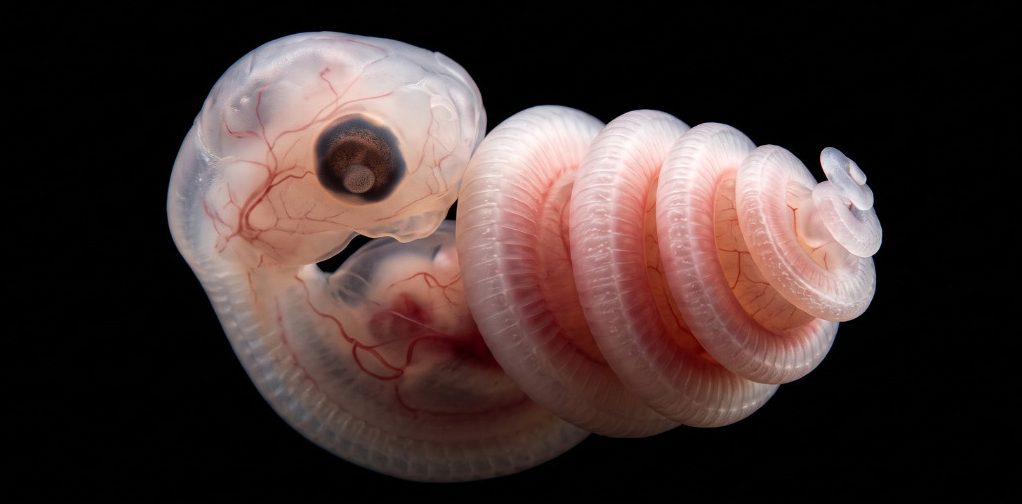
Snakes are already unsettling to plenty of people. Now it turns out they were doing something genuinely bizarre before they even had a face. A new study in Current Biology explains the snake embryo coiling, why every snake embryo twists itself into a tight, right-handed spiral inside the egg, and no, it is not because baby snakes are secretly showing off. The real answer involves a stubborn gut, a lopsided yolk, and a body that simply refuses to wait for its organs to catch up.
What Is Snake Embryo Coiling, Exactly?
Snake embryo coiling describes the tight spiral shape a developing snake forms inside its egg, long before hatching. Researchers led by Tetsuto Miyashita at the Canadian Museum of Nature examined more than 900 embryos across 39 snake and limbless reptile species. Consequently, they confirmed this coiling is not random. It is a strikingly consistent pattern that shows up in nearly every species studied.
Why Does the Spiral Start Before Snakes Have Muscles?
The spiral begins before the embryo has any muscle control, which rules out the idea that the snake is actively curling itself. In fact, researchers found this right-handed coiling appears within the first two weeks after the egg is laid. Therefore, something purely mechanical had to be forcing the shape, not behavior or movement.
What Actually Causes Snake Embryo Coiling?
Snake embryo coiling happens because the spine grows much faster than the digestive tract can manage. As a result, the gut acts like a short leash running through the middle of a rapidly lengthening body. The spine has nowhere to go but sideways, so it buckles and twists around that shorter tether, similar to how a strap loops when you pull it too tight.
Why Does the Twist Always Go Clockwise?

The direction depends entirely on where the yolk sits, not on any snake preference. Specifically, the yolk always sits to the embryo’s left side, so the buckling body gets pushed toward the right instead. Consequently, this produces a clockwise, or dextral, spiral when viewed from head to tail. It is basic mechanics, not a snake making a decision.
Does Snake Embryo Coiling Stay Clockwise Until Hatching?
No, and this is where the original claim needs a correction. The clockwise pattern is essentially universal only during the early weeks, before muscles develop. However, as the embryo grows and the yolk shrinks, the snake gains muscle control and starts repositioning itself. By the time hatching approaches, roughly half the embryos stay right-handed, and the other half switch to a left-handed coil.
Why Does This Coiling Trick Matter for Snake Bodies?
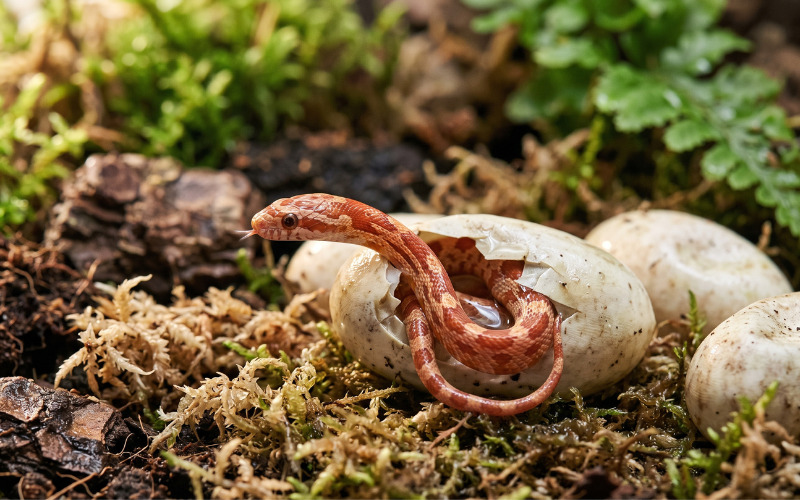
This coiling mechanism is likely what allows snakes to pack such an extreme number of vertebrae into a small egg. Snakes have far more vertebrae than any other vertebrate, and that length has to go somewhere during development. Therefore, the spiral is not decoration. It is a structural workaround for cramming a very long spine into a very small shell.
My Experience: Why This Study Surprised a Reptile Keeper
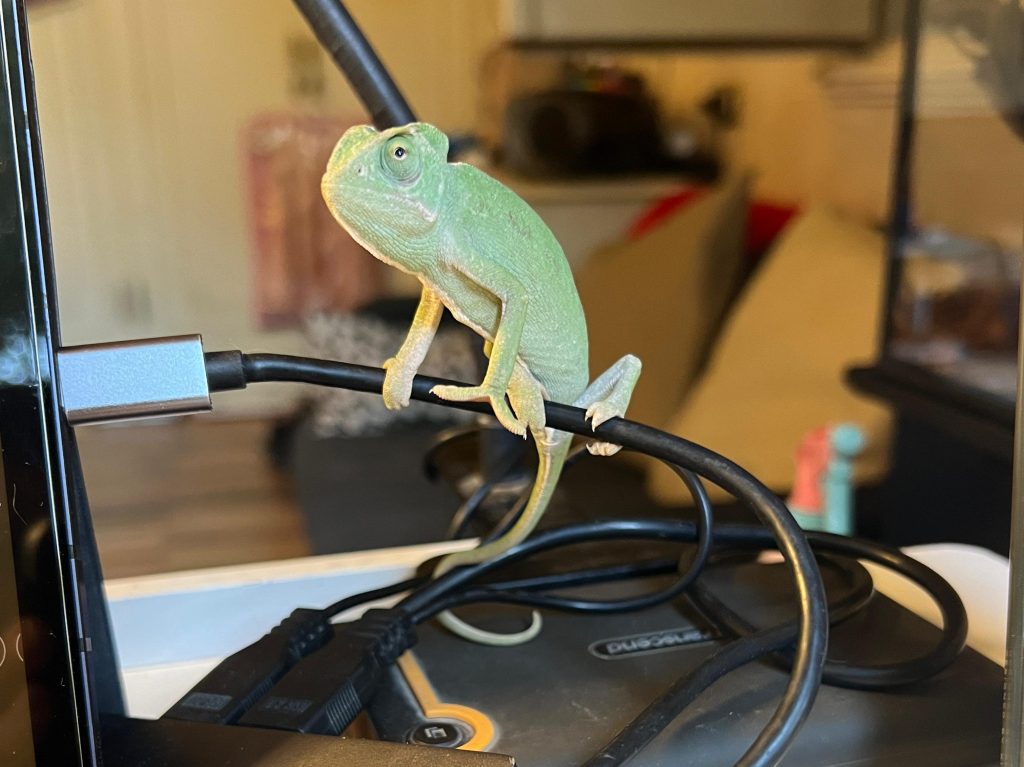
As the founder and researcher behind Exotastic Earth, I do not keep snakes myself, so I will not pretend to have watched one coil in an egg firsthand. However, years of watching Cosmo my chameleon develop and Mike and Frida grow from coin-sized RES hatchlings taught me one thing. Reptile development constantly humbles anyone who assumes it works like a simplified version of mammal biology. This study is a good reminder that “obvious” animal behavior often has a purely mechanical explanation hiding underneath it.
FAQ: Snake Embryo Coiling, Answered Directly
Snake embryo coiling is the tight spiral shape a developing snake takes inside its egg. It happens because the spine elongates faster than the gut, forcing the body to buckle. Researchers confirmed this pattern across 900-plus embryos from 39 species. The coil forms before the embryo can move on its own.
No, this is a common oversimplification. Nearly all embryos coil clockwise only during the first two weeks, before muscles develop. As muscles mature and the yolk shrinks, embryos reposition themselves freely. By hatching, roughly half remain right-handed and half switch to left-handed.
The gut causes the coiling because it grows much slower than the spine and physically restrains it. Muscles have not developed yet during the earliest coiling stage, so they cannot be responsible. The gut effectively acts as a tether, forcing the lengthening body to buckle around it.
Yes, snake embryos deal with a packing problem most reptiles never face. Lizards and turtles have shorter spines and do not need this buckling mechanism to fit inside an egg. Snakes evolved dramatically more vertebrae, so coiling likely became a mechanical necessity rather than a shared reptile trait.
The yolk determines the coil direction because it always sits on the embryo’s left side. Buckling tissue has to move away from that mass, so it gets pushed toward the right instead. This consistently produces a clockwise, or dextral, spiral during the earliest developmental stage.
There is no evidence that coiling direction affects a hatchling’s health or behavior. The coil is a temporary developmental solution to a spatial problem inside the egg, not a permanent physical trait. Once muscles mature, snakes reposition freely regardless of their original coiling direction.
Sources
- Canadian Museum of Nature
https://nature.ca/en/about-the-museum/media-centre/new-study-coiling-in-snakes/ - EurekAlert!
https://www.eurekalert.org/news-releases/1141750 - ScienceDaily
https://www.sciencedaily.com/releases/2026/09/260901070516.htm - Popular Science
https://www.popsci.com/environment/why-snake-embryos-coil-right/ - Earth.com
https://www.earth.com/animals/snake-embryos-almost-all-coil-the-same-direction-before-they-can-even-move/


Leave a Reply
You must be logged in to post a comment.