

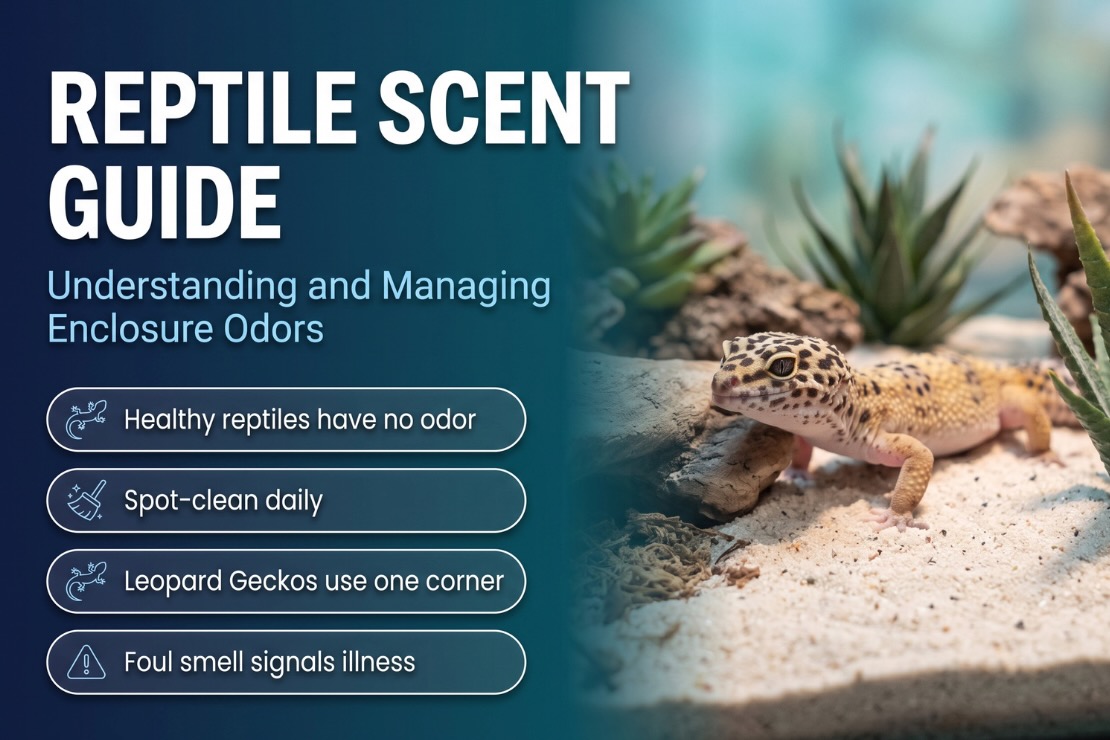
When I was first trying to convince my family to let me get a pet reptile, I was met with a wall of skepticism. The concerns were varied, but they all circled back to one central, unspoken fear: the “ick” factor. “Aren’t they slimy?” “Won’t it be gross?” and the question lurking behind it all, “Won’t it… smell?” Much of this fear comes from the idea of reptile scent and what it might be like. I think we’re culturally conditioned to associate reptiles with something primordial and swampy. But my first time holding a friend’s Leopard Gecko was a revelation. It wasn’t slimy; its skin was cool, dry, and felt like textured velvet. And the smell? There was none. Absolutely nothing. That little gecko was my first and most important lesson in reptile hygiene: a healthy reptile does not smell. A dirty enclosure, however, absolutely will.
The fear of a smelly pet is a major hurdle for many aspiring keepers. The truth is, when it comes to reptiles, you are not smelling the animal; you are smelling the quality of your own housekeeping.
What does a healthy, well-maintained reptile scent smell like?

A healthy, well-maintained reptile smells like almost nothing. At most, you will catch the clean, earthy note of its substrate. In fact, many first-time keepers sniff a leopard gecko and walk away slightly disappointed. The animal itself simply carries very little odor. As a result, a smelly reptile room almost always points to the enclosure, not the pet.
Why Does Reptile Skin Carry So Little Scent?
Reptile skin carries little scent because it is dry, scaled, and nearly free of the glands that make mammals smell. Specifically, it is covered in keratin scales and has few glands compared with mammals and amphibians. Mammals have sebaceous and sweat glands, and skin bacteria feed on those secretions. Reptiles give those bacteria far less to work with.

However, “glandless” is not quite accurate either. Many lizards have femoral or precloacal pores, which play a role in chemical signaling. Furthermore, snakes and most lizards have scent glands near the vent. These glands stay quiet during normal daily life. Consequently, a calm, healthy reptile in a clean enclosure smells mostly like its bedding. Aquarium keepers already know this feeling. A planted tank with a mature filter smells faintly of soil and nothing more. That neutral, earthy note is your target in a reptile enclosure too.
Pro Tip: Do the sniff test in two places. Smell the animal gently during handling, then smell the enclosure at substrate level. If only the enclosure smells, you are most likely dealing with a cleaning issue.
How Does Uric Acid Keep Reptile Scent Low?
Uric acid keeps reptile scent low because reptiles excrete nitrogen as a dry solid instead of liquid urine. Mammals flush nitrogen out as urea dissolved in water. Reptiles, however, excrete it mainly as solid uric acid. Keepers call that chalky white part of every dropping “urates.” Indeed, uric acid is roughly 10,000 times less soluble than ammonia or urea.

A 2025 study in the Journal of the American Chemical Society examined urates from more than 20 reptile species. The researchers found tiny spheres of uric acid in every one of them. They also found that uric acid helps convert toxic ammonia into a safer solid form. In other words, reptiles basically pee crystals. Aquarium keepers will appreciate the contrast. Fish release ammonia straight into the water, so we build entire filtration systems around it. Reptiles hand you a neatly packaged solid instead. However, that package does not stay neutral forever. Once waste sits on warm, damp substrate, it starts breaking down, and the smell arrives.
How does the digestive waste of a Bearded Dragon impact enclosure odor?

A Bearded Dragon affects enclosure odor more than most small lizards, mainly because of scale. Bearded dragons (Pogona vitticeps) are omnivores that eat both insects and vegetables. Consequently, each dropping arrives as a dark fecal portion with a white urate cap. A larger lizard produces larger droppings, and a fresh one is easy to smell in a warm enclosure. Once it dries, the smell fades noticeably. Therefore, removal speed matters far more than any air freshener. Claims that dragon waste smells worse than other lizards’ waste circulate widely online. However, this guide found no research ranking reptile droppings by smell. Size and diet remain the practical explanation.
What Daily Routine Controls Bearded Dragon Reptile Scent?
Daily scooping, same-day removal of leftovers, and regular substrate changes control bearded dragon odor. Here is the routine:

- Scoop on sight. Remove feces and urates as soon as you spot them, using a dedicated scoop.
- Clear leftover greens. Salad left under a basking lamp wilts and sours quickly, so remove it the same day.
- Remove uneaten feeders. Escaped crickets eventually die in corners, and you will smell them before you find them.
- Refresh the water bowl daily. Dragons sometimes soak in their water and occasionally use it as a toilet.
- Replace soiled substrate. The MSD Veterinary Manual advises fully replacing loose bedding regularly as feces and food soil it. It also warns that gravel is hard to clean and often swallowed.
For deep cleaning, the same manual notes that soap and water usually do the job. Bleach also works, provided you rinse thoroughly. However, avoid phenolic disinfectants, which the manual lists as toxic to reptiles.
Pro Tip: Many keepers notice that a warm soak often prompts a bowel movement. Therefore, schedule soaks right before your cleaning session and empty the tub immediately. Afterward, disinfect the tub, exactly as the CDC recommends for any reptile cleanup area.
Why are Leopard Geckos considered the elite of enclosure cleanliness?

Leopard Geckos (Eublepharis macularius) earn their tidy reputation because most of them choose one toilet spot, usually a corner. Their droppings are small, fairly dry, and capped with white urates. As a result, odor stays minimal and cleaning stays focused on one predictable zone. In fact, this habit makes them one of the easiest lizards for apartments and shared homes. However, “usually” is doing a lot of work in that sentence. Some geckos pick a spot inside or under a hide instead. Aquarium keepers know the dead spot behind the filter where debris always settles. A leopard gecko simply creates that dead spot on purpose.
Which Hacks Keep Leopard Gecko Reptile Scent Near Zero?

Turning the latrine corner into a removable, easy-clean zone keeps leopard gecko odor close to zero. These habits do the rest:
- Find the latrine early. Check corners and under hides during the first week, then note the favorite spot.
- Make it removable. Place a tile, a paper towel, or a shallow dish in that corner for one-swipe cleaning.
- Spot clean daily. The droppings are tiny, so daily checks take very little time.
- Feed with care. Offer insects a few at a time and remove leftovers instead of letting them roam.
- Refresh the humid hide. Leopard geckos need a humid hide for shedding, but permanently soggy moss turns musty. Replace it regularly.
- Deep clean monthly. Remove everything, wash with soap and water, rinse well, and let it dry before reassembly.
Pro Tip: Keep the latrine corner bare. Fewer objects there mean faster cleaning and fewer hidden surprises.
Do arboreal species like Crested Geckos and Chameleons require different cleaning strategies?

Yes. Arboreal lizards drop waste onto glass, branches, and leaves, so cleaning shifts from scooping to wiping. Crested geckos (Correlophus ciliatus) eat a fruit-based commercial diet plus insects. Chameleons, on the other hand, are mainly insectivores. Their droppings rarely smell strong. However, they smear, dry hard, and slowly turn your view into frosted glass.
How Do You Clean Arboreal Reptile Scent Hotspots?

You clean arboreal hotspots by wiping, not scooping, and by working before droppings dry. Follow these steps:
- Wipe while fresh. A damp paper towel removes new droppings in seconds. Dried ones need a little warm water first.
- Skip harsh sprays near the animal. The MSD Veterinary Manual states that soap and water handle most enclosure cleaning. Rinse surfaces well afterward.
- Rinse live plants with plain water. Never spray glass cleaner or disinfectant on leaves that a chameleon licks for water.
- Remove leftover crested gecko diet. Fruit-based food ferments in warm, humid air, so swap the dish before it turns.
- Check the lower levels. Waste often lands on lower leaves and the floor, so inspect beneath favorite perches.
Furthermore, a regular wipe-down schedule prevents buildup on the décor your gecko climbs every night.
How Do Misting and Ventilation Affect Reptile Scent?

Misting adds water that must drain somewhere, and poor ventilation turns that water into odor. According to the MSD Veterinary Manual, chameleons drink mainly by licking water droplets from leaves and décor. Consequently, keepers mist often, and all that water eventually runs downhill. Standing water mixed with droppings creates a stagnant, swampy smell. Aquarium keepers know this smell well. It is a bucket of tank water forgotten behind the door for a week. Therefore, give every misted enclosure an exit route for water. A drainage layer, a drip tray, or a bottom drain all work. In addition, keep airflow strong. The manual warns that cutting ventilation to hold humidity frequently causes skin and respiratory disease. In short, good drainage and airflow solve the odor problem and the health problem together.
Why is a snake’s waste considered a “one and done” cleaning event?
Snakes eat large meals at long intervals, so they defecate far less often than most lizards. A ball python (Python regius), for example, typically passes a meal about a week after eating. Adults on slower feeding schedules can go several weeks between droppings. Faster-feeding colubrids, such as corn snakes, may go more often. Consequently, each event arrives as one large deposit of feces and urates. You remove it in a single pass, and the odor leaves with it.
Pro Tip: The MSD Veterinary Manual recommends freshly killed or properly thawed prey rather than live rodents. If your snake refuses a thawed meal, remove it promptly. Warm enclosures spoil meat fast, and feeder rodents can also carry Salmonella.
Is Snake Musk the One Reptile Scent That Comes From the Animal?
Yes. Musk is the honest exception to the rule that reptiles do not smell. Every snake carries a pair of scent glands at the base of the tail. When disturbed, a snake can release a foul-smelling secretion from them. Keepers call this musking. Garter snakes are especially famous for it, and researchers describe musking across many snake groups.

In fact, a 2025 study in The Science of Nature found that these secretions repel ants. Direct contact even paralyzed or killed a high percentage of the ants tested. So yes, that smell is a chemical weapon, not a hygiene failure. Therefore, a newly arrived or nervous snake may musk during its first handling sessions. Handle calmly, keep sessions short, and wash your hands with soap afterward. However, a persistent smell or swelling at the tail base deserves attention. WikiVet notes that these glands can become impacted or abscessed in captivity.
Can a bioactive setup truly eliminate the need for manual cleaning?

No, but it can dramatically reduce it. Specifically, a cleanup crew of isopods and springtails lives in the soil and processes organic waste. Plants and beneficial microbes then recycle the nutrients. As a result, a balanced bioactive enclosure smells like a forest floor rather than a litter box. However, even bioactive suppliers state that cleanup crews reduce spot cleaning rather than replace it.
How Does the Cleanup Crew Control Reptile Scent?

The cleanup crew controls odor by eating waste and mold before decomposition can produce smell. Each member handles a different job:
- Isopods are the heavy lifters. They break down feces, shed skin, leftover food, and decaying leaf litter.
- Springtails are the mold patrol. They graze on mold and fungi before growth spreads across the substrate.
- Beneficial microbes finish the job, turning broken-down waste into nutrients that plants absorb.
Aquarium keepers will recognize the setup immediately. Nerite snails and cherry shrimp graze leftovers and algae beautifully. Still, nobody skips water changes because of them. A cleanup crew works the same way in a terrarium. Furthermore, bioactive is not only for tropical species. Arid setups use crews suited to drier conditions, and some desert builds rely on beetles. Consequently, match the crew to your enclosure’s humidity, not to whatever the shop has in stock.
Pro Tip: Seed the cleanup crew and add leaf litter before the reptile moves in. A crew with a head start handles the first droppings far better than a crew that just arrived.
Where Do Bioactive Setups Still Need You?
Bioactive setups still need you for large droppings, waterlogged soil, new-build mold, and overfeeding.

- Large droppings. A big lizard can produce more waste than a small crew can process. Remove large droppings by hand.
- Waterlogged soil. Soggy substrate loses oxygen and starts to smell sour. Aquarium keepers know the rotten-egg smell of a disturbed, oxygen-starved sand bed. Similar chemistry can develop in an overwatered terrarium.
- New-build mold. A white mold bloom often appears in fresh setups. Springtails usually bring it under control as their population grows.
- Overfeeding. Piles of uneaten food outpace the crew and invite mold and odor.
Therefore, treat a sour or swampy smell as a balance alarm. Improve drainage, increase ventilation, reduce misting, or add more crew. In short, a bioactive enclosure is a living system, and living systems still need a manager.
When does a change in Reptile Scent signify a serious health red flag?

A change in reptile scent becomes a red flag when the smell comes from the animal itself. The same applies when odor returns right after a full clean. Normal droppings smell briefly and then fade. Abnormal smells linger, intensify, or show up alongside other symptoms. Therefore, your nose works as a surprisingly useful early-warning tool. Pair every sniff test with a quick look at droppings, appetite, and behavior.
Which Reptile Scent Warning Signs Need a Vet?

Any foul smell from the mouth, droppings, shell, or tail base deserves a reptile veterinarian. Watch for these signs:
- Foul breath with red gums, pus, or excess saliva. These are classic signs of infectious stomatitis, also called mouth rot. Untreated cases can spread into bone or the bloodstream.
- Foul, runny, or bloody droppings that persist. Internal parasites, such as coccidia and flagellates, and bacterial infections can cause these changes.
- Foul-smelling ulcers on a turtle’s shell. Shell rot often leaves foul-smelling debris in the damaged area.
- Swelling or lingering odor at a snake’s tail base. Impacted or abscessed scent glands need veterinary treatment.
- A sour smell that survives a full clean. Something in the animal or the setup is wrong, and guessing wastes time.
Pro Tip: Collect the freshest dropping you can in a clean, sealed container. Then book a reptile veterinarian for a fecal exam. A fresh sample gives the vet far more useful information than an old, dried one.
Does a Scent-Free Enclosure Mean a Germ-Free One?
No. An odor-free enclosure can still carry germs that make people sick. According to the CDC, reptiles are more likely than other pets to carry such germs. Salmonella is the most common, and healthy reptiles often carry it in their digestive tracts. Consequently, good hygiene protects you even when nothing smells.

Follow these CDC-based basics:
- Keep reptiles and their equipment out of the kitchen.
- Clean habitats and supplies outdoors when possible.
- Indoors, use a laundry sink or bathtub, then disinfect it right away.
- Wash your hands after touching the animal, its enclosure, or its supplies.
The CDC also advises extra caution for children under five, adults over 65, and people with weakened immune systems. Aquarium keepers learned a version of this rule long ago. Tank equipment never goes in the kitchen sink, and reptile gear follows the same rule.
My Experience: Why Do Aquarium Lessons Apply to Reptile Scent?
They apply because odor follows the waste load in both hobbies, not the animal. I started with aquariums in 2022, beginning with two bettas in 20 liter planted tanks. Consequently, I met the nitrogen cycle long before I met a single reptile. Filter maturity, water changes, and zebra nerite snails taught me where smells really come from.

In early 2024, two coin-sized red-eared sliders, Mike and Frida, joined the household. Frida is now outgrowing Mike and runs the tank like a strict manager. Their setup sits right between both hobbies, because turtle waste goes straight into the water. Therefore, every aquarium lesson transferred directly to them. The same logic applies to every dry enclosure in this guide. When something smells, the source is almost always waste, water, or leftovers. In fact, the rule holds whether the resident has fins, a shell, or scales. Find the source first, and only then worry about the animal.
Reptile Scent FAQ
No. A healthy reptile has very little body odor because its dry, scaled skin carries few glands compared with mammals. Persistent odor in a reptile room almost always comes from the enclosure: old droppings, uneaten food, or damp substrate. Daily spot cleaning removes the source before the smell can build.
The usual causes are droppings left too long, uneaten insects or salad, a dirty water bowl, and wet substrate. Warmth and moisture speed up decomposition and odor. Remove waste daily, refresh water daily, replace soiled substrate regularly, and check ventilation. A clean enclosure in good balance should smell earthy or neutral.
A healthy snake does not smell during normal daily life. Every snake does carry a pair of scent glands at the tail base. A stressed snake may release a foul musk from them. Snake droppings are infrequent and easy to remove whole. The enclosure returns to a neutral, earthy smell after removal.
A balanced bioactive enclosure greatly reduces odor and cleaning, but it does not remove the need for spot cleaning. Isopods break down droppings and leaf litter, and springtails graze on mold. Large droppings, overfeeding, or waterlogged soil can overwhelm the crew. Remove big waste by hand and keep the substrate damp, not soggy.
Treat any foul smell that comes from the animal itself, or that returns right after cleaning, as a warning. Common culprits include mouth rot, foul diarrhea from parasites or bacteria, shell rot in turtles, and infected scent glands. Collect a fresh dropping and book a reptile veterinarian for a fecal exam.
That smell is most likely musk, a defensive secretion from the scent glands near the cloaca. Snakes release it when they feel threatened, often during handling by a new keeper. It is unpleasant but temporary. Calm, confident handling usually reduces it. A persistent smell from the tail base deserves a vet check.
It can be. The CDC notes that reptiles commonly carry Salmonella in their digestive tracts, even when they look healthy. An odor-free enclosure is not a germ-free enclosure. Use a dedicated scoop and keep reptile supplies out of the kitchen. Clean equipment outside or in a dedicated tub and wash your hands.
Sources
- MSD Veterinary Manual (Management and Husbandry of Reptiles) – https://www.msdvetmanual.com/exotic-and-laboratory-animals/reptiles/management-and-husbandry-of-reptiles
- MSD Veterinary Manual (Management of Reptiles: cleaning and disinfectants) – https://www.msdvetmanual.com/exotic-and-laboratory-animals/reptiles/management-of-reptiles
- WikiVet (Snake Skin and scent glands) – https://en.wikivet.net/Snake_Skin
- Veterinary Practice News (Reptile species-specific glands) – https://www.veterinarypracticenews.ca/?p=46488
- Journal of the American Chemical Society via PubMed Central (Uric acid microspheres in reptiles) – https://www.ncbi.nlm.nih.gov/pmc/articles/PMC12593373/
- The Science of Nature, Springer (Snake scent gland secretions repel ants) – https://link.springer.com/article/10.1007/s00114-025-01990-4
- Reptiles Magazine (Snake scent glands and ants) – https://reptilesmagazine.com/snakes-have-smelly-butts-to-repel-ants/
- Journal of North American Herpetology (Gartersnake musking study) – https://journals.ku.edu/jnah/article/download/11892/11221
- PangoVet (Leopard gecko odor and latrine habits) – https://info.pangovet.com/pet-lifestyle/geckos/how-to-get-rid-of-leopard-gecko-smell
- The Critter Depot (Ball python defecation timing) – https://www.thecritterdepot.com/blogs/news/how-often-do-ball-pythons-poop
- Zen Habitats (Cleanup crew role and limits) – https://www.zenhabitats.com/blogs/reptile-care-sheets-resources/what-is-a-cleanup-crew-cuc
- The Bio Dude (Springtails as cleanup crew) – https://www.thebiodude.com/blogs/isopod-and-springtail-clean-up-crew-guides-culturing-care-and-breeding/springtails-the-essential-cleanup-crew-for-bioactive-habitats
- Reptiles Magazine (Mouth rot, shell rot, and scale rot) – https://reptilesmagazine.com/identify-and-treat-mouth-shell-and-scale-rot-in-reptiles/
- PetMD (Snake mouth rot) – https://www.petmd.com/reptile/conditions/mouth/snake-mouth-rot-symptoms-causes-and-treatment
- Chewy Education (Bearded dragon mouth rot) – https://www.chewy.com/education/reptile-and-amphibian/bearded-dragon/bearded-dragon-mouth-rot
- CDC (Reptiles and Amphibians) – https://cdc.gov/healthy-pets/about/reptiles-and-amphibians.html
- ARAV (Salmonella in Reptiles: Veterinary Guidelines) – https://arav.org/wp-content/uploads/2024/02/Salmonella_VetGuide_2018_FINAL.pdf
Leave a Reply
You must be logged in to post a comment.