
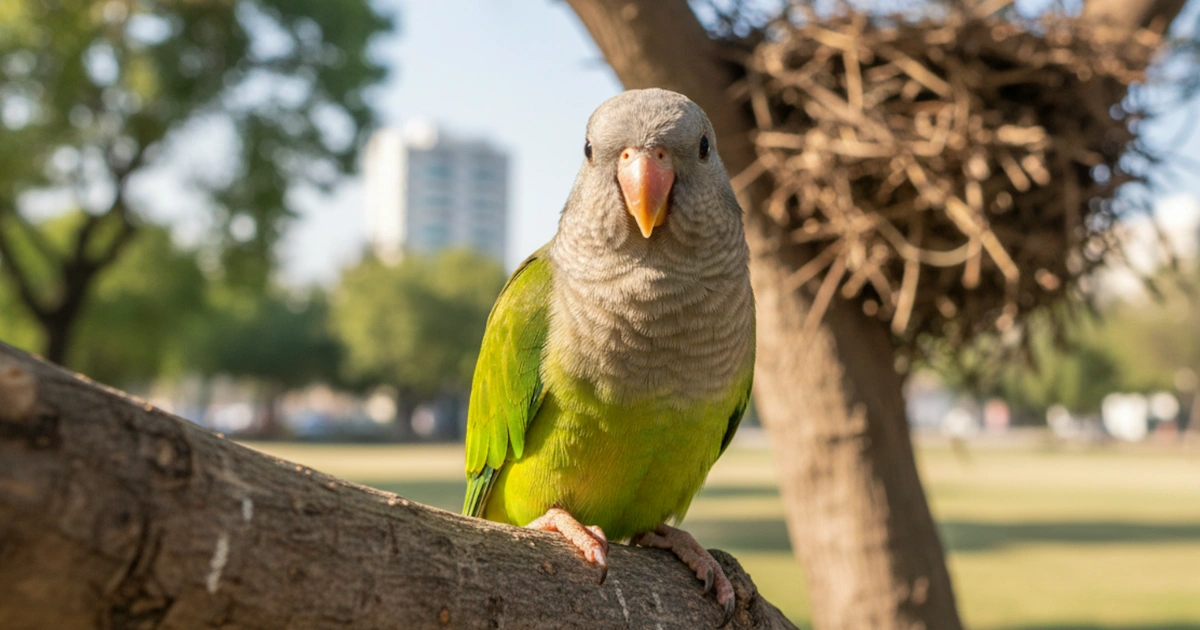
Quaker Parrots are also known as Monk Parakeets. They are famous for giant personalities in small bodies. These birds are brilliant and fiercely loyal. They are also endlessly entertaining to watch. However, their big brains come with unique challenges. This includes cage territoriality and specific legal restrictions. This guide delves into everything regarding these captivating little clowns.
Species Information and Suitability
Quakers are often considered a good first parrot for dedicated beginners. You must do your research first. They are small and incredibly intelligent. Furthermore, they form very strong bonds with owners. A potential owner must prepare for infamous cage territoriality. You should also expect loud vocalizations.
How long do they live?
These birds are a long-term commitment. They have an average lifespan of 20 to 30 years. This requires a healthy and caring environment. Consequently, they are not a short-term pet.
Are They noisy?
Consequently, these birds can be quite noisy. However, they do not reach the volume of a large macaw. Furthermore, they possess a loud and screechy call. They use this specifically when excited or alarmed. In fact, they are constant chatters. Therefore, they fill the day with words and mimics. As a result, their noise level might challenge some apartment dwellers. Talking is certainly one of their standout traits. Specifically, Quakers are prolific and clear talkers. They develop large vocabularies easily. Moreover, they learn to use words in the correct context. This makes them one of the best talking small parrots available.
Furthermore, they are notorious for bonding intensely with one person. As a result, they can become possessive. However, they can be good family pets if everyone helps. Consequently, the entire family should handle them from a young age. This specifically helps mitigate their one-person bird tendency. When well-socialized, they are very cuddly birds. In fact, they love to be held and snuggled. They also enjoy head scratches. However, this affection is usually reserved for a favorite person.
Furthermore, Quakers are spunky and comical. They are also confident and stubborn. Therefore, they have a big bird attitude in a small body. In fact, they are fearless and curious explorers. Temperament is largely an individual trait. Specifically, some keepers report that males talk better. However, others say females are moodier when hormonal. In fact, there are no hard and fast rules for temperament.
Quaker Parrots Legal Considerations
Checking local laws is critically important. You must verify your state or country regulations. Quaker parrots are illegal to own in several US states. These include California, Pennsylvania, and Georgia. Laws change often. Therefore, always check with your local fish and wildlife department.
Why are they illegal in some places?
Quakers are unique among parrot species. They build large communal stick nests. Other parrots use tree cavities. Escaped pet Quakers have established feral colonies worldwide. These nests are often built on power lines. Consequently, they cause damage and outages. They are also seen as agricultural pests. Some states ban them to prevent wild populations.
Quaker Parrots Enclosure and Habitat Requirements
The minimum cage footprint is 20 inches deep by 20 inches wide. It should be at least 24 inches high. However, a larger cage is highly recommended. These are very active birds. Bar spacing is also important. It should be between 1/2 inch and 5/8 inch. This prevents escapes or head injuries.
They are active and intelligent. You must provide a good mix of toys. Foraging toys keep their minds stimulated. Shreddable toys made of paper or soft wood are great. You should also provide nest-building materials. These include paper strips or safe twigs. Their nesting instinct is hardwired and unique. In the wild, they build massive stick nests. In captivity, they weave things into their cage bars. Providing safe materials for this is excellent enrichment.
Quaker Parrots Diet and Nutrition
A healthy diet is crucial for this species. They are very prone to obesity. A high-quality pellet should make up 60 to 70 percent of their food. This provides balanced nutrition. Fresh vegetables should make up 20 to 30 percent of the diet. A daily chop of fresh veggies is essential. Use fruits, nuts, and seeds sparingly. These should only be training treats.
High-fat diets are very dangerous. Quakers are genetically predisposed to Fatty Liver Disease. A diet high in sunflower seeds is risky. Specifically, it will significantly shorten their lifespan.
Quaker Parrots Health and Behavior
Common health issues include Fatty Liver Disease. They are also prone to feather plucking from boredom. Furthermore, they are susceptible to respiratory infections. Cage aggression is a hallmark Quaker trait. You can manage it with specific steps. Never discipline your bird inside its cage. The cage must be a safe space.
Train your bird to step up onto a stick. Ask them to come out onto a neutral object. Do not reach your hand inside the cage. Furthermore, rearrange toys and perches frequently. Biting is often a result of hormonal behavior. It can also stem from cage territoriality. Put the bird down calmly if it bites. Give it a short time out. Focus on reading body language to prevent future bites.
Why does my Quaker quake or bob its head?
This behavior gave them their name. Quaking and head-bobbing are common. Usually, these are signs of happiness and excitement.
Variations and Identification
The normal Quaker is bright green. Selective breeding has produced many variations. Blue is the most popular mutation. Lutino birds are bright yellow with red eyes. Albino birds are white with red eyes. There are also Cinnamon and Pallid versions.
Males and females look identical. They are a monomorphic species. Therefore, a DNA test is the only certain way to determine sex.
Quaker Parrots FAQ
In the United States, Quaker Parrots are illegal to own or sell in several states (including California, Georgia, and Pennsylvania) and highly restricted in others. This is because they are considered a high-risk invasive species capable of building massive “apartment-style” nests on utility poles, which can cause power outages and damage local ecosystems. Always check your local and state laws before acquiring one.
A single Quaker Parrot requires a minimum cage size of 24″ x 30″ x 24″, though larger is always better. Because they are the only parrot species that builds elaborate nests from twigs rather than nesting in holes, they need extra space to accommodate “building materials” and toys. Ensuring the bar spacing is between 1/2″ and 5/8″ is critical to prevent injury or escape.
Quaker Parrots have a unique metabolism that makes them highly susceptible to Hepatic Lipidosis (Fatty Liver Disease) if fed a high-fat seed diet. To prevent this, their diet should consist of 60-70% high-quality formulated pellets, with the rest made up of fresh vegetables and limited fruit. Seeds should be treated as high-value rewards for training only, rather than a dietary staple.
Quaker Mutilation Syndrome (QMS) is a severe behavioral and medical condition where the bird not only plucks feathers but begins to self-mutilate the skin on its chest, wing webs, or thighs. This is often triggered by a combination of high stress, lack of mental stimulation, or underlying allergies. Managing QMS requires immediate veterinary intervention and a strict regimen of environmental enrichment.
Unlike most parrots, Quakers have a strong instinctual drive to “weave” and build. They will often try to “fix” their cage or your furniture by weaving sticks, paper strips, or even stolen household items into the bars. Providing them with bird-safe popsicle sticks or natural twigs is essential for satisfying this unique cognitive need and preventing boredom-based destruction.
Sources
- Lafeber Company
https://lafeber.com/pet-birds/species/quaker-parakeet/ - The Spruce Pets
https://www.thesprucepets.com/quaker-parrots-as-pets-328813 - PetMD
https://www.petmd.com/bird/breeds/quaker-parrot - VCA Animal Hospitals
https://vcahospitals.com/know-your-pet/quaker-parrots-feeding - Beauty of Birds
https://beautyofbirds.com/quaker-parakeet-legality/


Leave a Reply