The island of Borneo is a place of almost mythical status. In fact, it is a world of ancient emerald rainforests. Specifically, mist-shrouded mountains dominate the landscape. Furthermore, it features the soulful, orange-eyed gaze of the Orangutan. A journey here is a step back in time. Therefore, it is an immersion into one of the most biodiverse places on Earth. However, a world of camouflage has evolved in this jungle. Potent chemical defenses also hide in the quietest shadows. Consequently, some creatures demand your utmost respect. As a result, this guide is your essential field manual. Specifically, it helps you navigate the wild wonders of Borneo safely.
Snakes in Borneo’s Rainforests
King Cobra (Ophiophagus hannah)

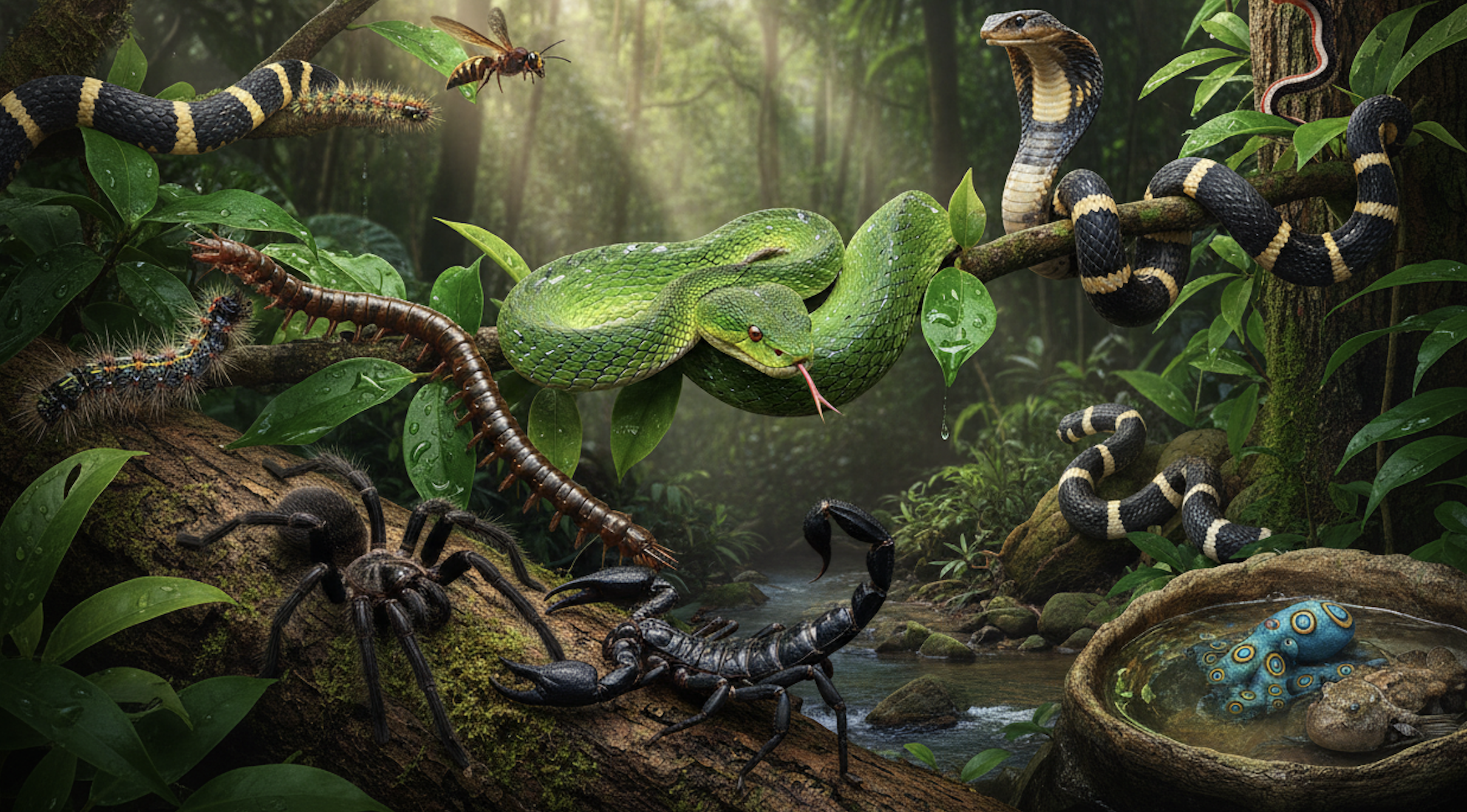
The world’s longest venomous snake. It is intelligent, reclusive, but incredibly dangerous if it feels threatened, capable of delivering a massive dose of potent neurotoxin.
Equatorial Spitting Cobra (Naja sumatrana)

A common cobra in Borneo that can and will accurately spit venom into the eyes of a threat from a distance, causing intense pain and potential blindness.
Malayan Krait (Bungarus candidus)

A highly venomous, nocturnal snake. Its venom is a powerful neurotoxin, and bites often occur at night when people accidentally step on them.
Wagler’s Pit Viper (or Temple Viper, Tropidolaemus wagleri)

A beautiful, green, (tree-dwelling) viper. They are masters of camouflage, often looking like part of the foliage.
Mangrove Snake (Boiga dendrophila)

Specifically, this is a beautiful black and yellow snake common in coastal forests. It is rear-fanged and mildly venomous. However, its large size and feisty attitude mean a bite can be unpleasant. Consequently, such an encounter may require medical attention.
Red-headed Krait (Bungarus flaviceps)

A beautiful and highly venomous snake with a striking red head and tail. It is a rare and secretive species.
Are There Dangerous Spiders and Scorpions?
Bornean Black Tarantula (Lampropelma violaceopes)

A large, beautiful tarantula. While its bite is painful, its primary defense is flicking irritating hairs from its abdomen.
Giant Forest Scorpion (Heterometrus species)

This species is also known as the Asian Forest Scorpion. Specifically, these are large and impressive black scorpions. Their sting is intensely painful. Furthermore, it is comparable to a bee or wasp sting. However, the venom is not typically considered medically significant for adults. Consequently, you should still exercise caution when exploring their habitat.
Various Spiders

While there are no spiders on the level of the Brazilian Wandering Spider, it is wise to avoid any unidentified spider, as bites can cause localized pain and infection.
What Venomous Dangers Lurk in Borneo’s Waters?
The waters around Borneo are part of the Coral Triangle, the epicenter of marine biodiversity, which also means they are home to some of the world’s most venomous creatures.
Stonefish (Synanceia)

The world’s most venomous fish. It is perfectly camouflaged to look like a rock or piece of coral. Stepping on its dorsal spines is a life-threatening medical emergency.
Blue-ringed Octopus

This tiny, beautiful octopus is one of the most deadly animals in the ocean. Its painless bite contains a powerful neurotoxin that causes paralysis and respiratory arrest. They are often found in shallow tidal pools. Do not touch any small octopus.
Box Jellyfish

An almost invisible jellyfish with tentacles that deliver an excruciatingly painful and potentially fatal sting.
Sea Kraits

These are true sea snakes. They are often seen by divers and are generally docile in the water, but they possess an extremely potent neurotoxic venom and should never be cornered or handled.
Cone Snail

These beautifully patterned shells hide a venomous harpoon that can be fatal to humans. Never pick up a living cone shell.
Lionfish (or Devil Firefish)

An invasive species in many parts of the world, their beautiful fins are venomous spines that deliver an intensely painful sting.
What Other Venomous Creatures Live in Borneo?
Giant Centipede (Scolopendra species)

These massive, fast-moving centipedes can deliver an extremely painful venomous bite with their front forcipules.
Hairy Tussock Moth Caterpillar (and others)

Many caterpillar species are covered in beautiful but venomous spines or hairs that can cause a severe, painful, and persistent rash upon contact.
Giant Asian Hornet

One of the world’s largest hornets. Its sting is incredibly painful, and a swarm can be very dangerous.
Assassin Bug

A predatory bug that can deliver a painful, venomous bite if handled or threatened.
Stingrays

The coastal waters are home to stingrays, whose defensive tail barb can inflict an agonizingly painful venomous wound.
What Should I Do in Case of a Bite or Sting?
- Alert Your Guide or Local Help: The local people and professional guides are your best resource.
- Stay Calm: Panic increases heart rate and can speed the spread of venom.
- Seek Professional Medical Care Immediately: For any serious envenomation, medical care is the only solution.
Sources
- National Geographic
https://www.nationalgeographic.com/animals/reptiles/facts/king-cobra - Ocean Conservancy
https://oceanconservancy.org/blog/2017/03/13/the-blue-ringed-octopus-small-but-deadly/ - The Australian Museum
https://australian.museum/learn/animals/fishes/reef-stonefish-synanceia-verrucosa/ - Clinical Toxinology Resources
http://www.toxinology.com/fusion/show_main.php?parent_id=SN0185
Leave a Reply
You must be logged in to post a comment.