
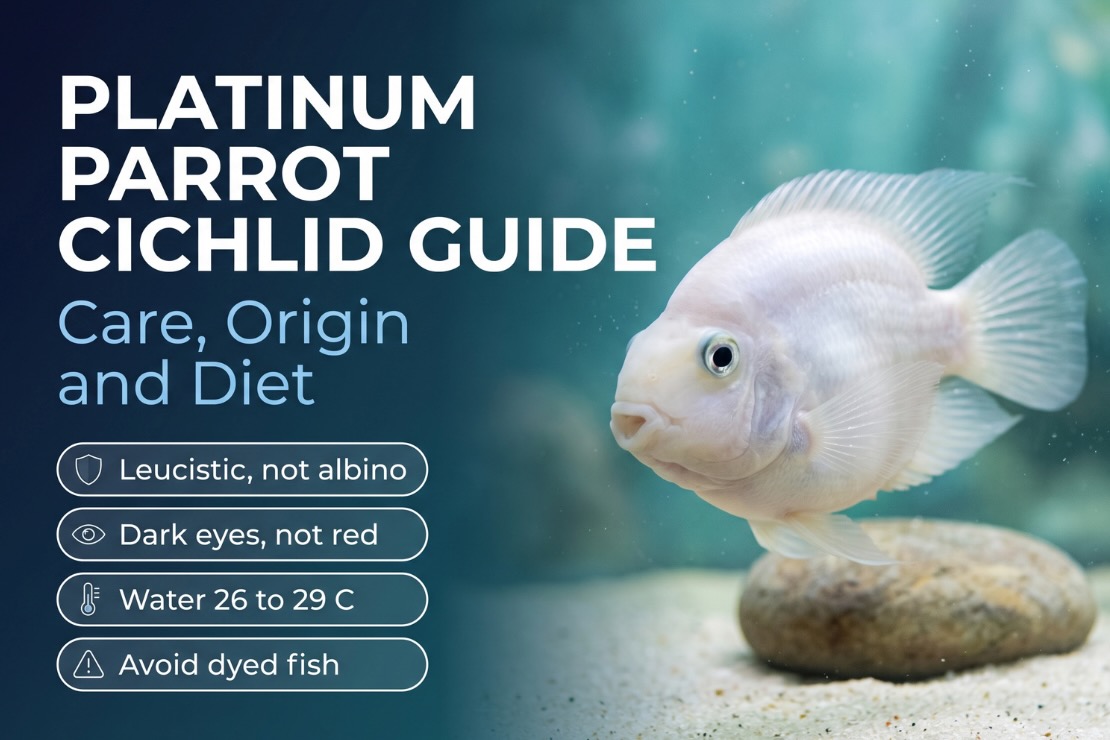
In the colorful world of cichlids, we’re accustomed to vibrant oranges, electric blues, and deep reds. But sometimes, the absence of color makes the boldest statement. My first time seeing a Platinum Parrot Cichlid, I was struck by its ethereal beauty. It was a solid, pearlescent white, like a living sculpture carved from marble. Against this pristine, ghostly canvas, its personality seemed to shine even brighter. Its big, expressive eyes were more soulful, its goofy, “o”-shaped mouth more comical, its excitement at seeing its owner more palpable. That fish taught me that a big personality doesn’t need a loud color to make its presence known. Sometimes, the most charismatic characters are the ones that paint their story on a blank slate.
The Platinum or Snow White Parrot Cichlid is a leucistic color morph of the famous Blood Parrot. It possesses all the interactive “water dog” intelligence that makes the breed so beloved, but its unique coloration comes with its own set of considerations.
Are Platinum Parrot Cichlids suitable for beginner fish keepers?
The Platinum Parrot Cichlid is an incredibly hardy fish, yet it is best suited for intermediate hobbyists. Specifically, their large adult size and significant waste production require a high level of maintenance. Furthermore, their territorial nature requires a keeper who understands cichlid behavior. Consequently, they are often viewed as the perfect “bridge” species for those moving into larger aquaria. Therefore, you should only acquire one if you are prepared for a long-term commitment. In fact, these fish can live for over fifteen years with proper care.
How intelligent and interactive is a Platinum Parrot Cichlid?
These fish are famous for their remarkable, puppy-like personalities. Specifically, a Platinum Parrot Cichlid will quickly learn to recognize its owner and follow movement outside the glass. Furthermore, their high intelligence allows them to be trained to accept food directly from your hand. Consequently, they provide a level of interaction rarely seen in the fish-keeping world. Therefore, they are much more than just a decoration; they become a genuine aquatic pet. As a result, many keepers form deep bonds with these “wet pets.”

What is the biological origin of Platinum Parrot Cichlids?
The Platinum Parrot Cichlid is a man made hybrid first developed in Taiwan during the 1980s. Specifically, it is a leucistic color morph of the standard Blood Parrot. Furthermore, leucism results in a lack of dark pigment while the eyes remain a normal, dark color. Consequently, they are distinct from true albino which possess red eyes. Therefore, you must distinguish these naturally occurring genetic colors from chemically dyed fish. In fact, artificially colored “jellybean” parrots are produced through cruel methods and should be strictly avoided.
What are the essential housing requirements for this species?
A single adult Platinum Parrot Cichlid requires a minimum of a 75-gallon aquarium to thrive. Specifically, you must provide massive, oversized filtration to handle their heavy bioload. Furthermore, these fish are active “redecorators” that will constantly move substrate around the tank. Consequently, soft sand is the ideal choice to prevent injuries to their delicate mouths. Therefore, you should only use smooth decorations like rounded river rocks. As a result, avoiding sharp objects prevents your clumsy swimmer from suffering accidental abrasions.
Which water parameters and diet ensure optimal health?
These fish are notoriously hardy but require pristine water to maintain their white coloration. Specifically, you should maintain temperatures between 78–84∘F (26–29∘C). Furthermore, weekly water changes of 50% are mandatory to keep nitrates at a minimum. Consequently, a high-quality, protein-rich sinking pellet is the most effective staple diet. Therefore, sinking foods are easier for their deformed mouths to consume than floating flakes. In fact, they do not require the color-enhancing additives needed by their orange cousins.

Why do Platinum Parrot Cichlids occasionally develop black spots?
The appearance of black splotches on a Platinum Parrot Cichlid is almost always a temporary stress response. Specifically, the high contrast of the white body makes these “stress spots” look very dramatic. Furthermore, poor water quality or aggressive tank mates are the most common triggers. Consequently, these spots typically fade once the environment stabilizes. Therefore, you should treat these marks as a biological warning sign to check your water parameters. In fact, pristine water is the best cure for most stress-induced discolorations.
Which species make the best tank mates for a Parrot Cichlid?
You can absolutely enjoy keeping these cichlids in vibrant community settings, especially when you choose robust and moderately sized tank mates. Severums and Angelfish make fantastic companions for the middle of the water column, adding beauty and charm to your aquarium. On the bottom, sturdy dwellers like large Plecos or Clown Loaches will thrive, happily ignoring territorial displays. This leaves you free to celebrate the diversity of your tank without worrying about small, timid fish that might struggle with the playful nature of the Parrot. With thoughtful selections, you’ll find “peaceful giants” that harmonize perfectly and share similar water needs, creating a lively and flourishing aquatic environment!
Platinum Parrot Cichlid FAQ
It is a leucistic hybrid. It is not an albino. It lacks the red eyes. Most are crosses between Pink Convicts (Amatitlania nigrofasciata) and Blood Parrots. Some call them Polar Blue Parrots. They are compact. They are bright white. They look like ghosts in your tank.
They stay smaller than standard Blood Parrots. Expect 3 to 5 inches at maturity. Their small size is a trap. They act much larger than they are. Do not put them in a tiny tank just because they are short. They need swimming room.
Yes. Significantly. They have functional mouths. They can bite. They can lock jaws. They inherit the nasty attitude of the Convict Cichlid. Do not trust them with peaceful, slow fish. They will claim a territory. They will defend it with violence. Your fancy guppies will disappear.
Yes. They are very fertile. This is the opposite of the infertile Blood Parrot. They lay eggs on flat surfaces. They guard them fiercely. They will attack your hand. They will kill tank mates during the breeding phase. Have a plan for the fry. You will have hundreds of them.
Start with 30 gallons for a breeding pair. They are small but territorial. A 20-gallon tank is too tight for their aggression. They need caves. They need broken lines of sight. Larger tanks reduce the chance of them killing each other.
They are not picky eaters. Use a high-quality cichlid pellet. Their functional mouths make feeding easy. They do not struggle like Blood Parrots. Supplement with frozen mysis shrimp or bloodworms. Feed them twice a day. They have high metabolisms.
Sources
- Seriously Fish
https://www.seriouslyfish.com/species/amphilophus-citrinellus/ - The Spruce Pets
https://www.thesprucepets.com/blood-parrot-cichlid-1378344 - Aquarium Source
https://www.aquariumsource.com/blood-parrot-cichlid/ - Tropical Fish Care Guides
https://tropicalfishcareguides.com/blood-parrot-cichlid-tank-mates/
Leave a Reply
You must be logged in to post a comment.