
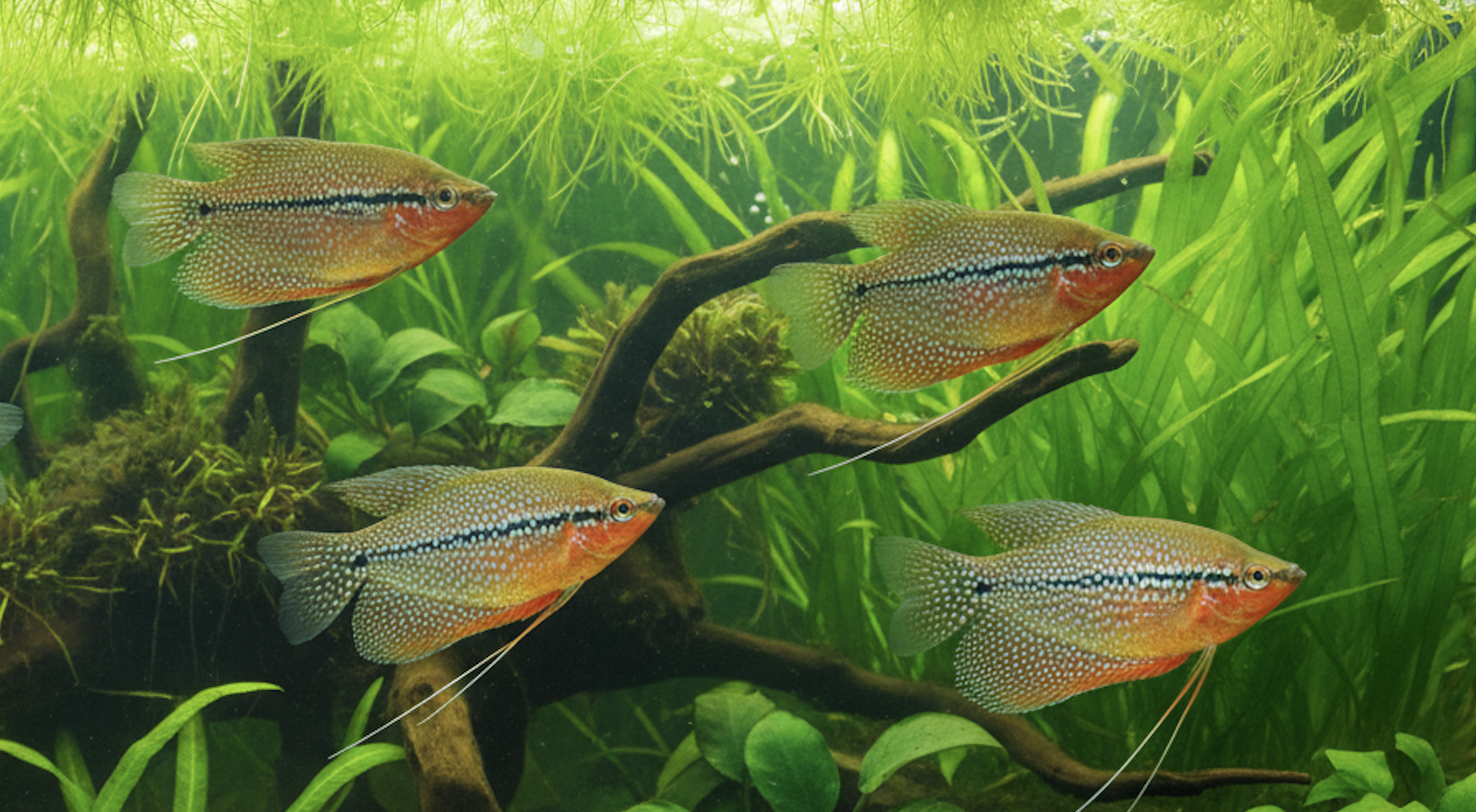
The Pearl Gouramis (Trichogaster leeri) represent one of the most aesthetically striking and behaviorally stable species in the hobby. Specifically, they are prized for their intricate mosaic pattern and gentle social dynamics. Furthermore, they are a labyrinth fish, meaning they possess specialized anatomy for breathing atmospheric air. In fact, their graceful presence often serves as a calming centerpiece for large community displays. Consequently, I reject the assumption that they are as delicate as the Dwarf Gourami. Therefore, this guide provides the purely analytical evidence required for their stewardship.
Are Pearl Gouramis good pets for beginners?
Specifically, Pearl Gouramis are an outstanding choice for beginners who possess a medium to large aquarium. Furthermore, they are significantly hardier and more disease resistant than their popular cousin, the Dwarf Gourami. In fact, they are much less likely to carry the incurable Iridovirus that plagues other gourami species. Consequently, they provide a much more reliable and less stressful introduction to the Osphronemidae family. Therefore, I prioritize their selection for those starting with a stable 40 gallon system.
How long do Pearl Gouramis live and how large do they get?
In a stable environment, these fish represent a commitment of eight to ten years as long-term companions. Specifically, they reach a manageable adult size of four to five inches. Furthermore, they maintain a graceful, laterally compressed body shape throughout their adult lives. In fact, providing pristine water conditions and high quality food is the primary factor in reaching their maximum lifespan. Consequently, they outlive many other common tropical fish found in community tanks. Therefore, I recommend planning for a decade of care.
What is the temperament of Pearl Gouramis?
Pearl Gouramis are famously peaceful and can even be characterized as shy in high traffic environments. Specifically, they carry themselves with a calm grace that sets a tranquil tone for the entire aquarium. Furthermore, while males may occasionally display territorial behavior toward other males, they rarely show aggression toward other species. In fact, they use their thread like ventral fins as sensory organs to interact gently with their surroundings. Consequently, they are ideal for a low stress habitat. Therefore, I prioritize a quiet environment for their success.
How do you tell the difference between a male and female?
As these fish mature, the visual differences between the sexes become both dramatic and beautiful. Specifically, males develop a deep, fiery red orange coloration on their throat and chest during the breeding season. Furthermore, the dorsal and anal fins of the male are significantly longer and more pointed than those of the female. In fact, females remain a more subtle silvery color and possess a noticeably rounder body shape. Consequently, sexing mature individuals is analytically straight forward. Therefore, I recommend identifying pairs by their fin extensions.
What is the minimum tank size and proper setup?
A 40 gallon breeder tank is the analytical minimum for a single pair to thrive. Specifically, you must provide a setup that mimics their native slow moving swamps through a lush, aquatic jungle. Furthermore, a heavily planted aquarium with a gentle filter flow is essential for their security. In fact, floating plants provide a critical shaded canopy that allows them to display their best shimmering colors. Consequently, open tanks with high light will cause them to remain reclusive. Therefore, I prioritize the use of driftwood and floating vegetation.
What type of filtration is needed for Pearl Gouramis?
You must utilize an adjustable flow filter because these fish despise strong currents. Specifically, their native habitats are stagnant or very slow moving waters where they can easily maneuver. Furthermore, a powerful hang on back filter should be baffled with a sponge to reduce surface agitation. In fact, a gentle sponge filter is the perfect choice for a dedicated pair or breeding setup. Consequently, heavy currents will prevent them from building stable bubble nests. Therefore, I prioritize low flow mechanical filtration for their comfort.
What are the ideal water parameters and diet?
Pearl Gouramis thrive in warm, stable water between 75°F and 82°F with a pH of 6.0 to 7.8. Specifically, the foundation of their diet must be a high quality flake or slow sinking pellet. Furthermore, they are micropredators by nature and truly thrive when supplemented with live bloodworms and daphnia. In fact, they are among the few fish known to hunt and eat pest Hydra in the aquarium. Consequently, a varied diet supports their immune system and vibrant pearlescent sheen. Therefore, I recommend weekly water changes to keep nitrates low.
What are the signs of health and behavior?
A healthy Pearl Gouramis will be actively exploring the mid to upper levels of the tank using its “feelers.” Specifically, these thread like ventral fins are used to physically sense objects and chemical signals in the water. Furthermore, a sick gourami will exhibit clamped fins, lethargy, or faded color patterns. In fact, their shimmering dots should be vibrant and catch the light constantly during movement. Consequently, watching their sensory interaction with the environment is a key health metric. Therefore, I prioritize monitoring their activity levels daily.
How do Pearl Gouramis breed and build bubble nests?
The male Pearl Gouramis is a specialized bubble nester that constructs an intricate floating nest from saliva and plant debris. Specifically, he will showcase his magnificent red throat and perform a graceful courtship “dance” to attract a female. Furthermore, after spawning, he will guard the nest with surprising ferocity until the fry hatch. In fact, he will often chase away the female to protect the eggs from predation. Consequently, breeding requires a dedicated setup with very still water surfaces. Therefore, I categorize this as a rewarding intermediate project.
Which tank mates are compatible with Pearl Gouramis?
The best tank mates are peaceful schooling fish such as Rummy Nose Tetras. Specifically, you should avoid housing a male with another male gourami or a Betta to prevent territorial conflict. Furthermore, peaceful bottom dwellers like Corydoras catfish and Kuhli Loaches make perfect companions. In fact, you must avoid known fin nippers like Tiger Barbs that target their delicate ventral feelers. Consequently, choosing calm courtiers maintains a stable social hierarchy. Therefore, I recommend avoiding hyper active or boisterous fish.
Essential Equipment for Your Pearl Gouramis
To manage the water quality and social needs of Pearl Gouramis, I recommend these professional grade components. Specifically, the Fluval 307 Canister Filter with an adjustable spray bar provides the gentle turnover they require. Furthermore, feeding NorthFin Community Sinking Pellets ensures your gouramis receive high quality, micropredator appropriate nutrition. In fact, utilizing Floating Silk Plants or live Salvinia provides the essential shaded canopy necessary for their psychological security.
Pearl Gourami Fish FAQ
A single Pearl Gourami needs at least 30 gallons to swim without constantly hitting the glass. These fish reach five inches and demand heavy planting to feel secure. Small tanks cause lethal stress and weaken their immune systems against common parasitic infections.
Pearl Gouramis are the peaceful pacifists of the labyrinth world. Never house them with aggressive fin-nippers like Tiger Barbs or large, territorial cichlids. Stick to peaceful tetras or rasboras to ensure your expensive centerpiece fish does not end up as a shredded mess.
Feed your Pearl Gouramis high-quality flakes and frozen bloodworms to maintain those iconic iridescent spots. These omnivores appreciate occasional blanched spinach or specialized vegetable wafers. Proper nutrition prevents digestive blockages and ensures their colors stay sharp and vibrant for years in your display tank.
Males possess significantly longer pointed dorsal fins and deep orange throats during the breeding season. Females remain smaller with rounded fins and much duller coloration. Identifying the “lace” extension on the male’s fin is the easiest way to distinguish between the two sexes.
Sources
- Seriously Fish
https://www.seriouslyfish.com/species/trichogaster-leeri/ - FishBase
https://www.fishbase.se/summary/Trichogaster-leeri.html - Aquarium Source
https://www.aquariumsource.com/pearl-gourami/


Leave a Reply