
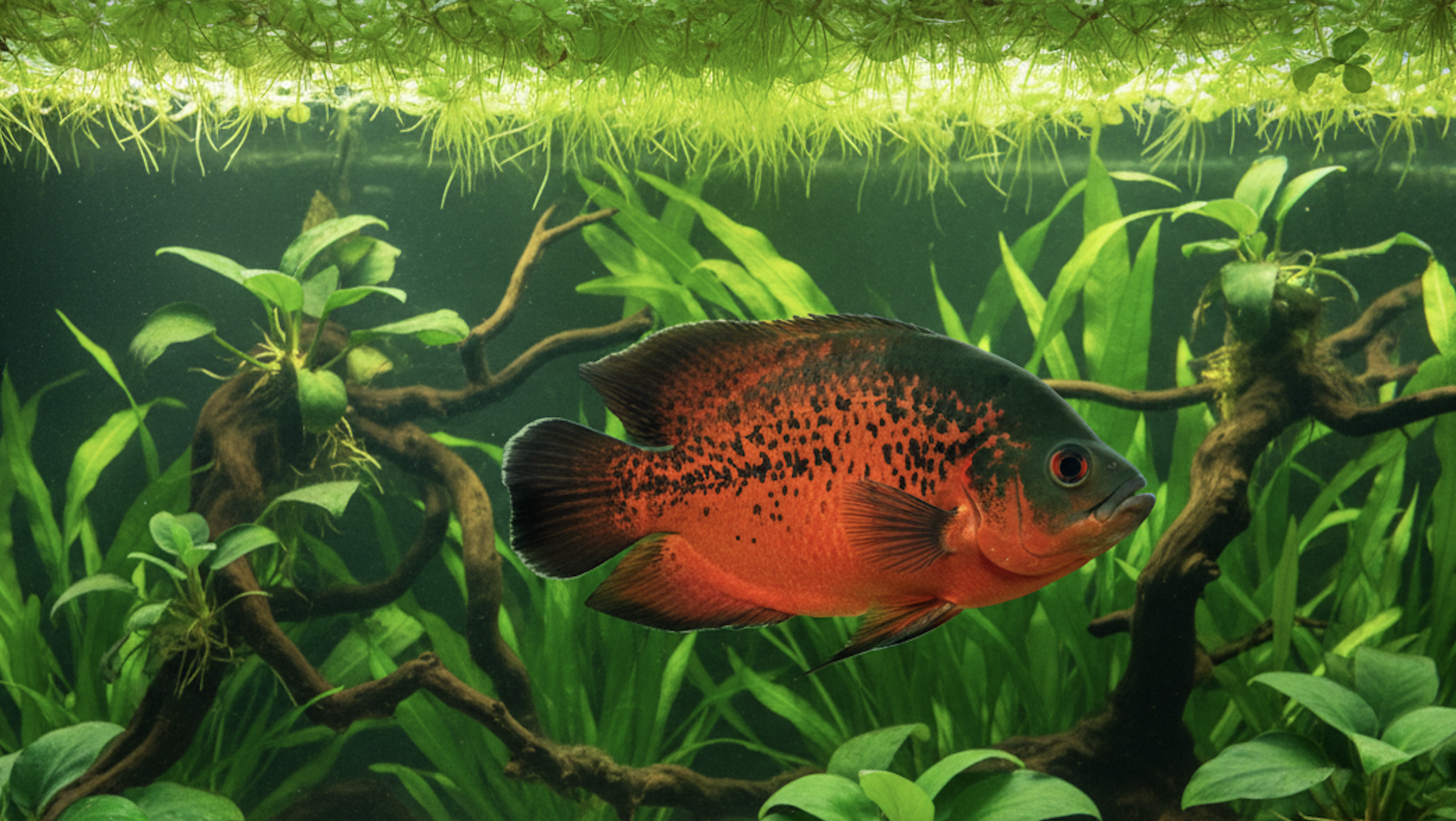
The Red Oscars (Astronotus ocellatus) represent a striking result of selective breeding within the South American cichlid family. Specifically, this variety features a solid or near solid covering of deep red and orange pigmentation. Furthermore, they are not a beginner species due to their massive environmental requirements. In fact, their high intelligence has earned them the analytical nickname “water dogs.” Consequently, I reject the assumption that they are suitable for standard community tanks. Therefore, this guide provides the purely analytical evidence required for their care.
Are Red Oscars good pets for beginners?
No, Red Oscars is strictly an expert level commitment that requires significant technical infrastructure. Specifically, their massive waste production will quickly overwhelm a novice keeper with a small tank. Furthermore, their aggressive and territorial nature makes them a danger to standard community fish. In fact, the filtration required to handle their bioload is often more expensive than the fish itself. Consequently, a beginner will likely face environmental collapse within the first year. Therefore, I prioritize experienced owners for their survival.
How large do Red Oscars grow and how long do they live?
A healthy Red Oscars will grow rapidly and reach an impressive adult size of twelve to fourteen inches. Specifically, they grow at a rate of roughly one inch per month when properly fed. Furthermore, these fish represent a long-term commitment of ten to fifteen years. In fact, they are long-term companions that require stable, high volume environments to thrive. Consequently, you must plan for a foot-long fish before making a purchase. Therefore, I recommend consistent maintenance to maximize their biological longevity.
What is the temperament of Red Oscars and bonding behavior?
They are quintessential “wet pets” that exhibit high cognitive function and complex social behaviors. Specifically, they are intelligent, curious, and notoriously interactive with their human keepers. Furthermore, they will learn to recognize your face and perform “happy dances” at the glass. In fact, they are also famously moody and territorial cichlids. Consequently, they will aggressively dominate their aquarium and eat any fish small enough to swallow. Therefore, I recommend consistent interaction to support their mental well-being.
What is the absolute minimum tank size?
The absolute analytical minimum for a single adult is a 75 gallon aquarium. Specifically, a 125 gallon tank is far superior for maintaining a stable nitrate to oxygen ratio. Furthermore, their powerful bodies require significant horizontal swimming room to prevent skeletal deformities. In fact, restricted environments cause chronic stress and suppress their immune systems. Consequently, horizontal footprint is more critical than vertical height for this species. Therefore, I prioritize a four to six foot tank length for adult specimens.
What type of filtration and setup is required for Red Oscars?
You require massive, oversized filtration to process the enormous volume of ammonia Red Oscars produce. Specifically, a large canister filter rated for twice your tank size is a mandatory requirement. Furthermore, their destructive nature means you must utilize heavy, smooth driftwood and rounded rocks. In fact, they are infamous for “redecorating” and will uproot any live plants in the tank. Consequently, you should avoid planted setups as they will be shredded within hours. Therefore, I prioritize industrial strength mechanical filtration.
What are the ideal water parameters and temperature?
Red Oscars thrive in stable, warm water between 76°F and 82°F with zero ammonia and nitrite. Specifically, you must maintain pristine water quality to prevent systemic health issues. Furthermore, large weekly water changes of at least 50% are mandatory to keep nitrates low. In fact, Oscars are incredibly messy eaters that quickly foul their environment. Consequently, high nitrates are the primary trigger for Hole-in-the-Head disease. Therefore, I prioritize a reliable heater and consistent water testing as health metrics.
What is the scientifically balanced diet for a healthy Red Oscars?
To maximize their fiery red color, their diet must be rich in natural carotenoids like astaxanthin. Specifically, the foundation of their diet must be a high quality, large sized cichlid pellet. Furthermore, you should supplement their meals with frozen krill and earthworms for protein. In fact, you must avoid live “feeder fish” as they are verified vectors for parasites. Consequently, poor nutrition will lead to a dull, yellowish appearance over time. Therefore, I recommend color enhancing pellets to maintain their vibrant red hue.
What is Hole-in-the-Head disease and why do they sulk?
Hole-in-the-Head (HITH) presents as eroding pits on the head and lateral line. Specifically, high nitrate levels and poor water hygiene cause this clinical condition. Furthermore, Oscars are famous for “sulking” on their sides when they feel stressed or unhappy. In fact, this dramatic behavior is typically a response to a change in the environment. Consequently, you must differentiate between moody behavior and clinical illness through water testing. Therefore, I prioritize water chemistry as the primary health diagnostic.
What defines the “Red” variation of the Oscar?
The Red Oscars variety is a selectively bred color morph characterized by solid orange and red pigmentation. Specifically, high quality specimens are prized for having an unbroken wall of fiery color across their bodies. Furthermore, while they may retain some black marbling, they are distinct from the chaotic Tiger pattern. In fact, their care, size, and temperament remain identical to other short finned varieties. Consequently, they are a purely aesthetic variation of the original species. Therefore, I categorize them as a “designer” cichlid.
Which tank mates are compatible with Red Oscars?
Keeping a solitary Red Oscars is often the safest and most rewarding strategy for the keeper. Specifically, housing them with others requires a massive system of 125 gallons or more. Furthermore, you need tank mates that are large and robust, such as Silver Dollars or common plecos. In fact, any fish small enough to fit in an Oscar’s mouth will eventually be eaten. Consequently, success in a community setup is never guaranteed due to individual personalities. Therefore, I recommend avoiding any fish that cannot defend itself.
What is the significance of the “Ocelli” spot in Red Oscars?
Even the selectively bred Red Oscars often retain the characteristic “ocelli” or eye spot on their tail fin. Specifically, this dark spot ringed in orange mimics the appearance of a large eye to confuse potential predators. Furthermore, in the wild, this serves as a defensive mechanism to prevent tail nipping from aggressive piranhas. In fact, many high grade Red varieties have a less distinct ocellus compared to wild types. Consequently, the presence of a clear eye spot remains a link to their ancestral survival traits. Therefore, I prioritize observing the tail fin as a marker of genetic heritage.
How do you identify sexual dimorphism in Red Oscars?
Visually sexing Red Oscars is nearly impossible for even the most experienced researchers without professional venting. Specifically, both males and females grow to the same impressive size and display the same fiery coloration. Furthermore, they do not possess the typical fin extensions or color differences found in other cichlid species. In fact, the only definitive way to identify sex is by observing their genital papillae during spawning. Consequently, most keepers purchase a group and allow them to pair off naturally to ensure a match. Therefore, I reject the assumption that fin length is a reliable sexual indicator.
What is the impact of “Glut” feeding on their health?
Red Oscars are opportunistic feeders that will consume far more food than their digestive tracts can process. Specifically, this “glut” feeding behavior leads to severe fatty liver disease and internal organ failure over time. Furthermore, overfeeding results in an immediate spike in ammonia and nitrogenous waste within the aquarium. In fact, a bloated belly in an Oscar is often a sign of chronic overnutrition rather than health. Consequently, you must provide a strict feeding schedule to prevent long-term metabolic shutdown. Therefore, I recommend feeding only what they can consume in sixty seconds.
Are Red Oscars sensitive to copper-based medications?
Like many large South American cichlids, Red Oscars show a high sensitivity to copper based aquarium medications. Specifically, high concentrations of copper can damage their sensitive lateral line system and sensory pits. Furthermore, these chemicals can suppress their immune systems, making them more vulnerable to secondary fungal infections. In fact, most common ailments are better treated through heat and increased water changes. Consequently, you must read all medication labels with technical precision before adding them to the tank. Therefore, I prioritize quarantine and water hygiene over aggressive chemical intervention.
Red Oscars FAQ
Red Oscars need a 75-gallon tank minimum. These fish are essentially swimming waste factories that will crash a smaller nitrogen cycle in days. Buy the big tank now or prepare for constant, soul-crushing water changes to keep the ammonia from spiking.
Feed your Red Oscar high-quality floating pellets and frozen krill to keep those colors sharp. Supplement with earthworms or crickets to satisfy their predatory instincts without the risk of parasite-ridden feeder fish. Cheap food leads to expensive health problems and stunted growth.
Red Oscars are notorious for their aggression and desire to remodel your aquarium. Keep them with large, thick-skinned tank mates like silver dollars or plecos. They will bully anything smaller into oblivion so do not even think about adding your favorite community fish.
Expect a Red Oscar to live for ten to fifteen years with proper care. Neglecting water changes is a fast track to Hole-in-the-Head disease and a premature end. This fish is a decade-long commitment that requires more than just a passing interest in the hobby.
These fish grow to fourteen inches with shocking speed. You cannot stunt their growth in a small tank without causing permanent skeletal deformities and internal organ failure. Get the footprint right from day one or do not buy the fish.
Sources
- Wikipedia
https://en.wikipedia.org/wiki/Oscar_(fish) - University of Florida – IFAS
https://edis.ifas.ufl.edu/publication/FA158 - FishBase
https://www.fishbase.se/summary/Astronotus-ocellatus.html - Aquarium Source
https://www.aquariumsource.com/oscar-fish-care/ - Veterinary Partner
https://veterinarypartner.vin.com/default.aspx?pid=19239&id=4952044
Leave a Reply
You must be logged in to post a comment.