
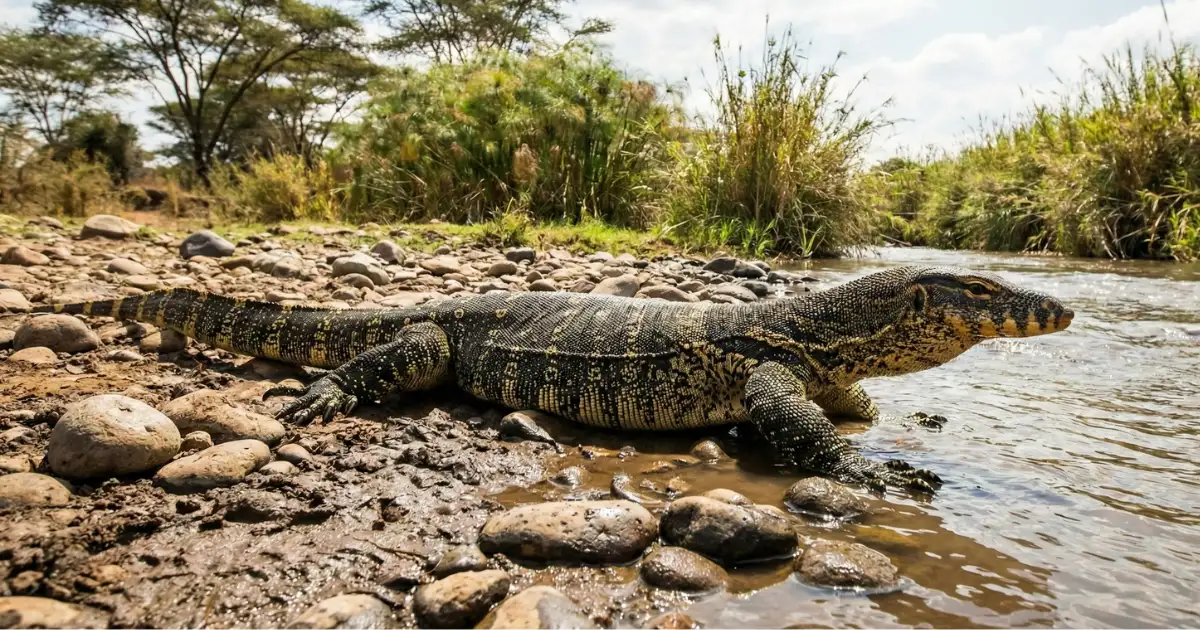
The Nile Monitor (Varanus niloticus) is one of the most intelligent lizards on Earth. Unfortunately, it is also one of the most high strung, defensive, and difficult to manage. This guide is an honest and serious look at what it truly means to take on the profound challenge of this species.
Is the Nile Monitor a suitable species for a beginning keeper?
The Nile Monitor is an expert-only species that should never be considered by a beginning hobbyist. Specifically, their combination of massive size and high strung, defensive nature makes them a liability for the inexperienced. Furthermore, the logistical and financial burden of maintaining a zoo-grade habitat is immense. Consequently, I reject the assumption that these are “manageable” pets for the average person. Therefore, only those with a dedicated room and extensive varanid experience should attempt to house this species. In fact, foundational errors in their care often lead to dangerous confrontations or the premature death of the animal.
What are the realistic growth and longevity expectations for a Nile Monitor?
A Nile Monitor represents a twenty to thirty year commitment to a powerful and athletic predator. Specifically, they can easily exceed 6 feet in length and possess incredible physical strength. Furthermore, they maintain a high metabolism that requires a constant, high quality food supply throughout their long lives. Consequently, you must prepare for a decades-long financial commitment to heating, filtration, and nutrition. Therefore, I prioritize the “brutal honesty” of their longevity over the low cost of hatchlings in the trade. As a result, owning one is a life altering decision that requires total dedication.
Why are aquatic features the most difficult part of their “Fortress” habitat?
Housing a Nile Monitor requires a sophisticated aquatic system that replicates their natural riverine environment. Specifically, a simple water bowl is insufficient for a semi-aquatic lizard that uses water for hunting and thermoregulation. Furthermore, you must integrate a large, heated pool with an industrial-grade filtration system. Consequently, the animal will frequently defecate in the water, which necessitates powerful mechanical and biological filtration to prevent disease. Therefore, I prioritize the engineering of the water feature as the most expensive part of the build. In fact, poor water quality is the leading cause of skin infections and systemic illness.
How do you replicate the intense tropical heat and humidity requirements?
Replicating the African savannah requires a high-energy array of halogen flood lamps and industrial humidification. Specifically, the basking surface must reach 120–140∘F (49–60∘C) to facilitate proper digestion. Furthermore, you must maintain ambient humidity levels between 70% and 80% to ensure healthy shedding and respiratory function. Consequently, a high-output T5 UVB tube is mandatory to prevent the onset of Metabolic Bone Disease. Therefore, your enclosure must be constructed from waterproof materials to prevent mold and structural rot. As a result, the utility costs for this species are among the highest in the reptile hobby.
What constitutes a scientifically balanced diet for a Nile Monitor?
The Nile Monitor requires a highly varied diet of whole prey to support its active lifestyle and high metabolism. Specifically, a diet consisting only of rodents is too high in fat and will lead to obesity and gout. Furthermore, you should prioritize gut-loaded insects for juveniles and lean proteins like fish, quail, and eggs for adults. Consequently, rotating prey items ensures a complete profile of essential vitamins and minerals. Therefore, I recommend the use of calcium-dusted invertebrates as the primary staple during their rapid growth phase. In fact, a lean, muscular monitor is a sign of successful nutritional management.
Why is their defensive arsenal considered so dangerous by experts?
The Nile Monitor possesses a formidable array of biological weapons that it will not hesitate to use when stressed. Specifically, their whip-like tail can lash out with incredible accuracy and force, causing painful welts. Furthermore, their sharp claws and powerful jaws are capable of inflicting severe mechanical trauma during a defensive strike. Consequently, their saliva contains venomous proteins and bacteria that can lead to significant medical complications if a bite occurs. Therefore, I prioritize a relationship of “respect” where the keeper never forces physical interaction. As a result, you must treat an adult Nile like a loaded weapon.
How can you safely manage and socialize a large adult Nile Monitor?
Socializing a Nile Monitor is a long-term process of building non-threat associations rather than “taming.” Specifically, you should use tools like target training and long tongs to create a bridge of communication. Furthermore, you must always read their body language, such as hissing or throat puffing, to avoid overstepping their boundaries. Consequently, the “two-person rule” is mandatory when entering the enclosure of a large adult for cleaning or maintenance. Therefore, I reject the use of “free-handling” for untamed individuals as it creates unnecessary risk. In fact, safety must be the primary focus of every interaction.
Nile Monitor Care FAQ
Nile Monitors rank among the most dangerous lizards kept in captivity due to their defensive nature. Their saliva contains bacteria and mild venom proteins capable of causing severe medical complications. Whip-tail strikes, deep claw wounds, and crushing bites make this species genuinely hazardous to handle.
Adult Nile Monitors reach 5 to 6 feet in total length and frequently exceed that range. Males develop heavier, more muscular builds than females across the species. Their athletic body plan combines speed, agility, and crushing strength in proportions rarely seen in captive lizards.
Nile Monitors live 20 to 30 years in well-managed captivity with proper diet and infrastructure. This longevity rivals many parrot species and demands true generational planning. Wild specimens often live shorter lives due to predation, but captives reaching their physical prime overwhelm most keepers within a decade.
Nile Monitors cannot truly be “tamed” in the way a dog or even a bearded dragon learns to trust. Patient keepers build non-threat associations through target training and consistent food rewards over years. The two-person rule remains mandatory for all enclosure maintenance regardless of how calm the animal appears.
Captive Nile Monitors thrive on rotating whole prey including fish, quail, eggs, and gut-loaded insects. Juveniles need calcium-dusted invertebrates as the primary staple during rapid growth phases. Rodent-only diets cause obesity, gout, and fatty liver disease, killing captive specimens within years of poor nutrition.
Nile Monitors face ownership bans in Florida, parts of Texas, and several other jurisdictions due to invasive establishment. Escaped pets formed breeding populations near canal systems, devastating native wildlife. Prospective keepers must verify state and county ordinances before purchase to avoid heavy fines or animal confiscation.
Nile Monitors require large heated pools with industrial filtration because they live semi-aquatic lives in the wild. A simple water bowl fails completely for a six-foot lizard that hunts, defecates, and thermoregulates in water. Filtration systems must match koi pond or hot tub specifications to handle organic load.
Sources
- Smithsonian’s National Zoo
https://nationalzoo.si.edu/animals/nile-monitor - Reptiles Magazine
https://reptilesmagazine.com/nile-monitor-care-sheet/ - National Geographic
https://www.nationalgeographic.com/animals/reptiles/facts/nile-monitor - Florida Fish and Wildlife
https://myfwc.com/wildlifehabitats/nonnatives/reptiles/lizards/nile-monitor/ - PNAS
https://www.pnas.org/doi/10.1073/pnas.0508660102 - Animal Diversity Web
https://animaldiversity.org/accounts/Varanus_niloticus/ - ReptiFiles
https://reptifiles.com/nile-monitor-care/


Leave a Reply
You must be logged in to post a comment.