

We already published a leopard gecko care guide once. You’d think we’d be done with the topic. However, life had other plans, because a new leopard gecko recently walked (technically, was carried) into our lives, and he demanded his own dedicated write-up.
We met him at a reptile expo, purchased from a breeder named AbdelRahman, whose terrarium and paludarium builds are genuinely stunning miniature recreations of real ecosystems. Furthermore, he’s the kind of talented that makes you rethink your own tank design choices on the drive home. As a result, we came home with a gecko we hadn’t officially named yet.
My daughter Leilah has since nominated “Geckonardo Da Vinci” as the frontrunner, and frankly, it’s sticking whether the rest of the household agrees or not. Therefore, this guide is dedicated to him specifically, even though the internet already has one leopard gecko article from us. He’s earned his own chapter. Indeed, a lizard with a Renaissance-artist name deserves nothing less.
Why Is Leopard Gecko Care So Beginner-Friendly?
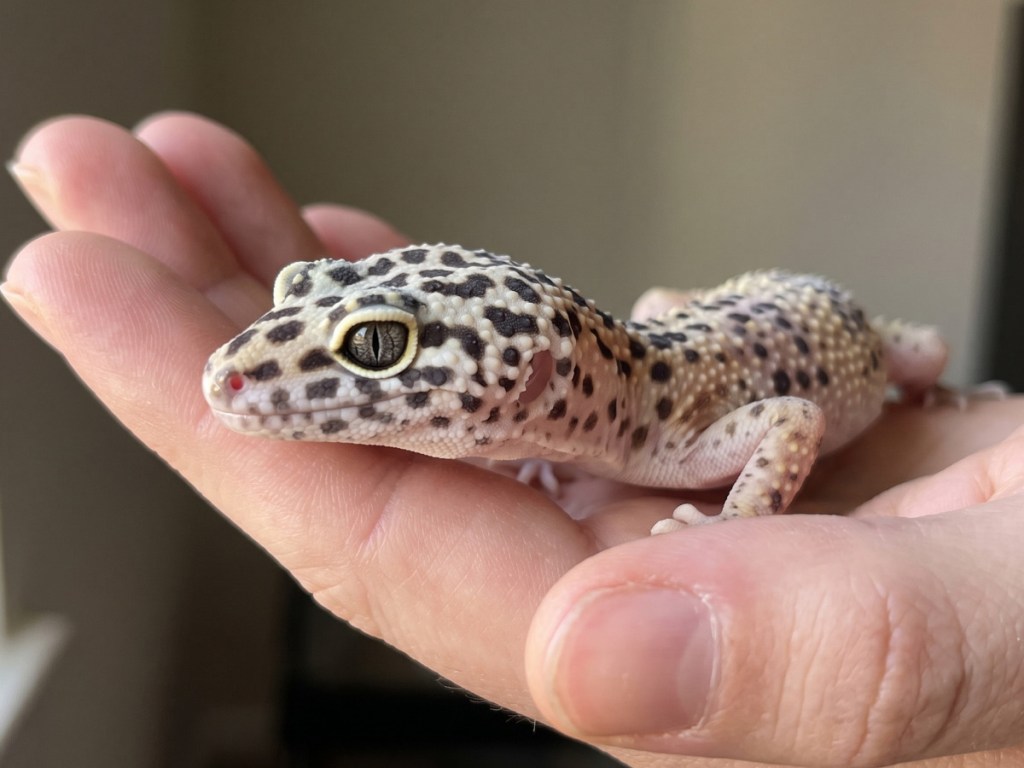
Why do so many first-time reptile owners start with this species?
Leopard geckos tolerate minor husbandry mistakes better than many other reptiles. Therefore, they forgive small errors while an owner learns proper technique. Furthermore, they are docile enough to handle without major stress once settled. In fact, their manageable size and calm temperament make them ideal for a first reptile, or a second, if the first one convinced you to adopt a tiny dinosaur enthusiast for a daughter.
How Long Do Leopard Geckos Live?
What is the realistic lifespan commitment?
Leopard geckos can live 10 to 20-plus years with proper care. Consequently, this is a long-term commitment, not a short-lived starter pet. Adults usually grow to 7–11 inches long. Furthermore, they are primarily nocturnal or crepuscular, meaning Geckonardo will mostly be productive at dawn and dusk, much like every deadline I’ve ever met.
What Do Leopard Geckos Eat?
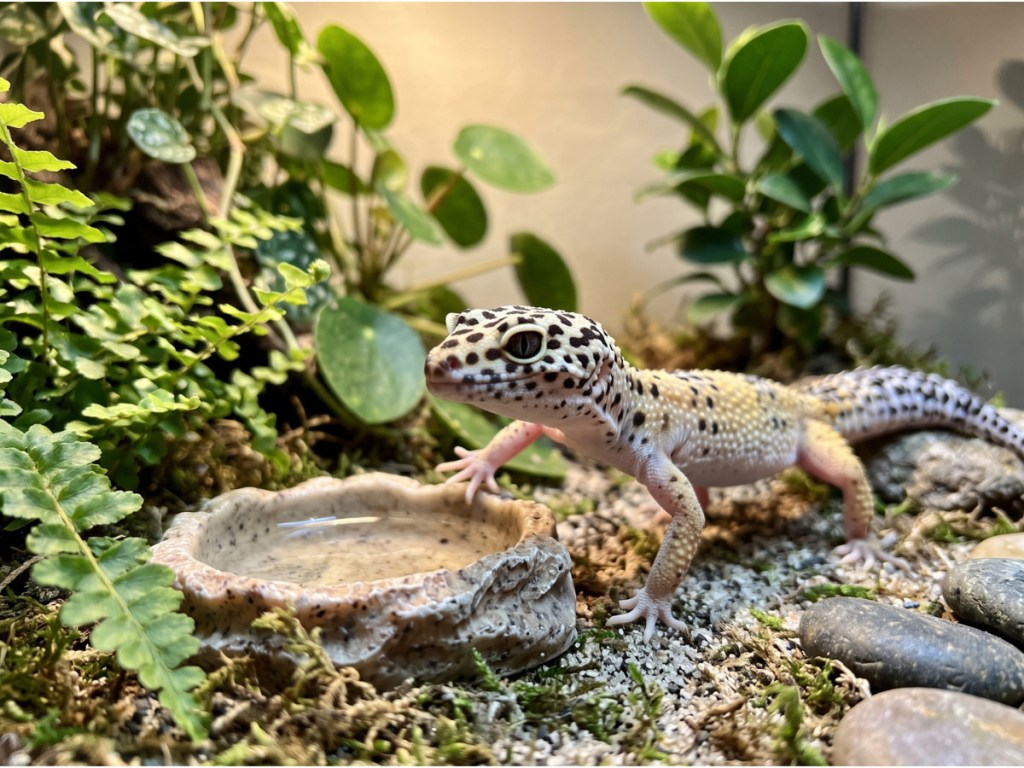
What should actually go in the feeding dish?
Leopard geckos are strict insectivores. Therefore, they do not eat plants or fruit under any circumstances, no matter how aesthetically pleasing a salad bowl looks in a terrarium photo. Offer a variety of insects, including crickets, mealworms, and dubia or red runner roaches. Specifically, babies need daily feedings, while adults do well on two to three feedings per week.
Do supplements matter as much as the bugs themselves?
Yes, arguably more. Dust every feeder insect with calcium, and add a multivitamin roughly once or twice weekly. Consequently, this prevents Metabolic Bone Disease, one of the most common and entirely preventable health failures in captive geckos.
What Does Proper Leopard Gecko Care Require for Housing?
What size enclosure does an adult actually need?
A 40-gallon long enclosure is the modern recommended standard for an adult gecko. Juveniles can start smaller, but sizing up early avoids a costly re-purchase later. However, more floor space only helps if it’s filled with usable hides and terrain, not left as an empty glass box for existential lizard reflection.
Can two geckos share one enclosure?
No. Leopard geckos are solitary and territorial by nature. Never house two males together, since this reliably leads to fighting and injury. Even male-female pairs require careful monitoring and enough space to retreat from one another, because nobody, gecko or otherwise, enjoys a roommate they didn’t choose.
Which Substrate Fits Best Leopard Gecko Care?
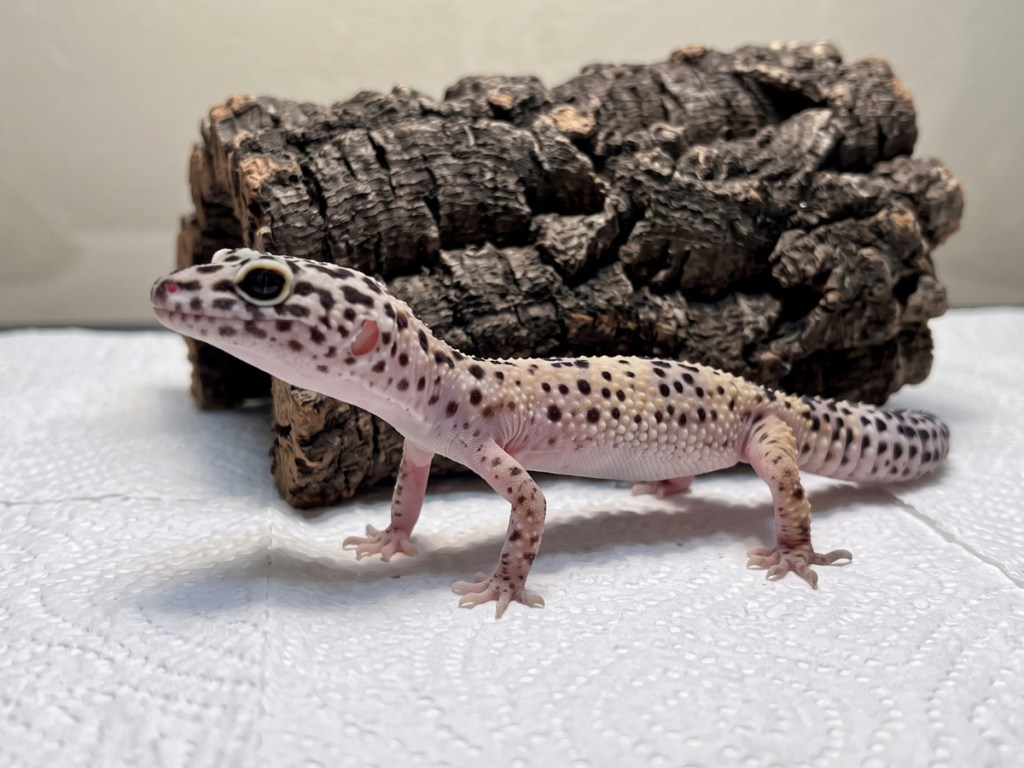
Should you use coco peat, coco husk, or something else entirely?
Avoid reptile carpet, since it catches claws and holds harmful bacteria over time. Paper towels or a paper-based liner remain the safest option for juveniles specifically. Coco husk (larger chips) carries a lower impaction risk than fine coco peat if a gecko accidentally ingests a piece. An organic topsoil and play sand mix works well for adults once feeding accuracy is established. Consequently, many keepers transition to bioactive substrate only after six months of age.
How Many Hides Do They Need?
Is one hide ever enough?
No, a minimum of three hides is required. Place one on the warm side, one on the cool side, and one moist hide specifically for safe shedding. As a result, the gecko can thermoregulate and shed without added stress, and without staging a dramatic escape attempt out of sheer boredom.
Does Leopard Gecko Care Include UVB Lighting?
Is UVB actually necessary, or just a nice extra?
UVB is not strictly mandatory, but low-output UVB lighting highly benefits long-term health. A 2–7% UVB tube, run for 10–12 hours daily, mimics natural dawn-to-dusk exposure. Indeed, current research increasingly supports UVB provision, even though older care guides once dismissed it as unnecessary for this species.
What Temperatures Support Leopard Gecko Care?
What’s the correct basking and ambient temperature range?
The warm side should sit around 88–92°F (31–33°C) at the basking surface. The cool side can drop to the low-to-mid 70s°F (23–24°C). Never use plug-in heat rocks, since they can malfunction and cause severe belly burns. Use an overhead halogen lamp or a deep heat projector instead, and run heat on the same 10–12 hour cycle as UVB.
What size water bowl works best?
A shallow bowl, roughly 2–4 inches wide with no more than 0.5–1 inch of water depth, is ideal. Juveniles specifically need the shallow end of that range, since they are not strong swimmers. However, don’t be surprised if a gecko licks water droplets off enclosure walls instead of using the bowl directly. Both behaviors are normal, and the bowl should stay filled regardless of which one your gecko prefers to ignore.
How Should You Handle a Leopard Gecko?
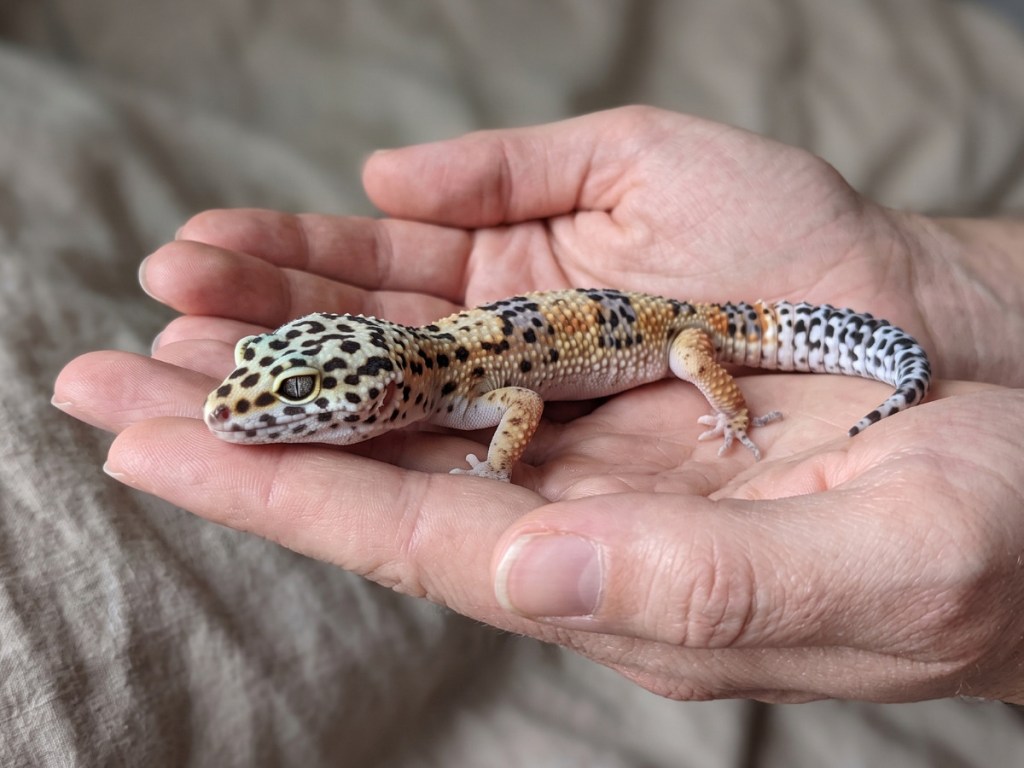
What’s the safest way to pick one up?
Support the body fully with a flat, open hand rather than grabbing or pinching. Consequently, this avoids triggering one of the species’ most dramatic defense mechanisms.
Why Do They Drop Their Tails?
Can a gecko really lose its tail on purpose?
Yes. If grabbed, pinched, or badly scared, a leopard gecko can detach its tail as a defense mechanism. It will grow back over time, though it typically looks different afterward. Furthermore, regrowing a tail costs the gecko significant stored energy, so it’s a last-resort escape method, not a party trick, however impressive it looks the first time you witness it.
How Do You Tame a New Gecko?
What actually works, versus rushing the process?
Patience beats speed every time with this species. Start by placing a flat hand in the enclosure for around 10 minutes daily, so the gecko adjusts to your scent. As a result, handling sessions later become far less stressful for both of you, and Geckonardo eventually stops treating my hand like an uninvited guest.
What Does Normal Breathing Look Like?
What is that in-and-out flutter under the chin?
That visible movement is called throat pulsing, or gular pumping. Leopard geckos lack a mammalian diaphragm, so they use throat muscles to help move air through the lungs. Therefore, this flutter is a completely normal part of respiration, not a symptom on its own. It often becomes more visible during handling or light activity, since respiration naturally speeds up under mild stress, much like ours does during a vet-search panic.
When does throat pulsing actually signal a problem?
Only when paired with other symptoms. Open-mouth breathing, wheezing, clicking sounds, or mucus around the nose or mouth combined with pulsing point toward a possible respiratory infection. In that case, a reptile vet visit is warranted. On its own, however, occasional throat pulsing during rest or handling is unremarkable.
My Experience: Leopard Gecko Care in Practice
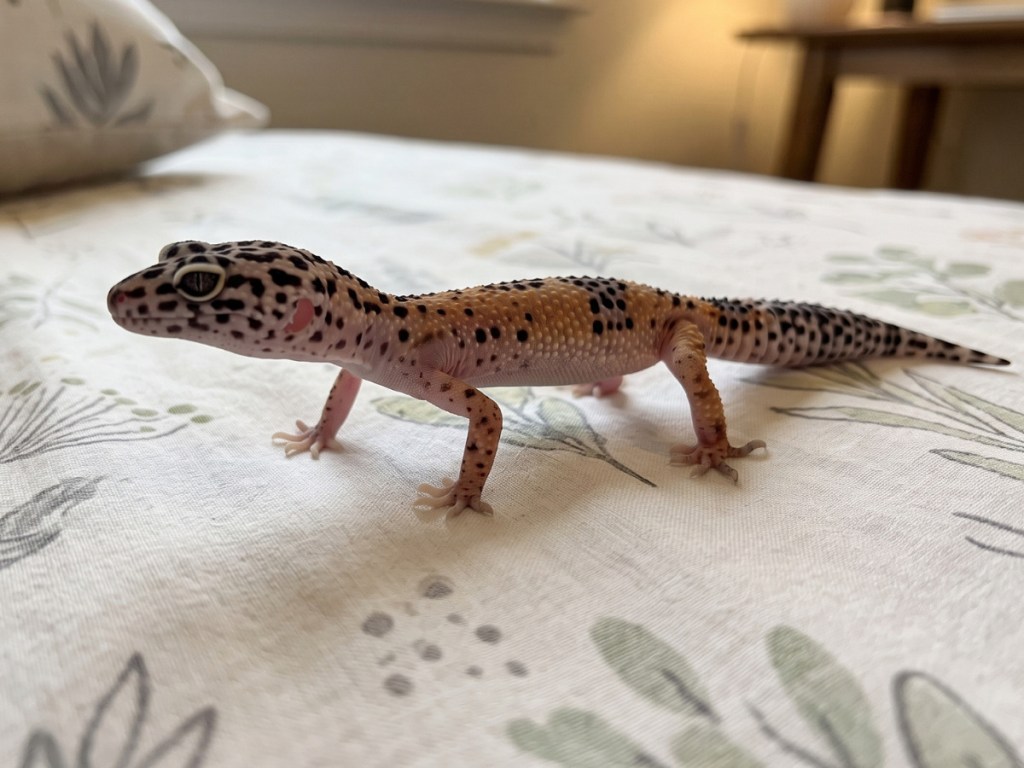
Geckonardo Da Vinci arrived home roughly 9–10 cm long, and immediately claimed the fake plant pot as his personal masterpiece studio. Consequently, he’s spent most of his first days sleeping there, which matches the expected settling-in pattern for a new juvenile, minus the artistic pretense.
He drank by licking droplets off the enclosure walls rather than visiting the water bowl directly, apparently finding the bowl beneath his notice. However, the bowl stayed filled and available the entire time, exactly as it should. He also ate two medium red runner roaches on his first morning, a genuinely encouraging sign for a gecko under stress from relocation and an unofficial name he never asked for.
We noticed visible throat pulsing both while holding him and during a light sleep. Neither instance came with open-mouth breathing, wheezing, or discharge. Therefore, both were treated as normal respiratory movement rather than a health concern, and Geckonardo continues his reign over the fake plant pot uninterrupted.
FAQ: Leopard Gecko Care Safety Questions
No, leopard geckos are solitary and territorial animals. Housing two males together reliably causes fighting and physical injury. Even a male-female pair needs close monitoring and enough enclosure space to separate when needed, since cohabitation stress affects appetite and long-term health.
UVB isn’t strictly mandatory for survival, but it meaningfully benefits long-term bone and metabolic health. A low-output 2–7% UVB tube run 10–12 hours daily mimics natural light exposure. Current research supports including it, despite older guides once treating this nocturnal-leaning species as UVB-independent.
Reptile carpet is not the safest substrate choice available. Its texture catches claws and traps bacteria that are difficult to fully clean. Paper towels, paper liners, or an organic topsoil-sand mix for adults offer safer, lower-risk alternatives for daily enclosure use.
Tail-dropping is a defense response triggered by grabbing, pinching, or extreme fear. The tail regrows over time but rarely matches its original color or shape. This process costs the gecko substantial stored energy, so prevention through gentle, supported handling matters far more than treatment afterward.
Yes, plug-in heat rocks pose a genuine burn risk. They can malfunction and overheat without any visible warning sign. Overhead halogen lamps or deep heat projectors deliver safer, more controllable belly and ambient heat without direct-contact burn danger.
Juveniles need daily feedings to support their high growth-related metabolic demand. Four to six appropriately sized roaches per feeding works for most juveniles, adjusted to individual appetite. Dust every feeder insect with calcium, since juveniles are especially vulnerable to Metabolic Bone Disease during this growth stage.
On its own, throat pulsing is normal respiratory movement, not illness. Leopard geckos lack a diaphragm and rely on throat muscles to help move air through their lungs. Paired with wheezing, open-mouth breathing, or nasal discharge, however, it can indicate a respiratory infection requiring a vet visit.
Sources
- Reddit r/leopardgeckos
https://www.reddit.com/r/leopardgeckos/comments/x0c0ab/leopard_geckos_an_updated_beginners_guide/ - Petco Care Sheets
https://www.petco.com/content/content-hub/home/articlePages/caresheets/leopard-gecko.html - MorphMarket Community
https://community.morphmarket.com/t/leopard-gecko-care-guide/39838 - Gecko Ranch FAQs
https://www.geckoranch.com/leopard-gecko-faqs.php - PetSmart Learning Center
https://www.petsmart.com/learning-center/reptile-care/leopard-gecko-care-guide - Zen Habitats Care Resources
https://www.zenhabitats.com/blogs/reptile-care-sheets-resources/answering-the-most-asked-leopard-gecko-questions-zen-habitats - Reptiles by Swell UK
https://www.reptiles.swelluk.com/help-guides/care-sheet-leopard-geckos/ - Stumps Custom Wood FAQs
https://www.stumpscustomwood.com/keeping-up/top-20-leopard-gecko-faqs-part-1 - Hudson Valley Reptile Rescue
https://www.hvreptilerescue.org/resources/care-guides/leopard-gecko-care-guide - Reptile Cymru
https://www.reptilecymru.co.uk/leopard-gecko/ - Francis Kennels Bark Blog
https://www.franciskennels.com/bark-blog/2025/6/22/remarkable-reptiles


Leave a Reply
You must be logged in to post a comment.