
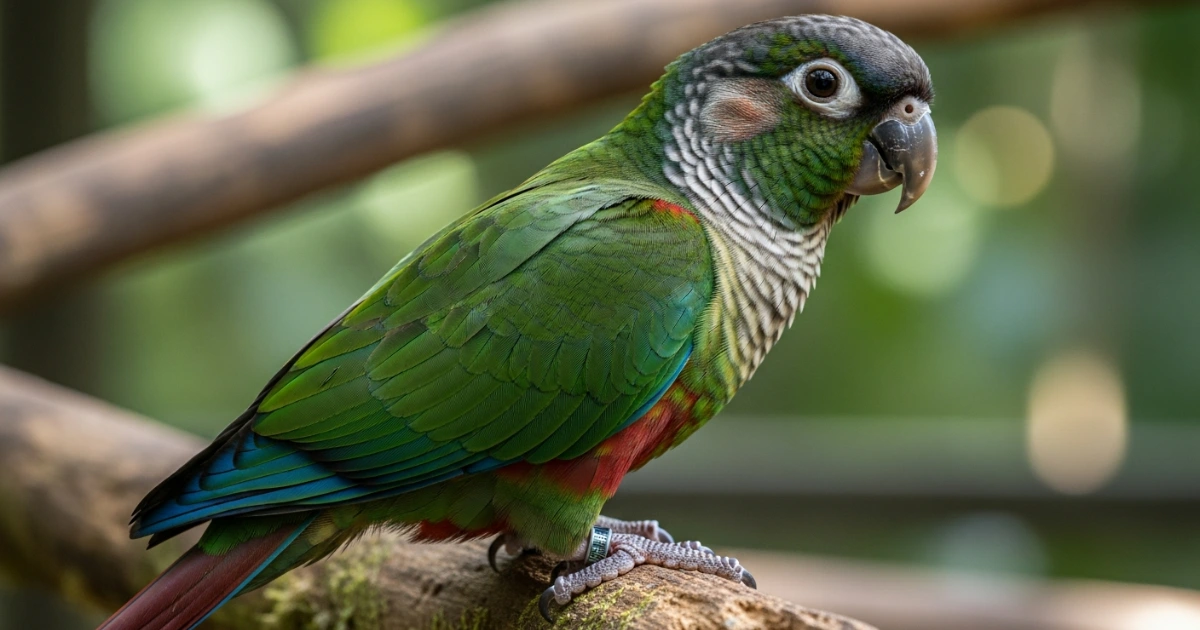
The Green-cheeked Conure is one of the most popular parrots. Specifically, they are playful and affectionate clowns. Do not let their small size fool you. They have the intelligence of a large parrot. Furthermore, they have complex emotional needs. This guide explores everything you need to know. Consequently, you can be the best home for these little acrobats.
Species Information and Suitability
Are these birds good for beginners?
Yes. Specifically, they are a great first parrot for dedicated owners. They have the behaviors of larger parrots in a manageable size. However, their intelligence requires commitment to training. They are generally less intimidating than larger macaws.
A healthy conure can live for 25 years. Consequently, they are a significant long-term companion.
Can they talk or mimic sounds?
They can talk. However, they are not known for their clarity. Their voices are often gravelly and cartoonish. Specifically, they excel at mimicking environmental sounds. What they lack in clarity they make up for in personality.
Are they noisy?
They are quieter than most other conures. Specifically, this is a huge part of their appeal. However, they are not silent birds. They use a high-pitched contact scream. But they are less prone to constant screaming. Their noise level is acceptable for apartment living. They can be excellent family pets. Specifically, they socialize with everyone if handled early.
Green-cheeked Conure Affection and Behavioral Traits
Do they enjoy being held?
Yes. Specifically, they are incredibly affectionate and cuddly. They love to snuggle into their owner’s neck. They demand head scritches constantly. Therefore, they are true contact birds. Are they aggressive or prone to biting? They are famously nippy. Specifically, this is different from true aggression. Their beaks are their hands. They use them to explore and play. Consistent training can manage this behavior effectively.
How intelligent are they?
They are highly intelligent birds. Specifically, they can learn many tricks and foraging puzzles. They learn household routines quickly. Their intelligence means they need mental stimulation. Consequently, you must provide activities to prevent boredom.
Green-cheeked Conure Enclosure and Habitat Requirements
The absolute minimum cage size is 18 inches square. However, a larger flight cage is always better. Specifically, larger cages provide room for toys and movement. Bar spacing must be no more than 1/2 inch. This prevents them from getting their head stuck. They appreciate a cage with vertical bars for climbing.
What kind of toys do they need?
They are playful and need many toys. Specifically, focus on shreddable items like soft wood and paper. Foraging toys keep their minds busy. Use foot toys they can hold. Furthermore, provide bells and swings. They require four hours of out-of-cage time daily. Specifically, this time must be supervised.
Do they need a sleeping hut?
Soft-sided huts are strongly discouraged. Specifically, they cause hormonal behavior. Birds can ingest the fibers. This leads to fatal crop impaction. Therefore, it is safer to use a soft rope perch. Consequently, your bird will stay healthy and safe.
Diet and Nutritional Needs
A healthy diet is crucial for a long life. Specifically, formulated pellets should provide 80 percent of nutrition. Fresh vegetables should make up 20 percent. Use fruits and nuts as training treats. Offer a variety of bell peppers and broccoli. Specifically, dark leafy greens are excellent for their health.
Avoid toxic foods like avocado and chocolate. Alcohol and caffeine are also standard toxins. Specifically, avoid onion and garlic. Large amounts of soy are also bad. Offer a bath three times a week. Many love playing in a shallow dish. Furthermore, some enjoy being gently misted.
Green-cheeked Conure Health and Common Concerns
A healthy conure is active and playful. Specifically, it has bright and clear eyes. A sick bird will be fluffed up and lethargic. Changes in droppings are a major red flag. They are susceptible to PDD and PBFD. Furthermore, feather plucking can occur due to stress.
Do they sleep on their backs?
Yes. Specifically, this is a quirky and unique behavior. It is usually a sign of a trusting bird. Why might they suddenly become aggressive? The most common cause is hormones. Specifically, this happens during the adolescent bluffing stage. It can also be a reaction to fear.
Green-cheeked Conure Training and Interaction Protocols
Focus on positive reinforcement during training. Specifically, reward gentle beak interactions. Stay calm if they bite. A firm no and a short time out is effective. Never punish the bird physically. Furthermore, learn their body language to prevent bites. Use treats to lure them for a step up. Specifically, keep training sessions short.
Do not reward screaming with attention. Instead, wait for a moment of quiet. Specifically, reward that silence with praise.
Should you clip their wings?
This is a personal decision. Clipping enhances safety inside the home. Furthermore, being fully flighted provides excellent exercise. Consult with your avian vet first.
Species Variants and Comparisons
Selective breeding has created stunning colors. Specifically, Cinnamon conures have lime-green bodies. Yellow-sided birds have bright red chests. Pineapple is a combination of these two mutations. Furthermore, Turquoise birds have beautiful teal feathers.
Do variations have different temperaments?
No. Specifically, a pineapple conure has the same personality as a normal one. Temperament is individual and not based on color.
Are they different from Maroon-bellied conures?
They are very similar. Specifically, Maroon-bellied conures have a scalloped chest pattern. They have a darker belly patch. You cannot tell the difference between males and females visually. Specifically, they are monomorphic birds. The only way to know is a DNA test. Consequently, you must test them if you plan to breed.
Conure Care FAQ
Green-cheeked Conures are excellent for dedicated beginners seeking a smaller bird with a big personality. They offer the intelligence of larger parrots in a more manageable size. However, their complex emotional needs and potential for nippy behavior require a serious commitment to consistent training and daily social interaction.
They are significantly quieter than most other conure species, making them ideal for apartment living. While they are not silent and use high-pitched contact calls, they rarely engage in constant screaming. Most owners find their occasional vocalizations acceptable for shared living spaces and manageable with proper attention.
Yes, these birds are exceptionally affectionate and frequently described as “cuddly.” They thrive on physical contact, often snuggling into their owner’s neck or demanding head scratches. While they are famously nippy when exploring with their beaks, this is usually a form of play rather than true aggression.
Soft-sided sleeping huts are strongly discouraged because they often trigger unwanted hormonal breeding behaviors. Furthermore, birds may ingest the fabric fibers, which leads to fatal crop impaction. Using a soft rope perch is a much safer alternative that provides comfort without the associated health and behavioral risks.
Sleeping on the back is a quirky, unique behavior common to Green-cheeked Conures. It is generally a positive sign that your bird feels completely safe and trusts its environment. While it may look alarming to new owners, it is typically a normal expression of a relaxed parrot.
Sources
- Lafeber Company
https://lafeber.com/pet-birds/species/green-cheeked-conure/ - PetMD
https://www.petmd.com/bird/breeds/green-cheek-conure - Association of Avian Veterinarians
https://www.aav.org/page/bird-safety - BirdNote
https://www.birdnote.org/listen/shows/parrots-sleep-strange-ways
Leave a Reply
You must be logged in to post a comment.