
When I think of an elephant, the image that comes to mind is the one from countless documentaries. Specifically, a colossal giant striding across the golden plains of the Serengeti. But, there is another elephant, a more elusive cousin that lives a life shrouded in the deep, verdant world of the Congo Basin. This is the African Forest Elephant. I remember seeing camera trap footage of one for the first time; it moved with a ghostly silence, a grey shadow in a sea of green. It was a creature of a different world, quieter and more compact. Moreover, it carries the immense responsibility of its entire ecosystem on its shoulders. And yet, it is disappearing. Because their fight is silent and hidden from view, our responsibility to be their voice is all the more urgent.
In fact, the plight of this species represents one of the most critical conservation crises of our time. They do not simply resemble their savanna relatives in a smaller form; rather, they constitute a distinct species that serves as a keystone of their habitat. Ultimately, they stand on the brink of extinction.
What is the Current Status of the African Forest Elephant?

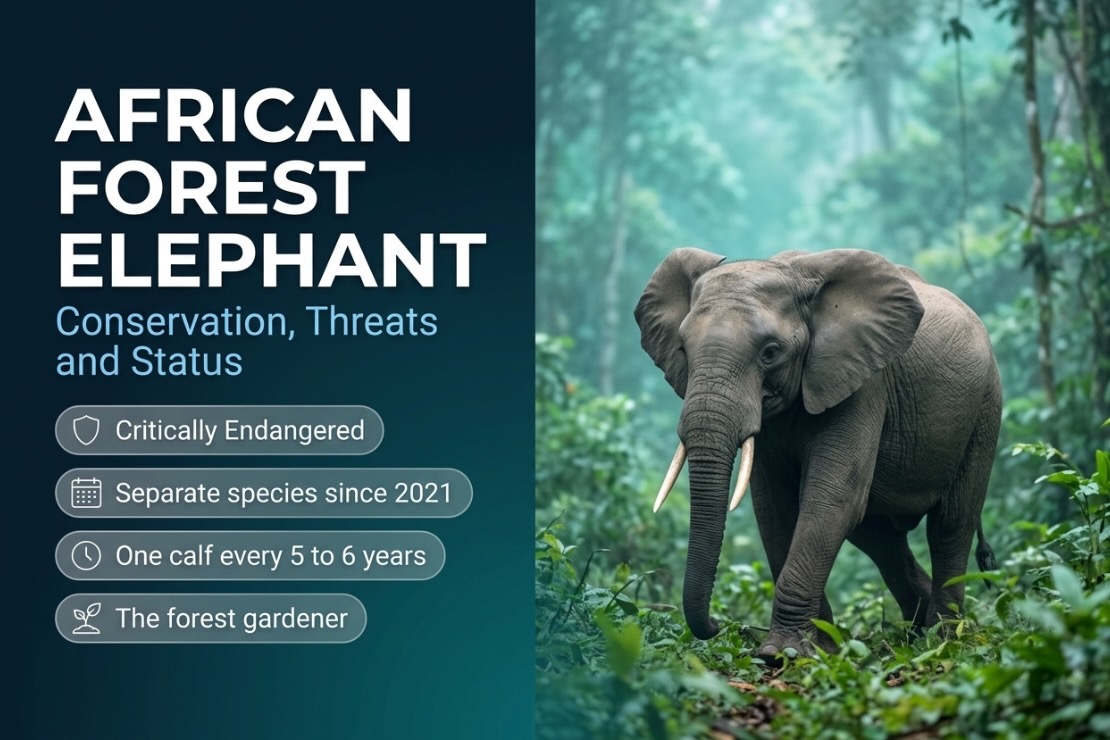
The African Forest Elephant (Loxodonta cyclotis) is listed as Critically Endangered. This is the last and most urgent step before a species is declared Extinct in the Wild. Previously, both forest and savanna elephants were classified together as “Vulnerable.” However, in 2021, the IUCN officially recognized them as two separate species. Consequently, this split revealed the true, perilous state of the forest elephant, warranting its Critically Endangered status and making African Forest Elephant conservation a top priority.
What are the Biggest Threats Facing This Species?

The two greatest threats are poaching for ivory and habitat loss. In addition, these challenges are often interconnected.
The current state of poaching for ivory
Even though international bans exist, poachers continue to pose a heart-wrenching threat to these majestic elephants. Poaching syndicates, often deeply entrenched criminal networks, exploit the vulnerability created by poverty and instability, tragically fueling the hunt for these gentle giants.
Habitat loss affecting the African Forest Elephant
Their habitat is being destroyed at an alarming rate for logging, agriculture, and mining. Furthermore,this not only reduces their available space but also fragments their populations, cutting them off from vital resources.
Human-elephant conflict
As elephant habitat shrinks, they are forced into closer contact with human settlements. They may raid crops to survive, which then leads to retaliatory killings.
Slow reproductive rate make them particularly vulnerable
Females do not typically begin breeding until they are in their 20s and have a gestation period of nearly two years, giving birth only once every 5-6 years. Because of this, their populations cannot possibly recover from the devastating losses caused by poaching.
Biology and Ecology

They are genetically distinct from savanna elephants. For instance, their tusks are straighter for moving through dense forest. Their most vital ecological role is that of a “forest gardener.” As they travel vast distances, they disperse the seeds of hundreds of tree species, literally planting the forest every single day. In other words, their presence is critical to the health of the entire ecosystem.
African Forest Elephant Conservation Efforts

A multi-pronged approach is underway. Specifically, key strategies include:
- Effective Anti-Poaching: Supporting and training well-equipped ranger patrols.
- Protected Areas: Creating and managing national parks where elephants are safe.
- Community Engagement: Involving local communities in African Forest Elephant conservation, so they benefit from the elephants’ presence.
- Reducing Ivory Demand: Running international campaigns to stigmatize the purchase of ivory.
The Future of the African Forest Elephant and How You Can Help
We need to increase efforts significantly. This requires more international teamwork and addressing the corruption that allows trafficking. Their role as forest gardeners is a powerful, natural climate solution. By dispersing the seeds of large, dense-wood trees, they help create a more carbon-rich forest. Thus, a healthy population directly contributes to a healthier planet.
What can individuals do to help?
You can be a crucial part of the solution

- Donate: Support reputable organizations actively working on the ground.
- Be a Conscious Consumer: Avoid products linked to deforestation in Central Africa, and never purchase ivory.
- Use Your Voice: Share their story. The more people who know about this silent crisis, the better the chance for effective African Forest Elephant conservation.
Ultimately, the extinction of the African Forest Elephant would be the unraveling of one of the world’s most vital ecosystems. Their future is in our hands.
Check our article on
Borneo’s 20 Venomous Creatures
Sources
- IUCN
https://www.iucn.org/news/species/202103/iucn-red-list-reveals-african-elephant-species-now-endangered-and-critically-endangered - Wildlife Conservation Society (WCS)
https://newsroom.wcs.org/News-Releases/articleType/ArticleView/articleId/9207/African-Forest-Elephants-Are-the-Slowest-Reproducing-Mammals-Ever-Studied.aspx - World Wildlife Fund (WWF)
https://www.worldwildlife.org/species/forest-elephant - Nature
https://www.nature.com/articles/s41561-019-0395-x - National Geographic
https://www.nationalgeographic.com/animals/article/forest-elephants-ivory-poaching-central-africa
Leave a Reply
You must be logged in to post a comment.