

As a responsible pet owner, providing a nutritious and varied diet is one of the most crucial aspects of your animal’s care. Naturally, feeder insects and worms are a staple for many fish and reptiles, but navigating the options can be confusing. Therefore, this guide will break down three of the most popular choices, bloodworms, mealworms, and superworms so you can make the best decision for your pet’s health and happiness.
I was so proud to present my grumpy chameleon, Cosmo, with his first superworm. I’d read all about their benefits. In fact, I offered it to him with the flourish of a world-class chef. He looked at the worm. He looked at me. Then, he turned his head away with an expression of such profound disappointment that I felt personally judged. It was a humbling reminder that while this guide gives you the best nutritional options, your pet will always be the final, and sometimes grumpiest, food critic.
Understanding the Differences between Feeder Worms
Blood-worms
Despite their name, bloodworms are not worms at all. In fact, they are the aquatic larvae of the midge fly (Chironomidae family). Their vibrant red color comes from the iron-porphyrin protein, hemoglobin, in their blood, which allows them to survive in low-oxygen water conditions. They are typically sold live, frozen, or freeze-dried. They are an excellent source of hydration, and their bright color and movement make them great for enticing picky eaters. However,they are not nutritionally dense. Therefore, they should be considered a treat or supplement rather than a staple food for most animals.
Meal-worms
A favorite for many reptile owners, mealworms are the larval stage of the darkling beetle (Tenebrio molitor). They have a hard, golden-brown exoskeleton and are known for being easy to care for and breed. From a nutritional standpoint,mealworms offer a good balance of protein and fat, making them a solid staple for many reptiles. However, their hard chitin exoskeleton can be difficult for some animals to digest.
Super-worms
Often mistaken for large mealworms, superworms (Zophobas morio) are the larvae of a different species of darkling beetle. Unlike mealworms, they are significantly larger, have a darker color, and are more active. A key biological difference is that superworms will not pupate if kept together in a container with a constant food source. Nutritionally speaking, superworms are a high-fat, high-protein powerhouse. This composition makes them an excellent choice for putting weight on an animal or for feeding to species with higher energy needs. However, due to their high fat content, they should be fed as part of a rotated diet to prevent obesity.
Nutritional Showdown: A Comparative Look
| Nutrient | Blood-worms (approx.) | Meal-worms (approx.) | Super-worms (approx.) |
| Moisture | High (~90%) | Moderate (~62%) | Low (~59%) |
| Protein | Moderate (~5-10%) | High (~20%) | High (~19-20%) |
| Fat | Low (~1-2%) | Moderate (~13%) | High (~14-18%) |
| Fiber | Low | Moderate (~2.5%) | High (~2.6%) |
| Calcium | Low | Very Low | Very Low |
Important Note on Calcium
All three of these worms are low in calcium and high in phosphorus. Because of this critical imbalance, it is absolutelyessential to dust mealworms and superworms with a calcium supplement before feeding them to your reptiles to prevent metabolic bone disease.
Who Eats What? A Feeding Guide
Blood-worms are highly favored by aquatic and semi-aquatic pets such as bettas, guppies, mollies, and other tropical fish, who go into a frenzy for them. They are also a fantastic treat for reptiles, aquatic frogs, newts, and salamanders.
Meal-worms are an excellent choice for small to medium-sized reptiles, including leopard geckos, bearded dragons (juveniles), chameleons, and turtles. Amphibians and other pets, such as several types of frogs and some tarantulas, will also readily consume them.
In contrast, Super-worms are best suited for medium to large reptiles like adult bearded dragons, larger chameleons, monitors, and tegus. Because of their size and activity, their larger size and active movement can help trigger a strong feeding response.
how to keep the worms alive longer?
To pass on the best nutrition to your pets, you must keep your feeder worms healthy. Therefore, you should focus on gut-loading them before feeding.
Caring for Bloodworms:
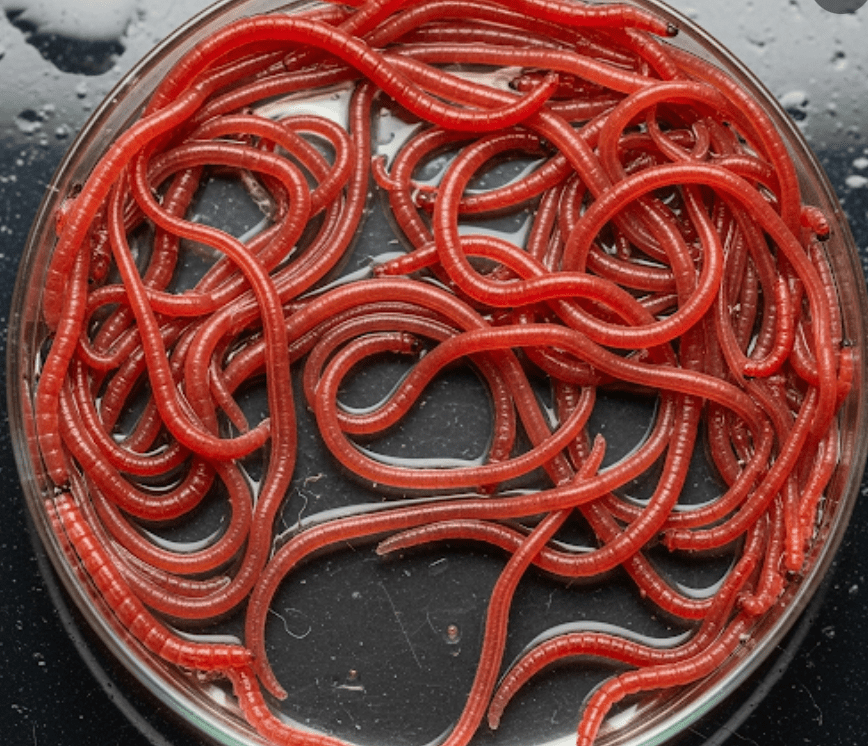
Live Blood-worms:
They have a very short shelf life. Therefore, keep them in a small amount of cool, dechlorinated water in the refrigerator. Change the water daily to remove waste and keep them fresh. You should aim to use them within 2-3 days.
Frozen/Freeze-Dried:
In contrast, store these in the freezer or a cool, dry place, and they will last for months.
Caring for Mealworms:

Housing:
A small plastic container with smooth sides and air holes in the lid is perfect.
Substrate (Bedding & Food):
For the substrate, use 2-3 inches of wheat bran, rolled oats, or cornmeal. Crucially, this will serve as both their bedding and their food source.
Hydration:
To provide moisture, add small pieces of carrot, potato, or apple. Make sure to use pieces, as this prevents the container from becoming too humid and moldy. Remove and replace these pieces every couple of days.
Temperature:
Keep them at room temperature. However, if you want to slow their growth and pupation, you can store them in the refrigerator door for a week or two.
Caring for Superworms:
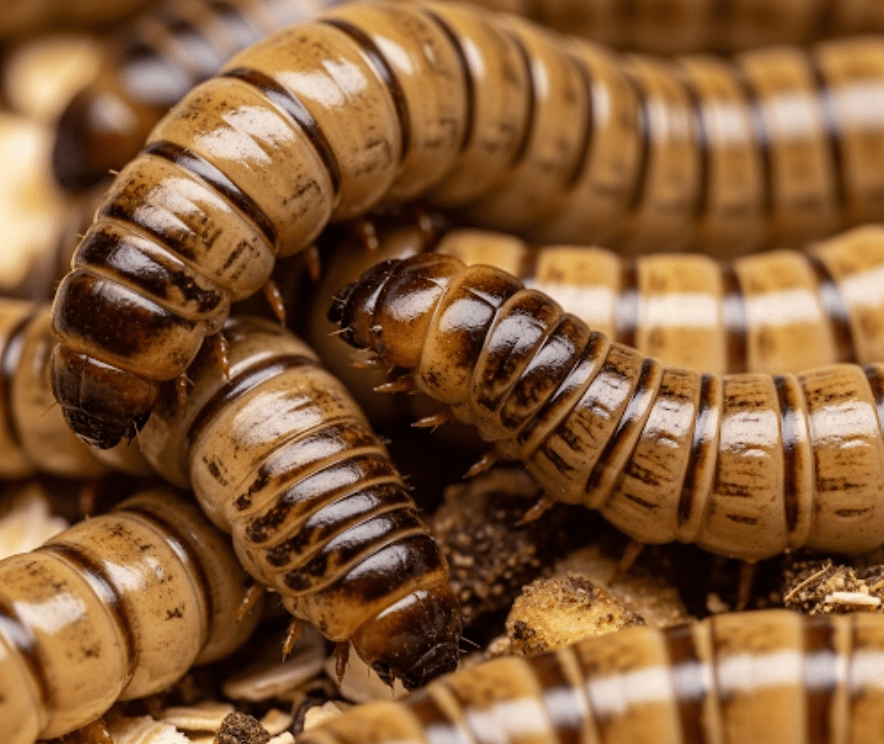
Housing:
Similar to mealworms, a plastic container with ventilation works well.
Substrate:
Likewise, use the same substrate of oats or wheat bran as mealworms.
Temperature:
Crucially, Superworms cannot be refrigerated as the cold will kill them. Therefore, they must be kept at room temperature (around 70−80∘F or 21−27∘C).
Separation for Pupation:
However, if you want them to turn into beetles for breeding, you must separate them into individual small containers.
By understanding the unique benefits and requirements of each of these feeder worms, you can provide a diet that is not only exciting for your pet but also perfectly tailored to its nutritional needs.
Feeder Worms FAQ
The best feeder worms for reptiles depend on size, age, and species needs. Mealworms suit small to medium reptiles, while superworms feed larger species like adult bearded dragons. Bloodworms work as treats for aquatic and semi-aquatic pets due to their high moisture content.
Bloodworms are not worms despite their misleading name. They are aquatic larvae of the midge fly from the Chironomidae family. Their bright red color comes from hemoglobin proteins that allow survival in low-oxygen water environments common to their natural breeding habitats.
Mealworms come from Tenebrio molitor darkling beetles and reach about 2 cm in length. Superworms come from Zophobas morio beetles and grow significantly larger and more active. Superworms also carry higher fat content and cannot pupate when housed together with food.
Feeder worms cause metabolic bone disease due to their poor calcium-to-phosphorus ratio. All three common feeders contain low calcium and high phosphorus, blocking absorption. Dusting with reptile calcium powder before feeding corrects the imbalance and prevents skeletal deformities in growing reptiles.
Mealworms can serve as a daily staple for many small reptiles when properly gut-loaded and calcium-dusted. Variety remains important to prevent nutritional gaps. Hard exoskeletons can challenge digestion in young or weakened reptiles, making rotation with softer feeders like silkworms beneficial.
Gut-loading feeder worms means feeding them nutrient-rich foods 24 to 48 hours before offering them to your pet. Use leafy greens, carrots, sweet potatoes, and commercial gut-load formulas. The worm becomes a nutritional delivery vehicle, passing vitamins and calcium directly to your reptile.
Superworms cannot be refrigerated, since cold temperatures kill them within hours. Keep them at room temperature between 21 and 27°C in containers with oat or bran substrate. Mealworms tolerate refrigeration and slow their pupation when stored at lower temperatures for short periods.
Superworms are safe for adult chameleons when fed in moderation due to high fat content. Larger species like adult Veiled or Panther chameleons handle them well as occasional treats. Daily feeding causes obesity and gout, so rotation with crickets and roaches works better.
Sources
- ReptiFiles (Feeder Insect Nutrition Chart)
- Dubia.com (Superworm Care Guide)
- Fluker Farms (Mealworm Care)
- Feeding Insect Eating Reptiles (Feeding Reptiles)


Leave a Reply