

Nature rewards honesty rarely and rewards a good bluff constantly. Batesian mimicry is one of evolution’s most successful lies. A harmless animal evolves to look like a dangerous one, and predators back off without ever testing the claim. Henry Walter Bates first documented this in Amazonian butterflies in 1862. Since then, biologists have found the same trick across insects, snakes, and even fish. This article breaks down how Batesian mimicry works, where it shows up, and where popular examples actually got the science wrong.
What Is Batesian Mimicry, Exactly?
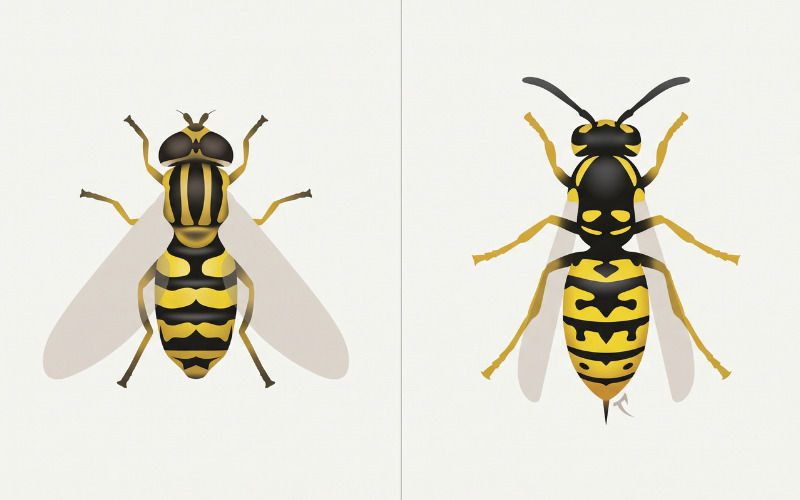
Yes. Batesian mimicry describes a harmless species evolving to resemble a dangerous or unpalatable one. The mimic gains protection purely through appearance, not through any actual defense. Consequently, the entire strategy depends on predators learning to avoid the dangerous model first. If predators never learn the lesson, the mimic’s disguise offers zero protection. This distinguishes Batesian mimicry from Müllerian mimicry, where both species are genuinely dangerous and share the warning cost equally.
The Scarlet Kingsnake’s Coral Snake Disguise

The scarlet kingsnake, Lampropeltis elapsoides, mimics the venomous eastern coral snake, Micrurus fulvius. Both display bands of red, yellow, and black along the body. However, the exact order of these bands differs between the two species. The old rhyme “red touches yellow, kills a fellow” refers to this distinction. Predators that have been bitten by a real coral snake generalize the danger to anything wearing similar colors. Therefore, the kingsnake survives on borrowed fear rather than earned danger. Milk snakes, close relatives of kingsnakes, use the identical strategy across their range.
Hoverflies and the Wasp Costume Nobody Checks
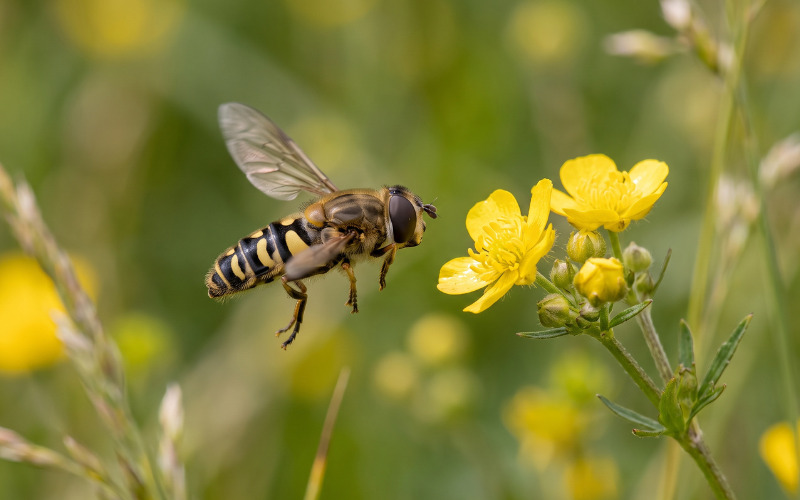
Hoverflies, family Syrphidae, mimic the black and yellow banding of wasps and bees with striking accuracy. In fact, some species even mimic the wasp’s flight pattern and buzzing sound. Hoverflies possess no stinger and pose zero threat to anything. Birds and other predators, however, associate the pattern with pain and generally avoid the meal entirely. This example remains one of the cleanest, most-cited cases of Batesian mimicry in modern biology.
The Viceroy Butterfly Myth Biologists Had to Correct
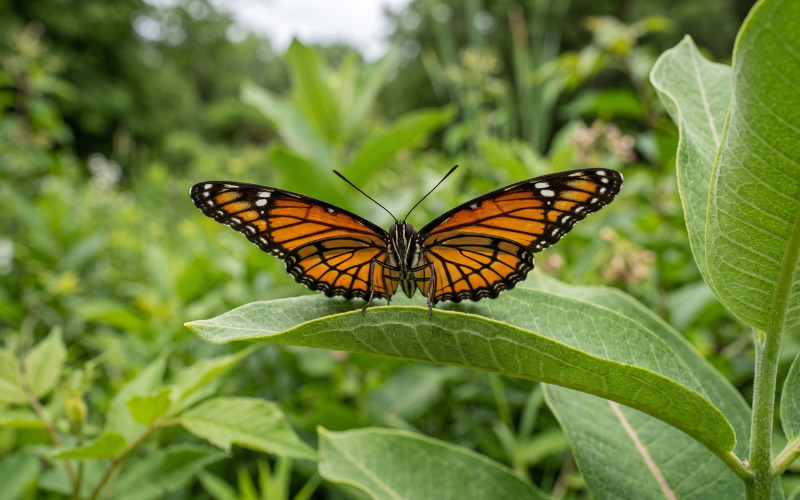
For decades, textbooks described the viceroy butterfly as a harmless mimic of the toxic monarch. Research published by Ritland and Brower in 1991 overturned that assumption. Viceroys, it turns out, taste just as bad to predators as monarchs do. As a result, the relationship is now classified as Müllerian mimicry, not Batesian. This correction matters because it shows how scientific consensus updates with better evidence. A famous textbook example was simply wrong, and biology fixed it.
Why Predators Fall for the Disguise At All
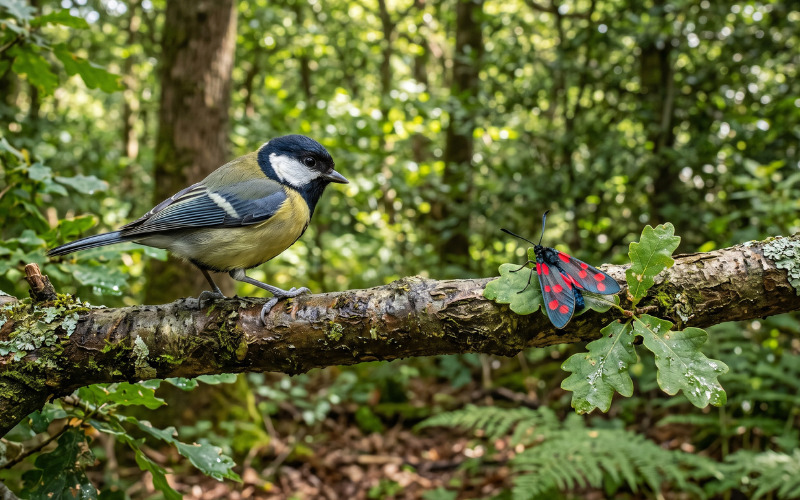
Predators learn through direct negative experience, not instinct alone. A young bird that survives an encounter with a wasp or a coral snake remembers the pain. That memory then generalizes to any prey sharing the same color pattern. Specifically, this generalization is what makes Batesian mimicry work at a population level. Notably, the system only functions if dangerous models outnumber or equal mimics locally. If mimics become too common, predators stop associating the pattern with real danger.
When Batesian Mimicry Breaks Down

Frequency-dependent selection controls how well Batesian mimicry holds up over time. If mimics vastly outnumber the dangerous models they copy, predators encounter mostly safe prey. Consequently, predators learn the pattern is not actually dangerous and start attacking mimics again. This creates constant evolutionary pressure balancing mimic and model populations. Some regions with scarlet kingsnakes but no coral snakes still show the pattern persisting. Researchers believe gene flow from populations that do overlap with coral snakes keeps the trait alive.
My Experience — Researching Batesian Mimicry From the Reptile Side

I have not personally kept a mimic species like a milk snake or a kingsnake. My reptile experience centers on Cosmo, my African chameleon, and Mike and Frida, my red-eared sliders. However, writing the site’s milk snake care guide pushed me into the mimicry literature directly. What struck me was how differently Cosmo bluffs compared to a mimic snake. Cosmo relies on deimatic behavior: puffing up, hissing, and darkening color to look threatening in the moment. A mimic snake, by contrast, is born already wearing its bluff. It never needs to perform the threat because the pattern does the work. Researching this made me appreciate how many separate evolutionary paths lead to the same result: survival through convincing a predator not to test you.
Batesian Mimicry FAQ Block
Batesian mimicry involves one harmless species copying a dangerous one for protection. Müllerian mimicry involves two or more genuinely dangerous species sharing a similar warning pattern. Both strategies rely on predator learning, but only Batesian mimicry includes a “free rider” species. The viceroy and monarch butterflies are now known to be Müllerian mimics, not Batesian.
Yes, milk snakes are considered Batesian mimics of venomous coral snakes in overlapping regions. Their banded red, yellow, and black pattern closely resembles the coral snake’s warning coloration. The band order differs slightly, which is the basis for the classic identification rhyme. Milk snakes carry no venom and rely entirely on this visual bluff for protection.
Yes, several fish species display Batesian mimicry, including certain blennies mimicking cleaner wrasse. The mimic blenny copies the cleaner wrasse’s appearance and behavior to approach unsuspecting fish. Instead of cleaning parasites, it bites a chunk of flesh and flees. This qualifies as aggressive mimicry, a specific subtype within the broader Batesian framework.
No, Batesian mimicry can involve sound, movement, and body shape in addition to color. Certain hoverfly species mimic wasp flight patterns and buzzing frequencies, not just banding. Some harmless snakes mimic the tail-vibration warning behavior of rattlesnakes when threatened. The strategy adapts to whatever sensory cue the predator relies on most.
Mimicry requires specific genetic variation to arise and then face the right selective pressure. A harmless species also needs geographic overlap with a dangerous model for the bluff to matter. Without predators that recognize the model’s warning signal, mimicry offers no survival benefit at all. Evolution does not plan ahead, so mimicry only appears where circumstances happen to align.
Sources
- Encyclopedia Britannica
https://www.britannica.com/science/Batesian-mimicry - Journal of Evolutionary Biology (Ritland & Brower viceroy findings, summarized)
https://www.jstor.org/stable/2409330 - National Wildlife Federation
https://www.nwf.org/Educational-Resources/Wildlife-Guide/Mimicry


Leave a Reply
You must be logged in to post a comment.