

It’s a scenario that plays out countless times: the tiny, quarter-sized turtle bought on a whim grows into a large, messy, and demanding adult. A common turtles release scenario occurs when the owner, feeling overwhelmed and believing they are doing the right thing, drives to a local pond and releases their pet “back to nature.” It can feel like an act of kindness.
However, the hard truth is that it is one of the worst possible outcomes. Specifically, releasing a captive pet turtle is often a slow death sentence for the animal, an ecological disaster for the local environment, and, in most places, illegal. Therefore, this guide will explore the devastating consequences of this single act and provide you with a clear, step-by-step roadmap to the safe, responsible, and ethical alternatives for turtle care.
A Lifelong Vow
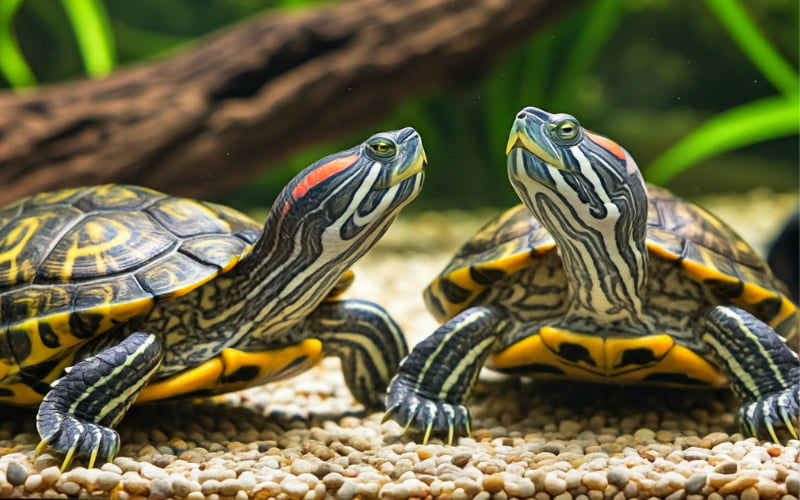
When I brought home my tiny, coin-sized RES turtles, Mike and Frida, I made a silent vow. I knew from my research that they could potentially outlive me, and I promised them that their home with me would be their forever home, no matter how big, messy, or inconvenient they became. That is the profound weight of a turtle’s commitment.
However, I understand that not everyone is prepared for that reality, and life can present unforeseen challenges. Therefore, this guide is not written to shame anyone, but to provide a clear, responsible, and humane path forward when you find yourself in the difficult position of no longer being able to care for your pet.
The Fate of a Released Turtles
Will a pet turtle survive if released into the wild?
The chances are heartbreakingly slim. A captive-bred turtle is not a creature of the wild; it is a vulnerable being, nurtured within the confines of an entirely fabricated environment. To release it is not to grant freedom, but to abandon it to a world for which it is utterly unready, a brutal fate that no being deserves.
What skills do captive-bred turtles lack compared to wild turtles?
Foraging and Hunting: They have no experience finding their own food. In fact, their entire life, food has simply appeared in their tank. Consequently, they don’t know which wild plants are safe to eat or how to hunt for aquatic insects and fish.
Predator Avoidance: A pet turtle does not have a natural, instinctual fear of common predators like raccoons, large birds, or even domestic dogs. A released turtle that associates humans with food is dangerously naive.
Shelter and Hibernation: Released turtles do not know how to find safe places to hide or how to properly burrow to escape the winter cold, which can lead to them freezing to death.
How long can a pet turtle that was released be expected to live?
Some released turtles may survive for a short time. However, most will perish within their first year. They may die from starvation, stress, predation, or exposure to the elements. It is a slow, cruel fate.
The Ecological Consequences of Turtles Release
What diseases can pet turtles carry that are harmful to wild turtles?
Captive turtles can be carriers for pathogens like Mycoplasma or various viruses and fungal infections. Even a seemingly healthy pet can be a carrier. A released turtle may shed these diseases into the water. This can infect entire native populations that have no immunity.
Why are Red-Eared Sliders a major invasive species problem?
The Red-Eared Slider is the world’s poster child for this issue. They are larger, more aggressive, and reproduce more prolifically than many native turtle species, like the Painted Turtle. When released, they out compete native turtles for limited resources.
How do released turtles compete with native species?
They compete for everything. This includes the best basking spots to absorb sunlight, safe nesting areas to lay eggs, and all available food sources. In this competition, the larger and bolder released turtle often wins. This victory pushes the shyer native species out.
Can a native species be considered invasive if released outside its range?
Yes. For example, a released Eastern Box Turtle (native to the East Coast) in California makes it an invasive species there. Critically, it can still spread diseases and disrupt the local ecosystem’s delicate balance.
Can releasing a turtle alter the native population’s genetics?
Yes. Even if released turtles are native species but from a different genetic line (for example, a Florida Red-bellied Turtle released in Virginia), they can interbreed with the local population. This “genetic pollution” can dilute unique adaptations and also eliminate the adaptations that have allowed the local population to thrive for thousands of years.
Legal and Ethical Obligations
Is it legal to release a pet turtle into the wild?
In the vast majority of places, it is illegal to release any non-native animal into the wild. Furthermore, many states and countries have strict laws; specifically, they prohibit the release of any captive-bred animal, even if it’s a native species.
What are the penalties for illegally releasing an animal?
Penalties can be severe, ranging from significant fines to, in some cases of major ecological damage, even jail time.
Is it ever legal to release a wild-caught turtle back into the wild?
This should only be done under very specific circumstances, and it often requires consultation with your state’s wildlife agency. For example, if you are helping a healthy turtle cross the road, you should place it on the other side. Critically, make sure it’s in the direction it was heading. Similarly, if you have taken in an injured wild turtle, first ensure it receives care from a licensed wildlife professional; then, release it only after it has been rehabilitated successfully.
What is the responsibility of a pet owner who can no longer care for their animal?
The moral and ethical responsibility is to ensure the animal continues to receive proper care for its entire life. This means that if you can no longer provide that care, your duty is to find someone who can, not release your turtle into the wild.
Responsible Alternatives to Turtles Release
You have several humane and responsible options.
How can I rehome my pet turtle safely?
This is your best first option. Therefore, reach out to fellow hobbyists through local reptile keeping Facebook groups or forums. However, the most crucial part of this process is to vet the new owner thoroughly. You must ask for pictures of their setup, focusing on their turtle care practices. Furthermore, ask questions about the diet they plan to provide, the size of their tank, and their knowledge of lighting. Ultimately, you have a responsibility to ensure your turtle is going to a better, permanent home, not just another temporary stop.
What organizations can I contact to surrender my unwanted turtle?
Search online for dedicated reptile rescue groups or turtle-specific rescues in your state or region. These organizations are experts and are your best bet for finding a qualified new home for your pet. Some humane societies or SPCAs may also accept turtles. However, you must call first. Ensure they are properly equipped to care for them.
What should I do if a rescue organization is full?
This is a difficult reality. If rescues are overwhelmed, do not give up.
Contact a veterinarian. They often have a network of clients and contacts and may know of someone willing to adopt.
Continue your search. Be persistent. It may take weeks or even months to find a suitable home.
In the interim, improve its current care. Use this time to upgrade your turtle’s habitat to the best of your ability. A healthier turtle is much more attractive to a potential new owner.
How to Be Part of the Solution
How can I raise awareness about the risks of releasing pets?
Share this article and raise awareness about the effects of released turtles on ecosystems. Talk to your friends and family. When someone mentions buying a “cute baby turtle” at a souvenir shop, tell them it’s a decades-long commitment. They should consider this seriously. Ultimately, education is the most powerful tool.
How can I support organizations that help?
Instead, donate your time or money to reptile rescues. They are on the front lines and deal with the constant influx of unwanted pets. Therefore, they are often underfunded and rely on community support.
Released Pet Turtles FAQ
Releasing a pet turtle into the wild is illegal in nearly every US state and most countries worldwide. Penalties range from substantial fines to potential jail time for major ecological damage. The law applies regardless of whether the species is native or non-native to the release location.
Released pet turtles usually die because captive-raised individuals lack hunting skills, predator avoidance instincts, and shelter-finding abilities. Most perish within the first year from starvation, predation, or exposure to seasonal temperatures. Release feels merciful but functions as slow abandonment to a brutal, unfamiliar environment.
Red-Eared Sliders are considered invasive worldwide because they outcompete native turtle species for food, basking spots, and nesting territory. They reproduce rapidly, grow larger than most natives, and behave more aggressively. Released specimens spread pathogens that local populations have no natural immunity against.
A sick or injured wild turtle should never go directly back into the wild without licensed rehabilitation first. Contact a wildlife rehabber or reptile-specialized veterinarian for proper care. Once fully recovered, the rehabilitator releases the turtle in the original location, following state wildlife agency protocols.
Find turtle rescues by searching state-specific reptile rescue directories and joining local reptile keeping Facebook groups. Veterinary clinics, herpetological societies, and SPCAs sometimes maintain rescue contact lists. Calling ahead confirms whether the organization has space, expertise, and proper aquatic setups for surrendered turtles.
Ask the potential adopter for tank photos, lighting setup details, filtration specifications, and feeding plans before rehoming your turtle. Verify their understanding of UVB requirements and adult turtle size commitments. Request references from other reptile keepers and confirm their long-term housing plans for the next decade.
Captive-bred native turtles cannot legally release into their natural range in most states despite being the same species. Genetic differences between captive lines and local wild populations dilute unique adaptations. Disease transmission risks and behavioral deficits make even native-species releases ecologically harmful.
Finding a new home for a turtle typically takes weeks to several months depending on rescue capacity and local demand. Persistent posting in reptile communities, contacting rescues, and networking through veterinarians speeds the process. During the search, improve current care to make the turtle more adoptable.
Sources
- University of Florida
https://edis.ifas.ufl.edu/publication/UW447 - MSD Veterinary Manual
https://www.msdvetmanual.com/exotic-and-laboratory-animals/reptiles/respiratory-diseases-of-reptiles - Global Invasive Species Database
http://www.iucngisd.org/gisd/species.php?sc=71 - National Library of Medicine
https://pubmed.ncbi.nlm.nih.gov/11443141/


Leave a Reply