
You have seen them in the elaborate setups online. Furthermore, you have seen them at your best local fish store. Specifically, they are mysterious chambers hidden in the cabinet. In fact, this is the aquarium sump. Moreover, it is the beating heart of a high-performance aquatic ecosystem.
Admittedly, it seems like a complex piece of plumbing. Therefore, many believe it is best left to the pros. However, it doesn’t have to be. In fact, building your own custom sump is a rewarding project. Consequently, this guide is your step-by-step blueprint. It aims to demystify the process completely. Ultimately, we will turn a pile of glass into a life-support system.
The Glorious Gurgling Monster in My Living Room
My house usually has the gentle sounds of the hobby. For example, I hear the quiet hum of a canister filter. Additionally, there is the soft bubbling of a sponge filter. However, then there is the sound a sump creates. Specifically, it is a complex symphony of gurgles. As a result, non-hobbyist guests nervously ask about my plumbing.
In fact, I recall the first time I helped a friend install one. At first, I was convinced we built a water treatment plant. Furthermore, I feared a power outage would create an indoor pool. But we eventually dialed it in. Consequently, it ran silently. Then, I understood the truth. In reality, a sump isn’t just a filter. Instead, it is the engine room of the Starship Enterprise. Therefore, this guide is for every aspiring aquarium plumber.
What is a Sump, and Why Would I Want One?

A sump is, simply put, a second tank plumbed below your main display aquarium. The process works as follows: Water drains from the main tank down into the sump, passes through various filtration chambers, and is then pumped back up into the display. This setup, consequently, offers massive advantages:
- Superior, Customizable Filtration: A sump allows you to use more and better filtration media than any other filter type.
- Hides All Equipment: Heaters, probes, protein skimmers, and all other ugly gear are hidden in the cabinet, thereby leaving your main tank clean and naturalistic.
- Increases Total Water Volume: Adding a 20-gallon sump to a 75-gallon tank effectively gives you a 95-gallon system. Crucially, more water means more stability and healthier fish.
What Do I Need to Build a Custom Sump?

- A Standard Glass Tank: A basic, inexpensive glass aquarium (like a 20-gallon long or a 40-gallon breeder) is the perfect shell.
- Baffles: Panes of glass or acrylic that will serve as the walls between your chambers. You can have a local glass shop cut these for you. While you can use acrylic baffles in a glass tank, silicone does not bond well to acrylic. It does not form a chemical bond with plastic; it only creates a weak mechanical seal (“gasket”). Over time, the pressure of the water can pop acrylic baffles loose. For a glass tank, glass baffles are significantly stronger and safer.
- 100% Aquarium-Safe Silicone: Do not cheap out here. It must be 100% silicone with no mold inhibitors.
- An Overflow Box: A device that safely skims water from the surface of your main tank and sends it down to the sump.
- A Return Pump: A submersible pump that will sit in the final chamber of your sump and push the clean water back up to the display tank.
- Plumbing: PVC pipes or flexible vinyl tubing to connect the overflow and the return pump.
How Do I Design and Build the Sump Itself? A Step-by-Step Guide
Step 1: How Do I Design the Baffle Layout?

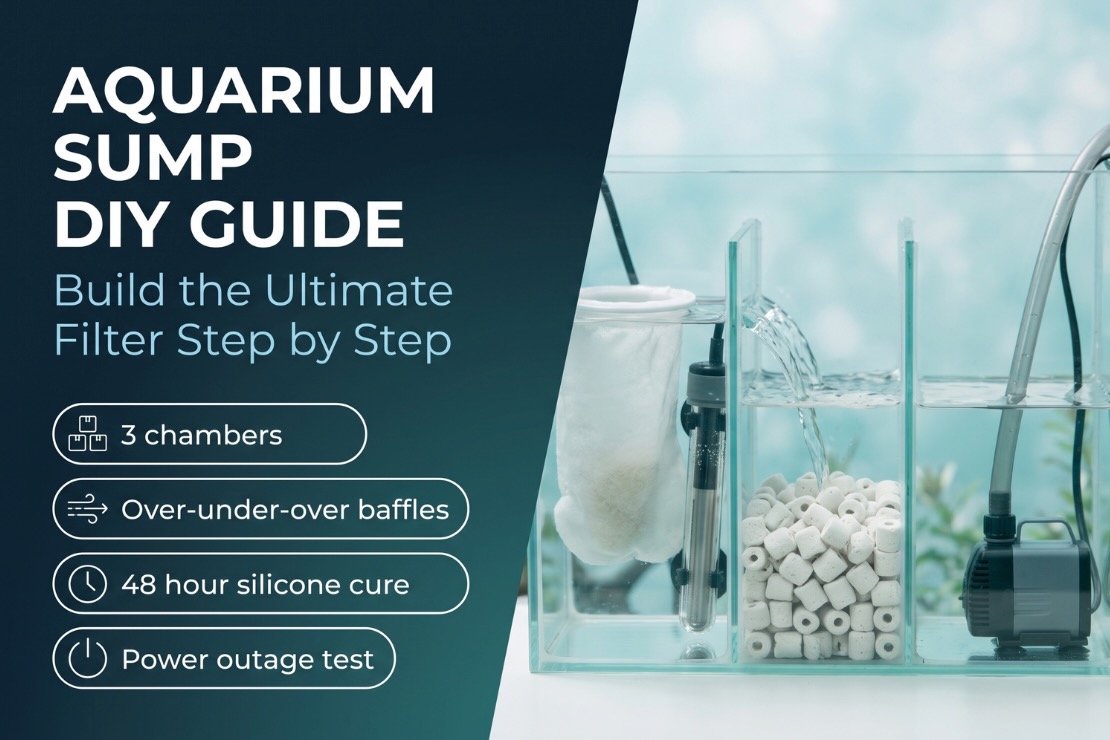
The most common and effective design for a sump is a three-chamber layout using an “over-under-over” baffle system.
- The Intake Chamber: Where water from the tank first enters. This is the largest chamber and where you’ll place heaters and a protein skimmer (for saltwater).
- The Middle Chamber (Media): The heart of your biological filter.
- The Return Chamber: The final, smallest chamber that holds the clean water and your return pump.
Step 2: How Do I Place the Baffles?

This is the most critical construction step. The goal is to create the “over-under-over” flow that traps bubbles and maximizes filtration.
- First Baffle (Over): The first wall after the intake chamber sets the water level for that chamber. Therefore, silicone it into place.
- Second Baffle (Under): Afterward, place this baffle about 1–2 inches (3–5 cm) after the first one, making sure to raise it 1–2 inches off the bottom of the sump. Water is forced to flow under this baffle, allowing it to pass through any media at the bottom.
- Third Baffle (Over): The final baffle is placed 1–2 inches after the second one. This one is siliconed to the bottom, just like the first. This final “over” baffle functions as a bubble trap. It effectively stops the micro-bubbles from your skimmer or refugium. This prevents them from being sent up into your display tank.
Pro Tip: Use masking tape to mark your lines perfectly. Use it to hold the baffles in place. Allow the silicone to cure for at least 48 hours.
Step 3: What Goes in Each Chamber?
- Chamber 1 (Intake): Water drains first into this chamber, often through a filter sock for mechanical filtration. Consequently, your protein skimmer and heaters go here.
- Chamber 2 (Media): Next, this is your bio-reactor. You can fill it with high-surface-area bio-media (like ceramic rings or bio-balls). Alternatively, you can create a “refugium” by adding a deep sand bed and slow-growing macroalgae (like Chaetomorpha), lit by a small, dedicated light. In the latter case, the macroalgae will consume nitrates and phosphates, acting as a natural, self-sustaining filter.
- Chamber 3: Finally, this chamber should contain only your return pump and the sensors for an Automatic Top-Off (ATO) system if you have one. Above all, keep it clean and clear.
How Do I “Tune” My Sump to Prevent an Overflow?

This is the biggest fear for any new sump owner, but it’s easily preventable with proper tuning.
The Golden Rule: The sump must have enough empty space to ensure it can hold all the water that will drain from the return pump chamber and the overflow box during a power outage.
The Power Outage Test:
- Fill your system and get it running.
- Mark the normal running water level in your sump.
- Unplug your return pump.
- Water from the return line and the display tank’s overflow will drain back into the sump. Watch the water level rise.
- Mark this new, higher “power outage” water level.
- The space between the “power outage” level and the top rim of your sump is your safety margin. Never fill your sump above the normal running water level you marked. This guarantees that if the power goes out, the sump can safely contain the backflow without overflowing.
Aquarium Sump Filtration Systems FAQ
An aquarium sump is a second tank plumbed beneath the main display aquarium. Water drains from the display tank down into the sump, passes through filtration chambers, and a return pump pushes clean water back up. This cycle runs continuously, providing superior filtration while hiding all equipment from the main tank.
The main flood risk is power failure, which causes water to back-drain from the display tank and return line into the sump simultaneously. Run a power outage test by unplugging the return pump and watching the sump water level rise. Never fill the sump above the level it reaches during this test.
A three-chamber design is the most effective and widely recommended layout for a DIY aquarium sump. The first chamber receives incoming water and houses heaters and skimmers, the second holds biological filter media, and the third contains only the return pump. This over-under-over baffle system traps bubbles and maximizes filtration efficiency.
Acrylic baffles in a glass aquarium sump are not recommended. Silicone does not form a chemical bond with acrylic, creating only a weak mechanical seal that water pressure can eventually push loose. Glass baffles cut to size by a local glass shop are significantly safer and create a permanent, watertight seal.
Yes, adding a sump directly increases the total water volume of your system. A 20-gallon sump plumbed to a 75-gallon display tank effectively creates a 95-gallon ecosystem. More water volume means greater stability in temperature and water chemistry, which reduces stress on fish and makes the entire system more forgiving of mistakes.
A standard, inexpensive glass aquarium is the ideal shell for a DIY aquarium sump. A 20-gallon long or a 40-gallon breeder tank works well for most home setups. These are widely available, affordable, and glass-to-glass silicone bonding ensures the baffles you install will hold securely under constant water pressure.
Sources
- Marine Depot (Benefits of a Sump)
https://www.marinedepot.com/blog/what-is-a-sump-pump-aquarium-sump-benefits - Aquarium Co-Op (Aquarium Safe Silicone)
https://www.aquariumcoop.com/blogs/aquarium/aquarium-silicone - Reef2Reef (Glass vs Acrylic Baffles)
https://www.reef2reef.com/threads/glass-vs-acrylic-baffles-in-glass-sump.304192/ - Melev’s Reef (Sump Design 101)
https://www.melevsreef.com/articles/how-to-build-a-sump - AlgaeBarn (Refugium Benefits)
https://www.algaebarn.com/blog/refugiums/what-is-a-refugium/ - The Spruce Pets (Preventing Sump Overflows)
https://www.thesprucepets.com/prevent-aquarium-sump-overflows-2924255
Leave a Reply
You must be logged in to post a comment.