
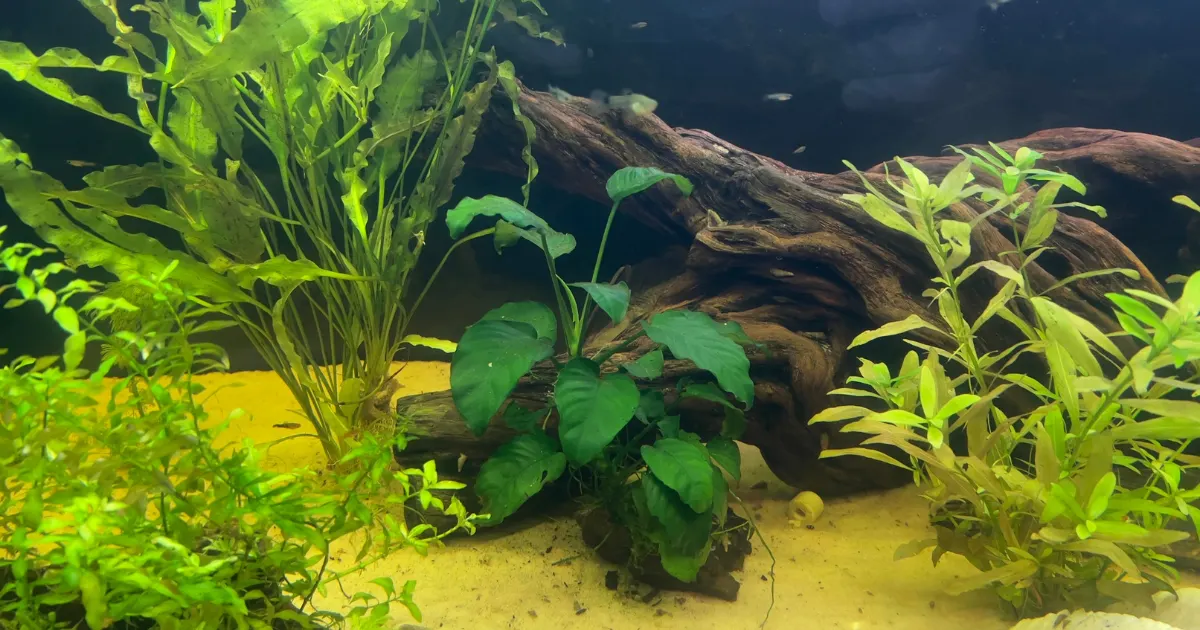
In the fast-paced world of aquarium keeping, we often chase rapid growth and vibrant, demanding plants. But my greatest lesson in the hobby came from the slowest plant in my tank: an Anubias nana. While other plants pearled, grew, and needed constant trimming, the Anubias just… was. It sat attached to its piece of driftwood, unfurling a single, perfect, dark green leaf every month or so. It asked for nothing—not bright light, not special soil, not constant attention. This taught me that there is a profound beauty in patience and resilience. The Anubias became the steadfast, quiet heart of my aquascape, a living sculpture that proved you don’t have to be fast to be strong.
This unique nature is why the Anubias genus is a family of iron-clad aquatic and semi-aquatic plants from Africa. They are, without a doubt, the single best beginner plant in the hobby, and a favorite of experts for their graceful, unchanging beauty. Now, this guide will explore everything you need to know to make this amazing plant thrive.
Aquarium Setup and Placement
Do I need to plant Anubias in the substrate?
No! This is the single most important rule of Anubias care. To explain, the thick, horizontal stem that the leaves and roots grow from is called a rhizome. If you bury the rhizome in the substrate, it will suffocate, rot, and the entire plant will die.
What is the best way to attach Anubias to driftwood or rocks?
This is the ideal way to plant Anubias. You have a few great options:
- Superglue Gel: This is the easiest and fastest method. Use a gel-type superglue (like Loctite Gel Control). A few dabs on the rhizome or roots, press it onto a dry spot on your rock or wood, hold for 30 seconds, and you’re done. It’s completely aquarium-safe.
- Cotton Thread or Fishing Line: Simply tie the rhizome to the hardscape. Cotton thread is a good choice as it will naturally dissolve over a few months, by which time the plant’s roots will have attached themselves firmly.
Can Anubias be planted in substrate safely?
Yes, but only if you follow one rule: the rhizome must stay above the substrate. To clarify, you can plant the thin, stringy roots down into the gravel or sand, but the thick, green rhizome itself must be exposed to the water column.
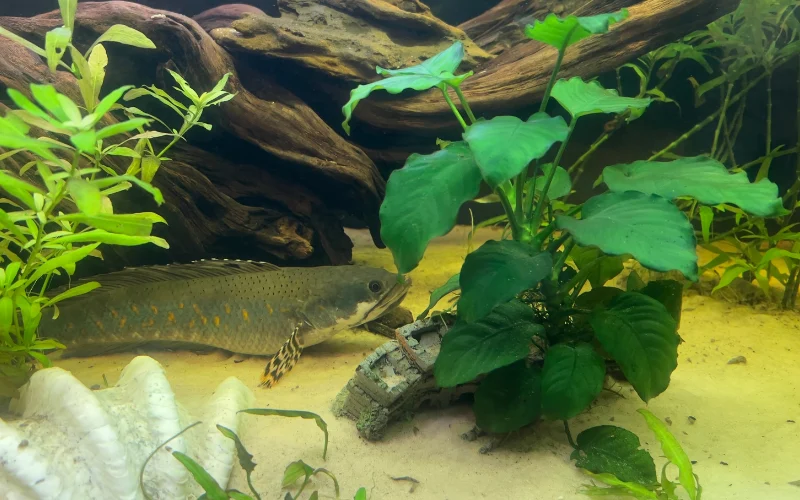
Water Parameters and Lighting
What are the ideal water parameters (pH, temperature, hardness)?
Anubias are incredibly adaptable. They will thrive in almost any standard tropical aquarium.
- Temperature: 72-82°F (22-28°C)
- pH: 6.0 to 8.0
- Hardness: They are not fussy and do well in both soft and hard water.
What are the specific lighting requirements for Anubias?
This is their superpower: they are a low-light plant. Therefore, they do not need and do not want intense, direct lighting. Instead, they thrive in the shaded areas of an aquarium, under floating plants, or in tanks with standard, low-output lights.
How does higher lighting affect Anubias?
Under high light, Anubias become an “algae magnet.” This is because they grow so slowly; their leaves provide a perfect, stable surface for algae to colonize under intense light. Consequently, the number one cause of algae on Anubias is too much light.
Do I need to use CO2 injection for Anubias?
No, CO2 is not necessary. It can slightly speed up their slow growth, but they are perfectly happy without it, making them ideal for low-tech setups.
Fertilization and Growth
Do Anubias need fertilizer to thrive?
Anubias are “epiphytes” that primarily feed from the water column through their roots and rhizome. Because of this method, they will greatly benefit from a good liquid fertilizer added to the water once or twice a week. However, if their roots are buried, a root tab can provide supplemental nutrition.
Why is my Anubias growing so slowly?
This is completely normal. The fact is, Anubias are famously slow growers. Getting one new leaf every 3–5 weeks is considered good, healthy growth. Ultimately, this is the plant that teaches patience.
Is it normal for a new Anubias plant to “melt”?
Yes. It’s common that when you add a new Anubias, it may shed a leaf or two as it acclimates to your specific water parameters. As long as the rhizome remains firm and healthy, it will bounce back.
Paludarium and High Humidity (Emersed Growth)
Can Anubias grow out of water in a paludarium?
Yes! In fact, this is how they often grow in the wild, along the banks of rivers. However, the key to growing them “emersed” (out of the water) is very high humidity. In this setup, their roots can be in the water or in a moist substrate, while their leaves are in the air.
What are the care differences for emersed growth?
They need consistent moisture on their leaves. To ensure this, in a high-humidity setup (80% or more), they will thrive. Otherwise, you may need to mist them daily in a more open-topped setup. As a final note, their leaves will often grow larger and tougher when emersed.
Algae and Common Problems
Why does my Anubias get so much algae on its leaves?
The cause is almost always too much light. Since the leaves are tough and last for a long time, and the plant grows slowly, it’s an easy target for algae. To remedy this, reduce your lighting intensity or duration, or move the plant to a shadier spot.
How can I clean algae off the leaves?
You can gently rub the leaves between your fingers or use a soft-bristled toothbrush to scrub it off during a water change.
What are the best algae-eating tank mates for Anubias?
Nerite snails, Amano shrimp, and Otocinclus catfish are all excellent choices as they will constantly graze on the leaves without harming the plant.
What is Anubias rot?
This is the one thing that can reliably kill an Anubias. It’s a bacterial or fungal infection of the rhizome that turns it soft, mushy, and foul-smelling. In nearly all cases, this is caused by burying the rhizome or physically damaging it. Therefore, to save the plant, you must use a sharp blade to cut away all the soft, rotting parts of the rhizome until only firm, healthy tissue is left.

Species and Varieties
What is the difference between Anubias nana and Anubias barteri?
Anubias barteri is the parent species, and Anubias nana is a smaller, more compact, and very popular dwarf variety of it.
What are some popular Anubias varieties?
- Anubias nana ‘Petite’: An even tinier version of Nana, perfect for nano tanks.
- Anubias ‘Coffeefolia’: Has unique, ridged leaves that resemble coffee plant leaves.
- Anubias ‘Golden’: A beautiful variety with bright, chartreuse-colored leaves.
- Anubias ‘Nangi’: Has beautiful, elongated, pointed leaves.
Which varieties are best for beginners?
All common varieties of Anubias are excellent for beginners. Their core care requirements are the same.
Propagation and Pruning
How do you propagate Anubias?
It’s incredibly simple. Using a sharp, clean razor blade or scissors, simply cut the rhizome into two or more pieces.
How many leaves should be on each section of rhizome?
To ensure a high chance of success, make sure each new section has at least 3-4 healthy leaves.
How do you prune Anubias?
Simply trim away any old, yellowing, or algae-covered leaves. Use sharp scissors and cut the leaf stem as close to the rhizome as possible without damaging it.
Anubias Plants Care FAQ
Anubias must never have its rhizome buried in substrate. The rhizome is the thick horizontal stem from which all leaves and roots grow, and burying it will cause it to suffocate, rot, and kill the entire plant. Attach the rhizome to driftwood or rocks using superglue gel or cotton thread, leaving the roots free.
Too much light is the cause of algae on Anubias in nearly every case. Anubias is a low-light plant that grows very slowly, which means its long-lasting leaves provide a stable, undisturbed surface that algae colonizes under intense lighting. Reduce lighting intensity or duration, or reposition the plant to a shadier area of the tank.
Anubias rot is a bacterial or fungal infection of the rhizome that turns it soft, mushy, and foul-smelling, almost always caused by burying the rhizome. To save the plant, cut away all soft, rotted tissue with a sharp blade until only firm, healthy rhizome remains. Dispose of infected cuttings away from the tank immediately.
Anubias propagation is simple and requires only a sharp, clean razor blade or scissors. Cut the rhizome into two or more sections, ensuring each new piece retains at least three to four healthy leaves. Each section will grow into a fully independent plant and can be attached to hardscape immediately after cutting.
Anubias does not need bright light or CO2 injection, making it one of the most accessible plants in the hobby. It thrives under low-to-standard aquarium lighting and actively suffers under intense light, which promotes rapid algae growth on its slow-growing leaves. A weekly liquid fertilizer provides all the supplemental nutrition it needs.
Superglue gel is the fastest and most reliable method for attaching Anubias to driftwood. Apply gel-type cyanoacrylate to the rhizome, press it against a dry spot on the wood, and hold for thirty seconds. Cotton thread tied around the rhizome is an effective alternative that dissolves on its own within a few months.
Sources
- Tropica (Anubias barteri var. nana)
https://tropica.com/en/plants/plantdetails/Anubiasbarterivar.nana(101)/4549 - Aquarium Co-Op (Anubias Care)
https://www.aquariumcoop.com/blogs/aquarium/anubias-care-guide - Practical Fishkeeping (Anubias Guide)
https://www.practicalfishkeeping.co.uk/features/anubias-the-ideal-plant-for-beginners/ - Flowgrow (Anubias barteri var. nana)
https://www.flowgrow.de/db/aquaticplants/anubias-barteri-var-nana - The Spruce Pets (Anubias Plant Profile)
https://www.thesprucepets.com/anubias-barteri-var-nana-1381907 - Aquasabi (Rhizome Rot)
https://www.aquasabi.com/aquascaping-wiki_aquatic-plants_anubias-rhizome-rot


Leave a Reply
You must be logged in to post a comment.