
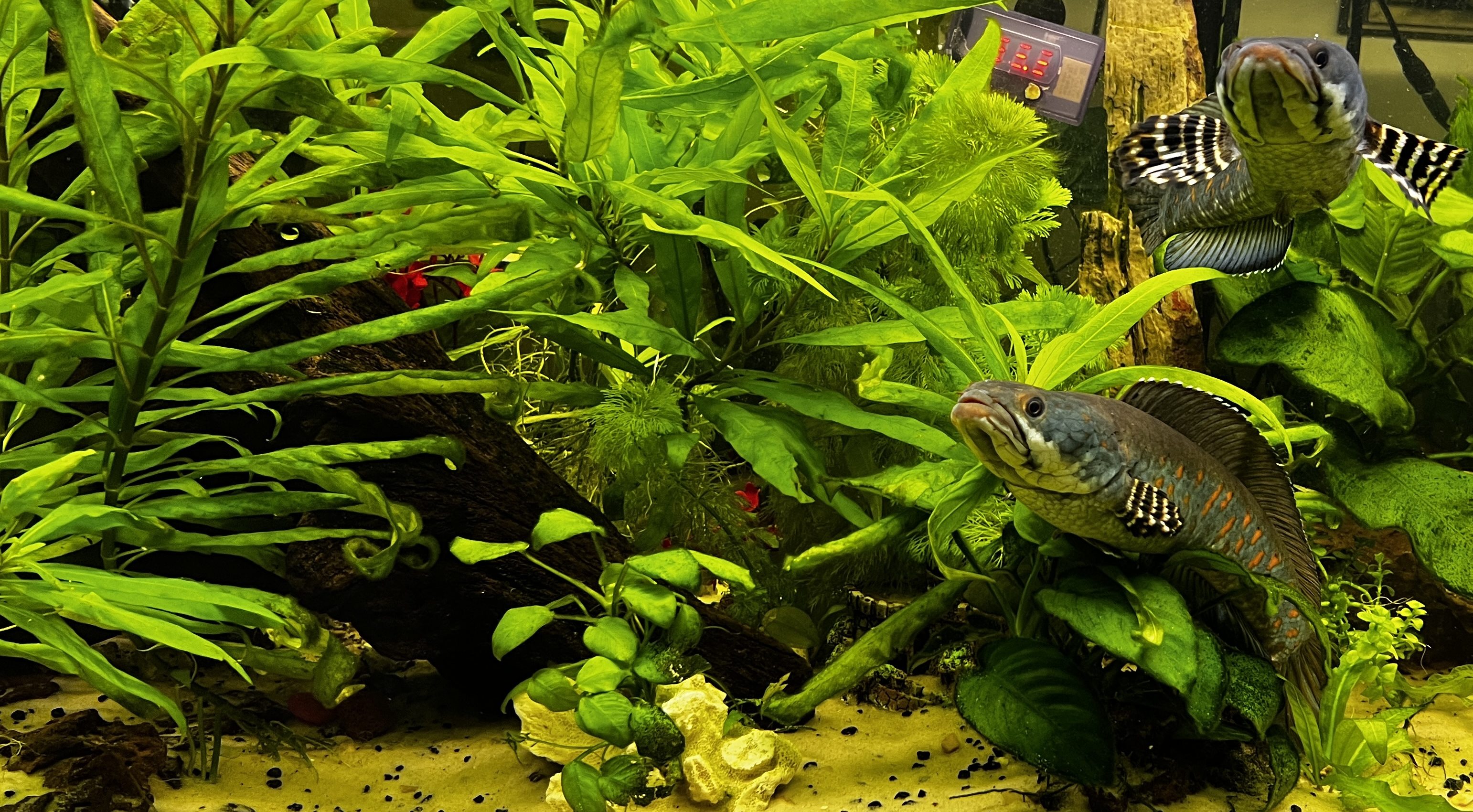
When I first dreamt of creating a lush, jungle-like aquascape, there was one plant that I knew had to be the star: the Amazon Sword. It was the iconic “aquarium plant” I’d seen in photos, with its broad, vibrant green leaves reaching majestically towards the light. My Anubias plants were my lesson in patience and resilience, teaching me about rhizomes and attaching plants to hardscape. However, the Amazon Sword was my lesson in building a foundation. It taught me the crucial importance of a nutrient-rich substrate and the concept of “root feeding.” Watching that first sword plant send out a runner that sprouted tiny new plantlets was a moment of pure magic, a sign that I was creating not just an aquarium, but a thriving, self-sustaining ecosystem.
In short, the Amazon Sword (Echinodorus genus) is a centerpiece, a background behemoth, and one of the most rewarding plants in the hobby. While often labeled a beginner plant, its true potential is only unlocked with a little specific knowledge.
Aquarium Setup and Planting
What size tank is needed for an Amazon sword?
These plants can grow quite large, often over 20 inches (50 cm) tall. it is worth noting that a healthy Amazon Sword can easily reach 18–24 inches in width. In a standard 20-gallon or 29-gallon tank, a single Amazon Sword will often physically fill the entire tank, blocking light to all other plants. They are best used as solitary centerpieces in these tank sizes.Consequently, they are best suited for taller aquariums. If placed in smaller tanks, they will quickly outgrow the space and dominate the aquascape.
What is the best substrate for Amazon swords?
This is the single most important factor for success. Amazon Swords are extremely heavy root feeders. They draw the vast majority of their nutrients from the substrate, not the water column.
- Ideal: A nutrient-rich aquatic soil.
- Essential for Inert Substrate: If you are using sand or gravel, it is non-negotiable to provide them with root tabs. Insert a few tabs deep into the substrate around the base of the plant every few months.
Do they need a deep substrate?
Yes. In order to support their large and extensive root systems, a deep substrate bed of at least 2–3 inches(5–7.5 cm) is highly recommended.
What is the best way to plant an Amazon sword?
Carefully bury the white, stringy roots in the substrate. However, be sure that the crown of the plant (the point where the leaves meet the root base) is not buried. The crown should sit right at the surface of the substrate. If you bury the crown, it can cause the plant to rot.

Water Parameters and Lighting
What are the ideal water parameters?
Amazon Swords are very adaptable and will thrive in a wide range of standard tropical tank conditions.
Temperature: 72-82°F (22-28°C)
pH: 6.5 to 7.5
What kind of lighting does an Amazon sword need?
They are often mistakenly sold as “low light” plants. While it’s true that they might survive in low light, they will grow extremely slowly and look leggy. However, for healthy, lush growth, they absolutely require moderate lighting.
Is CO2 injection necessary?
No, CO2 is not necessary, which makes them a great plant for low-tech setups. However, like most plants, they will absolutely thrive and grow much faster and more robustly if CO2 is provided.
Fertilization and Growth
Do Amazon swords need fertilizer?
Yes, absolutely. Since they are heavy root feeders, as mentioned, root tabs are the most important form of fertilizer for them. Although they can absorb some nutrients from the water column, a comprehensive liquid fertilizer is a beneficial supplement, though still not a replacement for root feeding.
What are the signs of nutrient deficiencies?
- Yellowing leaves (chlorosis): Often a sign of iron deficiency.
- Pinholes in leaves: A classic sign of a potassium deficiency.
- Stunted growth: Can be a lack of any number of nutrients or insufficient light.
Is it normal for a new Amazon sword to “melt”?
Yes, this is very common and often alarms new keepers. The reason is that most swords are grown “emersed” (out of water) at the nursery. Consequently, when you submerge them in your tank, they will shed their old “air” leaves and grow new leaves adapted for underwater life. As long as the crown and roots are healthy, be patient; new growth will appear.
Pruning and Propagation
How do you prune an Amazon sword?
It’s very simple. When trimming, when an outer leaf becomes old, yellow, or covered in algae, simply trim the leaf stem as close to the crown of the plant as possible with a pair of sharp aquascaping scissors.
How do you propagate an Amazon sword?
A healthy, mature Amazon Sword will propagate itself by sending up a long runner, or “flower stalk,” towards the light. From this runner, tiny new plantlets will begin to grow along this stalk.
When should I separate the plantlets?
Wait until the new plantlet has developed several leaves and a healthy root system of its own, at least an inch or two long.
How do I plant a new plantlet?
Carefully snip the plantlet off the runner. You can then plant it directly into the substrate (remembering to keep the crown above the soil). Because it is a heavy root feeder, placing a small piece of a root tab underneath it will give it a fantastic head start.

Common Problems
Why are my Amazon sword’s leaves turning yellow or brown?
This is usually either a sign of an old leaf dying off naturally, or a sign of a nutrient deficiency, most commonly iron. To correct this, ensure you are using a quality root tab and a comprehensive liquid fertilizer.
Why is my Amazon sword getting so much algae?
This is often caused by too much light intensity or duration, combined with an imbalance of nutrients. Furthermore, older, less healthy leaves are a prime target for algae. Therefore, pruning away dying leaves can help.
Why is my Amazon sword getting taller and thinner?
The plant is “stretching” or becoming etiolated. This is a classic sign that it is not receiving enough light. The plant is desperately trying to grow closer to its light source.
Tank Mates and Species
What are good tank mates for an Amazon sword?
Most community fish are excellent companions. The broad leaves provide great shelter for shy fish like tetras, rasboras, and gouramis.
Will certain fish eat my Amazon sword?
Yes. Large, plant-eating Cichlids (like Oscars), Silver Dollars, and Goldfish will likely eat or destroy them. Some large plecos are also known to rasp on and damage their broad leaves. Smaller species like Bristlenose Plecos are generally safe.
What are the different types of Amazon swords?
“Amazon Sword” is a common name that refers to many different species and cultivars within the Echinodorus genus. Some popular varieties include:
- Echinodorus bleheri/grisebachii: The “classic” Amazon Sword.
- Echinodorus ‘Ozelot’: A beautiful variant with reddish-brown spotted leaves.
- Echinodorus ‘Rubin’: A narrow-leaf variety with deep red coloration.
Amazon Sword Plants Care FAQ
Amazon sword plants are heavy root feeders that draw most of their nutrients from the substrate, not the water column. A nutrient-rich aquatic soil is the ideal choice. If using inert sand or gravel, root tabs inserted deep into the substrate around the plant’s base every few months are non-negotiable for healthy growth.
Burying the crown of an Amazon sword plant will cause the plant to rot and die. The crown is the point where the leaves meet the root base and must sit at the substrate surface, never below it. Bury only the white, stringy roots while keeping the crown fully exposed to the water.
Melting is a normal and expected transition for a newly added Amazon sword plant. Most swords are grown out of water at nurseries, and once submerged, they shed their old terrestrial leaves to grow new ones adapted for underwater life. As long as the crown and roots remain healthy, new growth will appear with patience.
Large, herbivorous fish are the primary threat to Amazon sword plants. Oscars, Silver Dollars, and Goldfish will eat or shred them entirely, while large Pleco species are known to rasp on and damage the broad leaves. Smaller species like the Bristlenose Pleco are generally safe and will not harm the plant.
A mature Amazon sword plant propagates by sending up a long runner toward the light, from which tiny plantlets develop. Wait until each plantlet has several leaves and roots at least one inch long before snipping it free. Plant it directly into nutrient-rich substrate with a root tab placed beneath it for a strong start.
Yellowing leaves, known as chlorosis, typically indicate an iron deficiency in an Amazon sword plant. Pinholes appearing in the leaves are a classic sign of potassium deficiency, while stunted overall growth usually points to insufficient nutrients or inadequate lighting. Regular root tabs and a comprehensive liquid fertilizer address most deficiency symptoms effectively.
Sources
- Aquarium Co-Op (Root Tabs Guide)
https://www.aquariumcoop.com/blogs/aquarium/how-to-use-root-tabs - Tropica (Planting Guide)
https://tropica.com/en/guide/get-started/how-to-plant/ - Seachem (Plant Deficiency Chart)
https://www.seachem.com/downloads/charts/Plant-Deficiency-Chart.pdf - Buce Plant (Crypt & Sword Melt)
https://buceplant.com/blogs/news/how-to-prevent-aquarium-plant-melt - Seriously Fish (Echinodorus care)
https://www.seriouslyfish.com/species/echinodorus-grisebachii/ - Florida Aquatic Nurseries (Echinodorus Propagation)
https://www.floridaaquatic.com/echinodorus-bleheri


Leave a Reply
You must be logged in to post a comment.