
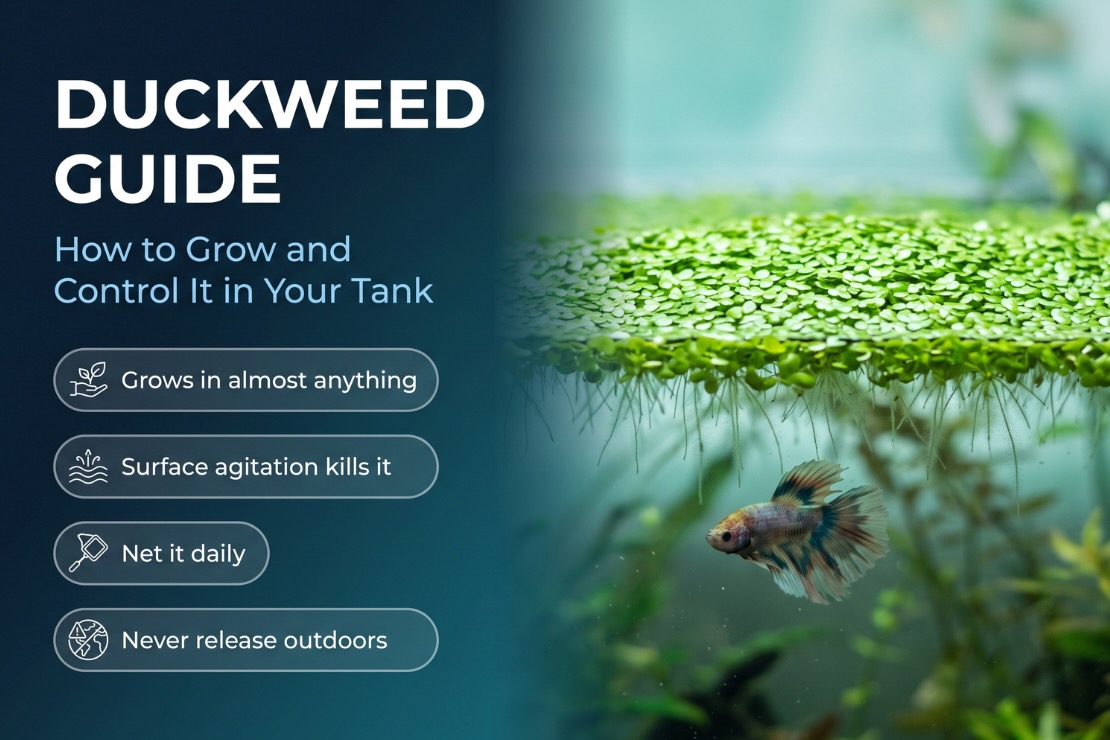
There comes a time in every aquarist’s journey when they are faced with a choice. It often arrives innocently, perhaps attached to a new plant or as a tiny, single green speck in a bag of fish. This choice is duckweed. I had a tank with a shy betta who loved shade. I thought, “A few little floating plants would be perfect!” A fellow hobbyist gave me what amounted to a spoonful and added it to my tank, marveling at the cute, miniature lily pads. However, a week later, I had a thin green carpet. Moreover, a month later, my aquarium had a new identity: it was a duckweed farm with a tank underneath. I had not just added a plant; instead, I had unleashed a force of nature, a tiny green overlord that was simultaneously my greatest ally in the fight for water quality and my eternal, inescapable nemesis.
It is not a plant you own; rather, it’s a lifestyle you adopt. It is, without a doubt, the single most prolific, beneficial, and maddeningly persistent plant in the entire hobby. Therefore, this guide is for anyone who has it, wants it, or is about to get it by accident.
For all its chaotic energy, duckweed is a legitimate super-plant.
- It’s a nutrient sponge, sucking up ammonia, nitrates, and phosphates at an incredible rate.
- It provides a wonderful sense of security for shy, surface-dwelling fish.
- It serves as a free, self-regenerating food source for many herbivores.
- It looks lush and natural, creating a “pond-like” feel.
Can duckweed help control algae?
Yes, in two powerful ways. First, it covers the surface and shades the tank, thereby reducing the light that nuisance algae needs to grow. Second, it actively outcompetes algae for the same nutrients in the water column. Consequently, a thick duckweed mat is one of the best natural algae inhibitors you can have.
Does duckweed provide shade for fish that prefer lower light?
Absolutely. In fact, it’s a living umbrella for fish like bettas, gouramis, and wild-type rasboras that feel stressed under intense, direct lighting. As a result, you’ll often see them relaxing just beneath the green carpet.
Can duckweed be used as a food source for some fish?
Yes! Goldfish, koi, and some larger gouramis and cichlids consider it an all-you-can-eat salad bar.Therefore, it’s a fantastic, nutrient-rich supplement for herbivorous fish.
Growth and Proliferation
Why is my duckweed dying?
This is the one question that will make experienced keepers laugh. However, the only thing that reliably kills duckweed is excessive surface agitation. If you have a powerful filter output or a strong bubbler that churns the water surface, the duckweed can’t stay still and will be driven underwater and die. Ultimately, it is its one, glorious weakness.
What are the ideal water parameters and lighting?
Here’s the scary part: duckweed will grow in almost anything. In fact, if you have water that can support fish, your duckweed will thrive. This is because it’s not fussy about pH, temperature, or hardness. Similarly, as for lighting, if you can see your tank, your duckweed has enough light to grow.
How do you slow down the growth of duckweed?
The honest answer? You don’t, really. You only manage it. Therefore, the only true way to slow its growth is to limit its resources. This means, consequently, you should reduce your fish feeding to limit the nutrients in the water and increase surface agitation to disrupt its growth.
Propagation
It reproduces asexually through budding. Essentially, a parent plant simply grows a small daughter plant, which then breaks off. Because of this method, this happens incredibly fast. Consequently, a single, solitary piece of duckweed can colonize a 10-gallon tank in a matter of weeks.
Control and Removal
Let’s be clear: getting rid of duckweed is not a task; it’s a war. A long, drawn-out war of attrition that you may never truly win. Because it is so pervasive, it will stick to your hands, your nets, your siphon, and your soul. Therefore, a single speck left behind is enough to restart the entire colony.
- The Net: Your primary weapon. Every day, or every few days, use a fine-mesh fish net to skim the surface. This is your new daily meditation.
- The Fork/Comb: A simple plastic fork or comb can be very effective at gathering the tiny leaves.
How can I prevent duckweed from spreading to other tanks?
Practice aquarium hygiene as if you were in a biohazard lab. Specifically, use completely separate nets, siphons, and tools for your duckweed tank and wash your hands and arms thoroughly between tanks. Duckweed is the glitter of the aquarium hobby; as a result, you’ll be finding it everywhere for months.
Does duckweed clog filters?
Yes. It is its favorite hobby. The issue is that it will get sucked into the intake of any hang-on-back filter and can clog the motor. To prevent this, create a “safe zone” around your filter. A simple floating ring made of airline tubing and a connector works perfectly.
Common Problems
Why is my duckweed turning yellow or brown?
In the rare event your duckweed is struggling, it’s a sign of a severe nutrient deficiency. In other words, the tiny overlord is hungry. This nutrient shortage usually only happens in a tank with very few fish or in combination with other, more demanding floating plants.
Why is my duckweed sinking?
Sinking duckweed is dead or dying, usually from being pushed underwater by surface agitation.
Tank Mates and Species Information
Are there any fish that will eat duckweed?
Yes! For instance, Goldfish and Koi are the most famous duckweed vacuums; they will devour it. As a result, many keepers grow it in separate tubs just to feed their goldfish.
What is the scientific name for duckweed?
“Duckweed” is a common name for several species, with the most common being in the Lemnagenus, like Lemna minor.
Is it true that duckweed can be invasive?
YES. This is critically important. To be clear, never, ever, under any circumstances, should you “release” duckweed into a local pond or waterway. The reason is that it is a highly invasive species that can completely blanket a body of water, blocking sunlight and killing native plants below. Therefore/Instead, always dispose of it by either feeding it to fish, composting it, or sealing it in a bag and putting it in the trash. Don’t Let It Loose!
Aquarium Duckweed FAQ
Duckweed is one of the most effective natural water purifiers in the hobby, absorbing ammonia, nitrates, and phosphates at a remarkable rate. It shades the surface to inhibit algae growth, provides security for shy fish that prefer lower light, and serves as a free, self-regenerating food source for herbivorous species.
Excessive surface agitation is the one reliable weakness of duckweed. Strong filter outputs, powerful bubblers, or any equipment that constantly churns the water surface will push duckweed underwater, preventing it from floating and causing it to die. This is the only environmental factor that consistently prevents or eliminates a duckweed colony.
Permanent removal of duckweed is extremely difficult and should be considered a long-term campaign rather than a one-time task. Manual skimming with a fine-mesh net must be performed consistently, as a single surviving speck can restart the entire colony within weeks. Using dedicated, separate tools for that tank prevents accidental spread to other aquariums.
Duckweed is classified as a highly invasive species and must never be released into local ponds, waterways, or drainage systems. It can blanket entire bodies of water, blocking sunlight and killing native plant life below the surface. Always dispose of excess duckweed by composting or sealing it in a bag for the trash.
Yes, duckweed will clog hang-on-back filter intakes, and this is its favorite hobby in any aquarium. The best prevention is a floating ring of airline tubing around the filter intake, which creates a plant-free zone while allowing water to flow through freely. Left unmanaged, recurring clogs can eventually damage the filter motor.
Goldfish and koi are the most voracious duckweed consumers and will devour entire surface carpets quickly. Many hobbyists grow duckweed in dedicated outdoor tubs or separate tanks specifically to harvest it as a nutritious supplemental food for their goldfish. Larger gouramis, some mollies, and certain cichlids will also graze on it given the opportunity.
Sources
- Rutgers University (Duckweed Fact Sheet)
https://njaes.rutgers.edu/fs1207/ - FAO (Duckweed as Feed)
https://www.fao.org/ag/aga/agap/frg/lrrd/lrrd7/1/3.htm - Aquarium Co-Op (Floating Plants)
https://www.aquariumcoop.com/blogs/aquarium/floating-plants - Texas A&M AgriLife (Common Duckweed Management)
https://aquaplant.tamu.edu/plant-identification/alphabetical-index/common-duckweed/ - FishLab (Managing Duckweed)
https://fishlab.com/duckweed/
Leave a Reply
You must be logged in to post a comment.