
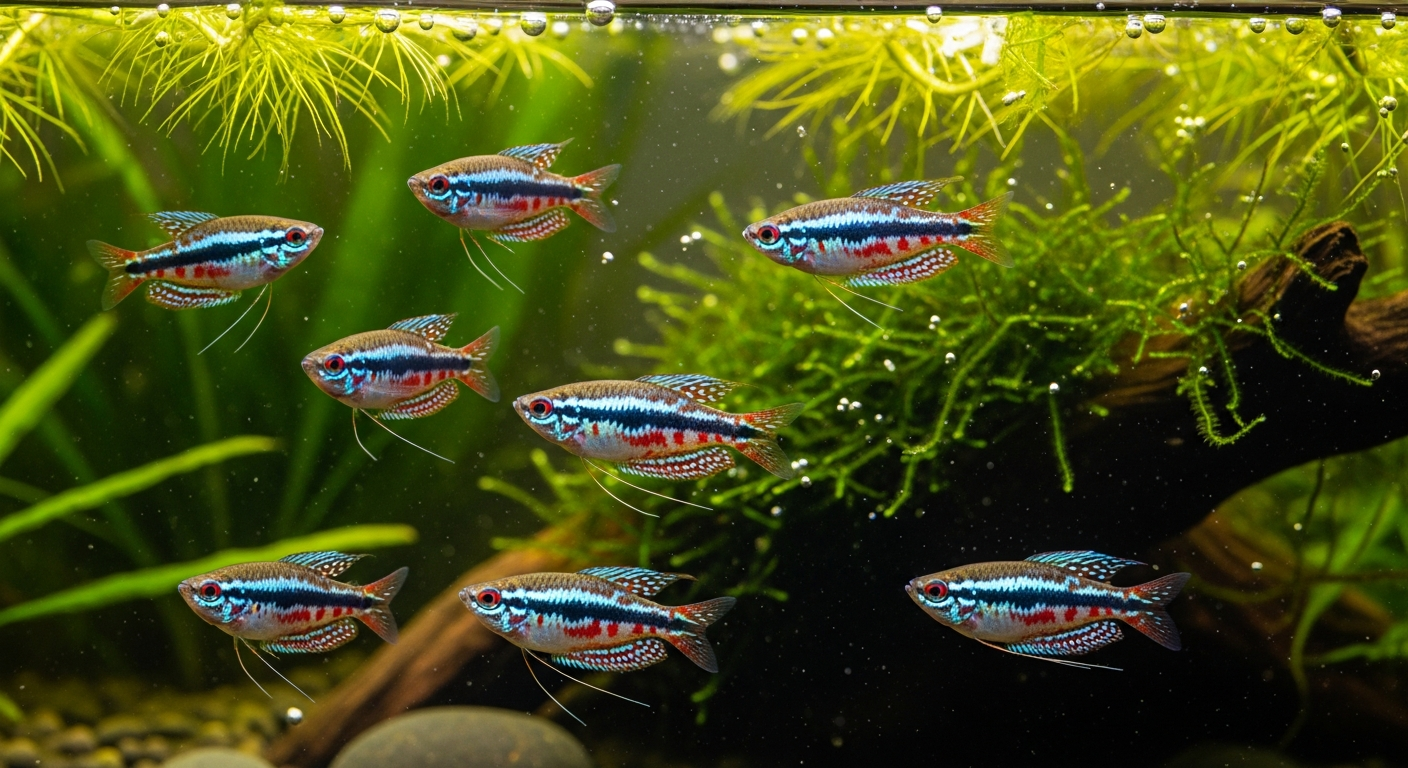
The Sparkling or Pygmy Gourami (Trichopsis pumila) is a tiny labyrinth fish from Southeast Asia. It is not a fish of bold statements, but rather of subtle, shimmering beauty and secret sounds, making it a true treasure for the dedicated nano aquarist.
General Information and Temperament
Are sparkling gouramis good pets for beginners?
Yes, they are an excellent choice for a beginner who is specifically looking to create a small, peaceful nano community tank. They are hardy and fascinating, but their timid nature and tiny size mean they are completely unsuitable for a standard, boisterous community aquarium.
What is the average lifespan of a sparkling gourami?
In a stable and well-maintained nano aquarium, consequently, you can expect these tiny jewels to live for 3 to 4 years.
How large do they get?
They are a true dwarf species, reaching a maximum adult size of only 1.5 inches (4 cm).
What is the temperament of a sparkling gourami?
They are exceptionally peaceful but can be very timid. Within their own species, males will establish a pecking order and may display and “croak” at each other, however, this rarely results in any physical harm. Crucially, their confidence is entirely dependent on having a densely planted environment and the company of their own kind.
Do they need to be kept in a group?
Yes, they are social fish. While not a tight-schooling fish like a tetra, they are much more confident and active when kept in a small group. A group of 5 or 6 individuals is a perfect start for a 10 or 20-gallon tank.
What is their “croaking” sound?
This is their most famous and fascinating trait! Specifically, Sparkling Gouramis can produce an audible clicking or croaking sound. They do this by rapidly moving a specialized tendon over the rays of their pectoral fins. Consequently, they use this sound for communication, especially during territorial disputes between males and also during courtship.
Tank Setup: A Tiny, Planted Jungle
What is the minimum tank size for a sparkling gourami?
A 10-gallon long-style tank is the perfect minimum size for a small group. However, a larger tank, like a 20-gallon long, is even better because it allows for a more stable environment and more tank mates.
What kind of setup do they need?
To make them feel safe, you must create a dense, jungle-like environment. A heavily planted tank is not a suggestion; it’s a requirement. A network of driftwood, leaf litter, and especially floating plants is essential to give them the shade and cover they need to feel secure and come out into the open.
What kind of filtration is needed?
They come from still, slow-moving waters and hate strong currents. An adjustable-flow hang-on-back filter baffled with a sponge, or, ideally, a gentle sponge filter, is the perfect choice for them.
Water Parameters and Diet
What are the ideal water parameters?
They are adaptable but do best in warm, stable water.
- Temperature: A stable temperature between 74−82∘F (23−28∘C) is ideal; therefore, a heater is a must.
- pH:6.0 to 7.5.
- Furthermore, clean water is important, so a regular weekly water change schedule is key to keeping nitrates low.
What do sparkling gouramis eat?
They are micropredators with tiny mouths. They will often ignore standard flake food. To keep them healthy and happy, their diet should consist of small live and frozen foods.
- Ideal Foods: Live or frozen baby brine shrimp, daphnia, and microworms are their absolute favorites and will bring out their best colors and behaviors.
- Dry Foods: High-quality crushed flake or micro-pellets can be used to supplement their diet.
Health and Behavior
What are the signs of a healthy vs. sick sparkling gourami?
A healthy Sparkling Gourami will have vibrant, iridescent colors and will be actively exploring its environment or interacting with its group. Conversely, a sick or stressed gourami will be pale, have clamped fins, and will hide constantly, refusing to eat.
Breeding Sparkling Gourami
Sparkling Gouramis are bubble nesters, but they are much more subtle about it than their larger cousins. Specifically, amale will build a small, often hidden bubble nest under a floating plant leaf or in a cave. Subsequently, he will court a female and, after spawning, will guard the nest ferociously. However, the fry are incredibly tiny and will consequently require microscopic foods like infusoria for their first few days. In a mature, densely planted tank, it’s not uncommon for a few fry to survive and appear as if by magic.
Tank Mates: A Gentle Crowd Only
What are good tank mates for a sparkling gourami?
This is the most critical decision for their survival. Their tank mates must be equally small, peaceful, and gentle.
- Perfect choices: Other true nano fish like Chili Rasboras, Kubotai Rasboras, and Ember Tetras. Peaceful bottom-dwellers like Pygmy Corydoras and Otocinclus catfish are also excellent. They are completely safe with freshwater shrimp and small snails.
- Fish to avoid: Absolutely anything large, fast-moving, or even semi-aggressive. A Zebra Danio is too boisterous, a Betta will likely kill them, and a Dwarf Gourami will bully them relentlessly. Think small, slow, and peaceful—always.
Sparkling Gourami Fish Care FAQ
Sparkling Gouramis are a true dwarf species with a maximum adult size of 1.5 inches or 4 centimeters. This tiny size makes them entirely unsuitable for standard community aquariums with larger or faster tankmates. A dedicated nano tank with equally small, peaceful species is the only appropriate long-term setup for them.
Sparkling Gouramis are micropredators with very small mouths that frequently reject standard flake food. Live or frozen baby brine shrimp, daphnia, and microworms form the nutritional core of a healthy diet. High-quality crushed flake or micro-pellets can supplement feedings but must not replace live and frozen food entirely.
A 10-gallon long-style tank is the minimum housing for a small group of sparkling gouramis. A 20-gallon long is significantly preferable, offering greater water stability and room for compatible companions. Tanks smaller than 10 gallons fluctuate too rapidly in temperature and water chemistry to sustain them safely.
Sparkling Gouramis produce audible clicking and croaking sounds by moving a specialized tendon across their pectoral fin rays. Males use this sound during territorial disputes and courtship rituals with potential mates. Hearing croaking from your tank confirms the fish are healthy and engaging in completely natural behavior.
A group of five to six sparkling gouramis is the ideal social configuration for a nano tank. Solitary sparkling gouramis hide permanently and rarely display their characteristic iridescent colors or croaking behaviors. Keeping them in a social group unlocks their full range of natural behaviors and visible personality.
Sparkling Gouramis must never be housed with Betta fish under any circumstances. A Betta will identify the tiny, slow-moving sparkling gourami as either a rival or easy prey. The size difference alone virtually guarantees a lethal outcome for the sparkling gourami in every encounter.
Chili Rasboras, Ember Tetras, Pygmy Corydoras, and Otocinclus catfish are the most appropriate companions for a sparkling gourami tank. Freshwater shrimp and small snails are completely safe and add natural activity to the nano environment. Any species that is larger, faster, or remotely semi-aggressive will permanently stress or kill the sparkling gourami.
Sources
- Seriously Fish (Trichopsis pumila)
https://www.seriouslyfish.com/species/trichopsis-pumila/ - Practical Fishkeeping (The Croaking Gouramis)
https://www.practicalfishkeeping.co.uk/features/the-croaking-gouramis/ - Aquarium Co-Op (Sparkling Gourami Care Guide)
https://www.aquariumcoop.com/blogs/aquarium/sparkling-gourami-care-guide - The Spruce Pets (Sparkling Gourami Profile)
https://www.thesprucepets.com/sparkling-gourami-species-profile-4684008


Leave a Reply