
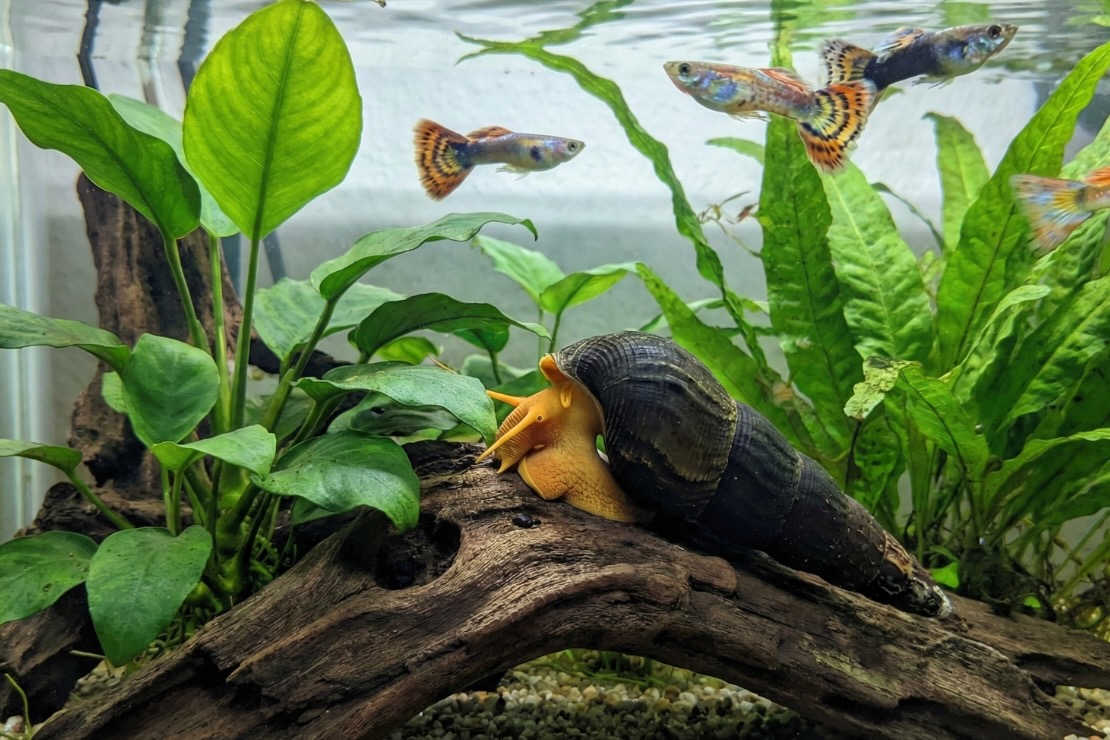
In an aquarium bustling with the zippy movements of tiny fish and the tireless scrubbing of nerite snails, there is a special kind of magic in the slow, deliberate presence of Rabbit Snails. My first one was a Golden Rabbit Snail, and I was immediately captivated. It wasn’t just its stunning conical shell; it was its face, with a wrinkled, trunk like snout that gave it the wise, ancient look of a miniature elephant. It would slowly and methodically explore the tank, its shell trailing behind it like a magnificent caravan. Watching it taught me that an aquarium doesn’t always have to be about speed and activity. Sometimes, the most fascinating creature is the one that forces you to slow down, to be patient, and to appreciate the quiet, steady rhythm of life on the substrate.
Rabbit Snails, from the genus Tylomelania, are live bearing freshwater snails from the ancient lakes of Sulawesi, Indonesia. Their unique appearance and peaceful nature make them a true “pet” snail that brings a special character to any tank.
What are the realistic growth and longevity expectations for Rabbit Snails?
Rabbit Snails (Tylomelania) are not the four-to-six-year marathon runners some sellers claim. Most captive specimens live between one and three years, and multiple breeder sources back that number. However, snails kept in stable, mineral-rich water can occasionally stretch toward three to five years. Genetics and husbandry both matter here. In fact, sub-par water conditions cut that lifespan sharply, sometimes before the snail’s second birthday. Treat any lifespan claim beyond five years as marketing, not biology. On size, the original claim holds up: adults reach three to five inches in shell length, genuine giants next to a typical Nerite. Consequently, budget real tank space rather than the small container plan most beginners start with.
Why is the “Sulawesi Standard” habitat mandatory for Rabbit Snails?

Tylomelania evolved in Sulawesi’s ancient volcanic lakes — Poso, Matano, and Towuti, and that origin dictates every parameter here. Water temperature must sit between 76–86°F (24–30°C), noticeably warmer than a standard community tank. Furthermore, a stable pH between 7.5 and 8.5 prevents the shell erosion that plagues snails kept in soft, acidic water. Crushed coral or aragonite sand buffers the water naturally, so I recommend it over plain gravel. A soft, sandy substrate also matters for their burrowing instinct, this is not optional decor. Therefore, a 20-gallon tank is the realistic minimum for a small, stable group. Replicate an ancient lake, not a generic tropical setup, or the snails simply will not thrive.
How do you manage the specialized diet and nutrition of Rabbit Snails?

Rabbit Snails act like scavengers, but scavenging alone will not sustain their large body mass. Daily feedings of calcium-rich algae wafers and blanched vegetables, like zucchini, keep them properly nourished. They also graze on biofilm, yet biofilm and tank waste cannot function as a complete diet on their own. Consequently, dropping a piece of cuttlebone into the filter supports steady shell growth over time. Sinking pellets offered at night match their nocturnal scavenging pattern better than daytime feeding. As a result, well-fed snails rarely bother your live plants, contrary to the horror stories some forums repeat.
What makes the reproductive cycle so unique?

Rabbit Snails are true livebearers, not egg-layers, which already sets them apart from most aquarium snails. A female produces one fully-formed baby roughly every four to six weeks. Furthermore, that offspring emerges as a miniature, fully shelled version of the adult, no vulnerable larval stage. Consequently, you will never find gelatinous egg clutches plastered across your glass or decor. The fear of a rabbit-snail population explosion is simply unfounded, pun fully intended. In fact, their slow reproduction rate is one of the main reasons hobbyists choose them over pest-prone species like bladder or ramshorn snails.
Which tank mates are compatible with them?
Selecting tank mates for Rabbit Snails comes down to one rule: keep it calm. Small, peaceful species like Rasboras and Corydoras make excellent companions that leave the snail’s antennae alone. However, Assassin Snails must be avoided entirely, since they actively prey on Tylomelania, adults and babies alike. Boisterous cichlids or loaches will stress a rabbit snail into permanent hiding, which defeats the point of keeping one. Prioritize a genuinely peaceful community over a flashy, aggressive one. Consequently, your snails stay visible, active, and exploring the tank during the day, exactly the behavior that makes them worth keeping.
How do you identify the primary health indicators for Rabbit Snails?

A healthy Rabbit Snail shows a smooth, vibrant shell and a fast, confident feeding response. Pitting or white erosion on the shell almost always points to low calcium or acidic water. Furthermore, staying retracted inside the shell for days signals temperature stress or an ammonia spike, not a nap. However, occasional stillness is normal, these snails do rest, sometimes dramatically, so do not panic immediately. If a snail floats and will not right itself, perform the sniff test. A dead snail smells strongly of ammonia. Therefore, weekly checks with a reliable liquid test kit for pH and hardness catch problems before they turn fatal.
Rabbit Snails FAQ
No. Rabbit Snails are livebearers that produce only one fully-formed baby every four to six weeks. No egg clutches appear on the glass, and no population explosion follows. This slow reproductive rate makes Tylomelania one of the most manageable snail choices for a peaceful community aquarium.
Rabbit Snails reach three to five inches in shell length, ranking among the largest freshwater gastropods kept in aquariums. Most live one to three years in captivity, occasionally longer under stable, mineral-rich conditions. That lifespan makes them a genuine long-term commitment, not a disposable tank cleaner.
Rabbit Snails need warm water between 76–86°F (24–30°C) and a stable pH between 7.5 and 8.5 to prevent shell erosion. Crushed coral or aragonite sand buffers the water naturally toward these levels. Standard community-tank conditions run too cool and too soft for this species to thrive.
Only if underfed. A properly fed Rabbit Snail, daily algae wafers, blanched zucchini, and sinking pellets, grazes on biofilm instead of live plants. Cuttlebone added to the filter meets their calcium needs and further reduces any temptation to nibble on your aquascape.
Small, peaceful species like Rasboras and Corydoras make ideal companions for Rabbit Snails. Assassin Snails must be avoided, since they actively prey on Tylomelania. Boisterous cichlids and loaches cause chronic stress, driving snails into permanent hiding instead of natural daytime activity.
Sources
- Seriously Fish
https://www.seriouslyfish.com/species/tylomelania-sp/ - Aquarium Care Basics
https://www.aquariumcarebasics.com/freshwater-snails/rabbit-snail/ - Modest Fish
https://modestfish.com/rabbit-snail-care/ - Aquatic Arts
https://aquaticarts.com/pages/rabbit-snail-care-guide - Shrimp and Snail Breeder
https://shrimpandsnailbreeder.co.uk/rabbit-snail-care/
Leave a Reply
You must be logged in to post a comment.