
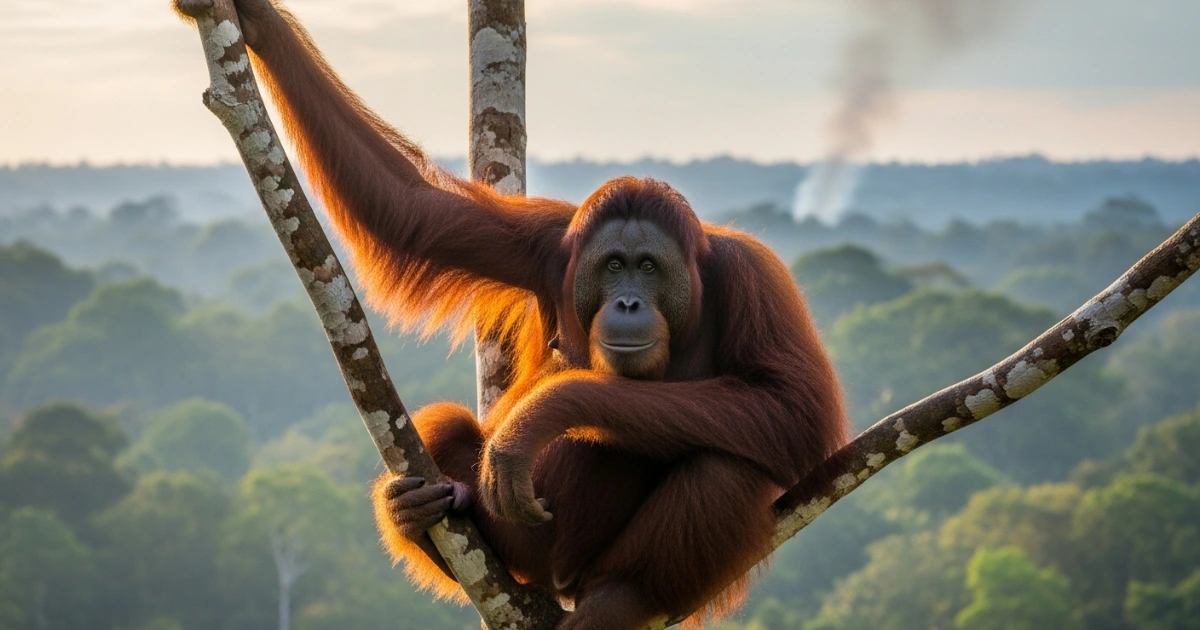
The word “Orangutan” comes from the Malay words for “Person of the Forest.” In fact, I don’t think anyone has ever given a more perfect name to an animal. To look into their eyes is to see a thoughtful and profoundly gentle soul looking back. Therefore, this gentle, sentient nature makes their plight all the more heartbreaking. These peaceful, solitary gardeners of the forest are disappearing. Specifically, their homes vanish in smoke and fire for the sake of consumer goods. Their story is a quiet tragedy, and consequently, listening and acting is our moral imperative.
Ultimately, the survival of all three Critically Endangered orangutan species is a direct reflection of our planet’s health and the choices we make every day, making conservation a globally important issue.
Species Information: Who Are the People of the Forest?
There are three distinct species, and they live only on two islands in Southeast Asia:
- Bornean Orangutan (Pongo pygmaeus)
- Sumatran Orangutan (Pongo abelii)
- Tapanuli Orangutan (Pongo tapanuliensis)
What are the key differences between the species?
While all are similar, Bornean orangutans tend to have darker hair and wider cheek pads. Conversely, Sumatran and Tapanuli orangutans have longer, lighter orange hair.
How many are left?
The numbers are critically low and declining rapidly. The Tapanuli Orangutan, for instance, has fewer than 800 individuals left, thereby making it the most endangered great ape on Earth.
What Threats Drive the Need for Orangutan Conservation?
Why are they critically endangered?
The single greatest threat is habitat loss, primarily for the cultivation of palm oil. This is then compounded by illegal logging and the illegal pet trade.
What is the impact of palm oil plantations?
Palm oil is an ingredient in countless consumer goods, and consequently, its cultivation is the primary driver of deforestation in Borneo and Sumatra. Rainforests are clear-cut and burned to the ground. As a result, this not only destroys their home and food source but also isolates populations.
Why are orangutans hunted?
They are often killed by plantation workers when they wander out of the forest. Furthermore, the illegal pet trade creates a brutal incentive for poachers to kill mother orangutans to steal their highly valuable infants.
How does their slow reproductive rate affect recovery?
This is their key biological vulnerability. A female will only give birth to a single infant once every 6 to 8 years. This means their populations cannot withstand the high death tolls from habitat loss.
Biology and Ecology: The Forest Gardeners
Orangutans are vital to their ecosystem. As they move through the trees and eat fruit, they spread seeds over large areas, helping the forest grow. In other words, the health of the rainforest depends on them, making orangutan conservation crucial. Unlike other great apes, they tend to live a mostly solitary life.
Key Strategies in Orangutan Conservation
What is being done to combat deforestation?
Conservation organizations work to establish protected national parks and promote certified sustainable palm oil (CSPO).
What is the role of rescue and rehabilitation centers?
Organizations like the Borneo Orangutan Survival (BOS) Foundation lead the charge. Essentially, they expertly rescue orphaned orangutans, deliver crucial medical care, and simultaneously impart the necessary skills to ensure their successful return to protected areas.
How Can Individuals Support Orangutan Conservation?
Your choices matter immensely in the fight for conservation.
- Donate: Support reputable conservation groups working on the ground.
- Be a Responsible Consumer: Check product ingredients and download apps that identify companies using sustainable palm oil. By reducing the demand for unsustainable palm oil, you reduce the incentive to destroy forests.
- Adopt an Orphan: Many rescue centers have symbolic adoption programs.
- Raise Awareness: Above all, share their story. The more people who understand this crisis, the greater the pressure for change.
The extinction of orangutans would trigger a devastating domino effect. Specifically, without its primary “gardener,” the entire ecosystem would decline. Yes, we can save them, but the window of opportunity is closing rapidly. Ultimately, therefore, the fate of the “Person of the Forest” is a direct reflection of our own humanity.
Sources
- ANU Researcher Portal
https://researchportalplus.anu.edu.au/en/publications/the-word-orangutan-old-malay-origin-or-european-concoction/ - IFLScience
https://www.iflscience.com/the-worlds-newest-great-ape-is-also-its-rarest-with-fewer-than-800-left-in-the-wild-81233 - WWF
https://www.wwf.org.uk/learn/fascinating-facts/orangutans - Orangutan Foundation
https://www.orangutan.org.uk/threats - Orang Utan Republik Foundation
https://www.orangutanrepublik.org/learn/species-information/


Leave a Reply