
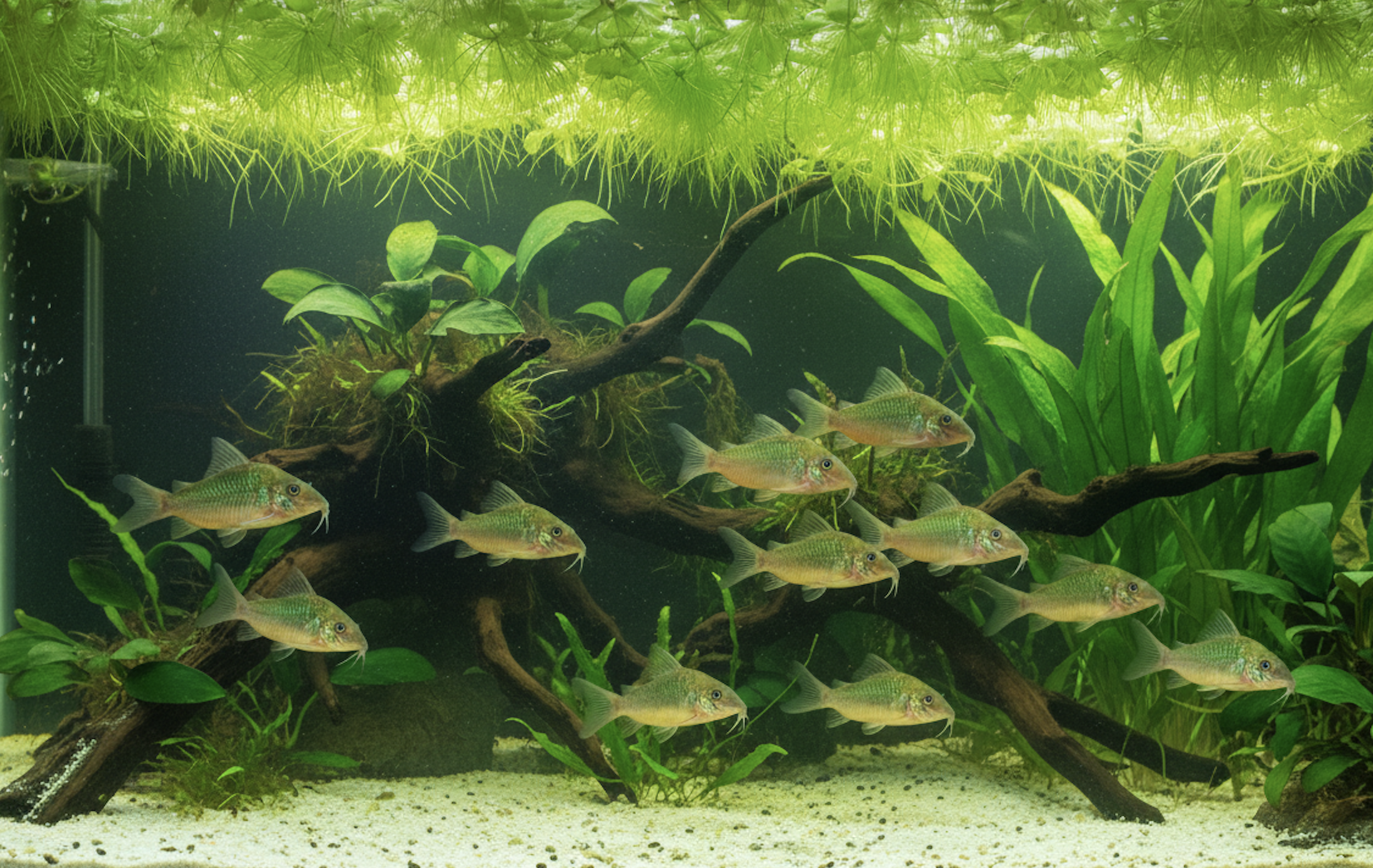
My journey with bottom-dwelling catfish has been filled with the delightful, puppy like energy of the Corydoras genus. For years, I thought I knew their world inside and out. Then, I saw my first true school of Emerald Corydoras. They weren’t the tiny, wiggling shoals I was used to; this was a herd. A group of substantial, three inch fish with an incredible, high gloss metallic sheen, like tiny armored vehicles polished to a mirror shine. They moved with a slower, more deliberate grace, their size giving them a powerful and majestic presence on the substrate. That was the moment I learned that the world of “Corys” had a bigger, bolder cousin, a gentle giant that brought a whole new level of gravitas to the bottom of the aquarium.
The Emerald Corydoras, or Emerald Brochis (Brochis splendens), is a breathtakingly beautiful and peaceful catfish. While it shares the beloved Corydoras personality, its unique classification and larger size give it a special place in the hobby and in the hearts of those who keep it.
Is it a Corydoras or a Brochis?
The Emerald Corydoras historically belonged to the Brochis genus. Specifically, researchers distinguish them by their dorsal fin rays. A standard cory has eight rays. However, the Emerald variety possesses over ten rays. Consequently, they look much bulkier. Furthermore, recent scientific data resurrected the Brochis name. Therefore, they are technically Brochis splendens again. In fact, this makes them unique. As a result, they are “giant” relatives of common catfish.
Are Emerald Corydoras good pets for beginner hobbyists?
Emerald Corydoras are excellent for beginners with large tanks. Specifically, they are very hardy and forgiving. Furthermore, they adapt to many water conditions. However, their size requires significant swimming space. Consequently, you cannot keep them in nano tanks. In fact, they need stable environments. Therefore, I recommend them for 30-gallon setups. As a result, beginners find them quite resilient. Specifically, they handle minor water fluctuations well.
How large do Emerald Corydoras grow and how long do they live?
An adult Emerald Corydoras reaches nearly four inches in length. In fact, they are much heavier than bronze corys. Furthermore, they live for over ten years. Specifically, some specimens reach fifteen years. Therefore, they are long term commitments. Consequently, you must plan for their full growth. However, small tanks will stunt their development. As a result, they may die prematurely. Specifically, providing 100 grams of volume per fish is ideal.
What is the temperament of Emerald Corydoras?
Emerald Corydoras are peaceful giants with gentle personalities. Specifically, they never show aggression toward tank mates. Furthermore, they spend time sifting through substrate. In fact, they are very social creatures. Therefore, they remain calm in busy tanks. Consequently, they ignore smaller fish. However, their size might startle timid species. As a result, they fit most community setups. Specifically, they are industrious and active foragers. Therefore, they keep the bottom moving.
Why is a school mandatory for their health?
You must keep Emerald Corydoras in schools of six or more. In fact, solitary fish become extremely stressed. Furthermore, they lose their vibrant metallic color. Specifically, groups provide a sense of security. Therefore, they forage more confidently together. Consequently, a single fish will hide constantly. However, a large school is magnificent. As a result, the fish exhibit natural behaviors. Specifically, they rest in “piles” together. Therefore, social interaction is vital.
What is the ideal tank setup?
A 30-gallon long tank is the analytical minimum. Specifically, the footprint matters more than height. Furthermore, sand is the only safe substrate. In fact, gravel shreds their delicate barbels. Therefore, you must avoid sharp rocks. Consequently, infections occur on rough surfaces. However, driftwood and plants provide security. As a result, the fish feel safe. Specifically, use broad leafed plants for resting. Therefore, create many shaded hiding spots.
What are the ideal water parameters?
Maintain a stable temperature between 72–82∘F. Specifically, they prefer a pH of 6.0 to 8.0. Furthermore, keep ammonia at zero. In fact, they are sensitive to nitrates. Therefore, perform weekly 50% water changes. Consequently, the water stays pristine. However, they are adaptable to hardness. As a result, they thrive in most tap water. Specifically, oxygenation must remain high. Therefore, use an air stone or powerhead.
What should you feed Emerald Corydoras?
Emerald Corydoras are enthusiastic omnivores with high metabolisms. In fact, sinking wafers are their staple food. Furthermore, they need protein-rich treats. Specifically, offer bloodworms or brine shrimp. Therefore, vary their diet for health. Consequently, they maintain a plump belly. However, they are not just scavengers. As a result, they need dedicated feedings. Specifically, feed them twice daily. Therefore, ensure food reaches the bottom.
Why do Emerald Corydoras dash to the surface?
Emerald Corydoras are facultative air breathers by nature. Specifically, they gulp air from the surface. Furthermore, their gut absorbs the oxygen. In fact, this is normal behavior. Therefore, do not panic during dashes. Consequently, it shows they are active. However, constant gasping indicates poor water. As a result, check your oxygen levels. Specifically, it is a survival adaptation. Therefore, they can survive in low oxygen water.
Can you breed Emerald Corydoras in an aquarium?
Breeding is possible but requires a large setup. Specifically, cool water changes trigger spawning. Furthermore, females lay hundreds of eggs. In fact, they stick them to glass. Therefore, you must move the parents. Consequently, the adults will eat eggs. However, raising fry is rewarding. As a result, use baby brine shrimp. Specifically, provide high water quality for fry. Therefore, keep the nursery tank clean.
Emerald Corydoras FAQ
Technically no — it belongs to the genus Brochis, not Corydoras. The key difference is dorsal fin rays: standard Corydoras have 8, while the Emerald (Brochis splendens) has over 10. This gives it a noticeably bulkier, more robust body shape than its smaller Corydoras relatives.
They reach nearly 4 inches — significantly larger than most Corydoras species. They are heavier and more substantial in build. A 30-gallon long tank is the minimum for a school of six, and their size means they produce a much higher bioload than standard Corydoras.
Yes — with one condition: the tank must be large enough. They are hardy and forgiving of minor water fluctuations, but their 4-inch adult size disqualifies them from nano setups entirely. A fully cycled 30-gallon with sand substrate is the baseline for keeping them well.
A minimum of six is required. Isolated specimens lose their metallic colour, hide constantly, and deteriorate quickly. A large school produces the most impressive display — they are known to rest in physical “piles,” a social behaviour that disappears entirely in small groups.
Yes — cool water changes trigger spawning and females can lay hundreds of adhesive eggs on the glass. Remove the adults immediately after spawning or they will eat every egg. Raise fry on baby brine shrimp in a clean, separate nursery tank with excellent water quality.
Sources
- FishBase
https://www.fishbase.se/summary/Brochis-splendens.html - Aquarium Co-Op
https://www.aquariumcoop.com/blogs/aquarium/cory-catfish-care-guide


Leave a Reply