
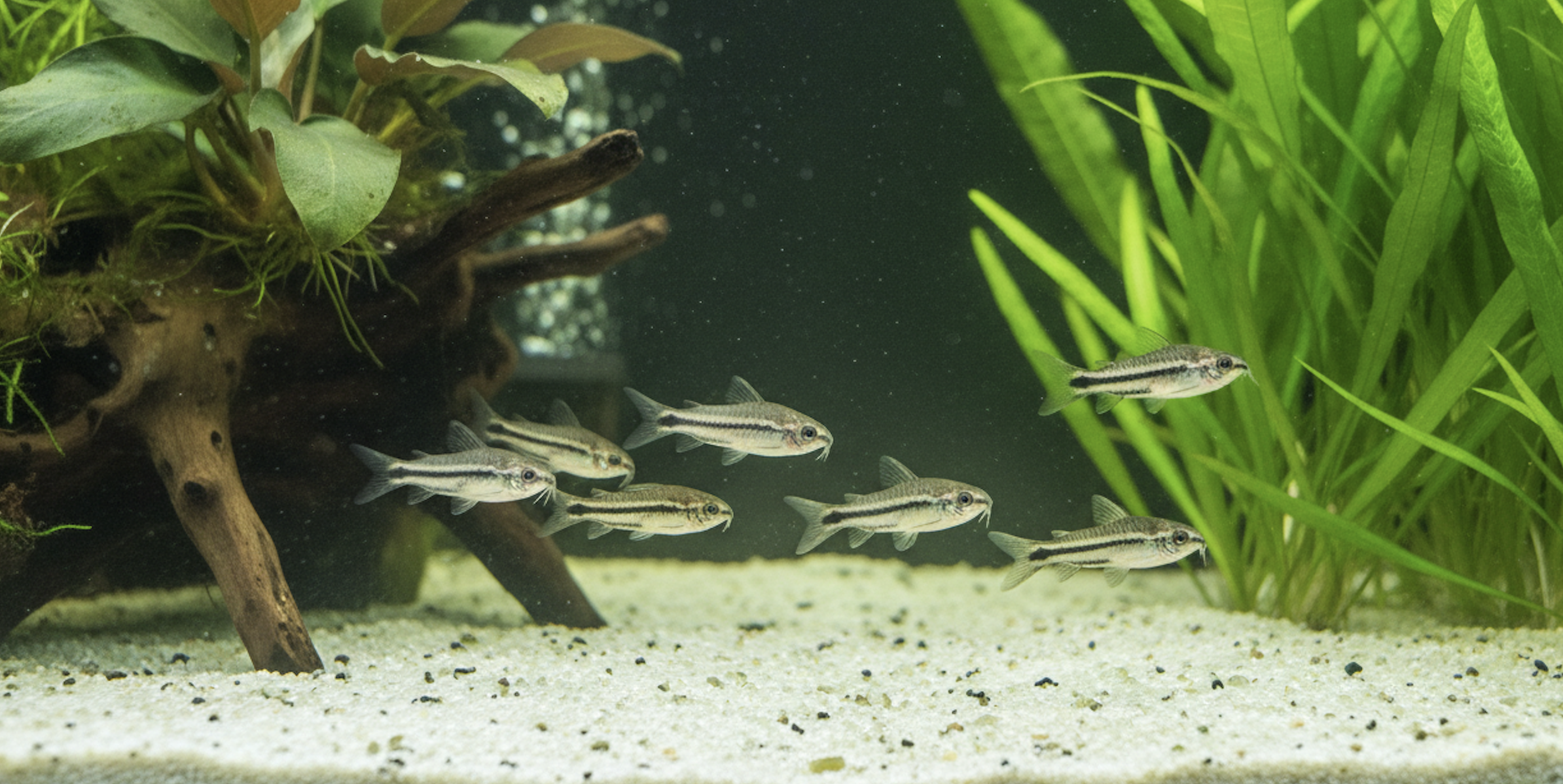
The Pygmy Corydoras (Corydoras pygmaeus) represents a specialized lineage of armored catfish that has evolved for a mid water existence. Specifically, this species is defined by its minute size and unique hovering behavior. Furthermore, they are the ideal choice for those maintaining nano-aquaria or peaceful community displays. In fact, their social dynamics are among the most complex in the Corydoras genus. Consequently, I reject the assumption that they are strictly bottom-dwelling scavengers. Therefore, this guide provides the purely analytical evidence required for their stewardship.
Are Pygmy Corydoras good pets for beginners?
The Pygmy Corydoras is an excellent pet for beginners who can provide a properly cycled and stable nano-environment. Specifically, they are very hardy and adapt well to various water parameters if the nitrogen cycle is established. Furthermore, their straightforward care requirements make them a low stress introduction to dwarf catfish husbandry. In fact, their peaceful nature ensures they will not cause conflict with other tank mates. Consequently, they are a high-value species for any small scale display. Therefore, I prioritize stable water chemistry for their success.
How long do Pygmy Corydoras live and how large do they get?
In a stable environment, Pygmy Corydoras typically live for three to five years, though eight years is possible. Specifically, they reach a manageable maximum adult length of just under one inch. Furthermore, they maintain a streamlined and robust body shape throughout their lives. In fact, providing pristine water conditions is the primary factor in reaching their maximum lifespan. Consequently, they are ideal for 10 gallon systems or larger. Therefore, I recommend consistent maintenance to maximize their longevity. As a result, they remain a fixture in your tank.
What is the temperament of Pygmy Corydoras and why is a school essential?
Keeping Pygmy Corydoras in a group of at least eight to ten individuals is a non-negotiable requirement for their welfare. Specifically, they are highly social animals that rely on a school for security and social interaction. Furthermore, isolated specimens will exhibit extreme stress and reclusive behavior. In fact, a solitary Pygmy Cory will likely suffer from a suppressed immune system due to fear. Consequently, they are much more active and playful when surrounded by their own kind. Therefore, I recommend a larger shoal for the most natural behavior.
What is the ideal tank setup and substrate?
Soft sand is the only appropriate substrate for this species to prevent physical injury to their barbels. Specifically, they possess delicate sensory whiskers used to sift for food within the substrate. Furthermore, sharp gravel can wear down or sever these organs, leading to fatal infections. In fact, sand allows them to exhibit their fascinating and natural sifting behavior. Consequently, you must prioritize a smooth, fine grained floor in the aquarium. Therefore, I recommend a 10 gallon long tank to provide maximum horizontal surface area.
What are the ideal water parameters and maintenance?
Pygmy Corydoras thrive in stable, warm water between 72°F and 79°F with a pH of 6.4 to 7.4. Specifically, as small fish with high metabolisms, they are sensitive to the buildup of organic waste. Furthermore, your aquarium must be fully cycled with zero ammonia and nitrite. In fact, keeping nitrates below 20 ppm is crucial for preventing systemic illness. Consequently, regular weekly water changes are a mandatory part of their care. Therefore, I prioritize water stability as the key health metric. As a result, the fish remain active and vibrant.
What should I feed my Pygmy Corydoras?
Pygmy Corydoras diet must be built around high quality sinking micro pellets or crushed flakes that reach the bottom. Specifically, they cannot survive on the “leftovers” from faster mid water swimming fish. Furthermore, they absolutely relish supplemental feedings of live or frozen baby brine shrimp and microworms. In fact, they are opportunistic omnivores that require a diverse range of nutrients. Consequently, providing a variety of small foods ensures they maintain a plump and healthy belly. Therefore, I recommend feeding them just before the lights go out.
What are the signs of health and why do they hover?
A healthy Pygmy Corydoras is active, social, and possesses a plump, rounded abdomen. Specifically, their signature behavior is hovering in the mid-water levels of the aquarium. Furthermore, they possess a specialized swim bladder that allows them to swim like tetras. In fact, staying in the middle of the tank is a sign of high environmental confidence. Consequently, you should monitor their schooling position as an indicator of water quality. Therefore, I prioritize observing their social interaction. As a result, you can verify their overall health.
Can you breed Pygmy Corydoras in a home aquarium?
Breeding Pygmy Corydoras in a home aquarium is entirely possible and often occurs without intervention. Specifically, it requires conditioning the school with high-protein live foods and dense vegetation. Furthermore, they will deposit tiny adhesive eggs on the underside of plant leaves or on the glass. In fact, simulating a rainstorm through large water changes often initiates the spawning process. Consequently, some fry will usually survive in a heavily planted tank without special care. Therefore, I categorize this as a rewarding intermediate-level project.
Which tank mates are compatible for a nano community?
The best tank mates are other exceptionally small and peaceful species like Chili Rasboras or Ember Tetras. Specifically, any fish that can fit a Pygmy Cory in its mouth will eventually view it as prey. Furthermore, they coexist perfectly with freshwater shrimp and peaceful snails. In fact, they are often used in “shrimp-safe” community setups. Consequently, you must avoid boisterous fish like Danios or Barbs that might cause them stress. Therefore, I recommend selecting companions that occupy different water layers.
Essential Equipment for Your Pygmy Corydoras
To provide the proper environment for a school of Pygmy Corydoras, I recommend the following professional-grade components. Specifically, CaribSea Super Naturals Sand is the ideal soft substrate to protect their delicate barbels. Furthermore, the Fluval 107 Canister Filter provides pristine water quality with a gentle, adjustable flow rate. In fact, supplementing their diet with Hikari First Bites or Micro Pellets ensures they receive a balanced nutritional profile suited for their tiny mouths.
Pygmy Corydoras FAQ
No — this is what makes them unique among Corydoras. They have a specialised swim bladder that allows them to hover in mid-water like tetras. Seeing them school in the middle of the tank is completely normal and a sign of a confident, healthy group.
They reach just under 1 inch at full adult size — making them one of the smallest Corydoras species available. A 10-gallon tank can comfortably house a school of 10. Their tiny size makes them ideal for nano aquariums paired with equally small tank mates.
A minimum of eight to ten individuals is required — more than most Corydoras species. Their small size makes them feel extremely vulnerable in smaller groups. A large school produces the natural mid-water hovering behaviour the species is known for.
Their tiny mouths require micro-sized foods — crushed flakes, micro pellets, baby brine shrimp, and microworms. Standard sinking wafers are too large. They cannot compete with faster fish for food, so feed just before lights-out when they are most active.
Only very small, peaceful species — Chili Rasboras, Ember Tetras, freshwater shrimp, and snails. Any fish large enough to fit a Pygmy Cory in its mouth will eventually eat one. Avoid boisterous species like Danios that outcompete them for food and cause stress.

Leave a Reply