
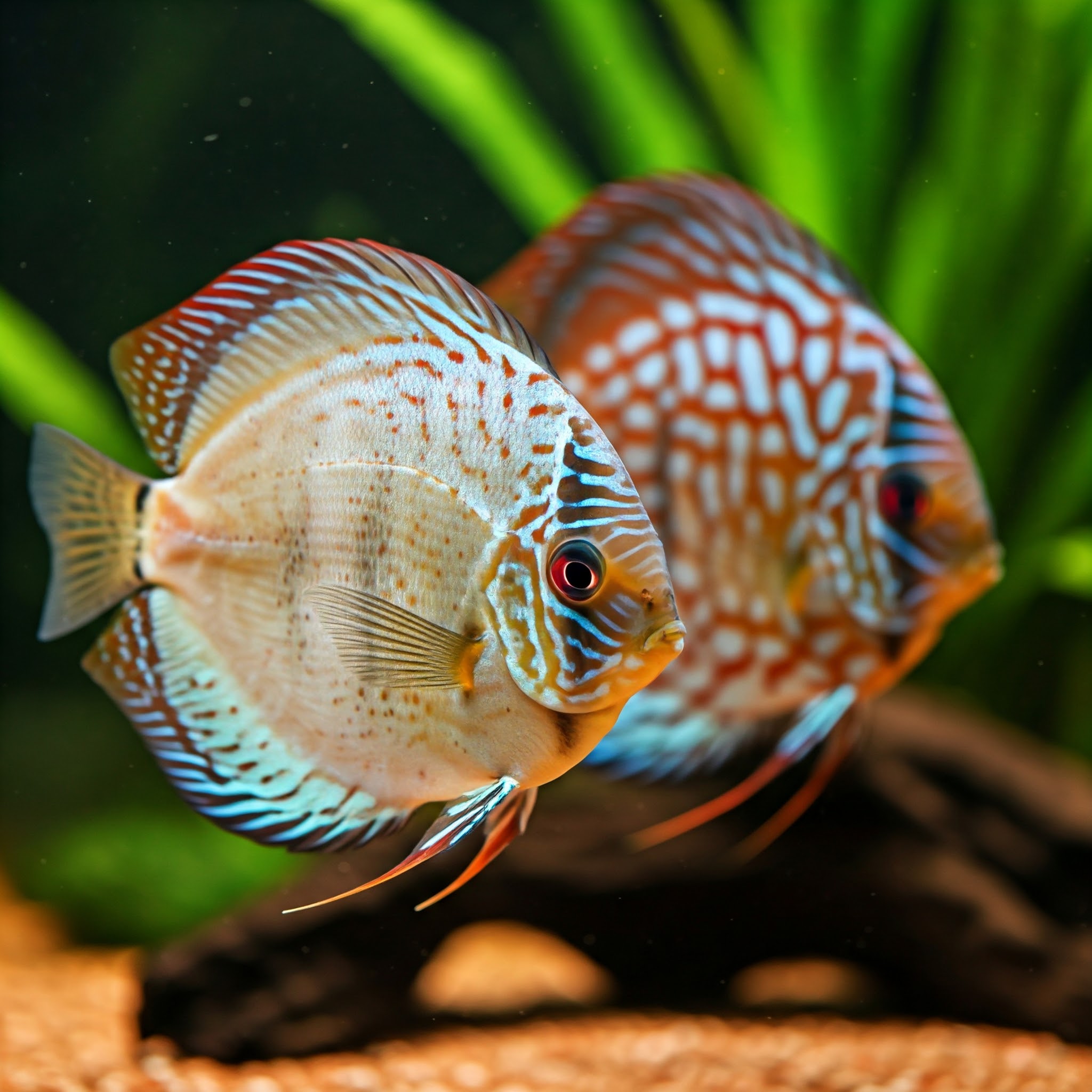
With their majestic, plate-like bodies, intricate patterns, and graceful movements, Discus fish (Symphysodon) are the undisputed kings of the freshwater aquarium. Consequently, they are a bucket-list fish for many hobbyists, representinga pinnacle of fishkeeping skill. But their royal reputation comes with a demanding list of requirements. This guide will, therefore, answer all your questions, providing a realistic and comprehensive look at what it takes to help these stunning fish thrive.
A Humbling Lesson in a Round Package
My first attempt at keeping Discus was an exhilarating, eye-opening adventure that opened up a whole new world of aquatic wonder! I stumbled upon a breathtaking group of vibrant, juvenile Discus at a local store, and I was utterly captivated. Having successfully cared for other fish, I boldly thought, “How much harder can it be?” I eagerly brought them home, and despite the challenges that came my way over the next few months, I absorbed a treasure trove of knowledge. Their delicate nature and enchanting personalities demanded a level of care that my other fish had never needed, inspiring me to evolve as an aquarist.
This experience became a vital stepping stone that deepened my connection to the underwater realm. It revealed to me that Discus are far more than mere fish. They embody a profound commitment to achieving an extraordinary level of stability. They maintain pristine water quality. This guide is born from that passion and respect, crafted to offer you the robust foundation I so desperately wished I had during my journey.
Are Discus Fish Hard to Keep?
Yes, Discus are considered an advanced-level fish. They are not hardy and, consequently, do not tolerate the common mistakes that beginners often make. Their difficulty comes directly from their strict requirements for exceptionally clean, stable, and very warm water. However, for a dedicated hobbyist who is willing to put in the work, keeping them is an incredibly rewarding challenge.
What is the Proper Tank Size for Discus Fish?
Discus are large, plate-shaped fish that require a tall tank to accommodate their body shape.
Minimum Size: A 55-gallon (approx. 208 liters) tank is the absolute minimum for a small group of adults.
Highly Recommended Size: A 75-gallon (approx. 284 liters) tank or larger, with a height of at least 18-24 inches (45-60 cm), is much better. A larger volume of water is more stable, which is key to success.
How Many Discus Fish Should Be Kept Together?
Discus are a shoaling species that establish a distinct pecking order. Consequently, keeping them alone or in a small group can lead to stress and bullying, where one individual is singled out. Therefore, to ensure their well-being, you should always keep them in a group of at least 6 or more.
What Are the Ideal Water Parameters?
This is the most critical aspect of their care.
Temperature: Discus thrive in wonderfully warm water, ranging from 82-86°F (28-30°C).
pH: They flourish in soft, acidic water, enjoying a stable pH between 6.0 and 7.0.
Ammonia and Nitrite: It is crucial to maintain these at 0 ppm at all times. This is because Discus are wonderfully sensitive to ammonia and nitrite poisoning.
Nitrate: In addition to the above, keeping nitrates as low as possible, ideally under 20 ppm, promotes a vibrant and healthy environment for these beautiful fish.
How Often Should You Do Water Changes for Discus?
Because they require pristine water, a demanding water change schedule is non-negotiable. Therefore, large water changes of 50% or more, performed two to three times per week, are standard practice for many successful keepers. Furthermore, daily water changes are common for those growing out juveniles.

What Do Discus Fish Eat?
Discus are carnivores that require a high-protein diet.
Staples: A high-quality Discus-specific pellet or flake should be a staple.
Frozen/Live Foods: They relish frozen or live foods like bloodworms, brine shrimp, and especially beef heart, which is a classic food for promoting growth and color.
Feeding Frequency: Juveniles need to be fed 3-5 times a day, while adults can be fed 1-2 times a day.
What Are Good Tank Mates for Discus Fish?
Choosing tank mates is difficult due to the Discus’s high temperature needs and shy nature.
Best Choices: Small, peaceful, warm-water tolerant schooling fish are the best option. Think Cardinal Tetras, Rummy Nose Tetras, and certain species of peaceful Corydoras or Plecos.
Quarantine: Any new fish must be quarantined for at least 4-6 weeks before being introduced to the main tank to avoid introducing diseases.
What is the Best Way to Acclimate New Discus Fish?
Discus are very sensitive to changes in water parameters. For this reason, the drip acclimation method is the best and safest way to introduce them to your tank. The process involves slowly dripping your tank water into their transport bag or a bucket over the course of an hour or more in order to gradually equalize the temperature and pH.
How Do You Breed Discus Fish?
Breeding Discus is considered a significant achievement in the hobby. When ready, a bonded pair will choose a vertical surface (like a breeding cone or a piece of driftwood) to lay their eggs. After the eggs hatch, the fry are unique in that they will feed on a special slime coat secreted from their parents’ bodies for the first few weeks of their life.
What is the Lifespan of a Discus Fish?
With excellent care and a pristine environment, Discus fish can live for 10 to 15 years, which consequently makes them a long-term commitment.
Discus Fish Care FAQ
Discus fish are not suitable for beginners — they require pristine water quality, high temperatures, and frequent large water changes. They do not tolerate the minor mistakes that forgiving beginner species like guppies or tetras survive without consequence. One to two years of successful freshwater experience is strongly recommended before attempting to keep discus.
Discus fish require water temperatures between 82–86°F (28–30°C), which is significantly warmer than most standard tropical aquariums. This elevated temperature range limits compatible tank mates, as many popular freshwater species cannot tolerate water that warm for extended periods. Maintaining stable temperature — without fluctuations exceeding 1–2°F — is as critical as the temperature range itself.
Discus fish are a shoaling species with a pecking order and should never be kept alone or in pairs. A minimum group of six distributes hierarchy pressure and prevents any single fish from being isolated and bullied. Smaller groups allow dominant individuals to single out the weakest fish, causing chronic stress that rapidly degrades health.
Discus fish require 50% water changes two to three times per week to maintain the water quality their physiology demands. Daily water changes are standard practice for hobbyists growing out juveniles, which are even more sensitive to nitrate accumulation. No other commonly kept freshwater fish requires a water change schedule of this frequency and volume.
Discus fish are carnivores that require a high-protein diet of discus-specific pellets, frozen bloodworms, brine shrimp, and beef heart. Juveniles need feeding three to five times per day to support their rapid growth phase. Adult discus are fed one to two times daily, with any uneaten food removed immediately to protect water quality.
The best discus fish tank mates are small, peaceful, warm-water schooling species sharing the same soft, acidic water requirements. Cardinal tetras, rummy nose tetras, and peaceful Corydoras are the most widely recommended companions for discus tanks. Aggressive, nippy, or large species are entirely unsuitable — even mild fin-nipping triggers the stress that causes disease in discus.
Discus fish live 10 to 15 years in captivity when maintained correctly, making them one of the longest-lived freshwater aquarium species. This lifespan requires sustained commitment to water quality, appropriate feeding, and a stable, stress-free environment throughout their life. Many discus keepers develop strong bonds with individual fish across a decade or more of care.
Sources
- Aquarium Co-Op (Discus Care Guide)
- Jack Wattley Discus (Tank Mates & Temperature)
- Tropical Fish Hobbyist (Breeding Behavior)
Leave a Reply
You must be logged in to post a comment.