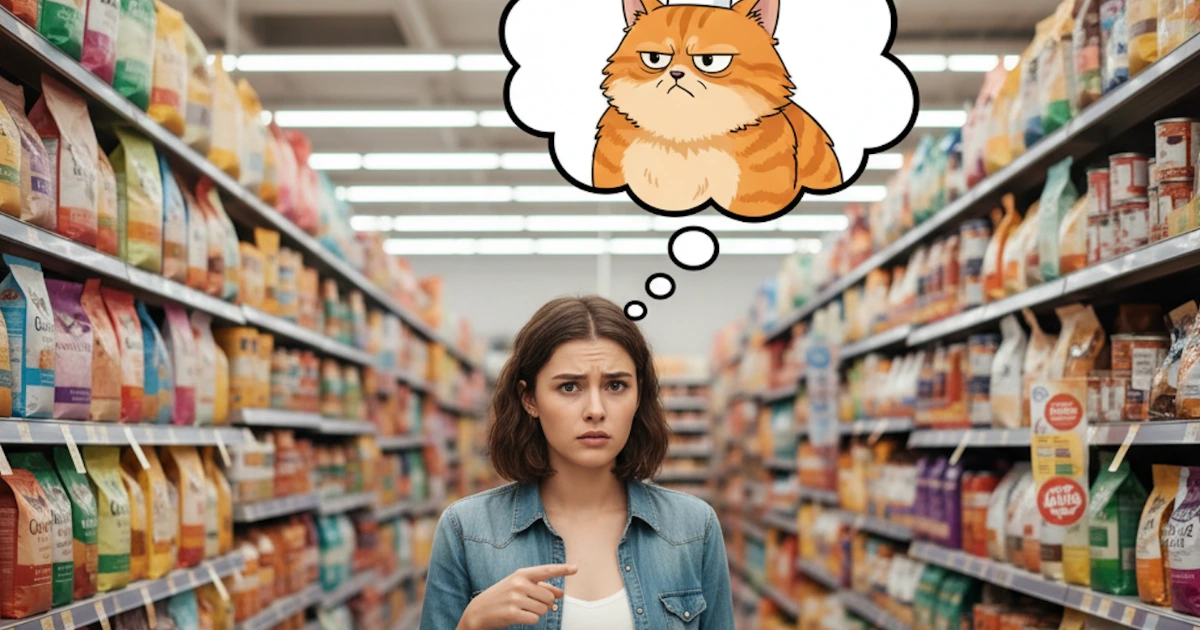
You stand in the cat food aisle, faced with a wall of options: Grain-Free Chicken Pâté, Ocean Whitefish in a Delicate Gravy, Senior Formula Kibble. Clearly, the choices are endless, the marketing is confusing, and a tiny, furry, judgmental food critic is waiting for you at home. Feeding your cat is the most fundamental act of care, yet it’s also one of the most misunderstood. This leads to crucial questions: What do they really need? Is wet food better than dry? And ultimately,is that piece of tuna you’re about to share a harmless treat or a health hazard? This guide, therefore, is your complete nutritional handbook, designed to help you decode the labels and make the best choices for your tiny, obligate carnivore.
The World’s Tiniest, Furriest Food Critic
In my house, every meal is a high-stakes performance review. My reptiles and fish are easy; they are grateful for whatever scientifically balanced meal I provide. Similarly, my dog, Vhagar, views any edible object as a 5-star culinary masterpiece. But my eight cats? By contrast, they are a panel of tiny, furry Michelin-star food critics.
They will inspect the bowl, sniff the offering with an air of deep suspicion, and only then look up at me with a gaze that says, “You really thought this was acceptable?” Consequently, they have turned me into their personal, live-in gourmet chef who works for payment in the form of purrs and the occasional, deeply unsettling, gift of a dead bug. This guide, therefore, is for every other loving servant of a tiny, judgmental connoisseur.
What Makes a Cat’s food So Special? (Understanding the Obligate Carnivore)
This is the single most important fact you need to know: cats are obligate carnivores. This is a non-negotiable biological reality.
What does “obligate carnivore” mean?
It means that your cat is a hunter, and therefore, its body is designed to get its nutrients exclusively from animal tissue. Consequently, they cannot be vegetarians. This is because they lack the necessary enzymes to efficiently digest plant matter.
Essential Nutrients:
Unlike a dog, a cat’s body cannot produce certain essential nutrients, most famously taurine, which they must get from meat. Consequently, a taurine deficiency leads to blindness and fatal heart conditions.
The Great Debate: Wet vs. Dry Cat Food?
This is the central question for most cat owners. The truth is, both have pros and cons.
What are the benefits of feeding wet (canned) food?
This is widely considered the “gold standard” by veterinarians for several reasons.
Hydration is Key: Cats are descended from desert animals, meaning they have a naturally low thirst drive. As a result, they are designed to get most of their water from their food. Therefore, wet food is crucial; since it is typically 70-80% water, it is the single best way to promote kidney health and prevent urinary tract issues.
High in Protein, Low in Carbs: It more closely mimics their natural diet of prey.
Palatability: Most cats find wet food more appealing.
What about dry food (kibble)?
Convenience and Cost: Dry food is cheaper, easier to store, and can be left out for “free-feeding.”
The Dental Myth: It is a common myth that the crunchy texture of kibble cleans a cat’s teeth. This is not true. It’s like a human eating pretzels to brush their teeth. Most cats swallow kibble whole or shatter it, providing no abrasive benefit.
The Verdict: While a diet of only high-quality dry food is acceptable, a diet that consists of mostly or entirely wet food is considered the optimal choice for a cat’s long-term health.
What Foods Are Dangerous or Toxic to My Cat? (The “Never” List)
- Onions, Garlic, Chives: All members of the allium family are highly toxic to cats and can cause life-threatening anemia by damaging their red blood cells.
- Chocolate: Just like with dogs, the theobromine in chocolate is toxic to cats.
- Alcohol: Extremely dangerous and can cause a coma or death.
- Grapes and Raisins: Can cause acute kidney failure.
- Xylitol: This artificial sweetener is a major danger. Always check labels on sugar-free products.
- Raw Meat, Fish, and Eggs: Carry the risk of Salmonella and E. coli.
- Dog Food: An occasional stolen bite isn’t a crisis, but a diet of dog food is a death sentence. It lacks the specific high levels of protein and, most critically, the taurine that cats need to survive.
- Tuna (for humans): A tiny bit of tuna in water is an occasional treat. But a diet based on it is dangerous. It is not nutritionally balanced and is too high in mercury.
What Human Foods Are Safe for My Cat in Moderation?
Remember that treats should make up a tiny fraction of your cat’s diet.
Cooked Meats: Small, unseasoned pieces of cooked chicken, turkey, or fish are a great treat.
Cooked Eggs: A small amount of scrambled or boiled egg is a good source of protein.
A Note on Dairy: It’s a myth that cats need milk. Most adult cats are lactose intolerant, and giving them milk will likely cause an upset stomach and diarrhea.
How Do I Choose a High-Quality Cat Food?
Learn to read the label. The first few ingredients are the most important.
The first ingredient should be a named animal protein source, like “Chicken,” “Turkey,” “Salmon,” or “Lamb.”
What to Avoid: Be wary of foods where the first ingredients are plant-based fillers like “Corn Gluten Meal,” “Ground Yellow Corn,” or non-specific “Meat and Bone Meal.”
How Much and How Often Should I Feed My Cat?
Avoid Free-Feeding: Leaving a bottomless bowl of dry food out is the leading cause of feline obesity.
The Best Method: Meal Feeding. Feed your cat two or three measured meals per day. Follow the guidelines on the food packaging as a starting point, but adjust the amount based on your cat’s Body Condition Score to keep them at a lean, healthy weight.
Cat Food FAQ
An obligate carnivore cannot meet its nutritional needs from plant matter alone. Cats cannot produce taurine — an essential amino acid obtainable only from animal tissue — and a taurine deficiency causes irreversible blindness and fatal heart disease. A cat cannot survive on a vegetarian or vegan diet regardless of how the food is formulated.
Wet food is the nutritionally superior choice because cats evolved as desert animals with a naturally low thirst drive, obtaining most hydration from prey. Wet food’s 70 to 80 percent water content directly supports kidney health and prevents urinary tract disease. Most veterinarians consider a diet based primarily on wet food the optimal long-term choice.
Dry kibble does not clean a cat’s teeth — this is a widely repeated but factually incorrect claim. Most cats swallow kibble whole or shatter it into fragments, providing no abrasive benefit to tooth surfaces. Effective feline dental care requires veterinary cleaning and regular tooth brushing with cat-safe toothpaste.
Feeding dog food to a cat as a regular diet is life-threatening, not merely nutritionally suboptimal. Dog food contains critically insufficient protein levels and no taurine for a cat’s requirements. A cat sustained on dog food will develop taurine deficiency, leading to irreversible blindness and fatal heart disease.
Onions, garlic, and all allium family members destroy red blood cells and can cause life-threatening anemia in cats. Grapes and raisins cause acute kidney failure, chocolate contains theobromine which is toxic to cats, and xylitol — found in many sugar-free products — is a major danger. Alcohol causes coma or death even in very small amounts.
The most reliable quality indicator is the first ingredient — it must be a specifically named animal protein such as chicken, turkey, or salmon. Foods listing plant-based fillers like corn gluten meal as first ingredients should be avoided. Two to three measured meals daily prevents feline obesity more effectively than continuous free-feeding.
Sources
- MSD Veterinary Manual
https://www.msdvetmanual.com/cat-owners/heart-and-blood-vessel-disorders-of-cats/disorders-of-the-cardiovascular-system-in-cats - Cornell Feline Health Center
https://www.vet.cornell.edu/departments-centers-and-institutes/cornell-feline-health-center/health-information/feline-health-topics/chronic-kidney-disease - VCA Animal Hospitals
https://vcahospitals.com/know-your-pet/dental-disease-in-cats - Pet Poison Helpline
https://www.petpoisonhelpline.com/poison/garlic/ - WSAVA
https://wsava.org/wp-content/uploads/2020/08/Body-Condition-Score-Cat-Updated-August-2020.pdf

Leave a Reply
You must be logged in to post a comment.