
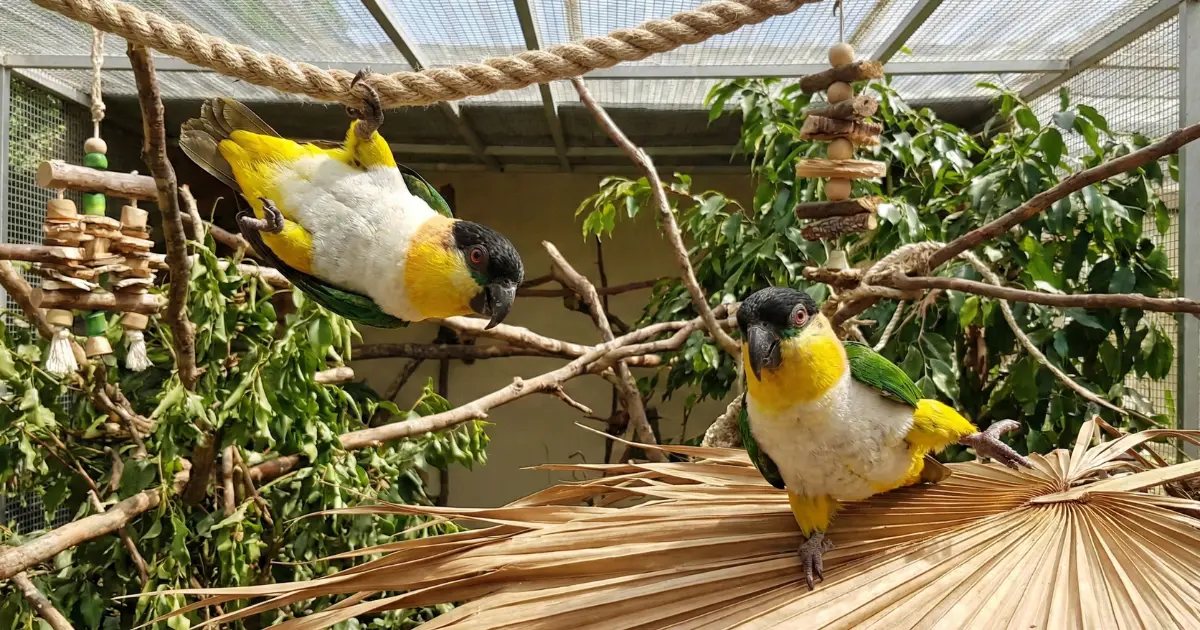
In fact, some birds fly. However, some birds bounce. Specifically, Caiques are not just pets you own. As a result of this, they are a high-energy lifestyle you adopt. Furthermore, they are the eternal toddlers of the bird world. Therefore, they demand constant playtime and intense supervision. In addition to this, Caiques (Pionites) are robust, medium-small parrots. In fact, their personality is anything but medium. Specifically, they are goofy, intelligent, and profoundly interactive. However, their boundless energy and feisty nature require a special owner. Consequently, this guide gives you a realistic look at these incredible avian clowns.
Species Suitability and Temperament
Are caiques good pets for beginners?
Generally, Caiques are considered an intermediate-level bird. A dedicated beginner who has done extensive research can succeed. However, they must be prepared for the Caique’s high energy and need for constant supervision. Furthermore, they must handle the famously nippy “beak-first” approach to life. They are a significant step up from a budgie or cockatiel. With proper care, a Caique can live for 20 to 30 years, making them a long-term companion.
What is the temperament like?
In a word: boisterous. Specifically, Caiques are known for being playful, comical, fearless, and stubborn. They have a “big bird” mentality and are constantly on the go. While they are incredibly affectionate and love to cuddle on their terms, they are prone to becoming over-excited. Consequently, this can lead to nipping. Regarding noise, they are not the loudest parrots, but they are far from quiet. They have a very loud, sharp, and piercing alarm call. Their daily sounds are a mix of chirps, squawks, and whistles. Therefore, their noise level can be challenging for apartment living. Their key personality traits include high energy, curiosity, and incredible goofiness. They are known for unique behaviors like hopping and “surfing.”
Do they bond with their owners?
Yes, they form very strong bonds. They can be extremely loving and cuddly with their chosen person. They thrive on interaction. Furthermore, they are very intelligent excellent problem solvers. They need a lot of mental stimulation, such as foraging and puzzle toys, to keep their busy minds engaged.
Caiques Enclosure and Habitat Requirements
What is the minimum cage size for a caique?
A cage of at least 24″ W x 24″ D x 30″ H is the minimum. However, a larger cage is highly recommended for these active birds. The cage must be durable and have a secure lock, as they are known escape artists.
Do they need more horizontal or vertical space?
They are acrobats who will use every inch of their cage. A good balance is ideal. Specifically, they appreciate a cage with lots of vertical and horizontal bars for climbing.
Do they need a lot of toys and enrichment?
Absolutely. This is non-negotiable. A bored Caique is a destructive and unhappy Caique. They need a huge variety of toys to chew, shred, and destroy. Foot toys they can hold and wrestle with are a particular favorite.
How much out-of-cage time do they need?
They require a minimum of 3-4 hours of supervised out-of-cage time every day. This is essential to burn off their immense energy. Furthermore, access to unfiltered sunlight or a full-spectrum avian UV lamp is important for their physical and mental health.
Caiques Diet and Nutritional Needs
What is the proper diet for a caique?
Their high energy means they need a great diet. High-quality pellets should make up 60-70% of their intake; this is the staple. Fresh vegetables and fruits should make up 20-30%; a daily chop is ideal, and Caiques particularly enjoy fruits. Nuts and seeds should only be 10% of the diet and used only as high-value training treats.
Why is a high-fat, high-seed diet dangerous?
Like most parrots, they are prone to fatty liver disease and obesity. Consequently, a diet based on fatty seeds will lead to health problems and a shortened lifespan.
Health and Behavioral Management
What are the signs of a sick or stressed caique?
A sick caique will be lethargic, fluffed up, and may show changes in their droppings. Stress or boredom can lead to behavioral issues like feather plucking or unstable behaviors.
What should I do if my caique starts to bite?
Caiques are notoriously nippy. They often use their beaks to play and test boundaries. Never “beak wrestle,” as this teaches them that biting hands is a fun game. Instead, redirect them by offering a toy to bite. Use positive reinforcement to reward gentle interactions. Read their body language; an over-excited Caique with pinning eyes is likely to nip. Learn the signs and give them a short time out to calm down.
Why is my caique “hopping” or “surfing”?
This is their signature move! specifically, hopping or “pogo-ing” on two feet is a sign of pure excitement and joy. They will also slide or “surf” on fabrics when playing. It is a normal and hilarious part of being a Caique.
Do they chew a lot?
Yes, they are powerful chewers for their size. Providing a constant supply of safe, destructible toys is essential to keep them from chewing your furniture.
Caiques Specific Species and Training
There are two main species of Caique commonly kept as pets. The Black-headed Caique (Pionites melanocephalus) has a black cap, orange-yellow face, white belly, and green wings. The White-bellied Caique (Pionites leucogaster) has a completely orange-yellow head, a clean white belly, and green wings.
Is there a difference in temperament?
There are many anecdotal opinions, but no scientific proof. Some keepers feel White-bellies are slightly more high-strung, while Black-heads are more easy-going. However, personality is highly individual. They are monomorphic, meaning sexes look identical; a DNA test is necessary to determine sex.
Specifically, training a Caique is all about channeling their energy. Therefore, use positive reinforcement. In fact, keep sessions short and fun. Furthermore, teach them simple tricks to engage their minds. Dealing with noise involves rewarding quiet moments. As a result, ensure they are never bored.
Wing clipping is a personal choice based on safety. However, breeding Caiques is a task for experienced aviculturists. Specifically, a bonded pair will become very territorial. They require specific care. Consequently, I do not recommend casual breeding.
Caiques Care FAQ
A Caique requires a minimum cage size of 24″ x 24″ x 36″, though larger is significantly better. Because Caiques are more prone to hopping and jumping than flying, the cage must provide ample horizontal space and multiple levels of perches. A cramped cage will quickly lead to psychological stress and “cage craziness” in this high-energy species.
Hopping is a natural and signature behavior of Caiques. In the wild, they move through the canopy with powerful jumps rather than long flights. In the home, this manifests as an adorable “bunny hop” when they are excited. Ensure your floors are clear of hazards and other pets, as Caiques spend more time on the ground and lower levels of the home than most other parrots.
Yes, Caiques are notorious for “bird-on-bird” aggression and should be monitored extremely closely around other species.They are bold, fearless, and often try to assert dominance over birds much larger than themselves. It is generally recommended to house them in a species-only environment to prevent serious injuries or fatalities to other feathered pets.
The foundation of a Caique’s diet should be a high-quality formulated pellet (60-70%), supplemented daily with a wide variety of fresh vegetables, fruits, and safe flowers like hibiscus. They have high metabolic needs due to their constant activity. Avoid a seed-heavy diet, which leads to vitamin deficiencies and obesity—a common problem for captive Caiques.
Caiques are arguably the most demanding small parrots and require at least 3 to 4 hours of direct out-of-cage interaction daily. They are “busybody” birds that need a constant rotation of toys, especially those they can destroy or “wrestle” with.Without this level of engagement, they are highly susceptible to behavioral issues like screaming and feather plucking.
Sources
- Lafeber Company
https://lafeber.com/pet-birds/species/caique/ - VCA Animal Hospitals
https://vcahospitals.com/know-your-pet/parrots-feeding - World Parrot Trust
https://www.parrots.org/encyclopedia/black-headed-caique - The Spruce Pets
https://www.thesprucepets.com/caiques-390472


Leave a Reply