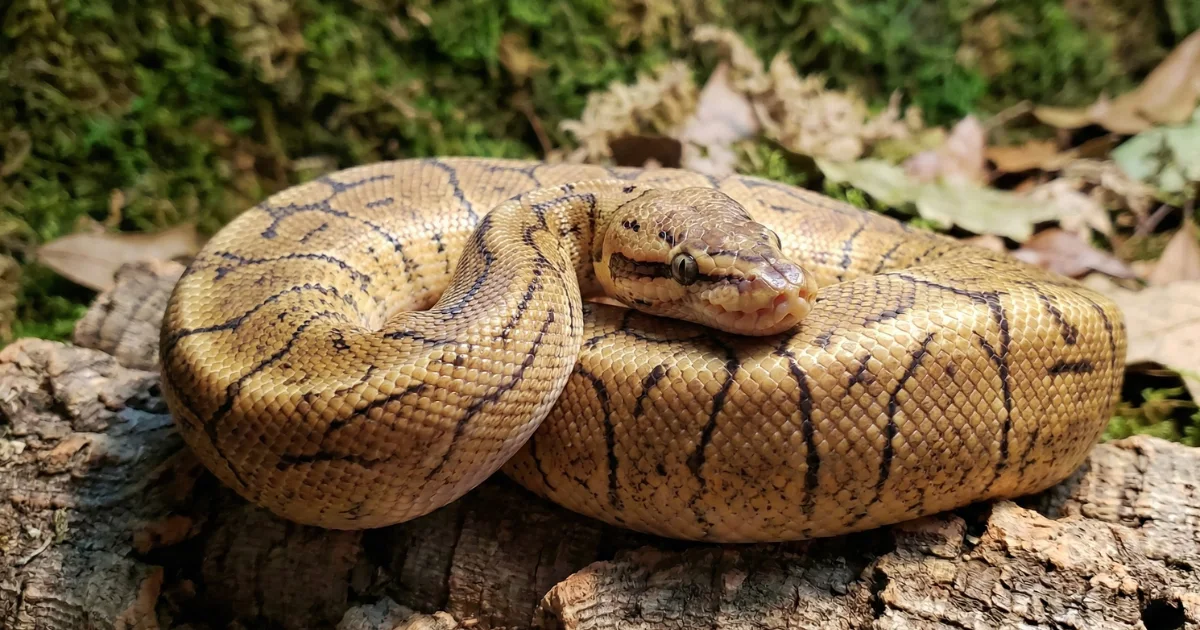
In the dazzling universe of Ball Python morphs, few are as iconic or as divisive as the Spider. With its intricate, web-like pattern and unique coloration, it is undeniably beautiful and has been a cornerstone in creating thousands of other “designer” combinations. But behind this beauty lies a genetic truth that has sparked one of the most intense ethical debates in the reptile hobby. The same gene that creates the Spider pattern also causes a neurological disorder. This guide is an honest, in-depth exploration of the Spider Ball Python, the “wobble” that comes with it, and the difficult questions every responsible keeper must ask.
What exactly is the genetic reality behind the Spider morph?
The Spider morph is a dominant genetic mutation that significantly alters the pigmentation and pattern of the snake. Specifically, it replaces the standard “alien head” markings with delicate, web-like black lines. Furthermore, this trait is highly sought after because it creates a high-contrast, golden-brown aesthetic. Consequently, only one parent needs to carry the gene to produce a clutch of Spider offspring. Therefore, I reject the assumption that this gene is just a cosmetic variation. In fact, it is a foundational mutation that has influenced thousands of designer combinations in the global reptile trade.
Why is the “Wobble” central to the Spider Ball Python Ethics debate?
The controversy surrounding this morph centers on a persistent neurological disorder known colloquially as the “wobble.” Specifically, every individual carrying the Spider gene exhibits this inner-ear defect to some degree. Furthermore, symptoms include head tremors, corkscrewing, and a general lack of physical coordination. Consequently, the animal may struggle to orient its head or strike accurately at its prey. Therefore, I prioritize the “brutal honesty” of this biological defect over the visual appeal of the snake. As a result, a “wobble-free” Spider is a biological impossibility according to current scientific data.
What are the primary arguments in the Spider Ball Python Ethics conflict?
Proponents of the morph argue that the wobble is often mild and does not impede basic biological functions. Specifically, they point to snakes that successfully eat, grow, and reproduce despite their tremors. However, opponents argue that intentionally breeding an animal with a known defect is inherently unethical. Furthermore, we cannot accurately measure the internal experience of a snake living with chronic vertigo. Consequently, a growing majority of keepers and veterinarians prioritize animal welfare over artistic breeding goals. Therefore, I reject the idea that a “mild” defect is an acceptable trade-off for a beautiful pattern.
How does current legislation reflect shifting Spider Ball Python Ethics?
Due to the persistent neurological issues, several international organizations have implemented strict bans on the sale of this morph. Specifically, the International Herpetological Society has prohibited Spiders at their events in the United Kingdom. Furthermore, several European countries are evaluating similar prohibitions under animal welfare legislation. Consequently, the market value of these animals is shifting as ethical standards become more rigorous. Therefore, I recommend that every prospective buyer researches the legal and ethical status of any morph they consider. In fact, the global trend is moving decisively away from supporting deleterious mutations.
Are there other reptile species facing similar health challenges?
The Spider gene is the most famous example of a pleiotropic defect, but it is not unique. Specifically, Jaguar Carpet Pythons and Enigma Leopard Geckos suffer from similar neurological syndromes. Furthermore, Super Cinnamon and Super Black Pastel Ball Pythons are prone to facial deformities and spinal kinking. Consequently, these health issues serve as a warning for the entire herpetological hobby. Therefore, I prioritize the identification of these “problematic” genes to prevent their further spread. As a result, ethical keeping requires a constant verification of the biological cost of high-end aesthetics.
How can consumers influence Spider Ball Python Ethics through their purchases?
The future of the reptile hobby depends entirely on the analytical decisions made by the individual consumer. Specifically, you possess the power to “vote with your wallet” by only supporting breeders of healthy morphs. Furthermore, you should ask direct, probing questions about the neurological status of any animal you intend to buy. Consequently, reducing the demand for “wobble” genes will naturally phase out their production over time. Therefore, I recommend choosing from the thousands of breathtakingly beautiful morphs that have zero health complications. In fact, an ethical purchase is the most powerful tool for conservation and welfare.
Spider Ball Python FAQ
The “wobble” is a neurological disorder inherent to all individuals carrying the Spider gene. Symptoms can include head tremors, corkscrewing (an inability to orient the head properly), and poor physical coordination, which can impact the snake’s ability to strike at prey or move normally.
According to current scientific data, no. The neurological defect is pleiotropically linked to the same dominant gene that creates the distinct Spider pattern. Therefore, a “wobble-free” Spider Ball Python is considered a biological impossibility.
This is a subject of intense debate. Opponents argue that intentionally breeding an animal with a known neurological defect for aesthetic reasons is unethical and compromises animal welfare. Proponents sometimes argue that the condition is “mild,” but there is no scientific way to measure the animal’s internal experience, such as the potential for chronic vertigo.
Yes, this is not unique to the Spider Ball Python. Other examples include the Jaguar Carpet Python and the Enigma Leopard Gecko, both of which suffer from comparable neurological syndromes. Ethical keeping involves identifying and avoiding the promotion of these deleterious mutations.
You can “vote with your wallet” by refusing to purchase morphs known for health issues. Always ask breeders direct, probing questions about the health and neurological history of the animal. By reducing the demand for these “wobble” genes, the hobby can shift toward favoring morphs that have zero health complications.
Sources
- International Society for Applied Ethology
https://www.applied-ethology.org/hottopics.html - Federation of British Herpetologists
https://fbh.org.uk/spider-ball-pythons/ - Advancing Herpetological Husbandry
https://www.facebook.com/groups/AdvancingHerpetologicalHusbandry/ - Journal of Herpetological Medicine and Surgery
https://www.jherpmedsurg.com/
Leave a Reply
You must be logged in to post a comment.