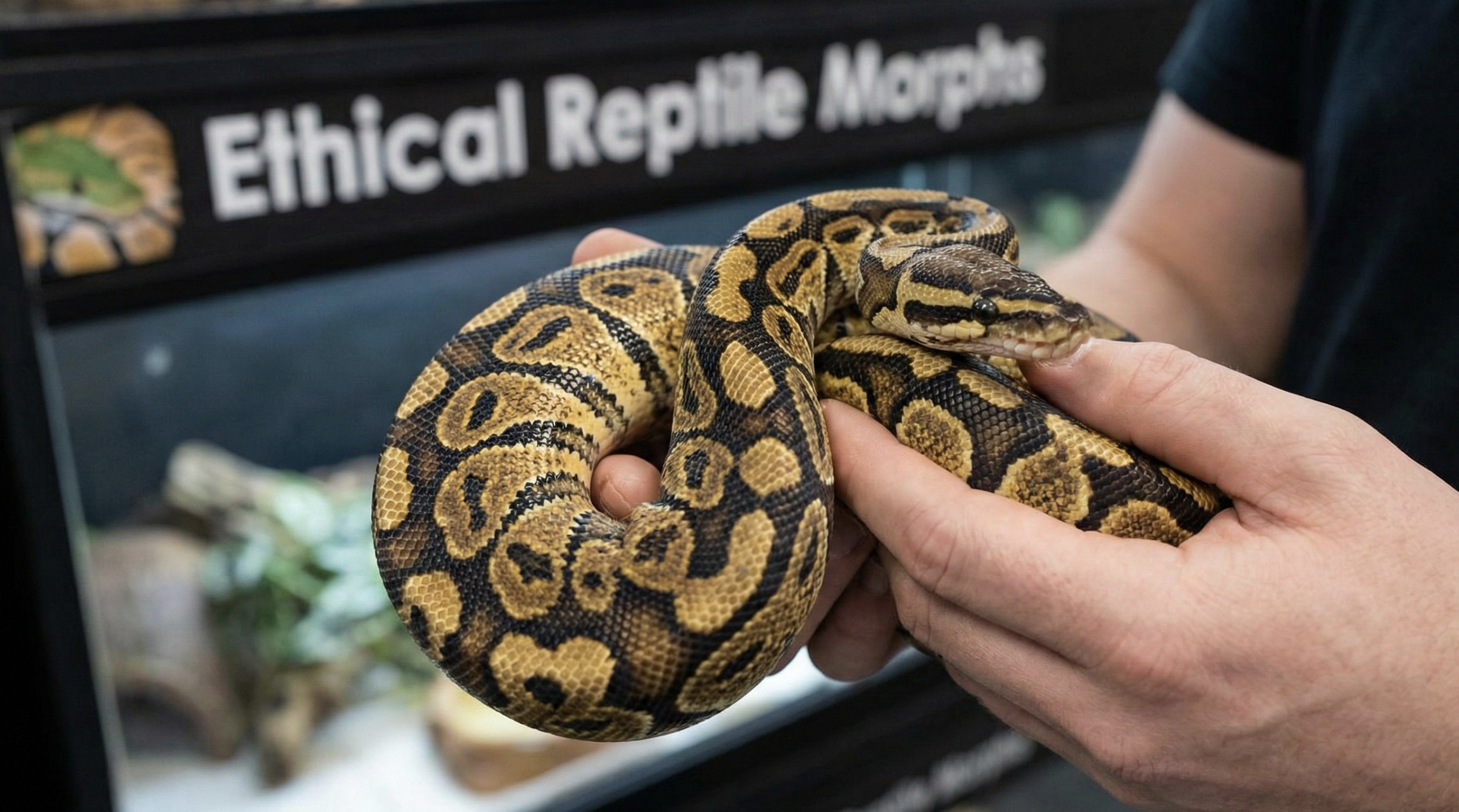
You scroll through an online marketplace and see it: a Ball Python with a pattern so intricate it looks like a digital mosaic, or a Corn Snake with colors that defy nature. This is the dazzling world of snake morphs, a testament to the power of genetics and the passion of dedicated breeders. But behind the beauty of some of these “designer” snakes lies a hidden cost, a genetic lottery that sometimes produces devastating health defects. Ethical Reptile Morphs and where to draw the line is a central question in the hobby. So, where is the line? What is an ethical morph, and when does the pursuit of beauty come at an unacceptable price? This guide is an honest exploration of the ethical challenges in the morph hobby.
What defines a “Morph” and why the debate about Ethical Reptile Morphs?
A morph is a snake displaying a specific genetic mutation that alters its natural color or pattern. Specifically, these mutations are often isolated and intensified through selective breeding to create “designer” aesthetics. Furthermore, the ethical debate arises when a desired visual trait is pleiotropic, meaning the gene affects both appearance and vital biological functions. Consequently, the core conflict is whether an animal’s aesthetic value justifies an inherent reduction in its quality of life. Therefore, I reject the assumption that beauty and health are always compatible in high-end breeding. In fact, prioritizing visual novelty over neurological stability is a fundamental failure of ethical husbandry.
Which specific morphs carry the most significant neurological health complications?
Several famous morphs are genetically tied to vestibular disorders that impair an animal’s balance and coordination. Specifically, the Spider Ball Python is the most notorious example, exhibiting a “wobble” that can cause the snake to corkscrew or flip. Furthermore, the Jaguar gene in Carpet Pythons produces similar “stargazing” symptoms that interfere with accurate striking and movement. Consequently, every single individual carrying these dominant genes is affected to some degree throughout its entire life. Therefore, I prioritize the “brutal honesty” of these defects over the intricate patterns they produce. As a result, many welfare focused organizations now categorize these as “defective” rather than “designer.”
What are the physical deformities associated with “Super” forms and scaleless varieties?
Selective breeding for “Super” morphs and scaleless traits often results in severe skeletal and integumentary failures. Specifically, Super Cinnamon and Super Black Pastel Ball Pythons frequently exhibit “duckbilling” and spinal kinking that can impede movement. Furthermore, scaleless snakes are missing their primary defense against dehydration and environmental abrasions. Consequently, these animals require a much higher level of specialized care just to survive in a captive environment. Therefore, I reject the assumption that a “unique look” compensates for an animal’s increased vulnerability to injury. In fact, scales are a biological necessity for the long-term health of any terrestrial reptile.
What constitutes Ethical Reptile Morphs in the modern herpetological hobby?
Ethical Reptile Morphs are a genetic variation that affects only the animal’s appearance without impacting its biological health. Specifically, morphs like Piebald, Axanthic, and Ghost have no known links to neurological or physical defects. Furthermore, these healthy variations allow keepers to enjoy “living art” without compromising the animal’s ability to thrive. As a result, the vast majority of available mutations fall into this safe, cosmetic only category.
How can a responsible buyer identify and avoid problematic genetic mutations?
Becoming an ethical buyer requires rigorous research and a refusal to accept assumptions from profit driven breeders. Specifically, you must search for specific health links before purchasing any new or “hot” designer morph. Furthermore, a reputable breeder should provide transparent data regarding the lineage and “wobble” status of their animals. Consequently, your purchasing power is the strongest tool in ending the production of defective genes. Therefore, I recommend asking direct questions about genetic health rather than focusing on the price or rarity of the pattern. In fact, supporting ethical breeders is the only way to protect the future of herpetoculture.
What are the long-term impacts of breeding neurological “wobble” into a species?
The long term impact of intentionally breeding neurological defects is a degradation of the species’ genetic integrity. Specifically, as these “wobble” genes are mixed into more complex multi gene animals, the defects can become harder to track. Furthermore, continuing this practice invites increased government regulation and potential bans that could affect the entire reptile trade. Consequently, the scientific community increasingly views these genes as mutations that should be phased out of captive populations.
Reptile Morphs FAQ
A morph is a snake or reptile that displays a specific genetic mutation affecting its natural color or pattern. The controversy arises because some genes are pleiotropic—meaning the same gene that creates a unique look also causes neurological or physical defects. The ethical debate centers on whether aesthetic rarity justifies an inherent reduction in the animal’s health and stability.
The most notorious is the Spider Ball Python, which carries a dominant gene linked to a “wobble” (a vestibular disorder affecting balance and coordination). Similarly, the Jaguar gene in Carpet Pythons often results in “stargazing” symptoms. These conditions can cause the animal to corkscrew, flip, or struggle with striking food accurately throughout its entire life.
Breeding for “Super” forms (homozygous versions of certain genes) can lead to skeletal deformities. For example, Super Cinnamon and Super Black Pastel Ball Pythons often suffer from “duckbilling” (deformed snouts) and spinal kinking. Scaleless varieties lack their primary defense against dehydration and abrasions, requiring significantly more specialized and intensive care to survive.
An ethical morph is a genetic variation that alters only the animal’s visual appearance without impacting its biological health or behavior. Popular examples include Piebald, Axanthic, and Ghost morphs, which have no known links to neurological or physical defects. These allow keepers to enjoy unique aesthetics while ensuring the animal remains hardy and functional.
Ask for transparent data regarding the animal’s lineage and whether that specific morph line has a history of “wobble” or kinking. A reputable breeder should provide clear feeding and shed records and be honest about any genetic predispositions. Researching the specific health links of a morph before purchasing is the best way to use your buying power to support ethical breeding practices.
Sources
- International Society for Applied Ethology
https://www.applied-ethology.org/ - Reptiles Magazine
https://reptilesmagazine.com/herp-queries-duckbilling-and-kinking/ - Advancing Herpetological Husbandry
https://www.facebook.com/groups/AdvancingHerpetologicalHusbandry/ - ReptiFiles
https://reptifiles.com/ball-python-care-guide/ball-python-health/ball-python-wobble/ - Journal of Herpetological Medicine and Surgery
https://www.jherpmedsurg.com/ - Federation of British Herpetologists
https://fbh.org.uk/
Leave a Reply
You must be logged in to post a comment.