
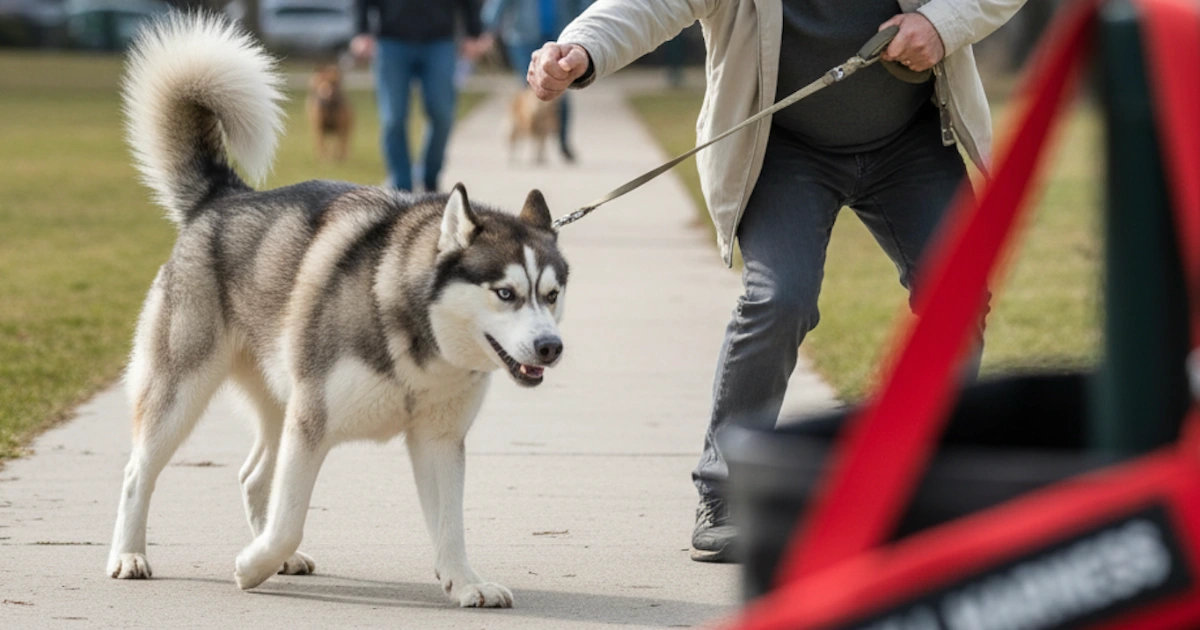
It is the great, universal paradox of dog ownership, the one activity that is supposed to be a relaxing, bonding experience, the daily walk is often the most stressful, frustrating, and arm-wrenching part of your day. You leave the house with a vision of a pleasant stroll, and you return having been dragged down the sidewalk by a furry freight train. If you feel like you are being walked by your dog, you are not alone. This guide is your complete training manual, filled with the techniques and tools you need to end the pulling and transform your daily tug-of-war into a peaceful, enjoyable walk.
Why Does My Dog Pull on the Leash in the First Place?
Understanding the “why” is the first step to solving the problem. It’s not because your dog is being “dominant” or “stubborn.” The reasons are much simpler:
They Walk Faster Than We Do: A dog’s natural walking pace is a trot, which is much faster than our leisurely human stroll.
The World is Exciting! The outside world is an intoxicating buffet of smells, sights, and sounds. Your dog is simply trying to get to the next interesting smell as fast as possible.
Pulling Works: This is the most important reason. When your dog pulls and you move forward, you have just taught them that pulling is a very effective way to get where they want to go. It is a self-rewarding behavior.
Will a Different Leash or Collar Stop the Pulling? (A Guide to Dog Walks)
Many owners look for a “quick fix” with a new piece of gear. It’s crucial to understand that these are training tools, not magic solutions. They help you manage the pulling while you teach your dog the right way to walk.
Standard Collar and Back-Clip Harness: These offer zero control over pulling. A back-clip harness can actually encourage pulling, as it engages the dog’s “opposition reflex,” similar to how sled dogs are harnessed.
The Best Tool: The Front-Clip Harness: This is the most recommended tool by positive reinforcement trainers. The leash attaches to a ring on the dog’s chest. When the dog pulls, the harness gently turns their body back towards you, redirecting their momentum without causing any pain or choking.
A Good Alternative: The Head Halter (or Gentle Leader): This looks like a muzzle but is not. It works on the principle of “where the head goes, the body will follow.” It gives you “power steering” over your dog’s head, making it almost impossible for them to pull. Crucially, you must spend time acclimating your dog to a head halter, as many hate the feeling at first.
What to Avoid: Aversive collars like choke chains and prong collars are not recommended. While they may stop the pulling out of fear or pain, they do not teach the dog the correct behavior and can cause serious physical and psychological damage.
How Do I Teach My Dog to Walk Loosely? (The Training Techniques)
The “Be a Tree” Method
- How it Works: The moment your dog starts to pull and the leash goes taut, you stop moving. Completely. You become a boring, unmovable tree.
- Why it Works: This teaches the dog a simple, powerful lesson: “Pulling makes the fun stop.” They learn that the only way the walk continues is if the leash is loose.
The “Reverse Direction” Method
- How it Works: The second the leash tightens, say “Let’s go!” in a cheerful voice and immediately turn and walk in the opposite direction.
- Why it Works: This teaches the dog that they need to pay attention to you. You are the leader of the walk. It breaks their forward-pulling focus and encourages them to keep an eye on where you are going.
The “Lure and Reward” Method
- How it Works: Arm yourself with high-value treats. As you walk, the moment the leash is loose and your dog is by your side, say “Yes!” and give them a treat.
- Why it Works: This is pure positive reinforcement. It teaches your dog that the “heel” position (walking by your side) is the most rewarding place in the universe to be.
What Role Does Exercise Play?
A dog that is bursting with pent-up energy is much more likely to pull. If possible, engage in a quick, high-energy activity before your walk, such as a 5-10 minute game of fetch in the backyard. This gets the “zoomies” out and helps them start the walk in a calmer state of mind.
Why is Dog Walk Consistency So Important?
This is the final, crucial piece of the puzzle. Every single person who walks your dog must use the same rules. If one person lets the dog pull and another doesn’t, you are sending mixed signals that will completely undermine your training. The walk ends for everyone when the leash is tight.
Dog Walk Training FAQ
Dogs pull because their natural trotting pace far exceeds a human’s walking speed. The outdoor environment delivers an overwhelming stream of scents, sights, and sounds that dogs urgently want to reach. Pulling has always worked — every time the leash went taut and the walk continued, the dog learned that tension produces results.
A front-clip harness is the better starting tool for most dogs because it redirects forward momentum without requiring any acclimation period. A head halter offers stronger control by steering the dog’s head, but many dogs resist it initially and require gradual desensitization before it becomes comfortable. Both outperform standard back-clip harnesses.
Choke chains and prong collars are not safe or recommended tools for dog walk training. They suppress pulling through pain and fear rather than teaching correct behavior, and carry documented risks of tracheal injury, nerve damage, and lasting psychological harm. Front-clip harnesses achieve better results without any physical discomfort.
The “Be a Tree” method requires stopping all forward movement the instant the leash goes taut. Standing completely still removes the only reward — forward progress — that the dog has associated with pulling. Dogs learn that a loose leash is the sole condition that keeps the walk moving forward.
Pre-walk exercise meaningfully reduces leash pulling by burning off excess energy before the structured walk begins. A short, high-intensity activity such as five to ten minutes of fetch addresses the dog’s drive to move fast. A calmer dog at the start of a walk responds to leash training far more reliably.
Inconsistency between handlers is one of the most common reasons dog walk training fails long-term. When one person allows pulling and another enforces a loose leash, the dog receives contradictory signals and cannot build a consistent behavioral pattern. Every person walking the dog must apply the same rules on every single outing.
Sources
- American Kennel Club
https://www.akc.org/expert-advice/training/how-to-stop-a-dog-from-pulling-on-the-leash/ - Association of Professional Dog Trainers
https://apdt.com/resource-center/choosing-right-training-equipment/ - The Spruce Pets
https://www.thesprucepets.com/train-a-dog-to-walk-on-a-loose-leash-1118244 - VCA Animal Hospitals
https://vcahospitals.com/know-your-pet/dog-behavior-problems-pulling-on-the-leash - Whole Dog Journal
https://www.whole-dog-journal.com/training/leash-training/training-your-dog-to-walk-on-a-loose-leash/
Leave a Reply
You must be logged in to post a comment.