
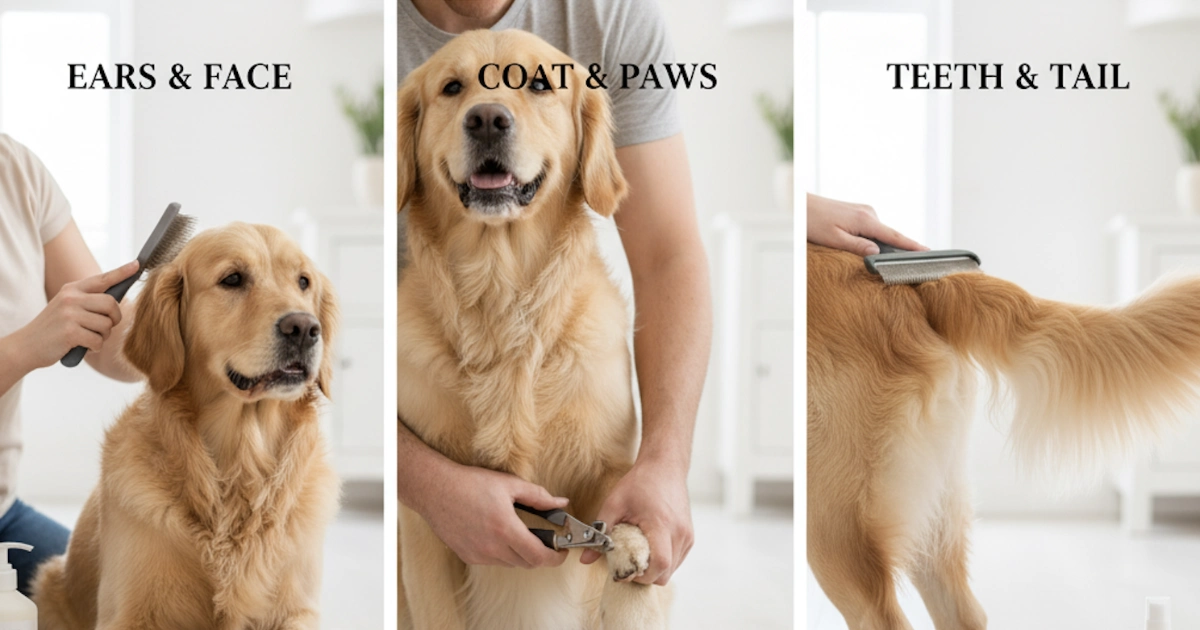
Between the shedding, the smell of “wet dog,” and the dreaded “click-clack” of long nails on your hardwood floors, it’s clear that our canine companions require a bit of upkeep. But how much is too much, and how little is neglect? Grooming your dog is far more than just a “doggy spa day”; it is an essential part of your dog’s health and well-being. The answer to “how often?” is not a single number, but a tailored schedule based on your dog’s breed, coat, and lifestyle. This guide is your complete grooming calendar, breaking down each task from nose to tail.
Part 1: How Often Should I Brush My Dog?
Brushing frequency is not a single universal number. It depends entirely on coat structure, which varies significantly across breeds. Furthermore, getting this wrong in either direction has real consequences. Under-brushing causes matting and skin disease. Over-brushing with the wrong tool damages the coat and irritates the skin. Use the correct tool for the correct coat type — this is non-negotiable.
Grooming For Short, Smooth Coats
(Beagles, Boxers, Greyhounds)
Breeds in this category include Beagles, Boxers, Greyhounds, Dalmatians, and Whippets. Their coats require brushing once per week as a baseline. However, during seasonal shedding periods, increase to twice weekly. A rubber curry brush or grooming mitt works best for this coat type. These tools lift dead hair efficiently without scratching the skin underneath. Furthermore, the brushing action distributes sebum — the natural skin oil — from the follicle along the hair shaft. As a result, the coat maintains its characteristic shine without any product intervention. Short coats do not mat, but they do shed constantly. Weekly brushing significantly reduces the amount of hair deposited on furniture and clothing.
Grooming For Double Coats
(German Shepherds, Labradors, Huskies)
This category includes German Shepherds, Labrador Retrievers, Siberian Huskies, Golden Retrievers, and Border Collies. These breeds require brushing two to three times per week at minimum. During seasonal coat blowouts — which occur twice yearly in most double-coated breeds — daily brushing becomes necessary. Consequently, skipping sessions during blowout periods results in compacted undercoat that traps body heat against the skin. This creates the conditions for hot spots — painful, infected skin lesions that require veterinary treatment.
The correct tool is an undercoat rake, not a standard slicker brush. The undercoat rake reaches through the topcoat and removes dead undercoat from the base. Furthermore, shaving a double-coated breed is one of the most damaging grooming decisions an owner can make. The topcoat and undercoat grow at different rates. Shaving disrupts both layers simultaneously. As a result, the coat frequently regrows incorrectly, losing its insulating and weather-resistant properties permanently. Brush — do not shave.
Grooming For Long or Silky Coats
(Golden Retrievers, Shih Tzus, Yorkshire Terriers)
Yorkshire Terriers, Shih Tzus, Maltese, Afghan Hounds, and similar breeds require daily brushing without exception. Their fine, long hair tangles within hours of the last brush session under normal activity conditions. Furthermore, mats — tight, compacted knots of hair — form quickly in this coat type and tighten progressively. A mat pulls the skin beneath it taut with every movement. This causes constant, low-grade pain the dog cannot communicate directly.
Use a slicker brush followed by a fine-toothed metal comb for this coat type. The slicker brush removes surface tangles. The metal comb identifies any remaining knots the brush missed. Specifically, run the comb all the way to the skin — not just through the top layer. Mat formation begins at the skin surface, not at the visible outer coat. Consequently, a coat that looks smooth on the surface can conceal severe matting underneath. Pay particular attention to friction areas — behind the ears, under the armpits, and around the collar — where tangling accelerates.
Grooming For Curly or Wiry Coats
(Poodles, Schnauzers)
Poodles, Schnauzers, Bichon Frises, Portuguese Water Dogs, and similar breeds require daily home brushing plus professional grooming every four to eight weeks. The common belief that these breeds do not shed is a partial truth. They shed continuously, but the shed hair does not fall free. Instead, it becomes trapped within the curly coat structure. Furthermore, this trapped hair integrates with new growth and creates dense matting that a regular brush cannot penetrate.
Home brushing between professional appointments maintains coat integrity and prevents mat formation from progressing to a point where shaving becomes the only option. A dematting comb and a slicker brush work in combination for most curly coat types. The professional groom every four to eight weeks addresses the full clip, scissor work, and detailed finishing that home grooming cannot replicate. Consequently, skipping professional appointments increases the severity of matting at the next visit and increases the cost of corrective grooming.
Part 2: How Often Should I Bathe My Dog?
Bathing frequency is the grooming topic most commonly handled incorrectly. The instinct to bathe a dog frequently — because humans bathe frequently — does not translate to canine biology. Furthermore, the consequence of over-bathing is measurable and directly counterproductive to the intended outcome.
The General Rule
A bath every one to three months suits most dogs with no specific skin condition. Dogs that spend significant time outdoors, swim regularly, or roll in soil or organic matter can be bathed more frequently as the situation demands. However, bathing on a fixed frequent schedule regardless of actual need is unnecessary. Most dogs maintain a functional level of cleanliness through their own grooming behavior. Furthermore, a dog that smells persistently despite regular bathing most likely has an underlying skin or ear issue — the answer is a vet visit, not more frequent bathing.
Why shouldn’t I bathe them more often?
A dog’s skin produces sebum — a natural lipid layer that maintains moisture balance, protects against environmental pathogens, and supports coat integrity. Bathing removes sebum. Frequent bathing removes it faster than the skin can replenish it. Consequently, the skin becomes dry, flaky, and compromised in its barrier function. Paradoxically, a dog bathed too frequently often smells worse between baths than one bathed monthly. The skin overproduces oil to compensate for the loss. Furthermore, chronic over-bathing in dogs predisposed to skin conditions accelerates the development of dermatitis and secondary infections.
The Golden Rule
Always use a shampoo formulated specifically for dogs. Human shampoo operates at a pH optimized for human skin — approximately 5.5. Dog skin operates at a significantly higher pH, closer to 7.5. Using human shampoo on a dog disrupts the skin’s acid mantle and creates conditions favorable to bacterial and fungal overgrowth. Furthermore, human shampoos frequently contain fragrances and conditioning agents that cause contact dermatitis in dogs. Medicated shampoos for dogs with specific skin conditions should be prescribed by a veterinarian and used at the directed frequency — not interchanged with standard shampoos.
Part 3: How Often Should I Trim My Dog’s Nails?
Nail maintenance is the most neglected routine grooming task across dog ownership generally. Furthermore, it is the task with the most serious long-term structural consequences when consistently ignored.
The “Click-Clack” Test
Audible nail contact with hard flooring indicates nails that are already too long. For most dogs, a trim every three to four weeks maintains nails at an appropriate length. However, individual growth rates vary by breed, activity level, and surface exposure. Dogs that walk frequently on concrete or asphalt naturally wear their nails faster than dogs exercised exclusively on grass or indoor surfaces. Consequently, some active dogs may need trimming less frequently than the three-to-four week baseline. Check nail length weekly by visual inspection — the nail tip should not extend beyond the paw pad when the dog stands on a flat surface.
Why is it so important?
Overly long nails force a dog’s foot into an unnatural, splayed position when they walk. This is uncomfortable, can be painful, and over the long term, can contribute to arthritis and joint problems. It’s a critical part of their structural health. If you are uncomfortable doing it yourself, this is a perfect task for a vet tech or a professional groomer.
Part 4: How Often Should I Clean My Dog’s Ears?
Ear cleaning is an as-needed task, not a scheduled weekly procedure for every dog. Check both ears weekly by visual inspection and smell. A small amount of light brown waxy debris is normal. A strong odor, dark discharge, redness, or the dog scratching or shaking the head indicates infection. Furthermore, cleaning an infected ear without veterinary diagnosis can push debris deeper and worsen the condition. See a vet first.
Which breeds need it most?
Breeds with long, floppy ears (like Basset Hounds, Cocker Spaniels, and Golden Retrievers) are much more prone to ear infections. The ear flap traps moisture and prevents airflow, creating the perfect warm, damp environment for yeast and bacteria to grow. These breeds require more frequent ear checks and cleanings.
When Should I Take My Dog to a Professional Grooming session?
Professional groomers provide services that home grooming cannot reliably replicate. Furthermore, recognizing the boundary between what you can maintain at home and what requires professional skill prevents both coat damage and unnecessary stress for the dog.
Use a professional groomer for any breed requiring a technical haircut — Poodles, Schnauzers, Bichon Frises, and similar breeds. Their clips require precision scissor work and equipment that exceeds standard home grooming tools. Furthermore, any coat that has developed severe matting requires professional assessment before any attempt at removal. Attempting to cut out large mats at home risks cutting the skin, which the mat conceals. A professional groomer evaluates mat depth before proceeding and makes the call between dematting and a full shave-down when necessary.
Nail trimming, ear cleaning, and anal gland expression are all services most grooming salons offer as add-on services during a full groom. Consequently, if any of these tasks cause significant stress at home, delegating them entirely to a professional is a completely reasonable decision. A groomer who handles your dog regularly also provides an additional set of experienced eyes on your dog’s skin, coat, and overall condition — an undervalued benefit of consistent professional grooming appointments.
Dog Grooming FAQ
Brushing frequency depends entirely on coat structure. Short smooth coats need once weekly. Double coats need two to three times weekly, daily during seasonal blowouts. Long silky coats require daily brushing without exception. Curly coats need daily home brushing plus professional grooming every four to eight weeks. Using the wrong tool for the coat type causes as much damage as not brushing at all.
Mats are compacted knots of hair that pull the skin beneath them taut with every movement, causing constant low-grade pain. They trap heat and moisture against the skin, accelerating bacterial and fungal growth. Mats begin at the skin surface, not the visible outer coat. Daily brushing with a slicker brush followed by a metal comb, run all the way to the skin, prevents formation.
A bath every one to three months suits most dogs. Over-bathing strips the sebum layer — the natural oil that maintains skin moisture and barrier function. Without it, skin becomes dry, flaky, and prone to infection. Dogs bathed too frequently often smell worse between baths as the skin overproduces oil to compensate. Use dog-specific shampoo every time — human shampoo disrupts skin pH.
An overgrown nail contacts the ground before the paw pad does, forcing the toe back against its natural alignment. The dog compensates by shifting body weight, altering posture throughout the entire kinetic chain from foot to shoulder. Over time, this stress contributes directly to joint damage and accelerated arthritis. Nails should never extend beyond the paw pad when the dog stands on a flat surface.
Breeds with long, pendulous ear flaps — Basset Hounds, Cocker Spaniels, and Golden Retrievers — are most susceptible. The ear flap rests against the canal opening, blocking airflow and trapping moisture after bathing or swimming. This creates a warm, damp environment where yeast and bacteria multiply rapidly. These breeds require ear checks after every bath and every swim. Never insert cotton swabs into the ear canal.
Shaving a double-coated dog is one of the most damaging grooming decisions an owner can make. The topcoat and undercoat grow at different rates. Shaving both simultaneously disrupts the regrowth pattern, and the coat frequently never recovers its original structure. The double coat actually insulates against heat in summer as well as cold in winter. Regular brushing to remove dead undercoat is the correct intervention.
Use a professional groomer for breeds requiring technical haircuts, any coat with severe matting, and any grooming task you cannot perform confidently. Severe mats conceal the skin beneath them — cutting them out at home risks lacerating the skin. Professional groomers also assess skin condition, coat health, and ear and nail status during appointments, providing an experienced evaluation most owners cannot replicate at home.
Sources
- American Kennel Club
https://www.akc.org/expert-advice/health/dog-grooming-tips-at-home-professional/ - The Spruce Pets
https://www.thesprucepets.com/human-shampoo-on-dogs-4153945 - Whole Dog Journal
https://www.whole-dog-journal.com/care/nail-trimming/the-importance-of-trimming-your-dogs-nails/ - MSD Veterinary Manual
https://www.msdvetmanual.com/dog-owners/ear-disorders-of-dogs/ear-infections-and-otitis-externa-in-dogs - VCA Animal Hospitals
https://vcahospitals.com/know-your-pet/grooming-and-coat-care-for-your-dog


Leave a Reply
You must be logged in to post a comment.