
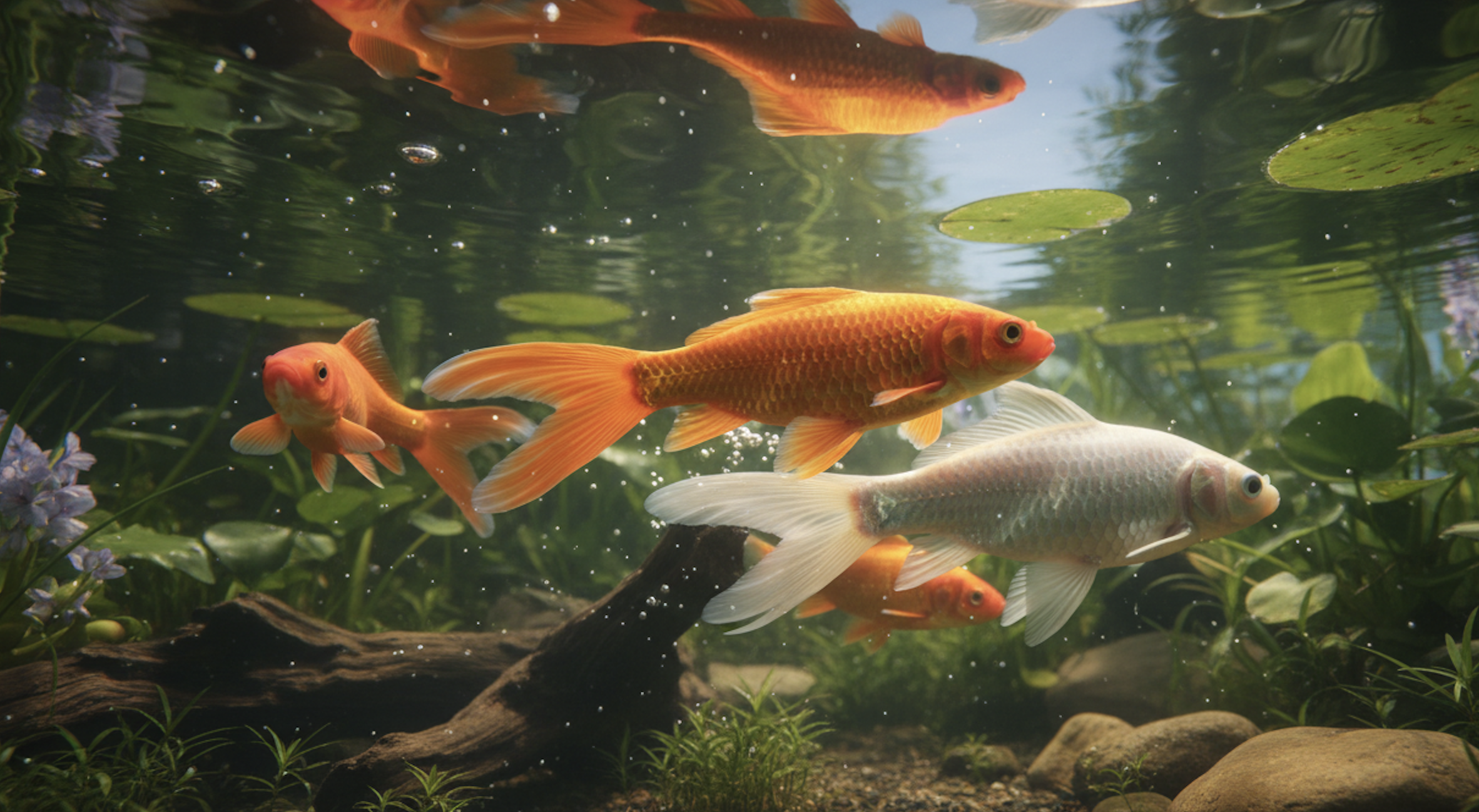
There’s a certain magic to a well-established garden pond, a sense of secret life just below the surface. My most treasured memory of this is watching a group of Comet Goldfish on a sunny afternoon. They weren’t just fish; they were living ribbons of fire and snow. Their long, flowing tails trailed behind them like a painter’s brushstroke, catching the light as they navigated the dark water with a speed and grace that seemed impossible for a “goldfish.” They were athletes, powerful swimmers in their element. That vision is seared into my mind every time I see their smaller cousins languishing in tiny tanks at a pet store. It’s a powerful reminder that these fish aren’t meant for a life of confinement; they are built to fly through water.
The Comet Goldfish (Carassius auratus) is often seen as a slight upgrade to the Common Goldfish, but that beautiful, flowing tail is a sign of its true nature. It is an animal born for a life of motion, and providing for that need is the key to its heart.
Are Comet Goldfish good pets for beginners?
This is a complex question because their durability often masks their significant environmental requirements. Specifically, they can endure water quality mistakes that would kill more sensitive species. Furthermore, their high waste production and size make them a poor choice for small “starter” tanks. In fact, they are a fantastic beginner choice for an outdoor pond rather than an indoor aquarium. Consequently, they are only “easy” if the keeper provides adequate volume and filtration. Therefore, I categorize them as a large scale commitment.
How long do Comet Goldfish live and how large do they get?
Comet Goldfish are not short-lived animals and represent a commitment of fifteen to twenty five years. Specifically, a juvenile will rapidly grow into a massive ten to fourteen-inch adult. Furthermore, their long, flowing fins can add several inches to their total physical profile. In fact, they possess an explosive growth rate when provided with high-quality nutrition. Consequently, you must not be fooled by the tiny specimens found in pet stores. Therefore, I prioritize planning for their maximum size from day one.
Are Comet Goldfish social and do they need companionship?
Comet Goldfish are highly social animals that are visibly more confident when kept in a group. Specifically, a solitary Comet will often exhibit shy and stressed behavior. Furthermore, they feel significantly more secure when shoaling with other single-tailed varieties. In fact, a group of Comets swimming in a pond is a magnificent display of synchronized movement. Consequently, isolation is a detriment to their psychological health. Therefore, I recommend keeping them in pairs or larger groups to encourage natural activity.
The Housing Dilemma: Why is a bowl a death sentence?
Keeping a Comet Goldfish built for speed and endurance in a small, unfiltered bowl is an act of cruelty. Specifically, a bowl lacks the surface area necessary for proper oxygenation. Furthermore, the absence of a filter leads to a rapid and toxic buildup of ammonia. In fact, this environment results in a slow and suffocating death for the fish. Consequently, I categorize bowls as unsuitable for any living creature. Therefore, you must utilize a high-volume aquarium or a pond.
What is the minimum tank size and why is a pond ideal?
A 55-gallon aquarium is the absolute starting point for a single juvenile specimen. Specifically, a 75-gallon or 90-gallon tank is far superior for maintaining stable water chemistry. Furthermore, an outdoor pond of at least 200 gallons is the ideal permanent home. In fact, ponds provide the unrestricted swimming space that these athletes require. Consequently, they can grow to their full majestic potential and even breed naturally. Therefore, I recommend pond housing for all adult Comets.
What type of filtration and heating is required?
You must utilize massive, oversized filtration to process the huge amount of ammonia they produce. Specifically, Comets are active and messy eaters that create a heavy bioload. Furthermore, you need a filtration system rated for at least double the actual water volume. In fact, they are true coldwater fish and do not require a heater in most indoor settings. Consequently, they are hardy enough to survive cold winters in deep ponds. Therefore, I prioritize high-turnover filtration rates for their health.
What kind of plants and diet are best for Comet Goldfish?
Comets are enthusiastic omnivores that will happily devour most delicate aquatic plants. Specifically, you should only use tough species like Anubias or Java Fern. Furthermore, the staple of their diet must be a high-quality sinking pellet or gel food. In fact, sinking foods prevent the ingestion of surface air which can cause bloating. Consequently, I recommend avoiding floating flakes for their long-term health. Therefore, you should supplement their meals with blanched peas and spinach.
What are the signs of sickness and black ammonia burns?
The most common signs of illness include lethargy, clamped fins, and gasping at the surface. Specifically, these symptoms are almost always a direct result of poor water quality. Furthermore, black spots on the skin are often “ammonia burns” showing the skin is healing. In fact, this is a major red flag that you must check your parameters immediately. Consequently, a large water change of 50-75% is the first step in treatment. Therefore, I prioritize weekly water testing.
Which tank mates are compatible with Comet Goldfish?
The best companions are other single-tailed goldfish such as Commons and Shubunkins. Specifically, they share identical environmental needs and can keep up with each other’s speed. Furthermore, you must never keep them with slow-moving fancy varieties. In fact, Comets will outcompete fancies for all available food, leading to starvation. Consequently, they can also be kept with Koi in very large pond environments. Therefore, I recommend a “single-tail only” community for the best stability.
Comet Goldfish FAQ
They reach 12 to 14 inches in length. They are not small. They are streamlined, fast-swimming powerhouses. Their long, single tail adds significant length. Do not expect them to stay “pet store size.” They grow rapidly. They need massive amounts of horizontal swimming space.
Start with a 55-gallon tank for a single fish. Use a 75-gallon tank or a pond for multiples. These fish are racers. They need room to build speed. A small tank stunts their growth. It causes their organs to compress. It is a slow, painful death. Use heavy-duty filtration. They produce more waste than most tropical fish.
Expect 15 to 20 years with proper care. Some well-kept pond specimens reach 30 years. This is a dog-level commitment. Most die within months because of poor water quality. They are hardy. They are resilient. They are not immortal. Plan for a two-decade relationship.
No. This is a recipe for starvation. Comets are too fast. They are highly active. They will reach the food before a clumsy Oranda or Ranchu can move. Fancy goldfish will starve. Comets will become obese. Keep single-tail varieties together. Keep double-tail fancies separate.
No. That label is a marketing tragedy. They are a distinct breed of Carassius auratus. They have dignity. They have personality. Pet stores sell them cheap to feed predatory fish. They deserve a filtered, cycled home. Treat them as a pet, not a snack.
No. They are cold-water fish. They thrive in temperatures between 18°C and 22°C. They can survive colder temperatures in outdoor ponds. High heat reduces oxygen. Low oxygen kills goldfish. Keep the water cool. Keep the surface agitated.
Sources
- Seriously Fish
https://www.seriouslyfish.com/species/carassius-auratus/ - FishBase
https://www.fishbase.se/summary/Carassius-auratus.html - Veterinary Partner
https://veterinarypartner.vin.com/default.aspx?pid=19239&id=4952044 - Aquarium Care Basics
https://www.aquariumcarebasics.com/freshwater-aquarium-fish/comet-goldfish/

Leave a Reply