
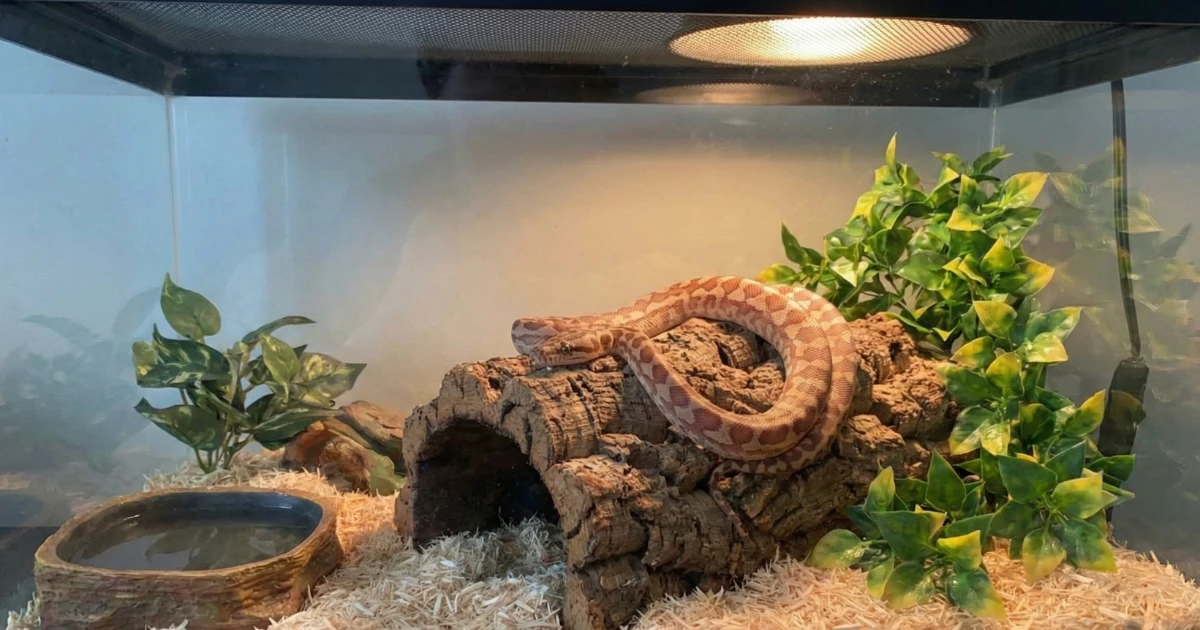
When I was first exploring the world of snakes, I came across a name that made me pause: the Children’s Python. I was immediately skeptical. It sounded like a marketing gimmick, a name designed to downplay the seriousness of owning a reptile. I imagined it was some sort of flimsy, delicate creature. It wasn’t until I saw one in person that I understood how completely wrong I was. The snake I was shown was not a toy; it was a small but robust python, with a beautiful, intricate pattern and a rainbow iridescence that shimmered over its scales like an oil slick on polished stone. It was a sophisticated, beautiful little serpent.
The keeper told me the truth: it wasn’t named because it was for children, but after a man named John George Children, a 19th-century British scientist. It was a historical accident. But in one of the happiest coincidences in the reptile hobby, this snake also just happens to be one of the absolute best beginner pythons a person could ever hope for.
The Children’s Python (Antaresia childreni) and its close relatives are a fantastic introduction to the world of pythons. Their manageable size and generally placid nature make them a true gem from the land down under.
Is a Children’s Python a suitable pet for beginning reptile keepers?
The Children’s Python is an absolutely superb choice for a beginner seeking a hardy and manageable first snake. Specifically, they stay small enough to eliminate the fear factor associated with larger constrictors. Furthermore, their resilient nature allows them to thrive even as a new keeper masters environmental controls. Consequently, they are often the “gold standard” for those entering the world of Australian pythons. Therefore, I frequently recommend this species for enthusiasts of all ages who want a long-lived companion. In fact, their straightforward needs make them nearly impossible to fail with if provided with basic research.
What are the realistic growth and longevity expectations for a Children’s Python?
A Children’s Python represents a twenty to thirty-year commitment to a slender and highly inquisitive predator. Specifically, they reach a very manageable adult size of 2.5 to 3.5 feet. Furthermore, their slender body mass makes them easy to support during handling sessions. Consequently, you must prepare for a pet that may be with you for several decades of your life. Therefore, I prioritize the “brutal honesty” of their longevity over their initial small purchase price. As a result, providing a stable and high-quality environment is essential for their enduring health and vitality.
What are the essential habitat requirements for a Children’s Python?
Constructing a habitat for a Children’s Python requires a focus on security and precise thermal management. Specifically, while a 20-gallon tank is functional, I advocate for a 36-inch enclosure to allow for full biological movement. Furthermore, you must provide at least two identical, tight-fitting hides to ensure the snake feels secure in its environment. Consequently, a lack of security leads directly to stress-induced anorexia or defensive behaviors. Therefore, I reject the use of oversized, open hides that leave the animal feeling exposed. In fact, a “cluttered” tank is a happy tank for this specific genus.
How do you manage the heat gradient and lighting for a nocturnal python?
The Children’s Python requires a precise thermal gradient to facilitate digestion and natural circadian rhythms. Specifically, the warm side of the enclosure should feature a basking spot of 90–95∘F (32–35∘C). Furthermore, the use of a thermostat is non-negotiable to prevent lethal burns from unregulated heating elements. Consequently, while they are active at night, providing low-output UVB lighting significantly benefits their physiological health. Therefore, I recommend overhead heating to replicate the natural solar patterns of the Australian outback. As a result, your snake can choose between surface heat and cooler thermal retreats.
What constitutes a scientifically responsible diet for a high-metabolism python?
In captivity, the Children’s Python thrives on a diet of appropriately sized, frozen-thawed mice. Specifically, you must ensure the prey item is no wider than the thickest part of the snake’s body. Furthermore, members of the Antaresia genus possess a comically intense feeding response that can surprise new keepers. Consequently, you must use long tongs during feeding to avoid accidental “mistaken identity” bites. Therefore, I prioritize the use of frozen-thawed prey because it is safer for the snake and more humane for the prey. In fact, adults only require a meal every 10 to 14 days to prevent obesity.
What are the most common health problems and biological behaviors?
Nearly all common health issues for the Children’s Python result from foundational failures in husbandry. Specifically, stuck shed and respiratory infections stem directly from incorrect humidity or temperature levels. Furthermore, it is perfectly normal for a snake’s eyes to turn cloudy as it prepares to shed its skin. Consequently, you must avoid handling the animal during this “in blue” phase to prevent unnecessary stress. Therefore, I prioritize the use of digital hygrometers to ensure moisture levels remain within the safe range. As a result, a well-monitored environment virtually guarantees a healthy and thriving python.
How do the various members of the Antaresia genus differ in care?
The Children’s Python belongs to a genus of four closely related species that share virtually identical care requirements. Specifically, the Spotted Python and Stimson’s Python are also highly popular in the pet trade. Furthermore, the Pygmy Python remains a specialist’s choice due to its incredibly tiny adult size. Consequently, the data in this guide applies broadly across the entire Antaresia family. Therefore, I reject the assumption that you need a different setup for each specific species. In fact, these pythons represent some of the best genetic diversity for small-scale reptile keeping.
Children’s Python Care FAQ
Children’s Pythons have an intense feeding response but rarely bite defensively. Most bites are food-motivated mistaken identity strikes, not aggression. Furthermore, they are entirely non-venomous, making any contact harmless beyond minor surface irritation. Using feeding tongs consistently eliminates the vast majority of accidental biting incidents.
Begin with short, calm sessions of five to ten minutes every other day. Support the snake’s full body weight rather than gripping it. Furthermore, avoid any handling within forty-eight hours of feeding to prevent regurgitation. Consistent, predictable interaction builds trust steadily over several weeks.
Cohabitation is strongly discouraged for this species. Two individuals compete directly for heat sources, hides, and food, producing chronic invisible stress. Furthermore, feeding two snakes in a shared enclosure carries a genuine risk of accidental cannibalism. Every Children’s Python requires its own dedicated, appropriately sized enclosure.
Juveniles shed roughly every four to six weeks during rapid growth phases. Adults shed considerably less frequently, typically every two to three months. A dull, opaque body and cloudy blue eyes signal an approaching shed. Avoid all handling during this phase and maintain appropriate humidity levels.
Standard Children’s Pythons typically range from eighty to one hundred fifty USD. Selectively bred morphs command higher prices depending on lineage and rarity. Always prioritize captive-bred specimens from reputable breeders over imported individuals. Wild-caught animals carry significant parasite burdens and acclimate poorly to captive environments.
Sources
- San Diego Zoo Wildlife Alliance
https://animals.sandiegozoo.org/animals/python - Australian Reptile Park
https://www.reptilepark.com.au/childrens-python/ - Reptiles Magazine
https://reptilesmagazine.com/childrens-python-care-sheet/ - Animal Diversity Web
https://animaldiversity.org/accounts/Antaresia_childreni/ - ReptiFiles https://reptifiles.com/childrens-python-care-sheet/
- Advancing Herpetological Husbandry
https://www.facebook.com/groups/AdvancingHerpetologicalHusbandry/ - Smithsonian’s National Zoo
https://nationalzoo.si.edu/animals/python-facts


Leave a Reply